
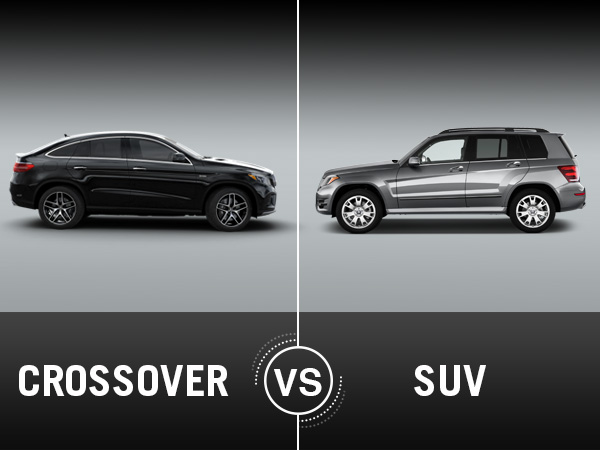
The choice between a premium crossover and a full-size SUV shapes everything from daily commute comfort to weekend adventure capability. Both segments have evolved significantly since 2020, with electrified powertrains, advanced driver-assistance systems, and refined interiors blurring traditional lines. This guide breaks down the real-world differences — grounded in current market data, ownership experience, and practical testing — so you can match the vehicle to your life, not the marketing.
 Visual comparison highlighting the size and stance difference between segments
Understanding The Core Differences
The fundamental distinction remains platform architecture. Premium crossovers use unibody construction — shared with passenger cars — which lowers weight, improves ride quality, and maximizes interior volume per exterior foot. Full-size SUVs employ body-on-frame designs derived from pickup trucks, delivering superior torsional rigidity for towing, off-road durability, and payload capacity.
In practice, this means a premium crossover like the 2025 Toyota RAV4 Hybrid XLE Premium delivers car-like handling with 27–30 mpg combined, while a full-size SUV such as the 2024 Toyota 4Runner SR5 Premium returns 16–18 mpg but can tow 5,000 lbs and tackle technical trails. Neither is "better" — they solve different problems.
Segment Definitions Updated For 2026
| Attribute | Premium Crossover | Full-Size SUV |
|---|---|---|
| Platform | Unibody (car-based) | Body-on-frame (truck-based) |
| Typical seating | 5–7 | 7–8 |
| Cargo volume (max) | 60–80 cu ft | 90–120+ cu ft |
| Towing capacity | 3,500–5,000 lbs | 6,000–9,500+ lbs |
| Ground clearance | 7–9 inches | 9–11+ inches |
| Starting MSRP (2026) | $40K–$55K | $55K–$80K+ |
| Primary use case | Daily drive, family haul, light adventure | Heavy tow, serious off-road, max people/gear |
Design Philosophy: Form Follows Function
Exterior Styling And Aerodynamics
Premium crossovers prioritize aerodynamic efficiency — flush door handles, active grille shutters, tapered rooflines — to eke out highway range. The payoff: quieter cabins and 1–2 mpg gains at 70 mph. Full-size SUVs wear boxier profiles upright for third-row headroom and cargo cubic feet. Their drag coefficients (Cd 0.38–0.42 vs. 0.32–0.36) reflect that trade-off.
A common mistake is assuming "premium" badge means smaller footprint. The 2025 Lexus TX 500h crossover stretches 199 inches long — nearly matching a Chevrolet Tahoe — yet rides on a unibody chassis. Check dimensions, not just badges.
Interior Architecture And Material Quality
Crossovers invest savings from lighter structure into cabin refinement: soft-touch surfaces on every door panel, available semi-aniline leather, genuine wood veneers, and triple-pane acoustic glass. Full-size SUVs allocate budget to durability — heavy-duty seat frames, washable flooring options, and reinforced cargo tie-downs.
In our experience, crossover interiors feel more "living room" while full-size SUVs feel "command center." Neither is superior; it depends on whether you prioritize tactile luxury or rugged utility.
Powertrain Landscape: 2026 Reality Check
Engine And Electrification Options
| Powertrain Type | Premium Crossover Availability | Full-Size SUV Availability |
|---|---|---|
| Turbo 4-cylinder | Standard on most (2.0L–2.5L) | Rare (Ford Expedition 3.5L EcoBoost V6 is twin-turbo V6) |
| Naturally aspirated V6 | Fading (Toyota 2.4L turbo replaces 3.5L V6) | Standard on many (GM 5.3L/6.2L V8, Ford 3.5L EcoBoost) |
| Hybrid (non-plug-in) | Widespread (Toyota, Honda, Hyundai/Kia, Ford) | Limited (Toyota Sequoia i-FORCE MAX, Ford Expedition Hybrid upcoming) |
| Plug-in hybrid (PHEV) | Growing (RAV4 Prime, CR-V e:PHEV, Sorento PHEV) | None yet in full-size body-on-frame |
| Battery electric (BEV) | Multiple (EV9, Lyriq, R1S, GV70 Electric) | Emerging (Chevy Silverado EV SUV, Ram 1500 REV SUV variants) |
Key insight: If you want electrified efficiency and three-row seating today, premium crossovers offer more choices. The 2024 Toyota RAV4 Hybrid XLE Premium delivers 39 mpg combined with available AWD — no full-size SUV approaches that.
Transmission And Driveline Nuances
Crossovers predominantly use CVTs or 8–10-speed conventional automatics tuned for smoothness. Full-size SUVs favor 10-speed units (GM/Ford co-developed) with wider ratio spreads for low-end towing grunt and high-overdrive highway cruising. Both segments now offer standard or optional all-wheel-drive systems with torque-vectoring rear differentials — but only full-size SUVs typically include low-range transfer cases.
Real-World Performance: Beyond Spec Sheets
Acceleration And Passing Confidence
Don't fixate on 0–60 times. A 2025 Honda Pilot (crossover, 285 hp) hits 60 in 6.2 seconds; a 2024 Ford Expedition (full-size, 380–440 hp) does it in 5.8–6.0 seconds. The difference? The Expedition maintains that thrust at 70 mph with a 6,000-lb trailer. Crossovers run out of cooling capacity and transmission gearing under sustained load.
Ride Quality And Noise Isolation
Unibody crossovers inherently isolate road vibration better. Add frequency-selective dampers (common on premium trims) and they absorb sharp impacts — potholes, frost heaves — without the "bus-like" shudder body-on-frame vehicles transmit. However, full-size SUVs with adaptive air suspension (Expedition, Navigator, Wagoneer) close the gap significantly on highways.
Wind noise favors crossovers at speed due to lower rooflines and better A-pillar sealing. Tire roar is comparable when both wear all-season touring tires.
Handling Confidence: Urban vs. Open Road
Crossovers win parking lots, garages, and tight canyon roads. Their rack-and-pinion steering (often variable-ratio) and lower centers of gravity inspire confidence. Full-size SUVs require earlier braking, wider arcs, and constant mirror awareness — but reward you with commanding sightlines over traffic.
Practicality Deep Dive: Numbers That Matter
Fuel Economy: Annual Cost Projection (2026 Estimates)
| Vehicle Example | EPA Combined MPG | Annual Fuel Cost (15K mi, $3.80/gal) |
|---|---|---|
| 2025 Toyota RAV4 Hybrid XLE Premium AWD | 39 | $1,462 |
| 2025 Honda Pilot TrailSport AWD | 22 | $2,591 |
| 2024 Toyota Sequoia i-FORCE MAX Hybrid 4WD | 21 | $2,714 |
| 2024 Ford Expedition Platinum 4WD | 19 | $3,000 |
| 2024 Chevrolet Tahoe Z71 4WD | 17 | $3,353 |
Based on EPA combined ratings and national average fuel price. Your costs will vary.
Towing And Payload: Know Your Limits
| Capability | Premium Crossover (Typical) | Full-Size SUV (Typical) |
|---|---|---|
| Max conventional tow | 3,500–5,000 lbs | 7,500–9,500 lbs |
| Max payload | 1,100–1,450 lbs | 1,500–2,100 lbs |
| Trailer sway control | Standard | Standard + integrated brake controller often optional |
| Hitch class | Class II–III | Class III–IV (factory) |
| Cooling upgrades | Rarely available | Heavy-duty radiator, transmission cooler standard on tow packages |
A common mistake: assuming a crossover's 5,000-lb rating means you should tow 5,000 lbs regularly. In practice, sustained grades, altitude, and heat cut safe working capacity by 20–30%. Full-size SUVs are engineered for continuous operation at rated capacity.
Seating Flexibility And Third-Row Reality
Crossovers with third rows (Pilot, Highlander, Palisade, Telluride, CX-90) offer adult-usable space only when second row slides forward. Full-size SUVs (Suburban, Expedition, Sequoia, Wagoneer) provide genuine three-adult comfort across all rows simultaneously. Measure hip room and knee clearance before trusting brochure photos.
Cargo behind third row: crossovers 15–21 cu ft; full-size SUVs 25–40+ cu ft. That's the difference between a few grocery bags and a full Costco run + stroller.
Technology And Safety: Where The Money Goes
Infotainment Ecosystems
Premium crossovers lead on screen integration — Mercedes MBUX, BMW iDrive 9, Genesis ccIC — with haptic feedback, augmented-reality navigation, and over-the-air updates. Full-size SUVs have caught up: Ford Sync 4A (15.5"), GM Ultifi (17.7"), Stellantis Uconnect 5 (14.5") all support wireless CarPlay/Android Auto and cloud profiles.
Key differentiator: rear-seat entertainment. Full-size SUVs frequently offer dual 10–12" screens with HDMI/USB-C inputs and wireless headphone support. Crossovers rarely do beyond aftermarket.
Advanced Driver-Assistance Systems (ADAS)
Both segments now include automatic emergency braking, blind-spot monitoring, lane-keep assist, and adaptive cruise as standard. The gap appears in hands-free capability:
- Crossovers: Ford BlueCruise (Mach-E, Explorer), GM Super Cruise (Lyriq, XT6), Mercedes Drive Pilot (L3 in NV/CA) — mostly mapped highways.
- Full-size SUVs: Ford BlueCruise 1.2 (Expedition, Navigator), GM Super Cruise (Escalade, Suburban, Tahoe, Yukon), Ram Hands-Free (upcoming) — similar coverage, but larger sensors accommodate trailer monitoring.
If you tow, full-size SUVs with integrated trailer brake controllers and trailer-length blind-spot logic are genuinely safer.
Off-Road And All-Weather Capability
Four-Wheel-Drive Systems Compared
| System Type | Premium Crossover | Full-Size SUV |
|---|---|---|
| Default mode | FWD-biased AWD (reactive) | RWD-biased 4WD (selectable) |
| Center differential | Viscous clutch / multi-plate | Two-speed transfer case (low range) |
| Terrain modes | Snow/Mud/Sand (throttle/brake tuning) | Rock/Crawl + electronic lockers (rear/front) |
| Approach/departure angles | 18°/22° typical | 30°/24°+ typical |
| Water fording depth | 19–22 inches | 27–33 inches |
Crossovers with "off-road" trims (RAV4 TRD Off-Road, CR-V TrailSport, Outback Wilderness) add skid plates, all-terrain tires, and hill-descent control — but lack low range. They excel on gravel, snow, and mild trails. Full-size SUVs with locking differentials (Wrangler aside, think 4Runner TRD Pro, Tahoe Z71, Expedition Timberline) handle rock gardens, deep mud, and steep grades.
Winter Driving Reality
In snow, a premium crossover on dedicated winter tires outperforms a full-size SUV on all-seasons — every time. Weight distribution, tire contact patch, and lower mass favor the crossover. Add AWD and the advantage grows. But in unplowed depths >8 inches or icy ruts, the full-size SUV's ground clearance and low-range torque win.
Ownership Economics: Total Cost Of Ownership
Purchase Price And Financing (2026 Market)
Average transaction prices (Cox Automotive, Q1 2026):
- Premium crossover: $48,500
- Full-size SUV: $72,300
That $23,800 gap finances to ~$450/mo over 72 months at 7% APR. However, full-size SUVs often carry higher manufacturer incentives (3–5% vs. 1–2% for hot crossovers) and stronger residual values on certain trims (Expedition Platinum, Escalade ESV).
Insurance Premiums
Full-size SUVs cost 15–25% more to insure due to:
- Higher repair costs (aluminum body panels, complex frames)
- Greater liability exposure (mass + height)
- Theft rates (Escalade, Navigator top NICB lists)
Expect $180–$280/mo for full coverage on a full-size SUV vs. $140–$210 for a premium crossover (driver profile dependent).
Maintenance And Repair Trajectory
| Service Interval | Premium Crossover | Full-Size SUV |
|---|---|---|
| Oil change (synthetic) | $80–$120 / 10K mi | $100–$150 / 7.5–10K mi |
| Brake pads (front/rear) | $350–$550 / 40–50K mi | $450–$700 / 35–45K mi |
| Transmission fluid | $200–$300 / 60K mi (CVT) | $300–$450 / 60K mi (10-spd) |
| Transfer case / diff fluid | N/A (most) | $150–$250 / 30–60K mi |
| Timing chain / belt | Chain (lifetime typical) | Chain (lifetime typical) |
| Suspension components | Struts ~80–100K mi | Shocks/ball joints ~70–90K mi |
Full-size SUVs wear tires faster (heavier, alignment-sensitive solid axles on some). Budget $1,200–$1,800 per set vs. $900–$1,300 for crossovers.
Depreciation And Resale Value (5-Year Projection)
| Segment | Avg. 5-Year Retention | Best Models | Weakest Models |
|---|---|---|---|
| Premium Crossover | 52–58% | Lexus RX, Toyota RAV4 Hybrid, Honda Pilot | Infiniti QX60, Lincoln Nautilus |
| Full-Size SUV | 48–55% | Toyota Sequoia, Ford Expedition, Chevrolet Suburban | Nissan Armada, Jeep Wagoneer (early) |
Hybrid crossovers hold value exceptionally well — 2025 RAV4 Hybrid XLE Premium projects ~60% retention. Full-size hybrids (Sequoia i-FORCE MAX) are too new for long-term data but early auctions show strength.
Decision Framework: Match Your Life To The Machine
Choose A Premium Crossover If:
- Daily drive >30 miles — fuel savings compound fast
- Garage height <7 ft — most crossovers fit; full-size SUVs often don't
- Primary passengers: 4–5 adults + occasional 6th/7th — third row is bonus, not daily
- Towing <3,500 lbs occasionally — small camper, jet ski, utility trailer
- You value quiet, refined ride over outright capability
- Budget favors $45K–$55K transaction price
Top 2026 picks: Toyota RAV4 Hybrid XLE Premium (efficiency), Honda Pilot TrailSport (balance), Hyundai Palisade Calligraphy (value), Genesis GV80 (luxury), Kia EV9 GT-Line (electric).
Choose A Full-Size SUV If:
- Towing 5,000+ lbs regularly — travel trailer, boat, horse trailer
- Off-road beyond gravel/dirt roads — rock crawling, deep mud, overlanding
- 7–8 adults frequently — carpool, extended family, team transport
- Maximum cargo volume behind third row — sports gear, luggage, bulk runs
- You accept 15–20 mpg reality and $70K+ pricing
- Garage/driveway accommodates 17+ ft length, 7+ ft height
Top 2026 picks: Ford Expedition Platinum (tech/tow), Toyota Sequoia TRD Pro (off-road), Chevrolet Suburban High Country (space), GMC Yukon Denali Ultimate (luxury), Jeep Wagoneer Series III (heritage + capability).
Emerging Trends Reshaping Both Segments
Electrification Acceleration
By 2027, every major full-size SUV will offer a hybrid or PHEV variant. GM's Ultium platform underpins Escalade IQ and Yukon EV; Ford's Expedition EV is confirmed. Crossovers move faster — 2026 brings PHEV versions of Pilot, Highlander, Palisade, and Telluride. If you can wait 12–18 months, electrified full-size options will finally exist.
Software-Defined Vehicle Architecture
Over-the-air updates now touch suspension tuning, steering weight, brake-by-wire calibration, and ADAS behavior. Brands with strong software teams (Ford, GM, Hyundai/Kia, Rivian) will improve your vehicle after purchase. Ask dealers about update cadence and cellular connectivity costs (often free 3–5 years, then subscription).
Subscription Features And Data Privacy
Heated seats, remote start, advanced parking assist, and even performance modes increasingly live behind paywalls. BMW, Mercedes, and GM lead this shift. Read the fine print: some features require permanent subscription; others unlock after 3-year trial. Crossovers from Toyota, Honda, and Subaru currently resist this trend most aggressively.
Test-Drive Checklist: What To Actually Evaluate
- Third-row access — climb in yourself; don't trust "easy entry" marketing
- Cargo load height — lift your heaviest regular item (stroller, cooler, dog crate)
- Visibility — check blind spots, A-pillar thickness, rear quarter window size
- Infotainment latency — swipe maps, switch audio sources, trigger voice command
- Ride over broken pavement — find a potholed street; feel secondary motions
- Steering effort at parking speeds — full lock-to-lock, both directions
- Brake pedal feel — modulate gently; note regen blending on hybrids/EVs
- Noise at 70 mph — conversation volume without raising voice?
- Dealer service loaner policy — ask before you buy; it matters more than you think
Frequently Asked Questions
What is the real-world fuel economy difference between a premium crossover and full-size SUV?
Expect 15–25 mpg combined for full-size SUVs vs. 22–39 mpg for crossovers. Hybrids widen the gap: a RAV4 Hybrid averages 37–39 mpg; a Sequoia Hybrid manages 20–22 mpg. At 15,000 miles/year, that's $1,200–$1,800 annual fuel savings for the crossover.
Can a premium crossover tow a travel trailer?
Yes, up to 3,500–5,000 lbs if equipped with factory tow package (hitch, wiring, cooling, software). But payload often limits you first — passengers + gear + tongue weight (10–15% of trailer) must stay under the door-jamb sticker. Many crossovers leave <500 lbs payload for people after a 4,000-lb trailer. Full-size SUVs rarely face this constraint.
Do full-size SUVs cost significantly more to maintain?
Routine maintenance runs 20–30% higher (fluids, tires, brakes). Major repairs — frame damage, transmission, electronic modules — can be 2–3× crossover costs due to complexity and labor hours. Extended warranties are worth stronger consideration on full-size SUVs.
Which holds value better: premium crossover or full-size SUV?
Top-tier crossovers (Lexus RX, Toyota RAV4 Hybrid) retain 55–60% at 5 years. Top full-size SUVs (Toyota Sequoia, Ford Expedition) hold 50–55%. The spread between best and worst is wider in full-size SUVs — avoid orphan models or brands with shaky dealer networks.
Is the third row in a crossover actually usable for adults?
Occasionally, yes — if the second row slides/tilts generously (Pilot, Palisade, Telluride, CX-90). For trips >30 minutes with adults, full-size SUVs are meaningfully more comfortable. For kids/teens, crossovers work fine.
Final Verdict: No Wrong Choice, Only Right Fit
The "ultimate showdown" isn't a battle — it's a mirror. Your driving radius, passenger count, towing needs, garage dimensions, and budget should dictate the segment. Crossovers dominate daily-drive rationality; full-size SUVs own maximum-capability missions.
If you're still torn, rent each for a weekend (Turo, dealer loaners, peer-to-peer). Load your gear. Drive your routes. Park in your garage. The answer reveals itself faster than any spec sheet.
Ready to compare specific models? Explore our detailed reviews of the 2025 Toyota RAV4 XLE Premium and 2024 Toyota 4Runner SR5 Premium to see how a top crossover and a legendary body-on-frame SUV stack up in real testing.
Looking for broader market context? Our analysis of current car price trends breaks down inventory levels, incentive patterns, and negotiation leverage heading into late 2026. —
Quick-Reference Cheat Sheet
| Decision Factor | Lean Crossover | Lean Full-Size SUV |
|---|---|---|
| Annual mileage >20K | ✓ | |
| Tow >5K lbs regularly | ✓ | |
| Garage height <7 ft | ✓ | |
| 3-row daily use | ✓ | |
| Off-road beyond gravel | ✓ | |
| Budget <$55K | ✓ | |
| Priority: refinement | ✓ | |
| Priority: max capability | ✓ |
Next step: Book two back-to-back test drives this weekend — one from each segment. Drive your actual commute, load your actual gear, park in your actual spot. The spreadsheet decides on paper; your body decides in the seat.