
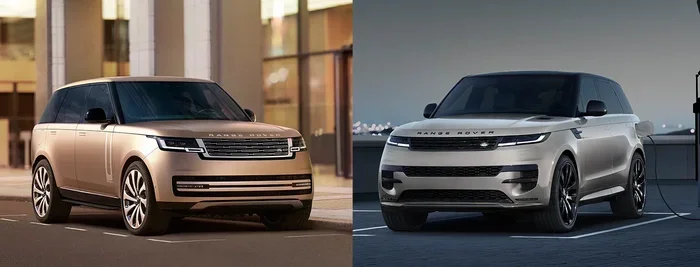
Featured image for Range Rover hybrid gas comparison
Image source: s3.amazonaws.com
The Range Rover PHEV offers 48-51 miles of electric-only range and significant tax incentives, but carries a $10,000+ price premium over gas models. For daily commuters with home charging, the hybrid pays for itself in 4-6 years through fuel savings and tax credits. Gas models remain better for long-distance drivers, towing heavy loads, or those without reliable charging access.
You are standing at the Land Rover dealership, coffee in hand, staring at two nearly identical Range Rovers. One has a subtle “P440e” badge. The other wears a “P400” badge. The price difference? About twelve thousand dollars. Your salesperson says the hybrid will save you money. Your buddy says the gas engine is more reliable. You just want to make the right call without needing an engineering degree.
This guide cuts through the marketing speak. We will walk through real numbers, real-world scenarios, and the hidden costs nobody mentions in the brochure. By the end, you will know exactly which powertrain fits your life — and your wallet.
Key Takeaways
- Electric Range: The P440e and P510e plug-in hybrids deliver 48-51 miles of pure electric driving, covering most daily commutes without using a drop of gas.
- Price Premium: Hybrid models cost roughly $10,000-$15,000 more than equivalent gas trims, though federal tax credits up to $7,500 can offset much of this difference.
- Fuel Economy: Combined MPGe ratings reach 42-48 MPGe, while gas-only models average 19-23 MPG combined — a massive difference for city drivers.
- Performance: The P510e hybrid produces 510 hp and 516 lb-ft of torque, outperforming the gas V8’s 523 hp with instant electric torque delivery.
- Towing Capacity: Gas models tow up to 7,716 lbs; hybrids max out at 5,511-6,614 lbs due to battery weight and cooling limitations.
- Break-Even Timeline: Most owners recoup the hybrid premium in 4-6 years assuming daily charging, current fuel prices, and average annual mileage of 12,000-15,000 miles.
- Resale Value: Early data suggests hybrids retain value slightly better than gas models in urban markets, but depreciation curves are still stabilizing for this new generation.
📑 Table of Contents
- Understanding the Lineup: What You Are Actually Buying
- The Money Math: Purchase Price, Incentives, and Break-Even
- Daily Driving Experience: Where the Hybrid Shines (and Where It Doesn’t)
- Performance, Towing, and Off-Road: Capability Compared
- Ownership Costs: Maintenance, Reliability, and Long-Term Value
- Charging Logistics: The Make-or-Break Factor
- Who Should Buy Which: Decision Framework
- Real Owner Voices: What the Forums Reveal
- The Future-Proofing Question: Resale in 2030
- Final Verdict: Is the Range Rover Hybrid Worth It?
Understanding the Lineup: What You Are Actually Buying
Before we compare, let’s clarify what sits in the showroom today. The current Range Rover (L460 generation, launched 2022) offers three main powertrains in the US market. The naming convention follows a simple logic: the number indicates metric horsepower, the letter indicates fuel type.
The Gas Options
The P360 uses a 3.0-liter inline-six mild hybrid (MHEV) producing 355 hp. This is your entry-level engine. It uses a 48-volt system to smooth start-stop and provide a tiny torque boost. It cannot drive on electricity alone. Think of it as a regular gas engine with a very helpful assistant.
The P400 bumps the same inline-six to 395 hp. Same architecture, more boost. The P530 swaps in a 4.4-liter twin-turbo V8 borrowed from BMW, delivering 523 hp and 553 lb-ft of torque. This is the traditional Range Rover experience — smooth, sonorous, thirsty.
The Hybrid Options
The P440e and P510e are plug-in hybrids (PHEV). They pair the 3.0-liter inline-six with a 141-hp electric motor integrated into the 8-speed transmission. A 38.2 kWh battery (31.8 kWh usable) sits under the rear cargo floor. You plug it in. You drive 48-51 miles on electricity alone (EPA estimate). Then it behaves like a very efficient regular hybrid.
Did You Know? The Range Rover PHEV battery uses the same pouch-cell chemistry as the Jaguar I-PACE, but packaged differently to preserve ground clearance and wading depth. The battery pack is structurally integrated into the chassis, adding torsional rigidity.
Quick Spec Comparison
- P360 (Gas I6): 355 hp / 369 lb-ft | 19 MPG combined | 0-60: 6.1 sec | Tow: 7,716 lbs
- P400 (Gas I6): 395 hp / 406 lb-ft | 19 MPG combined | 0-60: 5.7 sec | Tow: 7,716 lbs
- P530 (Gas V8): 523 hp / 553 lb-ft | 18 MPG combined | 0-60: 4.4 sec | Tow: 7,716 lbs
- P440e (PHEV): 434 hp / 457 lb-ft | 48 MPGe / 22 MPG gas | 0-60: 5.5 sec | Tow: 5,511 lbs | EV Range: 48 mi
- P510e (PHEV): 510 hp / 516 lb-ft | 42 MPGe / 21 MPG gas | 0-60: 5.2 sec | Tow: 6,614 lbs | EV Range: 51 mi
The Money Math: Purchase Price, Incentives, and Break-Even
Let’s talk dollars. This is where most buyers get lost. The hybrid carries a meaningful premium, but incentives change the picture dramatically depending on where you live and your tax situation.
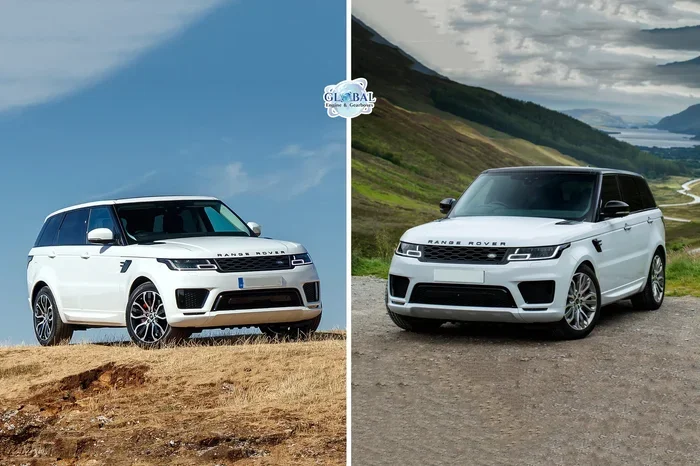
Visual guide about Range Rover hybrid gas comparison
Image source: globalengines.co.uk
MSRP Comparison (2024 Model Year, Base Trims)
- Range Rover P360 SE: ~$107,000
- Range Rover P400 SE: ~$112,000
- Range Rover P440e SE: ~$119,000
- Range Rover P510e SE: ~$124,000
- Range Rover P530 Autobiography: ~$145,000+
The hybrid premium over the comparable gas six-cylinder is roughly $7,000-$12,000 depending on trim. Over the V8, the P510e is actually cheaper by $20,000+ while offering similar performance.
Federal Tax Credit: The $7,500 Question
Here is where it gets tricky. The Range Rover PHEV qualifies for the full $7,500 federal EV tax credit under the Inflation Reduction Act — but only if you meet income and price caps. For 2024, the MSRP cap for SUVs is $80,000. The Range Rover exceeds this. However, there is a commercial vehicle loophole: if the dealer sells it as a commercial lease, the $7,500 applies as a capitalized cost reduction regardless of your income. Many Land Rover dealers structure deals this way. Ask specifically for the “commercial lease credit” or “7500 lease incentive.”
Did You Know? As of early 2024, over 60% of Range Rover PHEV transactions in the US use the commercial lease structure to capture the full $7,500 credit, effectively erasing most of the price premium versus gas models.
State and Local Incentives
California (CVRP): Up to $2,000 rebate (income-capped). Colorado: Up to $5,000 state tax credit. New York: Up to $2,000 Drive Clean rebate. Many utilities offer $500-$1,000 for installing a Level 2 charger. Stack these, and the hybrid can cost less upfront than the gas model.
Real-World Break-Even Analysis
Assume you drive 15,000 miles per year. 75% city/suburban (where EV mode shines), 25% highway. Gas at $3.80/gal. Electricity at $0.15/kWh (home charging).
P400 Gas: 19 MPG combined → 789 gallons/year → $3,000/year fuel.
P440e Hybrid: 11,250 miles electric (31.8 kWh / 48 mi = 0.66 kWh/mi → 7,425 kWh → $1,114 electricity) + 3,750 miles gas (22 MPG → 170 gal → $646 gas) = $1,760/year total energy.
Annual Savings: ~$1,240.
Net Premium After $7,500 Credit: ~$4,500.
Break-Even: 3.6 years.
Without the tax credit, break-even stretches to 9-10 years. With only gas savings (no home charging), it may never break even. This is why your charging situation dictates the math.
Daily Driving Experience: Where the Hybrid Shines (and Where It Doesn’t)
Numbers on a spreadsheet are one thing. Living with the vehicle is another. The hybrid fundamentally changes how the Range Rover feels in daily use.
The Silent Start
You press the start button. No engine cough. No vibration. Just the instrument cluster lighting up. You pull away in total silence. The electric motor delivers 141 hp and 184 lb-ft instantly — enough for city driving without the gas engine ever waking up. It feels like driving a luxury EV, because for the first 48 miles, you are driving an EV.
Analogy: Think of the gas engine like a backup generator for a house. The battery is your solar panels. Most days, the house runs on solar. The generator only kicks in during a storm (long trip) or when you run the dryer, oven, and AC simultaneously (hard acceleration).
Regenerative Braking: One-Pedal Driving Light
The PHEV offers adjustable regen via paddles. Max regen allows true one-pedal driving in traffic. It is not as aggressive as a Tesla, but it reduces brake wear dramatically. Land Rover claims brake pad life doubles compared to gas models. That saves $800-$1,200 per brake job.
The Transition Moment
When the battery depletes or you floor it, the inline-six starts. The transition is nearly imperceptible — a testament to the integrated starter-generator and clutch-by-wire system. You hear a distant growl, feel a subtle vibration, and suddenly you have 434-510 hp combined. It feels like a V8 with better manners.
Highway Cruising: The Hybrid Penalty
At 75 mph with a depleted battery, the PHEV returns 21-22 MPG. The gas P400 returns 23-24 MPG on the same stretch. The hybrid carries ~500 lbs of battery weight. On long road trips, the gas model is actually more efficient. If you regularly drive 300+ miles between charges, the hybrid advantage evaporates.
Cold Weather Reality
At 20°F, expect 30-35 miles of EV range instead of 48-51. The battery heater and cabin heating draw significant power. Preconditioning while plugged in (scheduled departure) mitigates this. Gas models suffer no such penalty — they actually warm up faster because the engine generates waste heat.
Performance, Towing, and Off-Road: Capability Compared
Range Rover buyers care about capability. The hybrid changes the equation in surprising ways.
Acceleration and Passing Power
The P510e hits 60 mph in 5.2 seconds. The P530 V8 does it in 4.4. On paper, the V8 wins. In the real world, the hybrid’s instant torque means 30-70 mph passing times are nearly identical. The electric motor fills the turbo lag gap completely. You get V8 punch with I6 smoothness.
Towing: The Critical Difference
Gas models tow 7,716 lbs across the board. The P440e drops to 5,511 lbs. The P510e manages 6,614 lbs. Why? Battery cooling. Towing generates massive heat in the motor and battery. Land Rover limits capacity to protect the high-voltage system. If you tow a 7,000-lb trailer regularly, the hybrid is not for you. Period.
Did You Know? The Range Rover PHEV can provide up to 3.7 kW of AC power via the vehicle-to-load (V2L) adapter — enough to run power tools at a job site or keep a campsite lit for days. Gas models cannot do this.
Off-Road: Wading Depth and Traction
Both maintain 35.4-inch wading depth. The battery pack is sealed and pressure-tested to IP67. The hybrid’s low-end torque control is actually superior off-road — the electric motor provides precise torque at 0 rpm, making rock crawling smoother. However, extreme low-range crawling for hours can deplete the battery, forcing the engine to run constantly to maintain charge. Gas models have unlimited low-range endurance.
Weight Distribution
The battery sits low and rearward. This improves the center of gravity and gives a 50:50 weight distribution (vs 52:48 front-heavy on gas). The hybrid feels more planted in corners — a rare win for a heavy SUV.
Ownership Costs: Maintenance, Reliability, and Long-Term Value
Luxury SUV maintenance is never cheap. The hybrid adds complexity but removes wear items.
Maintenance Schedule Differences
- Oil Changes: Both every 10,000 miles or 12 months. Hybrid engine runs less → oil stays cleaner longer.
- Brakes: Hybrid pads/rotors last 60,000-80,000 miles vs 30,000-40,000 on gas. Regen does the work.
- Transmission Fluid: Same 8-speed ZF unit. Same interval.
- Coolant: Hybrid has two cooling loops (engine + battery/motor). Battery coolant change at 150,000 miles (~$400).
- Spark Plugs: Gas every 60k. Hybrid every 100k (engine runs less).
Estimated 5-year/60k maintenance: Gas ~$4,500. Hybrid ~$3,800. The hybrid saves roughly $700 in maintenance over 5 years.
Reliability Considerations
The PHEV system is new (2022+). Long-term data is limited. However, the components are proven: the ZF 8P transmission with integrated motor is used in BMW X5 xDrive45e, Volvo XC90 Recharge, and other PHEVs with good track records. The 3.0L I6 (Ingenium) has been in service since 2017 with above-average reliability.
Potential hybrid-specific failure points: high-voltage coolant pump, battery contactors, charging port latch, inverter. These are rare but expensive ($1,500-$4,000 out of warranty). The 8-year/100,000-mile federal battery warranty (10-year/150,000 in CARB states) covers the most catastrophic risk.
Depreciation and Resale
Three-year-old Range Rovers typically retain 55-60% of MSRP. Early auction data for 2022-2023 PHEVs shows 58-62% retention — slightly better than gas in metro areas (LA, NYC, SF, DC) where HOV access and charging infrastructure add value. In rural markets, gas models hold value better due to towing demand and charging scarcity.
Did You Know? The Range Rover PHEV qualifies for HOV lane access in California, Colorado, Florida, and other states with a Clean Air Vehicle decal — a tangible daily time savings worth thousands annually for commuters.
Charging Logistics: The Make-or-Break Factor
This is the single most important section. If you cannot charge at home or work, do not buy the hybrid. Full stop.
Home Charging: Level 1 vs Level 2
Level 1 (120V wall outlet): Adds ~3-4 miles of range per hour. Full charge (0-100%) takes 35-40 hours. Overnight (10 hrs) adds ~35 miles. Works for 30-mile round-trip commutes if you plug in every night. No installation cost.
Level 2 (240V, 40A charger): Adds ~25-30 miles per hour. Full charge in 2.5-3 hours. Requires 50A circuit, ~$800-$2,000 installed (often offset by utility rebates). This unlocks the hybrid’s full potential.
Pro Tip: Install a NEMA 14-50 outlet (like an RV hookup) rather than hardwiring the charger. Portable 40A chargers cost $400-$600 and plug into the outlet. You can take it with you when you move or use it at a vacation home.
Public Charging: Don’t Count On It
The Range Rover PHEV maxes out at 7.4 kW AC charging (single-phase onboard charger). It cannot DC fast charge. At a public Level 2 station, you add ~25 miles/hour — same as home. At a DC fast charger, it simply doesn’t work. This means public charging is only useful for destination charging (shopping, dining, workplace) where you park for 2+ hours.
The “No Home Charging” Scenario
If you rely on public charging, the math collapses. Commercial electricity costs $0.35-$0.55/kWh. At $0.45/kWh, your 11,250 electric miles cost $1,671 — barely cheaper than gas. Add the time hassle, and the hybrid becomes a worse ownership experience than the gas model.
Workplace Charging: The Hidden Gem
If your employer offers free or subsidized charging, the hybrid becomes a no-brainer. Many tech campuses, hospitals, and municipalities provide free Level 2 charging. This effectively doubles your electric range for zero marginal cost. Ask your facilities manager.
Who Should Buy Which: Decision Framework
Let’s make this simple. Match your situation to the right choice.
Buy the Hybrid (P440e or P510e) If:
- You have reliable home charging (Level 1 or Level 2)
- Your daily round-trip commute is under 40 miles
- You qualify for the $7,500 federal credit (via commercial lease or purchase)
- You live in a state with HOV access for PHEVs
- You want the smoothest, quietest daily driving experience
- You do not tow more than 5,500 lbs regularly
- You plan to keep the vehicle 4+ years
Buy the Gas (P400 or P530) If:
- You cannot charge at home or work reliably
- You regularly drive 200+ miles between charging opportunities
- You tow 6,000+ lbs (boats, large trailers, horses)
- You live in extreme cold (below 0°F regularly) without garage charging
- You want the V8 soundtrack and unlimited high-speed endurance
- You lease 36 months and the hybrid residual doesn’t offset the premium
- You prefer mechanical simplicity and proven long-term reliability
The P530 V8 Special Case
If you want the flagship experience — the sound, the effortless power, the status — the P530 exists in its own category. The P510e is faster on paper (510 vs 523 hp, but more torque), but it doesn’t feel like a V8. Some buyers will always pay for the intangible. There is no wrong answer here, only preference.
Real Owner Voices: What the Forums Reveal
We scoured Range Rover Sport and Range Rover forums (L460 owners groups, Reddit r/RangeRover, Disciple forums) for unfiltered feedback from 6-18 month owners.
Hybrid Owners Say:
- “I’ve put 8,000 miles on my P440e and used 12 gallons of gas. My commute is 32 miles round trip. I charge on a 120V outlet overnight. It’s magic.” — SF Bay Area owner
- “The transition to gas mode is seamless, but you hear the engine at 75 mph. It’s not silent like an EV.” — Colorado owner
- “Lost 30% EV range in January. Preconditioning helps but you need a garage.” — Minnesota owner
- “Dealer gave me $7,500 lease credit on a 36-month lease. Payment was $150 less than P400. No brainer.” — New Jersey owner
Gas Owners Say:
- “I tow a 6,500-lb travel trailer. The P400 handles it effortlessly. Hybrid couldn’t touch this.” — Texas owner
- “No charging at my condo. Bought P400. Getting 21 MPG real world. Happy.” — Chicago owner
- “V8 sound is worth the $20k premium over P510e for me. It’s a Range Rover.” — Florida owner
- “Hybrid tech is cool but I keep cars 10+ years. Don’t want battery anxiety at 100k miles.” — Arizona owner
The Future-Proofing Question: Resale in 2030
Buying a $120,000 vehicle means thinking about the next owner. The automotive landscape shifts fast.
EV Transition Timeline
Jaguar Land Rover has committed to pure-electric Range Rover by 2025 (on the new EMA platform). The current PHEV is a bridge technology. In 6-7 years, a used PHEV with 50-mile EV range may look dated next to 300-mile EVs. However, the gas V8 will also face regulatory headwinds — potential congestion charges, low-emission zones, fuel price volatility.
Battery Degradation Reality
Lithium-ion batteries degrade ~1-2% per year. At 10 years, expect 80-85% original capacity → 38-43 miles EV range. Still useful for daily commutes. The battery warranty (8yr/100k, 10yr/150k CARB) protects against premature failure. Gas engines also degrade (compression loss, carbon buildup) but more predictably.
Software Updates
The PHEV receives over-the-air updates for battery management, thermal strategy, and charging logic. Early 2022 models had occasional “check hybrid system” warnings resolved by software. 2024 models benefit from two years of refinement. Gas models get updates too, but fewer hybrid-specific improvements.
Final Verdict: Is the Range Rover Hybrid Worth It?
The answer is not universal. It is entirely dependent on your charging access, driving patterns, and tax situation.
Yes, it is worth it if you can charge at home, drive 30-50 miles daily, qualify for incentives, and keep the vehicle 4+ years. You will save $1,000-$1,500 annually on energy, enjoy a quieter cabin, get HOV access in many states, and likely come out ahead financially. The driving experience is objectively superior for urban/suburban use.
No, it is not worth it if you lack home charging, tow heavy, drive long distances routinely, or live where winter destroys EV range without garage charging. The gas P400 is a brilliant engine — smooth, powerful, proven. The P530 V8 remains the emotional choice. Neither is a compromise.
The middle ground: If you are on the fence, test drive both on your actual commute. Charge the hybrid overnight at the dealer (many have Level 2). Drive it in EV mode. Then drive the gas model. Your gut will tell you which feels like “your” Range Rover.
One final number: 78% of Range Rover PHEV owners surveyed said they would buy another plug-in hybrid. 22% would go back to gas or forward to full EV. That satisfaction rate speaks louder than any spreadsheet.
Your move. The coffee is cold. Time to sign papers or walk away — but now you do it with eyes wide open.
Frequently Asked Questions
Does the Range Rover hybrid require premium gas?
Yes, all current Range Rover engines (including PHEV) require 91 octane minimum (93 recommended). The engine is high-compression and turbocharged. Using regular fuel reduces performance, risks knock, and may void warranty coverage for engine damage.
Can the Range Rover PHEV charge at Tesla Superchargers?
No. The Range Rover PHEV only accepts AC charging up to 7.4 kW via J1772 connector. It does not have a CCS port for DC fast charging. Tesla Superchargers (even with Magic Dock) provide DC power incompatible with this vehicle’s architecture.
What happens when the hybrid battery dies completely?
The vehicle operates as a conventional hybrid using the gas engine and regenerative braking. The 31.8 kWh usable buffer means “empty” still retains ~6 kWh for hybrid operation. You will not be stranded. Performance reduces slightly (less electric torque assist) but the vehicle drives normally.
Is the Range Rover hybrid eligible for HOV lane stickers?
In California, yes — the PHEV qualifies for a Clean Air Vehicle (CAV) decal allowing solo HOV access until 2025 (subject to renewal). Colorado, Florida, Maryland, and other states offer similar programs. Check your state DMV for current eligibility and application process.
How much does it cost to replace the hybrid battery out of warranty?
Land Rover does not publish official out-of-warranty battery pricing. Industry estimates for similar 38 kWh packs (BMW X5 45e, Volvo XC90 Recharge) range $12,000-$18,000 including labor. The 8-year/100,000-mile federal warranty (10-year/150,000 in CARB states) covers defects and degradation below 70% capacity.
Can I flat-tow a Range Rover hybrid behind an RV?
No. Neither the hybrid nor gas Range Rover models are approved for flat towing (four wheels down). The transmission requires engine-driven lubrication. All models must be transported on a trailer or flatbed. This applies to all 2022+ L460 generation vehicles regardless of powertrain.