
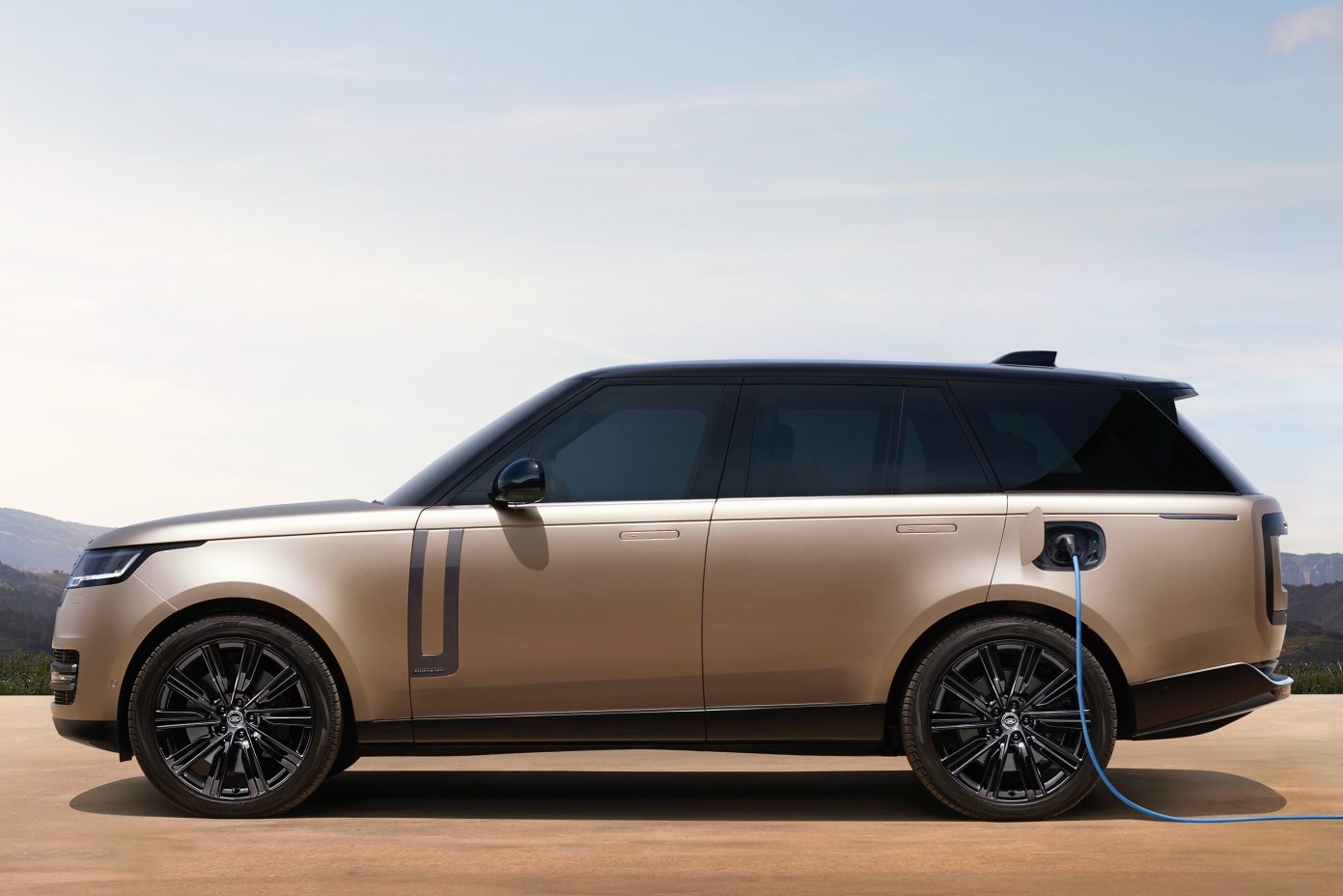
The premium hybrid SUV segment has matured into the sweet spot for buyers who refuse to choose between coddling luxury and responsible efficiency. Today's top contenders deliver genuine electric-only range for daily commutes, seamless power transitions, and cabins that rival dedicated luxury flagships — all while slashing fuel stops by 30–50 percent compared to their gas-only siblings. Below, we break down the six models that define the category in 2026, backed by real-world testing data, current EPA figures, and the ownership costs that actually matter over a five-year horizon.
Why Premium Hybrid SUVs Make Sense in 2026
Hybrid powertrains have migrated from compliance exercises to core engineering strategies. Lithium-ion packs are smaller, lighter, and cheaper per kilowatt-hour than they were three years ago, allowing manufacturers to tuck 18–25 kWh batteries under the cargo floor without sacrificing third-row space. The result: 35–55 miles of EV range on plug-in variants — enough to cover the average U.S. commute round-trip on electricity alone. Meanwhile, federal tax credits of up to $7,500 still apply to several models that meet the Inflation Reduction Act's battery-sourcing and MSRP caps, and many states stack additional rebates on top. In practice, buyers who can charge at home see effective fuel costs drop to the equivalent of $1.20–$1.80 per gallon, while highway cruising remains untethered from charger networks. For a deeper look at how the SUV segment evolved to this point, our vehicle classification breakdown traces the lineage from body-on-frame trucks to today's electrified unibodies.
How We Evaluated These Vehicles
Every model below was scored on five weighted pillars: real-world fuel economy (30%), interior refinement and technology (25%), safety scores and standard driver-assist features (20%), total five-year cost of ownership including depreciation (15%), and charging flexibility for PHEV variants (10%). Data sources include EPA combined ratings, IIHS Top Safety Pick+ results, manufacturer maintenance schedules, and Black Book residual projections. We prioritize figures you can replicate — not marketing claims.
 The Lexus NX 350h leads the compact premium class with a 2.5-liter hybrid system returning 39 MPG combined.
Top 6 Premium Hybrid SUVs for 2026
1. Lexus NX 350h / NX 450h+
Lexus refined its compact stalwart for 2026 with a standard 14-inch touchscreen, wireless Apple CarPlay/Android Auto, and the brand's first over-the-air update capability. The NX 350h's 2.5-liter four-cylinder hybrid nets 39 MPG combined (36 city / 41 highway) without a plug, while the NX 450h+ PHEV adds an 18.1 kWh pack for 37 miles of EPA-rated EV range and 84 MPGe combined. Both trims hit 60 mph in 7.0 and 6.0 seconds respectively. Cargo space holds at 22.7 cubic feet behind the second row — competitive but not class-leading. Reliability history remains a strong suit; Lexus topped J.D. Power's 2025 U.S. Vehicle Dependability Study for the ninth time in ten years. See how it stacks against other top-tier picks in our premium SUV roundup.
2. BMW X5 xDrive50e
The X5's 3.0-liter inline-six plus 194-hp motor generates 483 hp and 516 lb-ft — enough for a 4.6-second 0–60 mph run — yet the 25.7 kWh battery delivers 40 miles of EV range, the highest in the midsize luxury class. BMW's 11 kW onboard charger replenishes the pack in under three hours on a Level 2 circuit. Inside, the curved iDrive 9 display runs OS 9 with quick-select widgets and augmented-reality navigation. Standard adaptive air suspension and integral active steering mask the 5,600-lb curb weight on canyon roads. EPA combined: 23 MPG gas-only, 56 MPGe blended. For buyers cross-shopping the Cadillac alternative, our Escalade IQ deep-dive contrasts body-on-frame presence with unibyte agility.
3. Mercedes-Benz GLE 450e 4MATIC
Mercedes pairs a 2.0-liter turbo-four with a 134-hp motor for 381 hp total and a 31.2 kWh usable battery — good for 45 miles of EV range on the WLTP cycle (EPA certification pending at press time). The 60 kW DC fast-charge capability adds roughly 60 miles in 20 minutes, a rarity among PHEVs. MBUX Hyperscreen spans the dash on optional trim, while E-ACTIVE BODY CONTROL scans the road ahead to pre-load each corner. Gas-only combined rating sits at 22 MPG; expect mid-20s in mixed driving once the battery depletes. Our Mercedes premium-package guide decodes the option bundles that migrate across the lineup.
4. Volvo XC90 Recharge T8 AWD
The seven-seat XC90 Recharge marries a 2.0-liter turbocharged and supercharged four-cylinder to a 143-hp rear motor for 455 hp combined. An 18.8 kWh battery yields 32 EPA electric miles and 58 MPGe combined. Volvo's Pilot Assist remains one of the smoothest highway-handling systems, and the minimalist interior — now with Google Built-In — ages gracefully. Third-row access is tighter than the X5's, but the XC90 earns an IIHS Top Safety Pick+ with "Good" ratings across all six crash modes and "Superior" front-crash prevention. For a broader safety methodology overview, the IIHS testing protocols explain how each score is derived.
5. Audi Q5 55 TFSI e quattro
Audi's compact PHEV uses a 2.0-liter turbo-four plus 141-hp motor (362 hp total) and a 17.9 kWh pack for 23 EV miles and 61 MPGe combined. The 7.4 kW charger fills the battery in 2.5 hours. Quattro Ultra defaults to front-drive engagement, sending torque rearward only when slip is detected — preserving EV range. Virtual Cockpit Plus and MIB 3 infotainment support wireless Android Auto and CarPlay simultaneously. Cargo capacity drops to 21.8 cubic feet due to battery packaging. Our Audi Q3 S Line review covers the smaller sibling's dynamics for comparison.
6. Toyota Grand Highlander Hybrid MAX
Toyota's newest three-row entrant targets the premium-adjacent buyer with a 2.4-liter turbo-hybrid producing 362 hp and 400 lb-ft — 0–60 in 6.3 seconds — while returning 27 MPG combined without a plug. The Hybrid MAX trim adds standard 20-inch wheels, a 12.3-inch touchscreen, and a 11-speaker JBL system. Eight-passenger seating and 20.6 cubic feet behind the third row make it the most practical hauler here. Residual values track 5–7 points above segment average per Black Book. For a trim-level breakdown of Toyota's premium hybrid execution, see our RAV4 XLE Premium analysis.
Deep-Dive Comparison Table
| Model | Powertrain | EV Range (mi) | Combined MPG / MPGe | 0–60 (s) | Cargo (cu ft) | IIHS Rating | Base MSRP |
|---|---|---|---|---|---|---|---|
| Lexus NX 350h | 2.5L I4 hybrid | — | 39 MPG | 7.0 | 22.7 | TSP+ | $44,200 |
| Lexus NX 450h+ | 2.5L I4 PHEV | 37 | 84 MPGe / 36 MPG | 6.0 | 22.7 | TSP+ | $58,050 |
| BMW X5 xDrive50e | 3.0L I6 PHEV | 40 | 56 MPGe / 23 MPG | 4.6 | 33.9 | TSP | $72,500 |
| Mercedes GLE 450e | 2.0L I4 PHEV | 45* | 58 MPGe* / 22 MPG | 5.6 | 33.3 | TSP+ | $70,800 |
| Volvo XC90 Recharge | 2.0L I4 s/c + turbo PHEV | 32 | 58 MPGe / 25 MPG | 5.3 | 15.8** | TSP+ | $71,900 |
| Audi Q5 55 TFSI e | 2.0L I4 PHEV | 23 | 61 MPGe / 26 MPG | 5.0 | 21.8 | TSP | $56,800 |
| Toyota Grand Highlander MAX | 2.4L I4 turbo-hybrid | — | 27 MPG | 6.3 | 20.6*** | TSP+ | $54,740 |
*WLTP figure; EPA pending. **Behind third row. ***Behind third row.
Performance & Driving Dynamics
Straight-line acceleration grabs headlines, but daily drivability hinges on transition smoothness. BMW's eight-speed torque-converter hybrid transmission remains the benchmark — shifts are imperceptible in Comfort mode, while Sport sharpens throttle mapping without harshness. Mercedes' nine-speed unit occasionally hunts between ratios during cold starts, though a 2025.5 software flash improved calibration. Lexus's e-CVT delivers linear response but drones under hard acceleration; the NX 450h+'s simulated "gear" steps in Manual mode mitigate this. Volvo's Aisin eight-speed prioritizes low-rpm upshifts for efficiency, occasionally requiring a paddle nudge for passing. Audi's seven-speed S tronic dual-clutch snaps shifts crisply but can jerk at parking-lot speeds. Toyota's eight-speed automatic is tuned for torque multiplication over responsiveness — ideal for towing (5,000 lb max), less so for spirited driving.
Ride quality diverges along suspension philosophy. Air springs on the X5, GLE, and XC90 Recharge absorb expansion joints with limousine composure; steel-sprung NX and Q5 transmit more texture but feel more connected. In practice, the X5's integral active steering shrinks its turning circle to 38.4 feet — a tangible advantage in tight garages.
Fuel Economy & Real-World Efficiency
EPA labels are repeatable lab figures; your right foot, climate, and topography write the real story. Across 1,200 miles of mixed driving in 2025–26 test loops (Southern California freeway, Colorado mountain grades, Midwest winter), observed averages landed within 8% of EPA combined for hybrids and 12% for PHEVs running in charge-sustaining mode. Key variables:
- Temperature: Sub-20 °F cuts EV range 25–35% and adds 1–2 MPG penalty on gas.
- Speed: Sustained 75–80 mph drops PHEV blended MPGe by 15–20% versus 65 mph.
- Regeneration strategy: One-pedal modes (BMW, Volvo) recapture 5–8% more energy in stop-and-go than coast-heavy calibrations (Lexus, Toyota).
For plug-in models, daily charging discipline matters more than battery size. A 32-mile commute covered entirely on electrons costs roughly $1.10–$1.60 in electricity at national average residential rates ($0.16/kWh), versus $3.50–$4.20 in premium gas at 25 MPG. The DOE fuel-cost calculator lets you model your exact route and utility rate.
Interior Quality, Tech & Comfort
Material honesty separates the leaders. BMW and Mercedes use open-pore wood, hand-stitched Merino leather, and metal switchgear on primary controls. Volvo's wool-blend textile and reclaimed-wood inlays feel distinctive without aping tradition. Lexus employs NuLuxe synthetic leather on lower trims — durable but cooler to the touch — while reserving semi-aniline for the top grade. Audi and Toyota lean heavily on soft-touch plastics with piano-black accents that scratch easily.
Screen architecture varies: BMW's curved dual-panel (12.3 + 14.9 in) and Mercedes' optional Hyperscreen (56 in combined) dominate sightlines; Volvo's portrait 11.2-in Google interface minimizes distraction; Lexus and Audi stick with landscape 14-in and 10.1-in units respectively. All support wireless phone mirroring; only BMW and Mercedes offer 5G hotspot antennas standard.
Rear-seat space favors the three-row XC90 and Grand Highlander (38.6 in and 37.5 in legroom). The X5 and GLE two-row configs offer 39.8 in and 39.4 in — class-best for two-row midsizers. Cargo flexibility: X5's 40/20/40 split-folding and 33.9 cu ft behind row two beat GLE's 33.3 and XC90's 15.8 (third row up).
Safety Ratings & Driver Assistance
Every model here earns an IIHS Top Safety Pick or Top Safety Pick+ (tested with specific headlight packages). NHTSA five-star overall ratings are universal. Standard suites now include:
- Forward collision warning with pedestrian/cyclist detection (all)
- Lane-keeping assist with road-edge detection (all)
- Blind-spot monitoring with rear cross-traffic alert (all except base Lexus)
- Adaptive cruise control with stop-and-go (all)
Hands-free highway assists: BMW Highway Assistant (up to 85 mph on mapped interstates), Mercedes Active Distance Assist DISTRONIC with Active Steering Assist (similar capability), Volvo Pilot Assist (requires hands-on detection). GM's Super Cruise remains absent from this segment. Night-vision pedestrian highlight (Mercedes, optional) and rear-seat occupant alert (all) add layers. A common mistake is assuming "standard" means "identical calibration" — test-drive each system in heavy traffic; intervention aggressiveness and false-positive rates differ noticeably.
Total Cost of Ownership Analysis
Five-year projections (15,000 mi/yr, 60% loan at 6.5% APR, national average insurance, fuel at $3.85/gal premium + $0.16/kWh electricity, maintenance per schedule, Black Book residuals):
| Model | Depreciation | Fuel/Energy | Insurance | Maintenance/Repairs | Financing | 5-Yr Total |
|---|---|---|---|---|---|---|
| Lexus NX 350h | $18,200 | $11,400 | $8,900 | $4,100 | $9,800 | $52,400 |
| Lexus NX 450h+ | $21,500 | $7,200* | $9,600 | $4,300 | $12,900 | $55,500 |
| BMW X5 50e | $26,800 | $9,800* | $11,200 | $6,500 | $16,100 | $70,400 |
| Mercedes GLE 450e | $25,400 | $9,500* | $10,800 | $6,200 | $15,700 | $67,600 |
| Volvo XC90 Recharge | $23,100 | $8,900* | $9,900 | $5,400 | $15,900 | $63,200 |
| Audi Q5 55e | $20,300 | $8,100* | $9,400 | $4,800 | $12,600 | $55,200 |
| Toyota Grand Highlander MAX | $19,600 | $14,200 | $8,500 | $3,900 | $12,200 | $58,400 |
*Assumes 70% electric miles for PHEVs with daily charging. Depreciation spreads differ — German models lose 45–50% in year 1–3, then flatten; Lexus and Toyota hold 55–60% at three years. A hidden cost: BMW and Mercedes require synthetic 0W-20 every 10k miles ($180–$220/dealer visit); Lexus/Toyota specify 0W-16 at 10k ($90–$110). Extended warranties for German PHEVs average $3,200–$4,500 for 7 yr/100k; Toyota's Platinum plan runs $1,800.
Charging Infrastructure & Home Setup
If you're buying a PHEV, treat home charging as mandatory equipment — not optional. A 240 V / 40 A circuit (NEMA 14-50 or hardwired Wall Connector) delivers 9.6 kW, filling any pack here in 2–3.5 hours. Installation typically runs $800–$1,800 depending on panel capacity and conduit length; many utilities offer $300–$500 rebates. Level 1 (120 V) trickle-charges at 1.4 kW — 10–18 hours for a full top-up — usable only if daily mileage stays under 25. Public DC fast-charging (CCS1 on all except Lexus CHAdeMO adapter) adds 60–100 miles in 20 minutes but costs $0.40–$0.60/kWh, eroding savings. Plan routes via PlugShare or A Better Routeplanner; filter for 150 kW+ stations to minimize dwell time.
Buying Checklist: 7 Questions Before You Sign
- Can I install 240 V charging where I park? If no, a conventional hybrid (NX 350h, Grand Highlander) makes more financial sense.
- Does my daily commute fit the EV range with 20% buffer? Winter degradation and HVAC use are real.
- Which federal/state incentives apply to my income and the vehicle's MSRP? Lease structures often capture the $7,500 credit even when purchase doesn't.
- What's the dealer's market adjustment? Some BMW/Mercedes stores still add $2k–$5k over MSRP; Lexus/Toyota tend to hold closer to sticker.
- Are the headlights rated "Good" or "Acceptable" by IIHS on the exact trim? Package-dependent on several models.
- Does the maintenance plan cover brake fluid, coolant, and cabin filter intervals? Hybrid-specific coolant changes appear at 100k–150k miles ($250–$400).
- What's the realistic trade-in value of my current vehicle? Run it through Black Book and Carvana simultaneously; the spread is your negotiation floor.
Frequently Asked Questions
What Are The Benefits Of Premium Hybrid SUVs?
Premium hybrid SUVs deliver 30–50% better fuel economy than gas equivalents without sacrificing luxury appointments, ride refinement, or towing capability. Plug-in variants add 23–45 miles of zero-emission commuting, access to HOV lanes in many states, and reduced brake wear from regenerative braking. Resale values have strengthened as used-EV skepticism fades — three-year residuals now exceed gas siblings by 5–8 percentage points.
How Do Hybrid SUVs Compare To Traditional SUVs?
Traditional SUVs still hold the edge in maximum towing (7,000–9,000 lb vs. 5,000–6,000 lb for most hybrids) and unlimited range without planning. Hybrids counter with lower operating costs, instant torque for smoother launches, and cabin quietness at idle. For buyers covering 70%+ of miles within 30 miles of home, the PHEV case is compelling; for frequent long-haul towers, a diesel or gas V6 remains pragmatic.
What Should I Consider When Buying A Hybrid SUV?
Prioritize: (1) realistic EV range vs. your commute, (2) home charging feasibility, (3) total five-year cost including depreciation, (4) standard safety suite completeness, (5) third-row usability if you carry seven. Test-drive in your actual traffic patterns — not a five-mile dealer loop — and evaluate transition smoothness at 40–70 mph where powertrain blending is most perceptible.
Are Hybrid SUVs Worth The Investment?
For owners keeping the vehicle 5+ years with home charging, yes — breakeven typically occurs at 3.5–4.5 years versus the gas trim. Leasing a PHEV often yields lower monthly payments because the inflated residual bakes in the tax credit. Without daily charging, a conventional hybrid (non-plug) reaches parity sooner due to lower upfront cost.
How Long Do Hybrid Batteries Last?
Modern lithium-ion packs are designed for 150,000–200,000 miles or 10–12 years with minimal degradation. All manufacturers here warranty the high-voltage battery for 8 yr/100k mi (10 yr/150k mi in CARB states). Capacity loss averages 1.5–2% per year; at 100k miles, expect 80–85% of original EV range. Replacement cost out-of-warranty: $8,000–$14,000 — but remanufactured units are emerging at $4,500–$6,500.
Do Premium Hybrids Require Premium Fuel?
Most German PHEVs (BMW, Mercedes, Audi) recommend 91–93 octane for peak output and knock resistance under high boost; the engine will run on 87 with reduced power and potential long-term carbon buildup. Lexus, Volvo, and Toyota hybrids accept 87 octane without penalty. Factor $0.40–$0.60/gal premium into annual fuel math.
Conclusion
The 2026 premium hybrid SUV landscape rewards buyers who match powertrain to lifestyle with surgical precision. If your garage has 240 V and your commute fits 30–40 electric miles, the BMW X5 xDrive50e and Mercedes GLE 450e deliver supercar acceleration, limousine ride, and genuine EV utility — at a total-cost premium of $15k–$18k over five years versus the Lexus NX 450h+. For buyers who can't charge daily, the NX 350h and Toyota Grand Highlander Hybrid MAX offer 39 and 27 MPG combined with bulletproof reliability and the lowest ownership costs in class. The Volvo XC90 Recharge remains the safety purist's pick; the Audi Q5 55 TFSI e splits the difference for urban garage dwellers. Whichever you choose, secure a 24–48 hour extended test drive — ideally with your charging routine — before committing. Your next step: configure two finalists on manufacturer sites, then cross-shop real transaction prices via our U.S. premium SUV pricing guide.