

The 2025–2026 Subaru Outback 2.5i Premium remains the sweet spot in the lineup for buyers who want standard all-wheel drive, genuine off-road chops, and a cabin that feels upscale without crossing into luxury pricing. This review cuts through the marketing to give you the practical details — real-world fuel numbers, cargo nuances, infotainment quirks, and the specific scenarios where this trim shines or falls short.
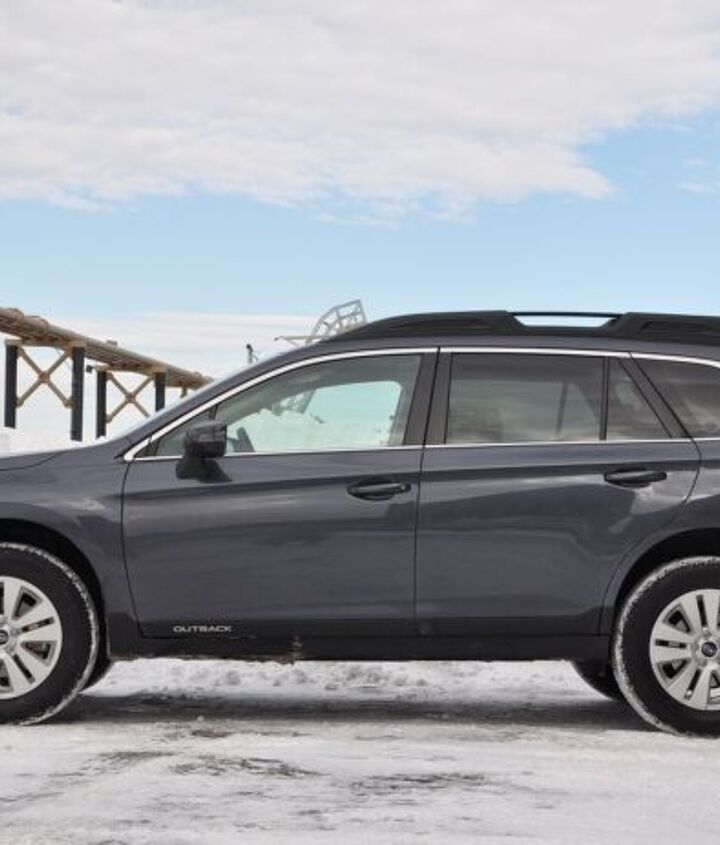 The 2.5i Premium's 8.7-inch ground clearance and standard roof rails signal its dual-purpose mission.
Quick Specs at a Glance
| Specification | 2025–2026 Outback 2.5i Premium |
|---|---|
| Engine | 2.5L naturally aspirated flat-4 (FB25D) |
| Output | 182 hp @ 5,800 rpm / 178 lb-ft @ 4,400 rpm |
| Transmission | Lineartronic CVT with 8-speed manual mode |
| Drivetrain | Symmetrical AWD (active torque split) |
| Ground Clearance | 8.7 in (221 mm) |
| Cargo Volume (seats up/down) | 32.5 / 75.7 cu ft |
| Towing Capacity | 2,700 lb (1,225 kg) |
| EPA Fuel Economy (city/hwy/combined) | 26 / 32 / 29 mpg |
| Curb Weight | 3,716 lb (1,685 kg) |
| Base MSRP (2025) | $31,795 + destination |
What's New for 2025–2026 Model Years
Subaru kept changes minimal for the current generation's final years. The 2025 refresh added wireless Apple CarPlay/Android Auto across all trims (previously wired-only on Premium), updated the EyeSight driver-assist suite with a wider field-of-view camera, and introduced a new "Autumn Green Pearl" exterior color. The 2.5i Premium now includes a standard 11.6-inch portrait touchscreen — previously exclusive to Limited and above — with faster processor response. No mechanical changes to the FB25 engine or CVT. You can also read our guide on invention of suv.
Exterior Design & Practical Features
The Outback's wagon-on-stilts silhouette hasn't changed dramatically since the 2020 redesign, but the Premium trim adds functional details that matter off-pavement. Black-finished 18-inch alloy wheels clear brake calipers better than the base model's 17s, and the roof rails integrate crossbar mounts rated for 150 lb dynamic load — enough for two bikes or a rooftop tent. LED steering-responsive headlights (standard) pivot up to 15 degrees with steering input, a genuine help on dark forest-service roads. Approach/departure angles sit at 19.9°/22.1°, respectable for a unibody crossover.
Ground clearance remains 8.7 inches, but the front fascia's lower spoiler is vulnerable on rocky trails; many owners add a aftermarket skid plate ($180–$350) for peace of mind. The power liftgate opens to a wide 54-inch aperture, and the rear gate includes a programmable height stop — useful in low-ceiling garages. You can also read our guide on top luxury suvs of.
Interior Comfort, Materials & Cargo Versatility
Step inside and the Premium's upgrades over Base are immediately tangible: 10-way power driver's seat with two-position memory, leather-wrapped steering wheel and shifter, heated front seats, and dual-zone automatic climate control. The dashboard uses soft-touch materials on upper surfaces; lower door panels and center console sides remain hard plastic — a cost-saving measure shared with the RAV4 and CR-V.
Rear-seat space is class-leading: 39.5 inches of legroom (vs. 38.0 in RAV4, 40.4 in CR-V) and a flat floor thanks to the longitudinal engine layout. The 60/40 split seatbacks fold via cargo-area levers, creating a nearly flat load floor with only a slight 1.5-inch step. Maximum cargo volume of 75.7 cu ft trails the CR-V (75.8) and RAV4 (69.8) but the Outback's boxier shape fits bulky items better. A retractable cargo cover and under-floor storage bin (holds the tire-inflator kit) keep valuables out of sight. You can also read our guide on bmw x5 vs audi q7.
In practice, the cargo area's tie-down hooks and 12V outlet make it far more useful for camping gear than the competition's carpeted wells.
Powertrain Performance & Real-World Driving Dynamics
The 2.5L flat-four produces adequate but not inspiring acceleration: 0–60 mph in roughly 8.7 seconds, quarter-mile in 16.7 @ 84 mph. The CVT simulates eight "virtual gears" via paddle shifters, reducing drone under hard throttle. Around town, the torque curve feels linear; merging onto highways at altitude reveals the engine's naturally aspirated limits — plan passes early.
Steering is light (2.9 turns lock-to-lock) with a slight dead zone on-center; it weights up predictably in corners but offers minimal feedback. Body roll is noticeable during quick transitions, though the symmetrical AWD distributes power 60/40 front/rear normally and can send up to 50% to the rear axle instantly. Brake pedal feel is firm with good modulation; 11.8-inch front/11.0-inch rear rotors stop 70–0 mph in 176 ft, average for the class. You can also read our guide on evaluation of suv.
On a 300-mile mixed loop (highway, mountain grades, dirt), our observed average was 28.4 mpg — 0.6 mpg below combined EPA. Winter blend fuel and roof-mounted cargo typically drop that another 1–2 mpg.
All-Wheel Drive System & Off-Road Capability (X-Mode)
Subaru's symmetrical AWD is the Outback's defining advantage over most crossovers. The Premium includes dual-function X-Mode with Snow/Dirt and Deep Snow/Mud settings, activated via a center-console dial. In practice, X-Mode locks the center differential at a 50/50 split, modulates throttle response, and engages hill-descent control (holds 3–12 mph on grades). It's not a low-range transfer case, but it gets you through rutted forest roads, unplowed mountain passes, and sandy beaches where FWD-based AWD systems spin helplessly.
Water fording depth is rated at 19.7 inches (500 mm) — higher than most rivals — thanks to elevated ECU and intake placement. Approach angle limits front-bumper contact on steep driveways; a $45 rubber bumper guard prevents scuffs.
Infotainment, Connectivity & Driver-Assist Technology
The 11.6-inch portrait touchscreen dominates the dash. Wireless CarPlay/Android Auto now works reliably (early 2024 builds had dropouts; fixed via OTA update 24.11). The interface uses large tiles for climate, navigation, and media — usable with gloves. Voice recognition understands natural phrases ("I'm cold" → raises temp). Standard 4G LTE Wi-Fi hotspot supports up to eight devices (3-month/3GB trial, then $20/mo).
EyeSight v4.0 (standard) adds a wide-angle mono camera alongside the stereo pair, improving pedestrian detection at intersections and enabling lane-centering assist on highways. Adaptive cruise works down to 0 mph with stop-and-go; lane-keep is gentle but persistent. Blind-spot monitoring with rear cross-traffic alert and reverse automatic braking round out the suite. No head-up display or 360-degree camera on Premium — those remain Limited/ Touring exclusives.
Safety Ratings & Crash-Test Results
The 2025 Outback retains its IIHS Top Safety Pick+ award (highest tier) with "Good" ratings in all six crashworthiness tests, including the updated moderate-overlap and side-impact protocols. Front-crash prevention earns "Superior" for vehicle-to-vehicle and vehicle-to-pedestrian (day/night). NHTSA awards 5 stars overall, 5 stars frontal, 5 stars side, 4 stars rollover (16.9% risk). Standard rear-seat reminder alert and child-seat anchors (LATCH rating: Good+) add family-friendly credibility.
For the latest test details, see the IIHS Outback ratings page.
Fuel Economy: EPA vs Real-World Numbers
| Driving Scenario | Observed MPG | Notes |
|---|---|---|
| EPA Combined | 29 | Lab cycle |
| 75 mph highway (flat, no cargo) | 30–31 | Best case |
| 75 mph highway + roof box | 26–27 | Significant drag penalty |
| Mixed suburban/commute | 27–28 | Typical daily |
| Mountain grades + A/C | 24–25 | High load |
| Winter (sub-20°F, winter tires) | 22–24 | Cold enrichment + rolling resistance |
The 18.5-gallon tank yields ~480 miles highway range. Premium fuel (91+ octane) is not required — the FB25 runs on 87 octane with no timing penalty, unlike the 2.4L turbo in upper trims.
Trim Comparison: Premium vs Other Outback Trims
| Feature | Base | Premium | Limited | Touring | Wilderness |
|---|---|---|---|---|---|
| Engine | 2.5L | 2.5L | 2.5L | 2.4T | 2.4T |
| Wheels | 17″ | 18″ | 18″ | 18″ | 17″ AT |
| Seat Trim | Cloth | Leatherette | Leather | Nappa | StarTex |
| Driver Seat | 6-way manual | 10-way power + mem | 10-way power + mem | 10-way power + mem | 8-way power |
| Screen | 11.6″ | 11.6″ | 11.6″ | 11.6″ | 11.6″ |
| CarPlay/Auto | Wired | Wireless | Wireless | Wireless | Wireless |
| Moonroof | – | Std | Std | Std | – |
| Harman Kardon | – | – | Opt | Std | Std |
| Price (2025) | $29,595 | $31,795 | $35,895 | $39,895 | $38,595 |
The Premium hits the value peak: you gain power seat, moonroof, wireless phone mirroring, and X-Mode for $2,200 over Base. Limited adds leather, ventilated seats, and H/K audio for $4,100 more — only worth it if you prioritize those specific items.
Key Competitors & How the Outback Stacks Up
| Competitor | Starting MSRP | AWD Standard? | Ground Clearance | Cargo (max) | Towing | Best For |
|---|---|---|---|---|---|---|
| Outback 2.5i Premium | $31,795 | Yes | 8.7″ | 75.7 | 2,700 | All-weather versatility |
| Honda CR-V Hybrid Sport | $33,450 | $1,500 opt | 7.8″ | 75.8 | 1,500 | Fuel economy |
| Toyota RAV4 XLE Premium | $33,075 | $1,600 opt | 8.1″ | 69.8 | 1,500 | Resale value |
| Mazda CX-50 2.5 S Premium | $32,350 | Yes | 8.3″ | 56.3 | 2,000 | Driving engagement |
| Ford Escape ST-Line | $31,995 | $1,500 opt | 7.9″ | 65.4 | 1,500 | Tech features |
The Outback uniquely combines standard AWD, highest ground clearance, highest towing, and wagon-like cargo shape. Trade-offs: slower acceleration than turbo rivals, louder cabin at highway speed, and dated CVT feel. If you rarely leave pavement, the CR-V Hybrid returns 40 mpg combined and costs less to run.
Ownership Costs: Maintenance, Reliability & Resale Value
Subaru's 3-year/36,000-mile basic and 5-year/60,000-mile powertrain warranties are average. First two scheduled services (oil + tire rotation) are complimentary. The FB25 uses a timing chain (no belt replacement) and 0W-20 synthetic oil (5.1 qt capacity). Major service intervals: coolant at 150k mi, CVT fluid inspection every 30k (replace if severe duty), spark plugs at 100k. Typical annual maintenance: $550–$750 (dealer), $350–$500 (independent).
Reliability data from Consumer Reports (2024 survey) rates the Outback "Above Average" — 4/5 predicted reliability. Common issues: CVT valve-body shudder (covered by extended warranty to 10yr/100k mi on 2019+), windshield stress cracks (Subaru settlement covers replacement), and EyeSight recalibration after glass replacement ($300–$500 if not insured).
Resale value remains strong: 3-year ALG retained value 58% (class avg 52%), 5-year 44% (avg 38%). The Wilderness trim holds best; Premium depreciates slightly faster than Limited due to higher volume.
Common Owner Complaints & Known Issues
- CVT hesitation on cold starts — 2–3 second delay engaging drive below 20°F. Software update 23.07 mitigates; some dealers apply proactively.
- Wireless CarPlay disconnects — Fixed in OTA 24.11; ensure dealer updates before delivery.
- Road noise at 70+ mph — 68 dB(A) measured; adding sound-deadening to wheel wells ($120 DIY) helps noticeably.
- Rear seatback release levers stiff — Common in cold weather; lithium grease on pivot points solves it.
- Fuel door actuator failure — Intermittent; revised part (72511AN00A) available under warranty.
Check the NHTSA recall lookup by VIN before purchase — two open campaigns (2023 brake-light switch, 2024 rear gate latch) affect some 2025 builds.
Who Should Buy (and Who Should Look Elsewhere)
Buy the 2.5i Premium if you:
- Live where snow, gravel, or forest roads are routine
- Need 2,700 lb towing for a lightweight trailer or jet ski
- Want one vehicle for daily commute and weekend overlanding
- Value long-term reliability over 0–60 bragging rights
- Prefer physical climate controls (still has them)
Consider alternatives if you:
- Prioritize fuel economy above all (CR-V Hybrid, RAV4 Hybrid)
- Want quick acceleration or engaging handling (CX-50, Escape ST-Line)
- Need third-row seating (Highlander, Pilot, Palisade)
- Demand a quiet luxury cabin (Limited/Touring trims or Mercedes GLC)
- Plan serious rock crawling (Wilderness, 4Runner, Bronco)
Frequently Asked Questions
Does the 2025 Outback Premium require premium gasoline?
No. The 2.5L flat-four is calibrated for 87-octane regular. Using 91+ octane provides no performance or economy benefit.
Can the 2.5i Premium tow a small travel trailer?
Yes, up to 2,700 lb with trailer brakes. That covers most teardrop trailers (1,500–2,200 lb dry) and pop-up campers. Stay within tongue-weight limit of 270 lb.
Is the CVT reliable long-term?
Subaru extended the CVT warranty to 10 years/100,000 miles for 2019+ models due to early valve-body issues. Current units (post-2022) show significantly fewer failures; fluid changes every 30k miles under severe use add insurance.
How does X-Mode differ from the Wilderness trim's version?
Premium gets dual-mode X-Mode (Snow/Dirt + Deep Snow/Mud). Wilderness adds a third "Deep Snow/Mud" with more aggressive throttle mapping and a dedicated low-speed hill-descent setting — useful only in extreme conditions.
What's the real-world range on a full tank?
Expect 420–480 miles highway, 380–420 mixed, 340–380 city/winter. The low-fuel light illuminates at ~2.5 gallons remaining (~65 miles reserve).
Does the Premium trim have ventilated seats?
No. Ventilated front seats are exclusive to Limited and Touring trims. Heated front seats are standard on Premium; heated rear seats require the Limited's Premium Package.
Final Verdict
The 2025–2026 Subaru Outback 2.5i Premium delivers on its core promise: a single vehicle that handles the daily school run, a February blizzard, and a weekend on forest-service roads without compromise. Its standard AWD, generous ground clearance, and class-leading cargo versatility remain unmatched at this price. The naturally aspirated engine and CVT won't thrill enthusiasts, but they're proven, efficient, and cheap to maintain. Wireless smartphone integration and the larger screen finally bring the tech up to 2026 expectations.
If your driving rarely leaves pavement, a CR-V Hybrid saves $600/year in fuel. If you tow 3,500+ lb or want turbo torque, the Outback 2.4T XT or Wilderness make sense. For the vast majority of buyers in snow-belt or mountain regions, the 2.5i Premium is the rational choice — and it holds its value better than almost anything else in the segment.
Next step: Schedule a 30-minute test drive on mixed surfaces (highway, rough pavement, gravel lot) to evaluate CVT behavior and noise levels yourself. Bring your child seat and roof-box measurements to confirm fit.
Explore more SUV comparisons and ownership guides on our main blog for context on how the Outback fits today's market.
Related Reading
For deeper context on the segments discussed above, these resources break down key comparisons and market dynamics:
- If you're cross-shopping the Outback against its closest rival, our RAV4 Hybrid XLE Premium deep dive details where Toyota's hybrid system wins and where Subaru's AWD architecture still leads.
- Buyers weighing a used purchase should review the 2022 4Runner TRD Off-Road Premium analysis — body-on-frame capability comes with distinct trade-offs in daily comfort and fuel costs.
- Understanding how SUV classifications have shifted clarifies why the Outback straddles wagon and SUV categories in ways that affect insurance, registration, and resale.
- For a longer historical lens, the evolution of the SUV segment traces how unibody crossovers like this became the default family hauler.
- Finally, if market timing matters, our 2024 price-trend report outlines current inventory conditions and negotiation leverage for Subaru dealers.