

The premium SUV segment remains the most profitable and fiercely contested corner of the American auto market. In 2025, these vehicles accounted for nearly 18% of all new light-vehicle registrations while commanding average transaction prices above $68,000. Buyers aren't just paying for badge prestige — they expect genuine advances in ride isolation, cabin materials, driver-assistance capability, and residual value. This guide breaks down the current sales leaders, explains which features actually matter at this price point, and gives you a practical framework for matching a model to your daily reality.
What Defines a Premium SUV in 2026
The line between "premium" and "mainstream" has blurred as brands like Mazda and Volkswagen push upscale, but three thresholds still separate the segment: base MSRP typically starts above $50,000; standard equipment includes genuine leather (or high-grade synthetic), multi-zone climate control, and a 12-inch-plus central display; and the dealer experience leans toward concierge-style service loops rather than volume throughput. Most contenders ride on longitudinal-engine platforms or dedicated EV architectures — not transverse compact-car underpinnings — which pays dividends in noise suppression and crash-structure engineering. You can also read our guide on what is an suv.
Current Market Leaders: 2025 Full-Year Sales Rankings
| Model | Est. 2025 US Sales | Segment Share | Starting MSRP | Key Powertrains |
|---|---|---|---|---|
| Lexus RX / RXh | 112,000 | 14.2% | $50,150 | 2.4T, 2.5L Hybrid, 2.4T PHEV |
| BMW X5 | 86,500 | 11.0% | $65,200 | 3.0T I6, 3.0T MHEV, 3.0T PHEV, 4.4T V8 |
| Mercedes-Benz GLE | 78,300 | 9.9% | $61,800 | 2.0T MHEV, 3.0T I6 MHEV, 2.0T PHEV |
| Audi Q7 | 54,200 | 6.9% | $60,900 | 2.0T, 3.0T V6 MHEV |
| Cadillac Escalade / ESV | 48,700 | 6.2% | $84,595 | 6.2L V8, 3.0L Duramax I6 |
| Genesis GV80 | 32,100 | 4.1% | $56,800 | 2.5T, 3.5T V6 |
| Volvo XC90 | 29,800 | 3.8% | $56,000 | 2.0T MHEV, 2.0T PHEV |
Figures rounded from OEM press releases and Automotive News Data Center estimates; 2026 MY deliveries began late summer 2025.
 Historical perspective: the 2016 competitive set looked very different — note the absence of Genesis and any electrified variants.
Deep Dives: Top 5 Best-Selling Premium SUVs
1. Lexus RX / RXh — The Volume Leader
Lexus moved roughly 112,000 units in 2025 by mastering the "premium Toyota" formula: bulletproof reliability data, a dealer network that consistently tops J.D. Power CSI rankings, and a hybrid system that delivers 36 mpg combined without plug-in hassle. The 2026 refresh adds a standard 14-inch touchscreen with wireless Apple CarPlay/Android Auto, but the infotainment learning curve remains steeper than German rivals. In practice, the RX 350h is the sweet spot for suburban families — quiet, efficient, and unlikely to surprise you with a four-figure repair bill at 80,000 miles.
2. BMW X5 — The Driver's Default
The X5 outsells the 5 Series sedan because it delivers 90% of the dynamics with 150% of the utility. The 48-volt mild-hybrid inline-six (xDrive40i) produces 375 hp and 398 lb-ft while returning 23 mpg combined — numbers a V8 needed a decade ago. Optional Integral Active Steering shrinks the turning circle to 37.4 feet, a genuine advantage in tight parking structures. A common mistake is skipping the Executive Package; the four-zone climate, gesture control, and heated/ventilated massaging seats transform the second row from "tolerable" to "first-class." You can also read our guide on luxury suv comparisons.
3. Mercedes-Benz GLE — Tech Showcase
Mercedes positions the GLE as an S-Class on stilts. The MBUX Hyperscreen (standard on 450e PHEV, optional elsewhere) spans 56 inches across the dash, and the augmented-reality navigation overlays turn arrows onto a live camera feed — genuinely useful at complex interchanges. The air suspension with E-ACTIVE BODY CONTROL can lean into curves or raise individual wheels for off-road extraction. Be aware: the 2.0T base engine feels taxed with seven occupants; the 3.0L inline-six in the GLE 450 4MATIC is worth the $6,300 premium. For fuel requirements across the lineup, see our breakdown of which Mercedes models mandate premium fuel.
4. Audi Q7 — The Understated All-Rounder
Audi's flagship SUV flies under the radar despite a 0-60 mph time of 5.7 seconds (55 TFSI e PHEV) and a third row that actually fits adults up to 5'10". The virtual cockpit plus dual touchscreens reduce physical buttons to near-zero, which looks clean but forces menu-diving for climate tweats. Quattro Ultra defaults to front-drive until slip is detected, boosting EPA highway rating to 25 mpg — a rare win for physics. Residual values trail BMW by 3-4 percentage points at 36 months, making certified pre-owned examples a sharp value. You can also read our guide on history of suv.
5. Cadillac Escalade / ESV — Presence Over Efficiency
The Escalade remains the cultural icon of American excess, now offered with a 3.0L Duramax turbodiesel that delivers 27 mpg highway and 460 lb-ft of torque. Super Cruise hands-free driving works on 400,000+ mapped highway miles — the most comprehensive system in the segment. Third-row legroom (34.9″) and cargo behind it (25.5 cu ft) are class-best. The trade-off: a body-on-frame ride that transmits sharp impacts, and a $1,200 annual fuel penalty versus the diesel X5 at 15,000 miles.
Powertrain Trends: Gas, Hybrid, and Electric Converge
Plug-in hybrid share jumped from 4% to 11% of premium SUV sales in 2025 as 30-40 mile EV ranges finally cover the average U.S. commute. BMW's xDrive50e, Mercedes' GLE 450e, and Volvo's XC90 Recharge all qualify for the $7,500 federal credit under the revised MSRP caps. Full EVs — Cadillac Lyriq, BMW iX, Mercedes EQS SUV — collectively captured 9% of segment volume but face steep depreciation (38% at 36 months vs. 28% for PHEVs). If you lack home charging, a mild-hybrid or conventional hybrid remains the lowest-friction choice; the Lexus RX 350h and Toyota's premium hybrid lineup demonstrate how seamless the transition can be. For a closer look at Toyota's approach, review our RAV4 Hybrid XLE Premium deep dive. You can also read our guide on top luxury suvs of.
 Mainstream models like the Rogue Platinum now encroach on entry-premium pricing, forcing established brands to sharpen standard equipment.
Safety Technology That Drives Purchase Decisions
NHTSA 5-star overall ratings are table stakes; the differentiator is IIHS TOP SAFETY PICK+ status, which requires "Good" ratings in the updated moderate-overlap, side-impact, and pedestrian-front-crash tests plus "Acceptable" or better headlights. As of 2026, only the Genesis GV80, BMW X5, Mercedes GLE, and Volvo XC90 sweep every category standard. Key systems buyers should verify are standard (not packaged):
- Automatic emergency braking with pedestrian/cyclist detection at speeds up to 50 mph
- Active lane-keeping with road-edge detection
- Blind-spot monitoring with rear cross-traffic alert
- Driver-attention monitoring (camera-based preferred over steering-torque inference)
The NHTSA 5-Star Safety Ratings portal lets you compare specific trim configurations before visiting a dealer.
Ownership Costs Beyond the Sticker Price
| Cost Factor | 5-Year Estimate (Avg.) | Notes |
|---|---|---|
| Depreciation | $32,000–$48,000 | EVs steepest; Lexus RX, GLE mild-hybrid shallowest |
| Fuel (15k mi/yr) | $14,500–$22,000 | Premium fuel required on most German models; diesel narrows gap |
| Maintenance & Repair | $6,800–$11,200 | Includes brake fluid, coolant, transfer-case service; extended warranty common |
| Insurance | $9,500–$14,500 | Varies wildly by zip; Escalade and X5 M60i top the list |
| Total 5-Yr Cost | $62,800–$95,700 | Excludes financing, taxes, fees |
A frequent oversight: assuming all Mercedes models demand 91-octane. The 2.0T in the GLE 350 and GLB 250 is calibrated for regular (87 AKI) with minimal output loss — see our analysis of Mercedes fuel requirements by model for the full matrix. You can also read our guide on evaluation of suv.
How to Choose the Right Premium SUV for Your Needs
- Define the non-negotiables — third-row usability, tow rating, EV range, garage fit.
- Set a total-cost ceiling — include likely dealer markups (still 3-7% on GV80, Escalade, X5 M60i).
- Test-drive a loaded and a base trim back-to-back — the suspension tuning and seat spec differences are often larger than the powertrain delta.
- Check certified pre-owned inventory — 2023-2024 off-lease units with 20k-30k miles frequently undercut new by $12k-$18k with balance of factory warranty.
- Negotiate the out-the-door price, not the payment — dealers bundle accessories (wheel locks, etch, nitrogen) that inflate monthly cost invisibly.
For buyers weighing Toyota's premium hierarchy against German rivals, our piece on what Toyota's premium positioning means for shoppers clarifies the value proposition.
2026-2027 Future Outlook
Three forces will reshape the segment through 2027: NHTSA's proposed mandatory AEB-with-pedestrian-standard (effective 2029, but OEMs are front-loading), the IRA tax-credit lease loophole that makes EVs artificially cheap on 36-month contracts, and the UAW contract's wage escalators pushing domestic MSRPs up 3-4% annually. Expect:
- BMW X5 "Neue Klasse" EV (2027 MY) on a dedicated platform with 800V architecture
- Mercedes GLE facelift adding L3 Drive Pilot on approved highways
- Lexus TX three-row expanding the TX platform below the LX
- Cadillac Escalade IQ (electric) launching late 2025 at ~$130k, sharing Ultium with Lyriq
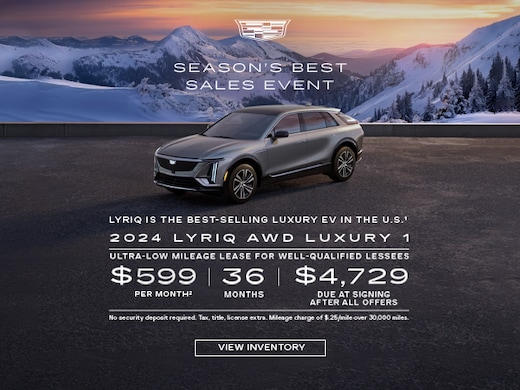 GM's Ultium platform underpins the Lyriq — a preview of the electric Escalade IQ's architecture.
Frequently Asked Questions
Which premium SUV holds resale value best?
Lexus RX hybrid and BMW X5 xDrive40i consistently retain 58-62% of MSRP at 36 months per ALG/Black Book data. Full EVs trail at 45-50% due to incentive volatility. You can also read our guide on tesla model x review innovation meets luxury.
Is a plug-in hybrid worth the $6,000-$9,000 premium?
If you can charge nightly and cover 80% of daily miles on electricity, the payback is 3-4 years at current electricity vs. premium fuel spreads. The federal tax credit (via lease) collapses the upfront gap immediately.
Do I really need air suspension?
For buyers in pothole-heavy metros or who tow near the 7,000-lb limit, yes — it preserves alignment and levels the trailer. For pure suburban commuting, adaptive dampers on steel springs (standard on X5, GLE, GV80) deliver 90% of the benefit at lower repair risk. You can also read our guide on toyota highlander hybrid suv.
What's the realistic third-row legroom cutoff for adults?
32 inches of legroom (SAE J1100) is the practical minimum for a 5'10" adult on a 30-minute trip. Only Escalade/ESV, Navigator, X7, and GV80 LWB clear this; Q7, XC90, GLE, and RX are "emergency use only."
How do dealer markups affect the "best-selling" rankings?
High-volume models (RX, X5, GLE) typically sell at or near MSRP; lower-volume flagships (Escalade, GV80, XC90) still carry $3k-$8k market adjustments in coastal metros. Always cross-shop three dealers within 100 miles.
Conclusion
The 2026 premium SUV landscape rewards buyers who match powertrain to lifestyle rather than chasing badge cachet. A Lexus RX 350h delivers 36 mpg and near-zero downtime; a BMW X5 xDrive40i serves up 375 hp with a 37-foot turning circle; a Mercedes GLE 450e covers 40 electric miles before the inline-six wakes up. Define your non-negotiables, stress-test the total five-year cost, and drive the top two contenders on the same day — preferably on roads you actually use. The perfect premium SUV isn't the one with the most press awards; it's the one that still feels right at 70,000 miles.
Ready to compare live pricing in your zip code? Start with our current market analysis on whether car prices are trending down to time your purchase.