
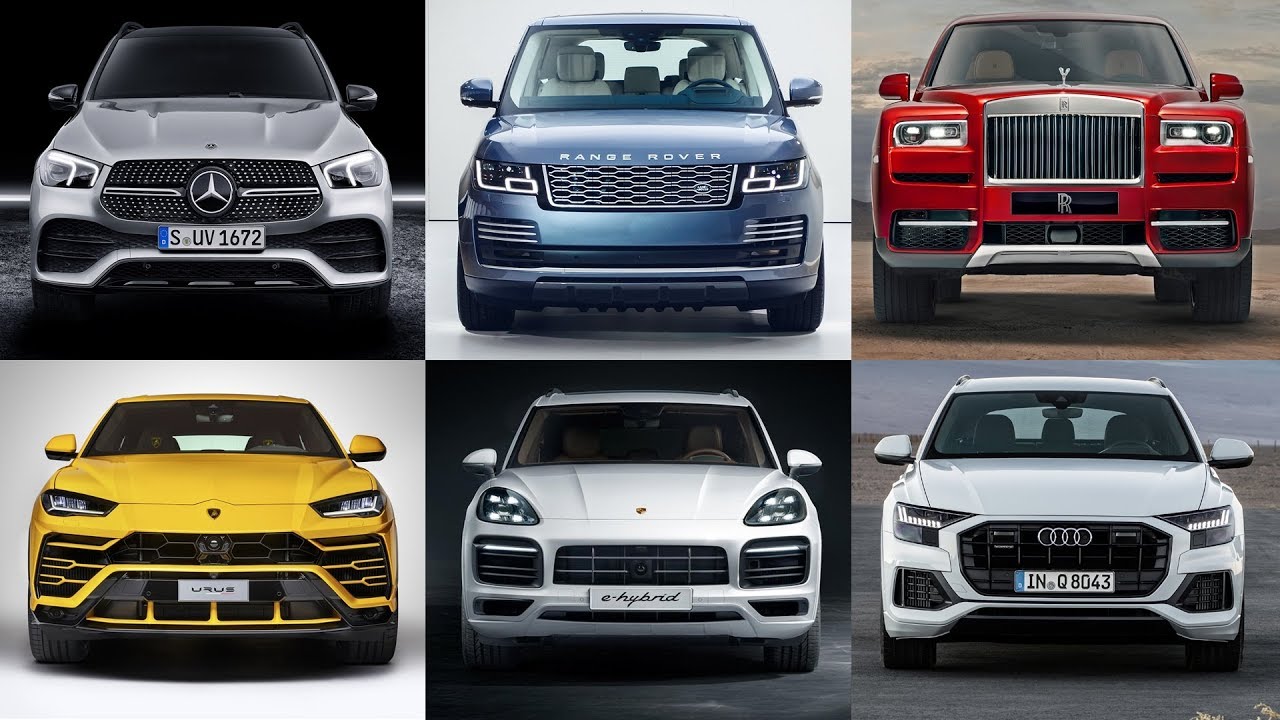
The premium SUV segment has never been more competitive — or more confusing. In 2026, buyers face a landscape where traditional V8 flagships share showroom space with 600-hp electric rockets, plug-in hybrids promising 40-mile EV ranges, and "near-luxury" models delivering 90% of the experience for 60% of the price. What separates a truly premium SUV from a well-equipped mainstream one isn't badge alone. It's the cohesion of materials, the sophistication of chassis tuning, the depth of NVH suppression, and the seamlessness of software integration. This guide cuts through marketing fluff to identify which 2026 models deliver genuine luxury-meets-performance credentials — and which compromises you'll actually feel behind the wheel.
 The Grand Wagoneer represents American ultra-luxury with its imposing grille and three-row cabin.
What Defines a Premium SUV in 2026
Price thresholds have shifted. The entry point for genuine premium credentials now sits around $55,000–$60,000 for two-row models and $65,000–$70,000 for three-rowers — anything below typically forces meaningful compromises in sound deadening, suspension complexity, or interior material authenticity. True premium vehicles share five non-negotiables:
- Multi-link rear suspension (or air springs with adaptive damping) for ride/handling separation
- Genuine leather, open-pore wood, and metal touchpoints across all primary surfaces — no "leatherette" on seat bolsters or door uppers
- Dual-screen or pillar-to-pillar display architecture with OEM-developed software, not reskinned Android Automotive
- Active noise cancellation plus acoustic glass on all four side windows
- Powertrain options exceeding 350 hp with sub-6-second 0–60 mph times
The segment splits into three tiers: near-luxury (Genesis GV70, Volvo XC60, Cadillac XT5), core premium (BMW X5, Mercedes GLE, Audi Q7, Lexus RX), and ultra-luxury (Range Rover, BMW X7, Mercedes GLS, Cadillac Escalade). Cross-shopping across tiers is common — a loaded GV80 3.5T Sport Prestige overlaps a base X5 xDrive40i on price but diverges sharply on dealer experience and residual values. You can also read our guide on history of suv.
Understanding segment fundamentals helps clarify where each model sits on the capability-comfort spectrum.
Top Contenders by Category (206 Model Year)
Best Overall: Range Rover (P440e / P530)
The benchmark remains the Range Rover. Its air-spring/chassis architecture delivers a magic-carpet ride that somehow sharpens when pushed — a feat rivals still chase. The P440e plug-in hybrid offers 51 miles of EPA EV range (real-world 38–42), while the 4.4L BMW-sourced V8 in the P530 delivers 523 hp with surprising civility. Interior quietness at 80 mph measures 58 dB — quieter than a Bentley Bentayga. Trade-off: third-row space is tight for adults, and the infotainment learning curve is steep. Pricing: $115,000–$160,000. You can also read our guide on top luxury suvs of.
Best Performance: Porsche Cayenne Turbo GT / BMW X5 M Competition
Different flavors of super-SUV. The Cayenne Turbo GT (631 hp, 4.0L twin-turbo V8) holds the Nürburgring SUV record (7:38.9) and feels like a lowered 911 on stilts — rear-axle steering, carbon-ceramics standard, 3,200-lb towing. The X5 M Competition (617 hp, 4.4L V8) retains three-row practicality and a more usable daily ride. Porsche wins track days; BMW wins road trips. Both exceed $130,000.
Best Electric: BMW iX M70 / Mercedes EQS 580 SUV / Cadillac Escalade IQ
The iX M70 (610 hp, 0–60 in 3.6s) combines carbon-cage rigidity with air suspension that masks its 5,700-lb mass. Real-world range: 265–285 miles. The EQS 580 SUV prioritizes serenity — 649 hp, 300-mile range, rear-axle steering standard, but softer dynamics. The Escalade IQ (750 hp, 24-module Ultium pack) targets 450+ miles and 10–80% DC fast charging in 25 minutes — if the charging network cooperates. All three qualify for the $7,500 federal credit under 2026 IRS guidance. You can also read our guide on tesla model x review innovation meets luxury.
Best Value: Genesis GV80 3.5T Sport Prestige / Lincoln Navigator Reserve
The GV80 3.5T (375 hp, 391 lb-ft) undercuts German rivals by $15,000–$20,000 while matching material quality and exceeding them on standard equipment (massage seats, 21″ wheels, Bang & Olufsen 3D audio, highway driving assist II). The Navigator Reserve delivers true three-row adult space, 440-hp twin-turbo V6, and available 28-speaker Revel Ultima 3D — all for $10,000 less than an Escalade. Resale lags Germans by 8–12% at 36 months.
Best Off-Road: Land Rover Defender 110 P400 / Lexus LX 600 / Toyota Land Cruiser (2024+)
The Defender 110 P400 (3.0L I6 mild-hybrid, 395 hp) combines Terrain Response 2 with 11.5″ ground clearance and optional 35″ tires — genuine expedition capability with Range Rover adjacent luxury. The LX 600 (3.5L twin-turbo V6, 409 hp) uses a Torsen center diff and Multi-Terrain Select that works seamlessly; its body-on-frame platform absorbs impacts the Defender transmits. The new Land Cruiser (i-FORCE MAX hybrid, 326 hp) prioritizes durability over plushness — cloth seats standard, minimal screens, 6,000-lb towing. Each demands a different compromise: Defender's ride stiffness, Lexus's third-row access, Toyota's interior austerity. You can also read our guide on luxury suv comparisons.
Deep Dive: Five Standout Models for 2026
| Model | Powertrain | 0–60 mph | EPA Range / MPG | Base MSRP | Key Strength |
|---|---|---|---|---|---|
| Range Rover P440e | 3.0L I6 PHEV (434 hp) | 5.5 s | 51 mi EV / 22 MPG hybrid | $115,300 | Ride quality, EV range, presence |
| BMW X5 xDrive50e | 3.0L I6 PHEV (483 hp) | 4.6 s | 40 mi EV / 23 MPG hybrid | $72,500 | Dynamics, tech integration, value |
| Mercedes GLE 450e 4MATIC | 2.0L I4 PHEV (381 hp) | 5.6 s | 54 mi EV / 21 MPG hybrid | $78,900 | EV range, interior refinement, safety |
| Genesis GV80 3.5T Sport | 3.5L V6 TT (375 hp) | 5.3 s | 18/23 MPG | $76,800 | Standard equipment, warranty, design |
| Cadillac Escalade IQ | Dual-motor AWD (750 hp) | <5.0 s | ~450 mi (est.) | ~$130,000 | Space, tech showcase, towing (8,000 lb) |
BMW X5 xDrive50e — The sweet spot for most buyers. Its 25.7 kWh usable battery delivers 40 real EV miles — enough for daily commutes — while the 3.0L I6 remains smooth when the engine fires. xDrive torque split (40:60 rear-biased) and available Integral Active Steering shrink the X5's footprint in parking lots. iDrive 9 with QuickSelect eliminates menu diving. Weakness: third row remains occasional-use only, and option boxes inflate price rapidly.
Mercedes GLE 450e — The 31.2 kWh battery (28 usable) yields class-leading 54-mile EV range, but the 2.0L four-cylinder sounds strained under hard acceleration. Rear air suspension standard; E-ACTIVE BODY CONTROL (48V active anti-roll) optional but transformative. MBUX Hyperscreen optional — impressive but glare-prone. Best for suburban drivers who prioritize silent commutes over canyon carving. You can also read our guide on evaluation of suv.
Genesis GV80 3.5T Sport Prestige — No PHEV yet, but the 3.5L twin-turbo V6 delivers effortless mid-range torque (391 lb-ft from 1,300 rpm). Eight-speed DCT shifts imperceptibly. Standard kit includes 21″ wheels, Nappa leather, 21-speaker Bang & Olufsen, Highway Driving Assist II (hands-on L2), and 5-year/60k-mile complimentary maintenance. The 14.5″ curved OLED is driver-focused, not passenger theater. Resale value improving but still trails Germans.
Cadillac Escalade IQ — GM's flagship EV SUV arrives late 2025 as a 2026 model. 200+ kWh pack (usable ~185), 800V architecture, 350 kW peak charging. 55″ pillar-to-pillar display, Super Cruise 2.0 (hands-free trailering), 24″ wheels standard. Towing 8,000 lb — class best for EVs. Weight exceeds 9,000 lb; efficiency ~2.1 mi/kWh. Early adopters should verify dealer EV readiness. You can also read our guide on bmw x5 vs audi q7.
Range Rover P440e — The 38.2 kWh battery (31.8 usable) delivers honest 38–42 mile EV range. 3.0L I6 mild-hybrid stays invisible in hybrid mode. Four-corner air suspension with adaptive dynamics reads road 500 times/second. SV Bespoke palette offers 230 exterior colors. Reliability history improved but still below Lexus/Genesis; budget for extended warranty.
Powertrain Landscape: Gas, Hybrid, PHEV, EV
Pure gas (V6/V8) — Simplicity, unlimited range, familiar maintenance. Best for towing >7,000 lb regularly or regions with sparse charging. V8s (Escalade, Navigator, GLS 580, X7 M60i) face gas-guzzler taxes and 14–16 MPG combined. Six-cylinders (RX 350, Q7 45, GLE 350) hit 20–23 MPG combined. You can also read our guide on toyota highlander hybrid suv.
Mild-hybrid (48V) — Standard on most 2026 premium six- and eight-cylinders. Recovers braking energy, smooths start-stop, adds 20–40 hp boost. Invisible to driver. No plug, no EV range. Practical take: don't pay extra for this — it's baked in.
PHEV (20–55 mi EV range) — The sweet spot for 2026. Covers average 37-mile daily commute on electricity; gas engine for trips. Requires nightly Level 2 charging (240V/40A) to maximize value. Federal credit eligibility depends on battery sourcing — BMW, Mercedes, Range Rover qualify; Volvo, Lincoln may not. Common mistake: buying a PHEV without home charging — you'll average 22 MPG and resent the weight.
Battery EV — Zero tailpipe, instant torque, lowest operating cost. Charging infrastructure remains the filter: if you can't charge at home or work reliably, skip. DC fast charging adds 150–200 miles in 20–30 minutes on 350 kW chargers — but non-Tesla networks still suffer 15–20% uptime issues. Cold weather cuts 25–35% range. In practice: EVs excel as second vehicles in two-car households with home charging.
Current market pricing trends show PHEV and EV premiums compressing — lease deals on iX, EQS SUV, and GV80 EV (coming 2026) often undercut gas equivalents after incentives.
Interior Quality & Technology Benchmarks
Materials honesty separates tiers. Core premium uses corrected-grain leather on seating surfaces, genuine wood veneers (0.6 mm), and aluminum/magnesium switchgear. Ultra-luxury upgrades to semi-aniline hides (full grain, minimal correction), open-pore woods (1.2 mm, no lacquer), and machined billet controls. Near-luxury mixes leatherette on bolsters/rears, laminate wood, and chromed plastic.
Display architecture has standardized: BMW (12.3″ + 14.9″ curved), Mercedes (12.3″ + 12.3″ or 56″ Hyperscreen), Audi (10.1″ + 8.6″ + 12.3″ virtual cockpit), Genesis (14.5″ curved OLED), Range Rover (13.1″ floating Pivi Pro). All support wireless CarPlay/Android Auto. Native voice assistants now handle multi-domain commands ("navigate to nearest charger with 350 kW, play jazz, set temp 71").
Audio systems are spec-sheet battles: Burmester 4D (Mercedes, 31 speakers), Bowers & Wilkins 4D (BMW/Range Rover, 28 speakers), Revel Ultima 3D (Lincoln, 28 speakers), Bang & Olufsen 3D (Genesis, 21 speakers), AKG Studio Reference (Cadillac, 36 speakers). Diminishing returns above 20 speakers — room acoustics matter more. Expert tip: audition with your own playlist; dealer demo tracks are mastered to flatter.
Rear-seat experience differentiates three-row buyers. Captain's chairs (standard on Navigator, Escalade, GV80, optional on X5, GLE, Q7) add $1,500–$3,000 but transform third-row access and second-row comfort. Executive rear packages (Mercedes, BMW, Range Rover) add heating/ventilation/massage, tablet remotes, and 110V outlets — $4,000–$8,000.
Safety Systems & Driver Assistance
Every 2026 premium SUV includes automatic emergency braking (pedestrian/cyclist detection), blind-spot monitoring, lane-keep assist, and adaptive cruise with stop-and-go. The differentiators:
- Hands-free L2 (highway): Mercedes DRIVE PILOT (L3 certified in NV/CA, 40 mph limit), BMW Highway Assistant (85 mph, hands-free w/ eye tracking), Ford BlueCruise / GM Super Cruise (mapped highways, hands-free), Genesis HDA II (hands-on, 110 mph capable).
- Automated parking: BMW Remote Control Parking (phone app), Mercedes Parking Package (360° cam + auto steer), Hyundai/Kia/Genesis Remote Smart Parking Assist (key fob).
- Night vision: Mercedes (standard on GLS/AMG), BMW (optional), Range Rover (optional) — detects pedestrians/animals 300+ ft out.
- Child presence detection: Rear occupant alert (ultrasonic) now standard on all; some add radar-based breathing detection (Hyundai/Kia/Genesis, Toyota).
NHTSA's 5-star rating program and IIHS TOP SAFETY PICK+ remain the gold standards — prioritize models achieving both. As of 2026, X5, GLE, Q7, GV80, RX, and Escalade hold dual honors.
Ownership Costs: The Numbers Behind the Badge
| Cost Factor | 3-Year Estimate (Core Premium) | 3-Year Estimate (Ultra-Luxury) | Notes |
|---|---|---|---|
| Depreciation | $22,000–$28,000 | $35,000–$50,000 | EVs depreciate faster Y1–Y2; PHEVs hold better |
| Fuel/Charging | $4,500–$6,500 (gas) | $5,500–$8,000 (gas) | Home EV charging: $1,200–$1,800/yr |
| Insurance | $4,800–$6,500 | $6,500–$9,500 | EV premiums 15–25% higher |
| Maintenance/Repairs | $2,500–$4,000 | $4,000–$7,000 | Include extended warranty ($3,000–$5,000) |
| Tires (set of 4) | $1,200–$1,800 | $1,800–$2,800 | 21″+ run-flats wear faster |
| Total 3-Yr Cost | $35,000–$47,000 | $53,000–$77,000 | Excludes financing/taxes |
Data synthesized from Kelley Blue Book, Edmunds True Cost to Own, and manufacturer maintenance schedules. Your mileage varies by region, driving habits, and dealer labor rates ($185–$275/hr for premium brands).
Mercedes fuel requirements — Most 2026 Mercedes SUVs recommend 91+ octane; the 2.0L PHEV in GLE 450e tolerates 87 with power reduction. Premium fuel for German SUVs remains a real cost — budget $0.80–$1.20/gal premium over regular.
How to Choose: A Decision Framework
- Define non-negotiables: Three-row adult space? Towing >6,000 lb? Home charging? Dealer within 30 mi?
- Set real budget: MSRP + destination + options + tax/title + extended warranty + 20% buffer.
- Test drive protocol: 30 minutes minimum. Your commute route + highway + broken pavement + parking lot. Bring car seats, golf bags, dog crate — whatever you haul.
- Compare lease vs. finance: PHEVs/EVs lease favorably due to incentive capitalization. Gas models often favor purchase if keeping 5+ years.
- Check dealer EV readiness (for EVs/PHEVs): Dedicated EV techs? Loaner fleet? DC charger on-site? Parts stock?
- Verify inventory vs. order: 2026 allocation tight on Range Rover, GLS, Escalade IQ, Defender. Popular specs (black/black, captain's chairs) may require 3–6 month orders.
What Toyota's upscale positioning means for buyers — Lexus remains the reliability anchor, but Genesis now matches on warranty (10yr/100k powertrain) and exceeds on standard content.
Future Trends Reshaping the Segment (2026–2028)
Software-defined architecture — BMW Neue Klasse (2026), Mercedes MB.OS (2027), VW Group E3 2.0 (2026) centralize compute, enabling OTA feature updates, subscription services, and cloud-based personalization. Expect "pay-as-you-go" heated seats, augmented reality navigation, and AI cabin assistants.
Solid-state batteries — Toyota, Mercedes (Factorial), BMW (Solid Power) target 2027–2028 production. Promise: 50% energy density gain, 10-min 10–80% charge, non-flammable. First applications likely in ultra-luxury ($150k+).
L3 autonomy expansion — Mercedes DRIVE PILOT currently limited to 40 mph on mapped highways in NV/CA. 2026 update targets 55 mph; 2027 targets city streets. Liability framework remains state-by-state.
Sustainability mandates — EU Euro 7 (2026) and EPA Tier 4 (2027) tighten cold-start emissions and brake particulate limits. Expect smaller displacement, more hybridization, and regenerative braking by wire.
Chinese premium brands — Nio, Xpeng, Zeekr preparing US entry (2027+). 800V platforms, 5C charging, Nvidia Thor compute. Could disrupt pricing like Genesis did — if dealer networks materialize.
 Annual comparison tests reveal how closely matched the top contenders have become.
Frequently Asked Questions
What Are The Top Premium SUV Brands in 2026?
The core premium tier remains BMW, Mercedes-Benz, Audi, Lexus, and Porsche — each with deep dealer networks, certified pre-owned programs, and mature L2+ autonomy. Genesis has earned inclusion with 5-year/60k complimentary maintenance and 10-year/100k powertrain warranty. Range Rover and Land Rover sit in ultra-luxury/off-road niches. Cadillac and Lincoln compete on value and American-sizing. Tesla Model X and Model Y (arguably crossover) operate outside traditional dealer structures.
How Much Do Premium SUVs Typically Cost Now?
Two-row core premium: $60,000–$85,000 (well-equipped). Three-row core premium: $70,000–$95,000. Ultra-luxury two-row: $110,000–$150,000. Ultra-luxury three-row: $125,000–$180,000. EV variants add $5,000–$15,000 before federal credit. PHEVs align with gas equivalents post-incentive. Always negotiate from invoice, not MSRP — 2026 supply allows 3–6% discount on most non-limited models.
What Are The Benefits Of Owning A Premium SUV?
Beyond materials and badge: superior NVH (10–15 dB quieter than mainstream at 70 mph), faster emergency braking (10–15 ft shorter from 60 mph), longer warranty coverage (4yr/50k bumper-to-bumper standard vs. 3yr/36k), loaner vehicles during service, and higher residual values (55–60% at 36 months vs. 45–50%). Intangible: dealer experience, brand community, and resale liquidity.
Are Premium SUVs Fuel-Efficient?
Gas models: 18–23 MPG combined. PHEVs: 40–55 mi EV + 20–25 MPG hybrid = 50–75 MPGe blended if charged daily. EVs: 2.0–2.8 mi/kWh (85–120 MPGe). Real-world gap: EPA overestimates PHEV electric utilization by 15–20% for drivers without home charging. EPA's fueleconomy.gov provides personalized estimates based on your commute and charging access.
Which Premium SUV Has The Best Reliability?
Lexus RX / NX / TX consistently top J.D. Power and Consumer Reports. Genesis GV70/GV80 close behind. Toyota Land Cruiser (body-on-frame) and 4Runner (if considered premium) legendary for durability. German brands average — electronic gremlins and suspension wear items appear at 50k–70k miles. Mitigation: purchase certified pre-owned with extended warranty, or lease 36 months.
Can I Tow With A Premium SUV?
Body-on-frame (Escalade, Navigator, LX 600, Land Cruiser, Wagoneer): 7,500–9,300 lb. Unibody V8 (X7 M60i, GLS 580, Range Rover P530): 7,200–7,700 lb. Unibody six-cylinder (X5 40i, GLE 450, Q7 45, GV80 3.5T): 6,000–7,200 lb. PHEVs: 5,000–6,000 lb (battery weight reduces payload). EVs: 5,000–8,000 lb (Escalade IQ) but range drops 40–50% under load. Always verify tongue weight capacity and equip factory tow package — aftermarket hitches void warranty on cooling/transmission.
Conclusion
The best premium SUV for you isn't the one with the highest spec sheet — it's the one whose compromises you'll never notice. If daily serenity and badge prestige matter most, the Range Rover P440e or Mercedes GLE 450e deliver. If driving engagement tops the list, the BMW X5 xDrive50e or Porsche Cayenne strike the balance. If value per feature dollar wins, the Genesis GV80 3.5T Sport Prestige is nearly unbeatable. If three-row adult space and towing are non-negotiable, the Lincoln Navigator Reserve or Cadillac Escalade IQ lead. And if the trail calls, the Defender 110 or Land Cruiser answer.
Test drive three — one from each tier. Bring your life (kids, gear, charging cable). The right choice reveals itself in the first ten minutes. When you're ready to dive deeper on specific models, our latest SUV coverage has detailed reviews, comparison tests, and ownership reports updated for 2026.