
The premium SUV segment has never been more competitive — or more confusing. Manufacturers are layering incentives, lease subventions, and loyalty bonuses on top of already complex pricing structures, making it difficult to separate a genuine deal from clever marketing. This guide cuts through the noise with a practical framework for evaluating 2026 offers across the luxury spectrum, from entry-level prestige crossovers to full-size flagships. Whether you're trading up from a mainstream brand or replacing an existing lease, you'll find actionable steps to secure terms that reflect real market value, not just the sticker price.
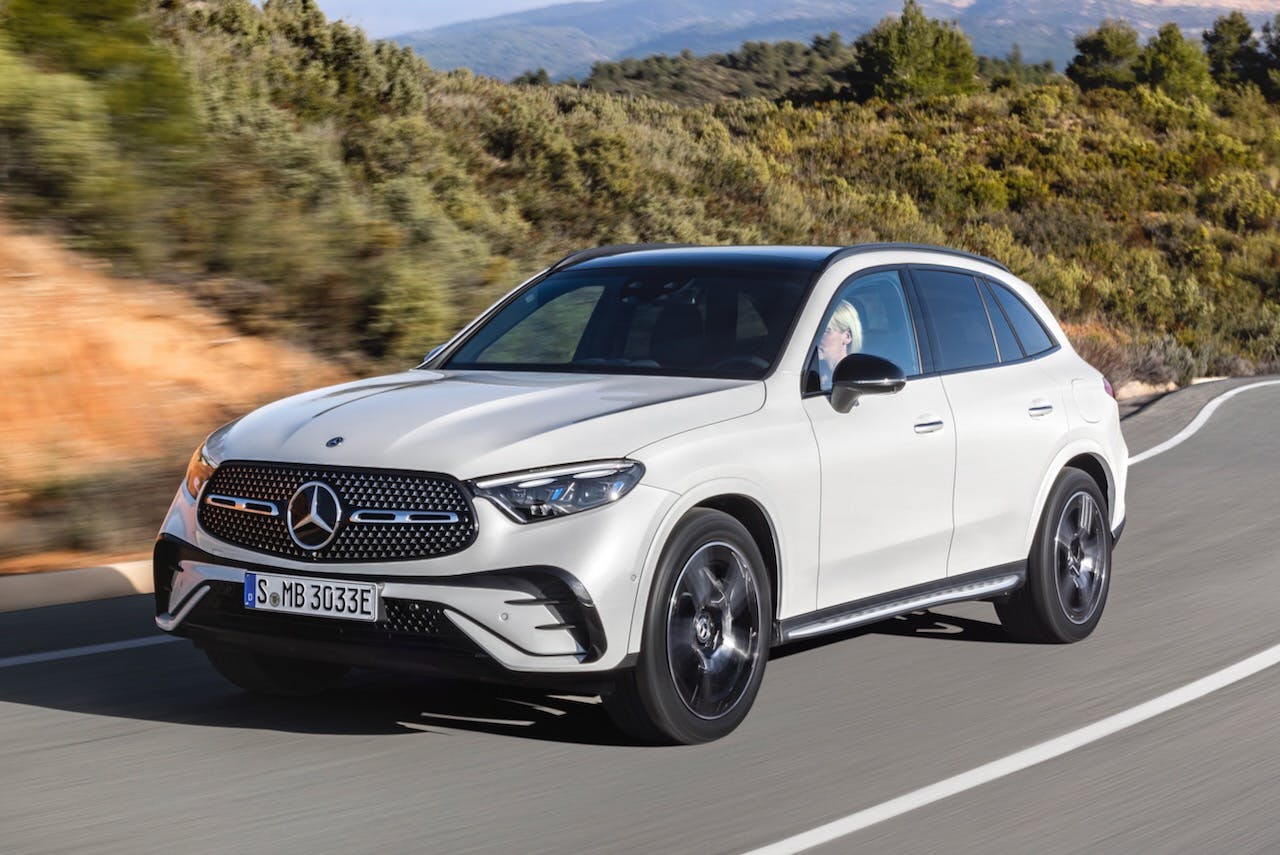
 Jaguar F-Pace — a compact luxury crossover that exemplifies current design trends in the segment
Understanding the 2026 Premium SUV Landscape
The definition of "premium" has shifted. Ten years ago, it meant German badges and leather seats. Today, buyers cross-shop the Genesis GV70 against the BMW X3, the Lexus RX against the Mercedes GLC, and increasingly, the Rivian R1S against the Range Rover Sport. Transaction prices have risen — the average premium SUV now transacts above $68,000 — but so has standard equipment. Features that were $3,000 options in 2020 (adaptive cruise, surround-view cameras, heated/ventilated front seats) are now baseline on many trims. You can also read our guide on evaluation of suv.
Key market dynamics affecting deals right now:
- Inventory normalization: Most brands have 50–70 days' supply, returning negotiating leverage to buyers after years of seller's markets.
- EV transition pressure: Legacy OEMs are discounting plug-in hybrids and mild-hybrid models to meet fleet emissions targets.
- Certified pre-owned (CPO) glut: Three-year lease returns from 2021–2022 are flooding CPO lots, creating value alternatives to new.
- Regional incentive variation: The same BMW X5 can carry $4,000 more incentive in the Northeast than in the Sun Belt due to competitive intensity.
For buyers new to the segment, it helps to understand what defines an SUV before comparing specific offers.
Top 2026 Contenders: Where the Real Deals Live
Manufacturer incentives change monthly, but certain models consistently offer deeper structural discounts due to competitive positioning or lifecycle stage. Below is a snapshot of where transaction prices most frequently diverge from MSRP as of early 2026. You can also read our guide on luxury suv comparisons.
| Model | Segment | Typical Discount Range | Best Incentive Type | Notes |
|---|---|---|---|---|
| BMW X5 | Midsize luxury | 6–9% off MSRP | Lease loyalty + fleet | 2024 refresh keeps residuals strong |
| Mercedes GLE | Midsize luxury | 5–8% off MSRP | Conquest + loyalty | PHEV models carry extra federal credit |
| Audi Q7 | Midsize luxury | 7–10% off MSRP | Lease pull-ahead | Aging platform; full redesign rumored 2027 |
| Genesis GV80 | Midsize luxury | 4–7% off MSRP | Finance subvention | Complimentary maintenance sweetens value |
| Lexus RX 350/500h | Midsize luxury | 3–5% off MSRP | Loyalty + APR | Limited discounting; high retention |
| Volvo XC90 | Midsize luxury | 8–12% off MSRP | Lease + safety | Deepest discounts in segment; EV transition |
| Cadillac Escalade | Full-size luxury | 4–6% off MSRP | Lease loyalty | V-Series commands premium; base trims deal |
| Lincoln Navigator | Full-size luxury | 5–8% off MSRP | Conquest + APR | New 2025 refresh improved competitiveness |
| Rivian R1S | Electric premium | 0–3% off MSRP | Federal tax credit | Direct sales; no dealer negotiation |
| Range Rover Sport | Midsize luxury | 3–6% off MSRP | Lease loyalty | P460e PHEV qualifies for $3,750 credit |
Discount ranges reflect typical dealer + manufacturer combined reduction before taxes/fees. Individual results vary by region, credit tier, and inventory age.
Practical observation: In practice, the deepest percentage discounts appear on slow-turning European midsize models (Volvo, Audi, Jaguar), but the highest dollar savings often come from full-size domestics (Escalade, Navigator) where 6% equals $6,000+. Cross-shop both categories if your use case allows.
New vs. Certified Pre-Owned: The 2026 Math
A three-year-old CPO premium SUV with 30,000 miles typically lists 35–45% below original MSRP. With manufacturer-backed warranties extending to 6 years/72,000 miles (Lexus, Genesis) or 7 years/100,000 miles (BMW, Mercedes), the risk gap has narrowed. Run this comparison before committing to new:
| Factor | New (Lease) | New (Finance) | CPO (Finance) |
|---|---|---|---|
| Monthly outlay (36 mo) | $750–$1,100 | $950–$1,400 | $650–$950 |
| Total 3-yr cost | $27k–$40k | $34k–$50k | $23k–$34k |
| Warranty coverage | Full bumper-to-bumper | Full bumper-to-bumper | Remaining + CPO extension |
| Tech currency | Latest | Latest | 1–2 generations back |
| Equity at 36 mo | $0 (walk away) | Positive (varies) | Positive (lower depreciation base) |
Rule of thumb: If you keep vehicles 5+ years, CPO often wins on total cost of ownership. If you rotate every 3 years, a subsidized lease on a high-residual model (Lexus RX, BMW X5) can undercut CPO when you factor in the "new car" reliability floor and latest safety tech. You can also read our guide on invention of suv.
Decoding the Deal: Price vs. Value vs. Total Cost
Price is the signed number. Value is equipment, warranty, and brand service experience per dollar. Total cost adds financing, insurance, fuel/charging, maintenance, depreciation, and tax implications over your ownership horizon.
Lease vs. Finance vs. Cash: 2026 Decision Framework
| Scenario | Best Structure | Why |
|---|---|---|
| Want latest tech every 3 yrs, drive <12k mi/yr | Lease (36 mo, 10k–12k mi) | Subsidized residuals + pull-ahead programs |
| Keep 5+ yrs, drive 15k+ mi/yr | Finance (60–72 mo, <6% APR) | No mileage penalties; build equity |
| Business use, >50% business miles | Lease (tax deduction on payment) | Section 179 / lease payment deduction |
| EV/PHEV with federal credit eligibility | Lease (captures $7,500 credit via cap cost reduction) | Credit passes through on leases; purchase requires tax liability |
| Cash buyer, no trade | Finance at 0.9–2.9% APR (if offered) or cash | Opportunity cost of capital vs. dealer rate |
A common mistake: Focusing solely on monthly payment. A $850/mo lease with $4,000 down and 10k mi/yr costs more over 36 months than a $920/mo lease with $0 down and 12k mi/yr if you drive 12k. Always model total cash outlay. You can also read our guide on bmw x5 vs audi q7.
For deeper perspective on how SUV pricing evolved, the history of the segment reveals why today's "premium" features were yesterday's luxuries.
Interior Technology: What's Standard vs. What's Worth Paying For
The 2026 baseline across most premium brands now includes:
- 12.3"+ digital instrument cluster + 14"+ center touchscreen
- Wireless Apple CarPlay / Android Auto
- 360° camera with automated parking
- Heated/ventilated front seats + heated steering wheel
- Three-zone climate with rear controls
- Over-the-air updates for infotainment and (increasingly) vehicle dynamics
Where extra money buys measurable daily improvement:
- Augmented reality head-up display (BMW, Mercedes, Genesis): Projects nav arrows onto windshield — genuinely reduces glance-away time.
- Rear-seat entertainment with streaming (Escalade, Navigator, Range Rover): Worth it if you regularly transport kids; otherwise, tablets are cheaper.
- Massaging front seats with adjustable bolsters (Mercedes Energizing, BMW Comfort): Noticeable on 3+ hour trips; skip for daily commutes.
- Premium audio (Bowers & Wilkins, Burmester, Revel): Diminishing returns above the mid-tier system unless you're an audiophile.
Voice assistants have improved but still struggle with natural-language destination entry in noisy cabins. Physical climate controls (retained by Genesis, Volvo, Lincoln) remain faster than touchscreen menus — test this during your drive. You can also read our guide on bmw suv vs lexus suv.
Performance, Efficiency, and the Powertrain Shift
The 2026 premium SUV powertrain menu spans turbo-four mild hybrids, plug-in hybrids (PHEVs), pure EVs, and a shrinking pool of V6/V8s. Match the powertrain to your actual use case:
| Powertrain | Best For | Real-World Efficiency | Caveat |
|---|---|---|---|
| 2.0T mild hybrid (48V) | Mixed commuting, 15k+ mi/yr | 22–26 MPG combined | Can feel strained at altitude/load |
| 3.0T inline-six mild hybrid | Towing, passing confidence | 20–24 MPG combined | Smoothest gas option; premium fuel required |
| PHEV (30–40 mi EV range) | Suburban commute + weekend trips | 55–75 MPGe + 24–28 MPG gas | Must charge daily to realize benefit |
| BEV (dual motor, 300+ mi) | Home charging + <250 mi daily | 85–110 MPGe | Charging infrastructure dependency |
| V8 (Escalade V, Navigator, Range Rover SV) | Towing 7,000+ lbs, emotional want | 14–18 MPG combined | Gas guzzler tax; resale softening |
Fuel requirement reality check: Most German turbo engines recommend 91+ octane but run on 87 with reduced output and efficiency. The Mercedes premium fuel guidance applies broadly: expect 1–2 MPG loss and 10–15 hp reduction on regular. For a 15k mi/yr driver, that's ~$150–$250/yr savings vs. potential carbon buildup risk — a personal calculus.
The EPA's fueleconomy.gov provides side-by-side comparisons for every 2026 model — use it instead of window-sticker estimates. You can also read our guide on mercedes hybrid suv.
Safety: Beyond the Checklist
Every 2026 premium SUV earns a 5-star overall NHTSA rating and IIHS Top Safety Pick or "+". The differentiation lies in active safety calibration and standard vs. optional packaging.
What to verify on the specific trim you're considering:
- Automatic emergency braking (AEB) with pedestrian/cyclist detection at night — standard on Volvo, Genesis, Mercedes; optional on some BMW/Audi base trims.
- Lane-centering assist that works below 35 mph — critical for stop-and-go; GM Super Cruise, Ford BlueCruise, and Mercedes Drive Pilot lead here.
- Driver monitoring (camera-based) — required for hands-free systems; ensures engagement without torque-sensing steering nags.
- Rear cross-traffic braking (not just alert) — prevents backing collisions in parking lots; standard on Genesis, Lexus, Volvo; often packaged higher elsewhere.
Practical test: During your test drive, trigger the lane-keep assist on a marked highway at 65 mph. Note whether it centers confidently or ping-pongs. Try the blind-spot intervention at 30 mph with a car alongside. These behaviors vary more by calibration than by hardware.
NHTSA's vehicle comparison tool lets you pull detailed crash-test scores and standard safety equipment for any two models side by side.
Financing & Insurance: The Hidden Cost Levers
Securing the Best Rate
- Credit union pre-approval before visiting the dealer gives you a benchmark. PenFed, Navy Federal, and DCU frequently offer 0.5–1.0% below captive finance for 720+ scores.
- Captive finance (BMW FS, MBFS, etc.) often runs 0.9–2.9% APR subventions on specific models — but only for 36–48 month terms. Extending to 72 months usually jumps to 5.9%+.
- Lease money factor conversion: Multiply the money factor by 2,400 to get equivalent APR. A 0.00125 MF = 3.0% APR. Negotiate the MF independently of the cap cost.
Insurance Cost Drivers
Premium SUVs cost 25–40% more to insure than mainstream equivalents. Factors within your control:
- Deductible choice: $1,000 vs. $500 saves 10–15% on collision/comprehensive.
- Usage-based programs (Progressive Snapshot, State Farm Drive Safe): 5–15% discount for low-mileage, gentle drivers.
- Bundling home/auto: 10–20% multi-policy discount.
- Garaging address: Urban ZIP codes can add $300–$600/yr vs. suburban.
Pro tip: Get insurance quotes before finalizing the deal. A $150/mo difference between two similar models changes the 3-year total by $5,400.
Negotiation Tactics That Still Work in 2026
- Separate the transactions: Negotiate purchase price (or lease cap cost) first. Then trade-in. Then financing. Dealers blend them to obscure margin.
- Request the "out-the-door" price in writing — including doc fee, acquisition fee (leases), taxes, registration. Compare this number across dealers.
- Use competing quotes as leverage, not bluffs. "Dealer B offered $X OTD on the same VIN. Can you match?" works better than "What's your best price?"
- Time it right: Last 3 business days of the month, end of quarter (March/June/Sept/Dec), and model-year changeover (Aug–Oct) align dealer incentives with your wallet.
- Know the holdback: 2–3% of MSRP returned to dealer after sale. Not negotiable directly, but explains why they can sell "at invoice" and still profit.
Avoid: "Monthly payment" negotiations, extended warranty pressure (factory warranty + CPO covers most risks), and accessories added after agreement (nitrogen tires, etch, fabric protection — typically 300–500% markup).
Electric & Plug-In Hybrid Premium SUVs: Unique Deal Structures
The Inflation Reduction Act (IRA) changed the calculus for 2026:
- Leased EVs/PHEVs qualify for the full $7,500 commercial credit regardless of battery sourcing or income caps — the lessor passes it through as cap cost reduction.
- Purchased EVs face strict critical-mineral/battery-component requirements and $150k/$300k income limits. Most German and Korean models don't qualify in 2026.
- PHEVs with <7 kWh battery (rare now) get $3,750; most 2026 PHEVs (15–25 kWh) qualify for the full $7,500 on leases.
Models where lease captures the credit effectively: BMW X5 xDrive50e, Mercedes GLE 450e, Volvo XC90 Recharge, Range Rover Sport P460e, Jeep Grand Cherokee 4xe. On a 36-month lease, $7,500 reduces monthly by ~$208 before tax — often making the PHEV cheaper than the gas counterpart.
Regional & Timing Strategies
- Northeast / California: Highest competitive density → deepest incentives. Willing to travel 100+ miles? Expand your search radius.
- Texas / Florida: Strong truck/SUV demand → lighter discounting on full-size models, but better EV infrastructure incentives.
- Model-year transition (Sept–Nov): 2026s arrive, 2025s become "last year's model" — expect 2–3% additional discount on 2025 stock.
- Holiday weekends (Memorial Day, Labor Day, Black Friday): Marketing events with stacked incentives; verify they're not just rebadged standard offers.
Ownership Experience: Service, Loaners, and Retention
The deal doesn't end at signing. Premium brands differentiate on:
- Complimentary maintenance: Genesis (3 yr/36k), BMW (3 yr/36k), Mercedes (prepaid packages), Lexus (2 yr/20k first two services).
- Loaners during service: Standard at Genesis, Lexus, Volvo; hit-or-miss at others — ask your specific dealer.
- Mobile service / valet pickup: Tesla, Rivian, Lucid, and now Genesis (in select metros) offer at-home service for routine items.
- Resale value leaders (3-yr retention): Lexus RX (~62%), Porsche Macan (~60%), Land Rover Defender (~58%), BMW X5 (~55%). Low retention = higher lease payments or bigger depreciation hit if financing.
Quick-Reference Checklist Before You Sign
- Compared OTD quotes from 3+ dealers (including one outside your metro)
- Modeled total 3-year cost for lease vs. finance vs. CPO
- Verified standard safety equipment on your trim via NHTSA
- Confirmed fuel requirement and real-world MPG via fueleconomy.gov
- Obtained insurance quotes for top 2–3 candidates
- Secured credit union pre-approval (if financing)
- Test-drove in conditions matching your daily use (highway, parking, cargo load)
- Reviewed CPO warranty terms vs. new warranty for your ownership horizon
- Checked for open recalls on any used/CPO candidate via NHTSA VIN lookup
Frequently Asked Questions
What Are The Best Premium SUV Deals Available Now?
As of early 2026, the deepest structural discounts sit with Volvo XC90 (8–12%), Audi Q7 (7–10%), and BMW X5 (6–9%). Genesis GV80 and Cadillac Escalade offer strong value via complimentary maintenance and warranty coverage rather than pure price reduction. Lease subventions on PHEVs (X5 50e, GLE 450e, XC90 Recharge) effectively lower monthly cost by $200+ via the $7,500 federal credit capture.
How To Find Premium SUV Deals In My Area?
Start with manufacturer "build & price" tools to see current national incentives. Then use dealer websites' "new inventory" filters (sort by "days on lot" — >60 days = motivated seller). Expand search radius to 100+ miles; many dealers will ship or meet halfway. Email the internet sales manager with your target VIN and OTD request — phone calls create pressure; email creates a paper trail.
Are Premium SUVs Worth The Investment?
"Investment" is the wrong frame — vehicles depreciate. The question is value per dollar over your ownership period. Premium SUVs deliver superior NVH, safety calibration, dealer service experience, and residuals vs. mainstream equivalents. If you keep 5+ years, the gap narrows. If you lease 3 years, the subsidized residuals on high-retention models (Lexus RX, BMW X5, Porsche Macan) can make premium cheaper than mainstream on a monthly basis.
What Should I Consider Before Buying A Premium SUV?
Budget for total cost (payment + insurance + fuel + maintenance + tires), not just the monthly. Verify the specific trim includes the safety and tech features you want — base trims often omit key items. Test the infotainment and voice control extensively; you'll live with them daily. Confirm dealer service reputation via independent reviews, not manufacturer surveys.
Conclusion
The best premium SUV deal isn't the lowest sticker price — it's the configuration that matches your actual driving life, financed or leased on terms that reflect current market reality, from a dealer who respects your time. The 2026 market favors prepared buyers: inventory is healthy, incentives are real, and the competitive set has never been stronger. Do the modeling, get the quotes, and don't sign until the out-the-door number matches your spreadsheet.
Your next step: pick two models from the contender table, run the 3-year total-cost scenarios (lease/finance/CPO), and request OTD quotes from three dealers each. The spreadsheet will tell you more than any brochure.
Ready to compare specific models? Browse our latest reviews and comparisons on the Premium SUV blog for detailed drive impressions and spec breakdowns.