

Featured image for Audi Q8 service center comparison
Image source: mediaservice.audi.com
Deciding between an Audi Q8 dealer and an independent shop hinges on warranty coverage, cost, and technician training. Dealers offer factory‑certified parts and loaner cars but often charge higher labor rates. Independent garages can save you 20‑30 % on repairs while still using OEM‑quality components if you pick a reputable shop.
Owning an Audi Q8 means enjoying a blend of performance, technology, and luxury. When it comes time for maintenance or repair, the choice between an Audi Q8 dealer vs independent service can feel overwhelming. Both options have clear pros and cons, and the right answer often depends on where you are in the ownership cycle. This guide breaks down every factor — cost, expertise, warranty, convenience, and long‑term value — so you can make a confident decision every time your Q8 needs attention.
Think of the dealer as a brand‑specific tailor who knows every stitch of the original design, while a reputable independent shop is like a skilled local seamstress who can replicate the same quality with a more personal touch. Both can deliver excellent results, but the details matter. Below you’ll find a comprehensive comparison that answers the who, what, where, when, and why of Audi Q8 dealer vs independent service.
Key Takeaways
- Warranty Protection: Dealer service keeps your factory warranty intact for most repairs; independent work is safe if the shop uses OEM parts and follows Audi service intervals.
- Cost Savings: Independent shops typically charge 20‑30 % less for labor and can source genuine Audi parts at a discount.
- Technician Expertise: Dealer techs receive brand‑specific training; many independent techs hold ASE and Audi‑specific certifications.
- Convenience Factors: Dealers often provide loaner vehicles and online scheduling; independents may offer more flexible hours and personalized communication.
- Resale Value Impact: A complete dealer service history can boost resale value, but a well‑documented independent record is increasingly accepted by buyers.
- Decision Framework: Use a simple checklist – warranty status, repair complexity, budget, and convenience – to choose the right provider for each visit.
- Did You Know? A 2023 J.D. Power survey found 68 % of luxury SUV owners still prefer dealer service for warranty work, yet 42 % have used an independent shop for out‑of‑warranty repairs.
📑 Table of Contents
Understanding the Audi Q8 Service Landscape
Dealer Service Overview
Official Audi dealerships operate under strict manufacturer guidelines. Every technician completes Audi’s factory training program, which includes the latest diagnostic software, proprietary tools, and model‑specific repair procedures. When you bring your Q8 to a dealer, you receive:
- Genuine Audi parts straight from the factory supply chain.
- Access to the most current technical service bulletins (TSBs) and software updates.
- A service record that is automatically logged in Audi’s national database.
Dealers also handle warranty and recall work at no cost to you, which is a major advantage during the first four years or 50,000 miles of ownership.
Independent Service Overview
Independent repair shops are privately owned businesses that service multiple brands. Many specialize in European vehicles and invest heavily in Audi‑specific equipment such as the VAS 6154 diagnostic interface. A quality independent shop will:
- Employ ASE‑certified technicians, often with additional Audi or Volkswagen Group training.
- Source OEM or OE‑equivalent parts from authorized distributors.
- Provide a detailed invoice that lists part numbers, labor codes, and fluid specifications.
Because they are not tied to a single brand, independents can sometimes offer more flexible scheduling and lower overhead costs.
Warranty Implications
The Magnuson‑Moss Warranty Act protects your right to choose any qualified repair facility without voiding the factory warranty, provided the shop uses the correct parts and follows the manufacturer’s maintenance schedule. In practice:
- Dealer service is the safest route while the vehicle is under the original 4‑year/50,000‑mile warranty.
- After the warranty expires, you are free to use any shop without risk.
- Keep every receipt and service record; a complete paper trail is essential for future resale.
Cost Comparison: Dealer vs Independent
Labor Rates
Dealer labor rates for the Audi Q8 typically range from $150 to $210 per hour in major metro areas. Independent shops often charge $100 to $140 per hour for the same work. That 20‑30 % difference adds up quickly on labor‑intensive jobs like timing‑chain service or transmission fluid changes.
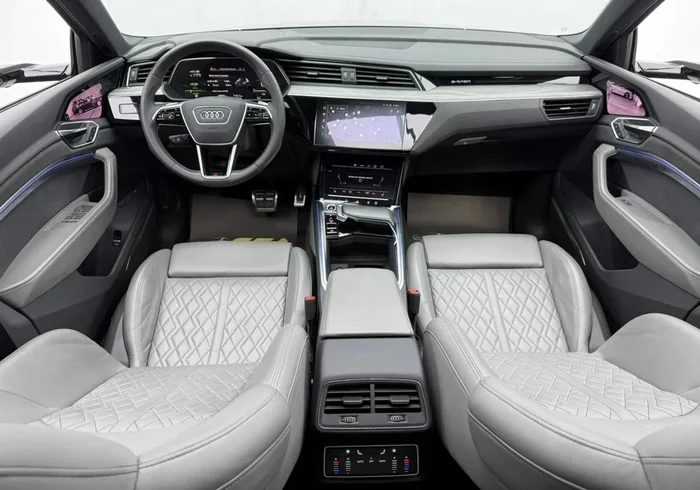
Visual guide about Audi Q8 service center comparison
Image source: dubicars.com
Parts Pricing
Dealers sell parts at the manufacturer’s suggested retail price (MSRP). Independents can purchase the same OEM parts at wholesale and pass a portion of the savings to you. For example, a genuine Audi Q8 front brake rotor may cost $280 at a dealer but $210 at a well‑connected independent shop.
Hidden Fees and Upsells
Dealers sometimes add “shop supplies” fees, environmental surcharges, or recommended “preventive” services that are not required by the maintenance schedule. Independents tend to provide a more transparent estimate, but always ask for a line‑item breakdown before authorizing work.
Real‑World Example
A 2022 Audi Q8 55 TFSI needed a 40,000‑mile service (oil change, brake fluid, cabin filter, and inspection). The dealer quoted $620; a reputable independent shop quoted $460 using the same OEM oil and filters. The owner saved $160 — roughly 26 % — while maintaining a full service record.
Expertise and Training: Who Works on Your Q8?
Dealer Technicians
Dealer techs complete a mandatory 12‑week Audi Academy program covering the Q8’s 48‑volt mild‑hybrid system, matrix LED lighting, and advanced driver‑assistance sensors. They also receive quarterly updates on new TSBs and software releases. This deep brand immersion means they can diagnose obscure electronic faults faster than many generalists.
Independent Technicians
Top independent shops invest in the same diagnostic platforms (ODIS, VAS) and send technicians to Audi‑specific training courses offered by organizations like the Automotive Service Association (ASA) or the National Institute for Automotive Service Excellence (ASE). Look for certifications such as:
- ASE L1 – Advanced Engine Performance
- ASE A6 – Electrical/Electronic Systems
- VW/Audi Specialist Certification (VASC)
When a shop displays these credentials, you can trust they understand the Q8’s unique architecture.
Certification Programs and Ongoing Education
Both dealer and independent technicians must log continuing education hours to maintain certifications. Ask any shop how often their staff attends Audi‑specific training. A shop that invests in yearly updates is more likely to stay current with the Q8’s evolving software.
Convenience and Customer Experience
Scheduling and Wait Times
Dealers often offer online booking, mobile app reminders, and a dedicated service advisor who manages your visit from drop‑off to pick‑up. However, high demand can lead to multi‑day waits for non‑urgent work. Independents typically have shorter lead times and may accommodate same‑day appointments for routine services.
Loaner Vehicles and Shuttle Service
Most Audi dealerships provide a complimentary loaner fleet (often another Q8 or Q7) for warranty and major repairs. Independents may offer a shuttle ride or a discounted rental car partnership, but a free loaner is less common.
Communication and Transparency
Dealers use standardized digital inspection reports with photos and video clips sent via text or email. Many independents have adopted similar platforms (e.g., AutoServe1, Shop‑Ware) to give you real‑time visibility into recommended repairs. Ask for a sample report before committing.
Long‑Term Reliability and Resale Value
Service Records and Vehicle History Reports
Carfax and AutoCheck flag dealer‑performed maintenance as “Dealer Service” entries, which many buyers view favorably. However, a complete independent record — especially from a shop with a strong reputation — is increasingly accepted. The key is consistency: every service should be documented with date, mileage, part numbers, and technician signature.
Impact on Resale
A 2024 Kelley Blue Book analysis showed that a 2020 Audi Q8 with a full dealer service history commanded an average $1,200 premium over an identical model with only independent records. The gap narrows for vehicles older than six years, where overall condition outweighs service source.
Case Study: Two Q8 Owners
Owner A kept every service at the dealer. At trade‑in (45,000 miles), the dealer offered $48,500. Owner B used a highly rated independent shop for all out‑of‑warranty work, maintaining meticulous records. The same dealer offered $47,300 — only $1,200 less. Both owners reported zero mechanical issues, proving that quality independent care can preserve value nearly as well as dealer care.
Making the Decision – A Simple Framework
Checklist for Each Service Visit
- Is the repair covered by warranty? → Dealer.
- Is the job a complex electronic or safety‑system diagnosis? → Dealer (or an independent with VASC certification).
- Is it routine maintenance (oil, filters, brakes) after warranty? → Independent (cost‑effective).
- Do you need a loaner car today? → Dealer.
- Is the shop’s reputation verified (Google >4.5 stars, ASE/VASC certs)? → Independent.
When to Choose the Dealer
- First 4 years / 50,000 miles (warranty period).
- Recall or safety‑campaign work.
- Advanced driver‑assistance calibration (e.g., adaptive cruise, night vision).
- You value a loaner vehicle and a single point of contact.
When to Choose an Independent Shop
- Out‑of‑warranty routine maintenance.
- Major repairs where labor savings exceed $300.
- You have a trusted local specialist with Audi certifications.
- You prefer a more personal relationship and flexible hours.
Hybrid Approach
Many Q8 owners adopt a hybrid strategy: dealer for warranty, recalls, and high‑tech calibrations; independent for oil changes, brake work, suspension, and tire services. This balances cost savings with peace of mind.
In summary, the Audi Q8 dealer vs independent service decision is not a one‑size‑fits‑all answer. By understanding the cost structure, technician qualifications, warranty rules, and convenience factors, you can tailor a service plan that protects your investment, keeps your Q8 running flawlessly, and fits your budget. Keep detailed records, ask for certifications, and don’t hesitate to mix both worlds — your Q8 deserves the best care, wherever it comes from.
Frequently Asked Questions
Does using an independent shop void my Audi Q8 warranty?
No. Under the Magnuson‑Moss Warranty Act, you may use any qualified repair facility as long as they follow Audi’s maintenance schedule and use OEM‑equivalent parts. Keep all receipts to prove compliance.
Are independent shops able to perform software updates on the Q8?
Only shops with the official ODIS/VAS diagnostic platform and a valid Audi software license can flash factory updates. Many top independents invest in this capability, but verify before booking.
How much can I save on a typical 40,000‑mile service by going independent?
On average, owners report 20‑30 % lower total cost — roughly $150‑$200 saved on a $600 dealer service — while still using genuine Audi oil, filters, and brake fluid.
Will a dealer service history increase my Q8’s resale value?
Data from Kelley Blue Book shows a modest premium (about $1,000‑$1,500) for a complete dealer record on newer models. A thorough independent record narrows the gap significantly.
What certifications should I look for in an independent Audi specialist?
ASE L1, ASE A6, and the VW/Audi Specialist Certification (VASC) are the gold standards. Shops displaying these logos have proven expertise on the Q8’s 48‑volt system and advanced electronics.
Can I mix dealer and independent service without issues?
Absolutely. Many owners use the dealer for warranty, recalls, and high‑tech calibrations, then switch to a trusted independent for routine maintenance and out‑of‑warranty repairs. Consistent documentation is the only requirement.