
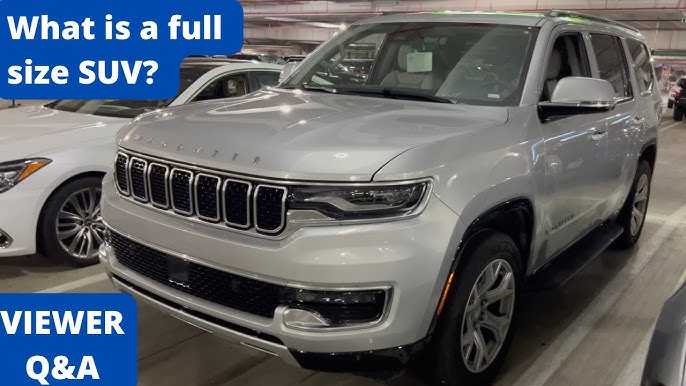
Choosing between a premium crossover and a standard SUV remains one of the most common dilemmas for vehicle shoppers in 2026. Both segments have evolved significantly — crossovers now challenge traditional luxury sedans in refinement, while standard SUVs have closed the gap on comfort without sacrificing their core utility. The decision ultimately hinges on how you weigh daily driving experience against long-term versatility, and whether your budget favors upfront premium features or lower total ownership costs.
Understanding the Core Differences
The line between crossovers and SUVs has blurred, but the engineering distinction still matters. Crossovers use unibody construction — the body and frame are a single unit — which reduces weight, lowers the center of gravity, and improves on-road handling. Standard SUVs traditionally use body-on-frame architecture, borrowing from pickup truck platforms to deliver genuine off-road durability and higher towing capacity. You can also read our guide on top luxury suvs of.
In practice, this structural difference cascades into every other attribute: ride quality, interior packaging, fuel efficiency, and even crash energy management. A premium crossover like the Genesis GV80 or BMW X5 rides on a car-derived platform tuned for pavement, while a standard SUV such as the Toyota 4Runner or Ford Expedition shares its ladder frame with commercial trucks.
What Defines "Premium" in Today's Market
Premium crossovers justify their price tags through a combination of tangible and intangible upgrades. Materials quality leads the list — open-pore wood, semi-aniline leather, metal switchgear, and active noise cancellation create a cabin environment that isolates occupants from road noise at highway speeds. Technology integration goes deeper than screen size; expect over-the-air updates, augmented reality navigation, and driver-assistance suites that handle stop-and-go traffic without driver intervention. You can also read our guide on history of suv.
Powertrain refinement is another differentiator. Turbocharged inline-sixes, plug-in hybrid systems, and 48-volt mild-hybrid architectures deliver smooth, linear power delivery with minimal vibration. In practice, a premium crossover's transmission calibration prioritizes imperceptible shifts over raw acceleration times — a deliberate choice that pays off during long-distance cruising.
Standard SUVs: Utility-First Engineering
Standard SUVs allocate their engineering budget differently. Boxy rooflines maximize third-row headroom and cargo volume behind the second row. Skid plates, low-range transfer cases, and solid rear axles (on truck-based models) enable genuine off-road capability that no unibody crossover can match. Towing capacities regularly exceed 8,000 pounds — double what most premium crossovers can manage. You can also read our guide on what is an suv.
Interior durability takes precedence over luxury. Washable floor surfaces, stain-resistant cloth seats, and hard-wearing plastics withstand mud, pets, and sports equipment without showing wear. The trade-off is obvious: more road noise, firmer low-speed ride, and utilitarian switchgear. For buyers who treat their vehicle as a tool rather than a sanctuary, these compromises are features, not flaws.
 Unibody crossover (left) versus body-on-frame SUV (right) — note the lower beltline and integrated frame rails
Performance Metrics That Actually Matter
Published horsepower and 0-60 times tell only part of the story. Real-world performance differences appear in passing power, stability under load, and efficiency at highway speeds. You can also read our guide on luxury suv comparisons.
Powertrain Character and Efficiency
Premium crossovers increasingly adopt electrified powertrains not just for emissions compliance, but for torque fill and refinement. A 2.5-liter turbo-four with a 48-volt system delivers 300+ lb-ft from idle, eliminating turbo lag. Plug-in hybrid variants offer 30-50 miles of electric-only range — enough for most daily commutes without using gasoline.
Standard SUVs lean on larger-displacement naturally aspirated V6s and V8s, or turbocharged V6s in newer models. These engines favor low-end torque over peak horsepower, ideal for towing and climbing grades. Fuel economy typically trails premium crossovers by 3-5 mpg combined, but the gap narrows on highways where aerodynamic penalties matter less. You can also read our guide on toyota highlander hybrid suv.
| Vehicle Type | Typical Combined MPG | Towing Max | 0-60 mph Range |
|---|---|---|---|
| Premium Crossover (PHEV) | 28-35 MPGe | 3,500-5,000 lbs | 5.0-6.5 sec |
| Premium Crossover (Gas) | 22-26 | 4,500-7,200 lbs | 5.5-7.5 sec |
| Standard SUV (Unibody) | 20-24 | 5,000-6,500 lbs | 6.5-8.0 sec |
| Standard SUV (Body-on-Frame) | 17-21 | 7,500-9,500+ lbs | 7.0-9.0 sec |
Handling, Ride Quality, and Off-Road Reality
Premium crossovers excel on pavement. Multi-link rear suspensions, adaptive dampers, and rear-axle steering (on flagships) deliver flat cornering and precise turn-in. The trade-off emerges on broken pavement — 21- and 22-inch wheels with low-profile tires transmit sharp impacts that smaller wheels on standard SUVs absorb more gracefully.
Standard SUVs prioritize wheel articulation and approach/departure angles. A Toyota 4Runner TRD Pro or Jeep Grand Cherokee Trailhawk can tackle technical trails that would destroy a premium crossover's lower control arms and plastic fascia. However, their on-road manners show body roll, vague steering, and longer braking distances — especially when loaded. You can also read our guide on evaluation of suv.
In practice, most standard SUV owners never engage low range. If your "off-roading" means gravel campground roads and snow-covered mountain passes, a premium crossover with all-wheel drive and all-terrain tires covers 95% of those scenarios with far better daily manners.
Interior Experience: Materials, Space, and Daily Usability
Cabin design reveals each segment's true priorities. Spend 30 minutes in both categories back-to-back and the differences become impossible to ignore.
Premium Crossover Cabins: Sanctuary Engineering
Noise, vibration, and harshness (NVH) suppression defines the premium experience. Laminated side glass, active engine mounts, and frequency-selective dampers create a library-quiet cabin at 75 mph — often 3-5 dB quieter than standard SUV counterparts. This matters more than most buyers realize; lower ambient noise reduces driver fatigue on long trips and allows conversation at normal volume.
Seating ergonomics receive equivalent attention. Multi-contour front seats with adjustable bolsters, extended thigh support, and massage functions accommodate diverse body types. Second-row captain's chairs (common on three-row premium models) offer heating, ventilation, and recline — but reduce maximum occupancy to six or seven.
Storage flexibility lags behind standard SUVs. Fixed rear load floors, intruding wheel wells, and sloped rooflines limit tall cargo. A folding rear seatback often leaves a step-up to the load floor, complicating heavy item loading.
Standard SUV Interiors: Configurable Utility
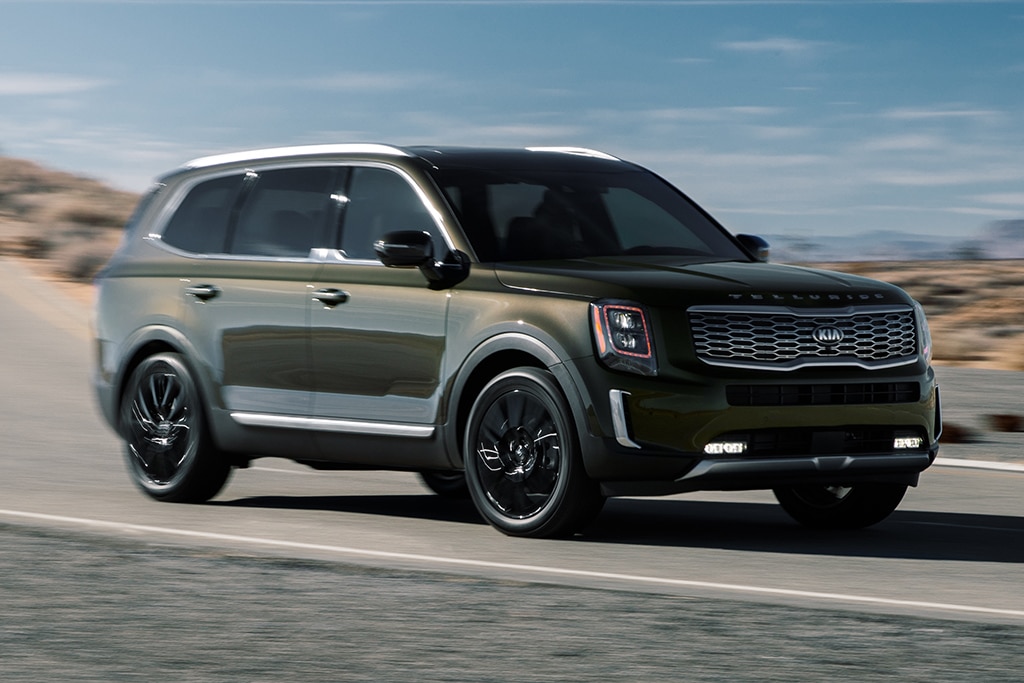
Boxy architecture pays dividends inside. Flat load floors, square wheel arches, and vertical tailgates maximize usable volume. The Honda Pilot, Hyundai Palisade, and Kia Telluride — though unibody — benchmark this packaging efficiency. True body-on-frame SUVs like the Chevrolet Tahoe or Ford Expedition add genuine three-row adult space with cargo room behind the third row.
Materials feel durable rather than luxurious. Hard plastics on door panels and dash tops resist scratches but show mold lines. Cloth seats clean easily but lack the thermal comfort of ventilated leather. In practice, families with young children often prefer this honesty — spilled juice wipes off; scratched leather requires professional repair.
Second- and third-row access varies widely. Sliding second-row seats (common on unibody standard SUVs) ease third-row entry. Body-on-frame models typically use tumble-forward second rows that require more effort but preserve seat adjustments.
Technology and Safety: Where the Gap Narrows
Ten years ago, premium crossovers monopolized advanced safety and infotainment. Today, standard SUVs offer remarkable parity on core features — the differentiation lies in execution depth and integration quality.
Infotainment and Connectivity
Premium systems (BMW iDrive 9, Mercedes MBUX, Genesis ccIC) feature larger displays (14-16 inches), natural language voice control, and seamless smartphone integration with wireless Apple CarPlay/Android Auto as standard. Over-the-air updates add features post-purchase — a capability that extends vehicle relevance.
Standard SUV systems have improved dramatically. Toyota's Audio Multimedia, Ford's SYNC 4, and Hyundai's ccNC platform all support wireless phone projection, cloud-based navigation, and voice assistants. Screen sizes now reach 12.3 inches on mainstream trims. The difference: slower processors, occasional lag, and fewer customization options.
In practice, both categories handle daily needs competently. Premium systems feel faster and more polished; standard systems cover 90% of use cases without frustration.
Advanced Driver-Assistance Systems (ADAS)
This is where premium crossovers still lead. Level 2+ systems — hands-off, eyes-on highway driving — appear on Genesis Highway Driving Assist 2, Ford BlueCruise, GM Super Cruise, and Mercedes Drive Pilot (Level 3 in limited conditions). These systems change lanes on command, navigate interchanges, and handle traffic jams with minimal driver input.
Standard SUVs increasingly offer hands-free highway assist (Toyota Safety Sense 3.0, Honda Sensing Elite, Hyundai SmartSense) but often restrict it to higher trims or require separate subscriptions. Functionality matches premium systems on straight highways but struggles with construction zones, poor lane markings, and complex merges.
All 2026 models meet updated NHTSA automatic emergency braking standards for pedestrian detection at night — a regulatory floor that benefits every buyer. For detailed crash-test methodology, the National Highway Traffic Safety Administration publishes comprehensive testing protocols.
Ownership Costs: Beyond the Window Sticker
Purchase price tells only part of the financial story. Five-year total cost of ownership often reverses the apparent value proposition.
Depreciation and Resale Value
Premium crossovers depreciate faster in absolute dollars but often retain higher percentages. A $75,000 Genesis GV80 might lose $35,000 over five years (47% retention), while a $45,000 Toyota Highlander loses $18,000 (60% retention). The premium buyer spends $17,000 more on depreciation despite the better percentage.
Leasing changes the calculus. Manufacturers subsidize premium crossover residuals to keep lease payments competitive — sometimes making a premium model cheaper monthly than a standard SUV purchase. In practice, shoppers comparing lease vs. buy should run both scenarios.
Maintenance, Repairs, and Fuel
Premium crossovers require synthetic oil, premium fuel (on most turbocharged engines), and dealer-tier labor rates. Brake wear accelerates with heavier vehicles and performance-oriented pads. Extended warranties cost more but may pay for themselves given complex electronics.
Standard SUVs often run regular unleaded, use conventional fluids on simpler engines, and share parts across high-volume truck platforms — lowering repair costs. Body-on-frame models allow easier frame repair after off-road damage; unibody crossover damage often requires structural sectioning.
Fuel costs favor premium crossovers, especially PHEV variants. At 15,000 miles annually, a 30 MPG crossover saves $400-600 per year over a 20 MPG standard SUV (at $3.50/gal). Over five years, that's $2,000-3,000 — meaningful but rarely decisive alone.
For current fuel economy ratings by model, the EPA's fueleconomy.gov database provides verified real-world estimates.
Electrification Trends Reshaping Both Segments
The 2026 model year accelerates a transition that fundamentally alters the crossover vs. SUV comparison.
Premium Crossovers Lead Electrification
Dedicated EV platforms (Hyundai E-GMP, GM Ultium, VW MEB) underpin new premium crossovers like the Genesis GV60, Cadillac Lyriq, and Mercedes EQE SUV. These architectures optimize battery packaging, enabling flat floors, frunks, and 300+ mile ranges. Performance variants hit 60 mph in 3.5 seconds — supercar territory from silent, vibration-free powertrains.
Plug-in hybrids bridge the transition. The Volvo XC90 Recharge, BMW X5 xDrive50e, and Lincoln Aviator Grand Touring offer 30-40 electric miles — enough for most daily driving — with gasoline backup for trips. In practice, PHEV owners who charge nightly use gasoline only on road trips.
Standard SUVs Electrify Differently
Body-on-frame EV SUVs remain rare (Rivian R1S, Chevrolet Silverado EV SUV) due to weight and cost challenges. Most standard SUVs adopt hybrid systems — Toyota's Hybrid Max (362 hp in the Grand Highlander), Ford's PowerBoost (430 hp in the Expedition), and GM's eAssist mild-hybrid — prioritizing towing capability and range over pure electric operation.
Three-row EV crossovers (Kia EV9, Hyundai Ioniq 7, Volkswagen ID.Buzz) challenge standard SUV utility with flexible seating, flat floors, and bidirectional charging. Their 250-300 mile ranges suffice for daily use but complicate long-distance towing — a known limitation for EV trailering.
Decision Framework: Matching Vehicle to Life
No single "best" choice exists. The right vehicle aligns with your specific constraints and priorities.
Choose a Premium Crossover If:
- Daily driving dominates — commuting, carpooling, highway trips exceed 80% of miles
- Refinement matters — you notice and value quiet cabins, smooth powertrains, polished interfaces
- Technology adoption — you want the latest ADAS, OTA updates, and seamless phone integration
- Garageable dimensions — you park in structured garages or tight urban spaces (most premium crossovers stay under 194 inches long)
- Electric curiosity — you're considering PHEV or EV but need gasoline backup flexibility
Choose a Standard SUV If:
- Towing is regular — boat, camper, or trailer exceeds 5,000 lbs more than a few times yearly
- Genuine off-roading — you drive technical trails requiring low range, lockers, and armor
- Maximum people/cargo — you routinely carry 7-8 adults plus luggage, or need 4×8 sheet goods capability
- Durability over delicacy — kids, dogs, gear, and weather will test interior surfaces daily
- Total cost sensitivity — lower purchase price, insurance, and repair costs outweigh refinement gains
The Middle Ground Worth Considering
Several 2026 models blur the line intentionally. The Toyota Grand Highlander Hybrid Max delivers premium-crossover refinement (quiet cabin, 362 hp hybrid, 12.3-inch display) with standard-SUV packaging (three-row adult space, 5,000 lb towing, 27 mpg combined). The Ford Explorer Platinum and Honda Pilot Elite occupy similar territory. The Kia Telluride SX Prestige X-Pro adds all-terrain tires and styling cues without sacrificing unibody ride quality.
For buyers considering Toyota's premium-trims strategy, our analysis of Toyota's premium brand positioning explains how XLE Premium and Limited trims bridge this gap.
Real-World Shopping Advice
Test drives reveal more than specifications. Follow this sequence:
- Schedule back-to-back appointments — drive a premium crossover and standard SUV same day, same roads
- Bring your gear — install child seats, load golf bags, fold seats — verify fit before negotiating
- Test the tech — pair your phone, voice-command navigation, test adaptive cruise in traffic
- Evaluate sightlines — check blind spots, backup camera clarity, pillar obstruction at intersections
- Ride in the back — spend 10 minutes in second and third rows on varied pavement
A common mistake is fixating on trim-level feature lists while ignoring ergonomics. A standard SUV with intuitive climate knobs often beats a premium crossover with buried touchscreen menus for daily usability.
If you're cross-shopping specific models, our 2025 Toyota RAV4 XLE Premium review details how Toyota's best-selling crossover stacks up against premium rivals, while the 2024 Toyota 4Runner SR5 Premium review covers the traditional SUV benchmark.
Market Outlook: Where Each Segment Is Heading
Premium crossovers will continue fragmenting into sub-niches: compact electric (GV60, EX30), midsize PHEV (X5 50e, Aviator GT), three-row flagship (X7, QX80, LX 600). Software-defined features — subscription heated seats, on-demand performance unlocks — will expand, controversially.
Standard SUVs face regulatory pressure. CAFE standards and state ZEV mandates push unibody models toward hybridization; body-on-frame models may become low-volume specialty products. Expect the next-generation Tahoe/Suburban and Expedition to offer PHEV variants by 2027.
Used markets reflect these trends. Three-year-old premium crossovers depreciate steeply — creating value for certified pre-owned buyers. Standard SUVs hold value stubbornly, especially TRD Pro, Trailhawk, and Timberline trims with off-road equipment.
Final Recommendation
Start with honest use-case analysis, not badge preference. Track your actual driving for two weeks: miles by road type, passenger count, cargo volume, towing frequency. Map those data points to the framework above.
If you're replacing a vehicle you've owned for 5+ years, recognize how much the segments have evolved. A 2026 standard SUV rides and quiets better than a 2018 premium crossover. A 2026 premium crossover tows and hauls more capably than its predecessor. The gap has narrowed — which means your personal priorities matter more than segment stereotypes.
Next step: Narrow to 3-4 specific models, schedule same-day test drives, and bring your real-world gear. The vehicle that disappears beneath you on familiar roads — the one you stop noticing — is usually the right choice.
 Premium crossover (foreground) and standard SUV at a mountain trailhead — both capable, but optimized for different journeys
 Third-row cargo capacity varies dramatically — measure your stroller, luggage, or gear before deciding
Frequently Asked Questions
What is the fundamental engineering difference between a crossover and an SUV?
Crossovers use unibody construction (integrated body/frame) derived from car platforms, prioritizing on-road handling, efficiency, and ride quality. Traditional SUVs use body-on-frame construction (separate ladder frame) shared with pickup trucks, prioritizing towing, off-road durability, and load-bearing capacity. Some modern "standard SUVs" like the Honda Pilot or Hyundai Palisade use unibody architecture but retain SUV packaging and utility focus.
Do premium crossovers require premium gasoline?
Most turbocharged premium crossovers recommend or require 91+ octane for optimal performance and efficiency. Naturally aspirated V6 models (Lexus RX 350, Acura MDX) often accept regular. Plug-in hybrids typically recommend premium for the gasoline engine but can run regular with minor power reduction. Always check the owner's manual — using regular in a premium-required engine risks long-term damage from knock.
Can a standard SUV match premium crossover comfort for daily driving?
Modern unibody standard SUVs (Telluride, Palisade, Pilot, Grand Highlander) close 80% of the comfort gap with premium crossovers. They offer quiet cabins, supple rides, and upscale materials on top trims. Body-on-frame SUVs (4Runner, Tahoe, Expedition) remain noticeably firmer and louder — a deliberate trade-off for durability. Test drive both architectures back-to-back; the difference is immediately apparent.
Which holds value better: premium crossover or standard SUV?
Standard SUVs typically retain higher resale percentages (55-65% at 5 years) due to broader buyer appeal and durability reputation. Premium crossovers retain lower percentages (45-55%) but depreciate more in absolute dollars. However, subsidized lease residuals on premium models can make monthly payments competitive. Run both purchase and lease scenarios for your specific models.
Are premium crossovers capable in snow and light off-roading?
Yes — with all-wheel drive and proper tires (all-season or all-weather), premium crossovers handle snow, gravel, and dirt roads competently. Ground clearance (typically 7-8 inches) limits deep snow or rocky terrain. All-terrain tires on 19-20 inch wheels improve capability but increase noise and reduce pavement grip. For dedicated winter use, a standard SUV with higher clearance and low range provides more margin.
How do maintenance costs compare over 5 years?
Premium crossovers average $1,200-1,800 annually for maintenance/repairs (synthetic fluids, premium tires, dealer labor). Standard SUVs average $800-1,200 (conventional fluids, shared truck parts, independent shop access). Extended warranties cost 30-50% more for premium brands. PHEV models add battery coolant service but reduce brake wear via regeneration.
What's the real-world towing difference?
Premium crossovers tow 3,500-7,200 lbs depending on powertrain. Standard unibody SUVs tow 5,000-6,500 lbs. Body-on-frame SUVs tow 7,500-9,500+ lbs. Towing near maximum ratings stresses any vehicle — transmission cooling, brake sizing, and frame strength matter more than the rated number. For regular 5,000+ lb towing, a standard SUV's hardware margin provides peace of mind.
Is the premium crossover "badge tax" worth it?
The premium covers tangible upgrades (materials, NVH, technology, powertrain refinement) and intangibles (dealer experience, brand cachet, residualized lease support). Value is subjective: buyers who keep vehicles 8+ years often prefer standard SUV durability; lessees and 3-4 year cyclers may find premium total cost comparable after lease incentives. Calculate your specific ownership horizon.