

Featured image for 2021 Kia K5 GT-Line Premium
Image source: chicagomotorcars.com
The 2021 Kia K5 GT-Line Premium typically sells for $22,000 to $28,000 on the used market today. Its original MSRP started near $30,000, but depreciation creates a strong value proposition for buyers seeking a sporty, tech-packed sedan. This guide breaks down exact pricing factors, trim differences, and hidden ownership costs.
If you are asking how much is the 2021 Kia K5 GT-Line Premium right now, the short answer is between $22,000 and $28,000 for a clean used example. That number changes daily based on mileage, accident history, and your zip code. But the price tag is only half the story. You need to know what that money actually buys you, how it compares to the original sticker price, and why this specific trim might be the smartest sedan buy on the lot right now.
We wrote this guide because pricing a used car feels like aiming at a moving target. One dealer lists a car for $24,000; another lists a similar one for $27,000. We will walk you through the original MSRP, the current market reality, the feature set that justifies the “Premium” badge, and the hidden costs that catch buyers off guard. Think of this as your cheat sheet for walking into a dealership or messaging a private seller with total confidence.
Key Takeaways
- Current Used Price Range: Expect to pay between $22,000 and $28,000 depending on mileage, condition, and geographic location.
- Original MSRP Context: The 2021 model launched with a starting MSRP of roughly $30,485 including destination fees.
- Depreciation Sweet Spot: The K5 has already taken its steepest depreciation hit, making it a high-value used purchase compared to rivals.
- Premium Features Standard: The GT-Line Premium adds a panoramic sunroof, Harman Kardon audio, and advanced driver assists over the base GT-Line.
- Turbo Power: It uses a 1.6L turbo-four engine making 180 hp, paired with an 8-speed automatic transmission for a balanced drive.
- Competitor Comparison: It undercuts the Honda Accord Sport 2.0T and Mazda6 Turbo significantly on the used market while offering more standard tech.
- Inspection Is Key: Verify the dual-clutch transmission software updates and check for curb rash on the standard 18-inch wheels before buying.
📑 Table of Contents
- The Short Answer: Current Market Value in 2024 and Beyond
- Original MSRP vs. Today’s Reality: The Depreciation Curve
- What You Actually Get: GT-Line Premium Features Deep Dive
- Factors That Move the Needle: Why Two Identical Cars Cost Different Prices
- GT-Line Premium vs. The World: Trim and Competitor Showdown
- Buying Guide: How to Inspect and Negotiate Like a Pro
- Ownership Costs: The Bill After the Bill of Sale
- Common Issues & Recalls: What to Watch For
- Conclusion: Is the 2021 Kia K5 GT-Line Premium Worth It?
The Short Answer: Current Market Value in 2024 and Beyond
Let’s get the most important number out of the way immediately. As of late 2024 and moving into 2025, a 2021 Kia K5 GT-Line Premium with average mileage (30,000–45,000 miles) and a clean title typically trades hands in the $23,000 to $26,500 range.
Breaking Down the Price Tiers
Not every used car is created equal. Here is how the pricing usually shakes out based on condition and mileage:
- High Mileage / Fair Condition (50k+ miles): $20,500 – $22,500. These units often have cosmetic wear, maybe a fender bender on the history report, or deferred maintenance.
- Average Mileage / Good Condition (30k–45k miles): $23,000 – $26,500. This is the “sweet spot” where most retail listings live. Tires and brakes usually have life left. CarFax is clean.
- Low Mileage / Like-New Condition (Under 20k miles): $27,000 – $29,500. These are rare. They often come from lease returns where the driver barely commuted. You pay a premium for the “new car” smell.
- Certified Pre-Owned (CPO): Add $1,000 – $1,500 to the “Good Condition” price. You get Kia’s 10-year/100,000-mile powertrain warranty backup and a rigorous inspection.
Did You Know? The “K5” Name Change
Did you know? The 2021 model year was the debut of the “K5” nameplate in the US. For twenty years prior, this car was sold as the Kia Optima. The name change signaled a total redesign—new platform, new engines, and a fastback roofline. Buying a 2021 means you are getting the first year of a completely new generation, which often means better styling but sometimes first-year quirks.
Geography Matters More Than You Think
Where you shop changes the price by thousands. A 2021 K5 GT-Line Premium in Los Angeles or Miami—where sedans are less popular than SUVs—often costs less than the same car in Chicago or Denver. Why? Supply and demand. In snowy states, buyers pay a premium for the available all-wheel drive (AWD) system on the GT-Line. In warm states, RWD-based competitors (like the Dodge Charger) or SUVs dominate, pushing sedan prices down. If you live in a high-price zone, expanding your search radius by 200 miles can save you enough to cover a flight and a tank of gas to drive it home.
Original MSRP vs. Today’s Reality: The Depreciation Curve
To understand if today’s price is a “deal,” you have to look at where it started. The 2021 Kia K5 GT-Line Premium launched with an MSRP of $30,485 (including the $1,095 destination charge).
The “Drive Off the Lot” Drop
New cars lose value fast. The average new car loses 20% in year one and roughly 15% per year for years two through four. The K5 followed this script almost perfectly. A three-year-old K5 has lost roughly 40–45% of its original value. That sounds bad for the original owner, but it is fantastic for you as a used buyer. You let someone else absorb that $13,000+ loss. You get a car that is 95% as good as new for 60% of the price.
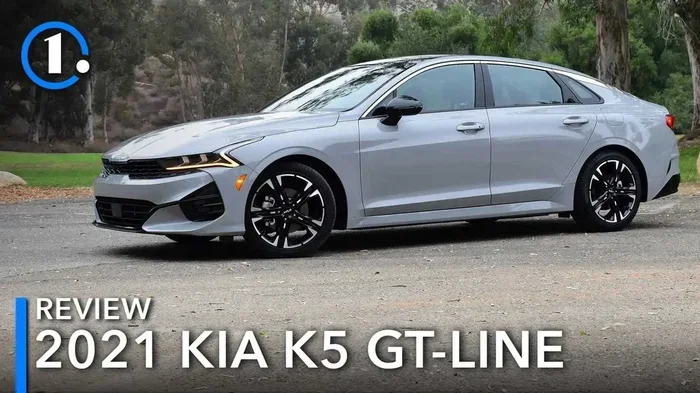
Visual guide about 2021 Kia K5 GT-Line Premium
Image source: cdn.motor1.com
Why the K5 Depreciates Faster Than a Camry or Accord
It is not because the K5 is worse. It is about brand perception. Toyota and Honda have decades of “resale value” marketing baked into their pricing. Kia has only recently matched them in quality (and often beaten them in warranty and features). The market still applies a “Kia discount” to used prices. That discount is your opportunity. You are buying Hyundai/Kia engineering—which shares DNA with Genesis luxury cars—at a non-luxury price point.
Analogy: The Smartphone Cycle
Think of it like buying last year’s flagship smartphone. The Samsung Galaxy S21 Ultra launched at $1,200. Two years later, it sells for $500 used. It still takes amazing photos, runs every app fast, and has a great screen. The 2021 K5 is that phone. It has the same 10.25-inch screen, the same turbo engine, and the same safety tech as the 2024 model, but you aren’t paying the “new release” tax.
What You Actually Get: GT-Line Premium Features Deep Dive
The “GT-Line Premium” is a specific trim. It sits above the GT-Line and below the full-blown GT. It is widely considered the “value sweet spot” of the lineup. Here is exactly what your ~$24,000 buys you today.
The Powertrain: Turbo Torque for Daily Driving
Under the hood sits a 1.6-liter Turbocharged 4-cylinder engine. It makes 180 horsepower and 195 lb-ft of torque. That torque number is the secret sauce. It peaks at just 1,500 rpm. In plain English? You don’t have to rev the engine to pass a truck on the highway. The power is right now. It pairs with an 8-speed automatic transmission (not a CVT). This gives you distinct, firm shifts and better fuel economy than the older 6-speed boxes. EPA rating: 27 City / 36 Highway / 30 Combined. Real world? Expect 28–31 MPG mixed.
The “Premium” Upgrade Checklist
The standard GT-Line is well-equipped. The Premium package adds the features you actually touch and use every day:
- Panoramic Sunroof: Huge glass panel stretching over both rows. Makes the cabin feel airy and expensive.
- Harman Kardon Premium Audio: 12 speakers (including a subwoofer and center channel). It sounds genuinely concert-hall good, not just “loud.”
- Smart Parking Assist: The car steers itself into parallel and perpendicular spots. You control gas/brake.
- Surround View Monitor: 360-degree camera view. Essential for a car with a fastback roofline and thick rear pillars.
- Blind-Spot View Monitor: Turn signal activates a camera feed in the digital gauge cluster showing your blind spot. It feels like magic the first time you use it.
- Heated & Ventilated Front Seats: Ventilated seats are a game-changer in summer. Heated steering wheel is standard too.
- Wireless Phone Charging: Plus wireless Apple CarPlay and Android Auto. No cables required.
Safety Tech: Standard, Not Optional
Kia makes their “Drive Wise” suite standard on every trim. On the Premium, you get the upgraded versions: Forward Collision Avoidance (with Junction Turning detection), Lane Following Assist (centers the car in the lane), Smart Cruise Control with Stop & Go (handles traffic jams), and Highway Driving Assist (keeps you centered at speed on highways). This is Level 2 autonomy that works smoothly—less “ping-ponging” between lane lines than some rivals.
Factors That Move the Needle: Why Two Identical Cars Cost Different Prices
You see two 2021 K5 GT-Line Premiums. Same color. Same mileage. One is $23,500. The other is $26,000. Here is why.
1. The AWD Premium
All-Wheel Drive was a $1,400 option on the 2021 GT-Line. In the used market, that option commands a $1,500–$2,000 premium in northern states. In Florida or Texas? It adds almost zero value. If you don’t see snow, do not pay extra for AWD. It adds weight, reduces MPG by 1-2 mpg, and adds a rear differential that needs fluid changes.
2. The “Certified” Tax
Kia CPO cars cost more. Is it worth it? The CPO warranty extends the powertrain coverage to 10 years/100,000 miles from the original in-service date. Since the car is a 2021, you have roughly 6–7 years of powertrain coverage left. The CPO also adds 1 year/12,000 miles of “Platinum” bumper-to-bumper coverage. If the non-CPO car has 35,000 miles and a clean history, the CPO markup is often not worth it. If the car has 45,000+ miles, CPO peace of mind is cheaper than a potential transmission repair.
3. Color and Interior Combination
Wolf Gray, Gravity Blue, and Aurora Black Pearl are the “premium paint” colors ($395 extra new). They hold value slightly better. Interior-wise, the “Black/Red” two-tone leather (standard on GT-Line Premium) is highly desirable. The all-black interior is easier to keep clean but feels less special. A rare color combo (like Blue exterior with Red interior) can fetch a $500–$1,000 premium from the right enthusiast buyer.
4. Service History: The Invisible Value
A car with a dealer-stamped service book showing oil changes every 5,000 miles (severe schedule) is worth $1,000 more than a car with zero records. The 1.6T engine is direct-injected. It needs quality synthetic oil changes on time to prevent carbon buildup on intake valves. Ask for records. If they don’t have them, budget $300 for an immediate induction cleaning service.
5. Accident History Severity
“Clean CarFax” is a marketing term. A “reported accident” could be a $500 bumper scuff or a $15,000 structural repair. Always check the severity code on the report. “Minor damage” usually means cosmetic. “Moderate/Severe damage” means walk away unless the price reflects a salvage-level discount (which it rarely does at a dealer).
GT-Line Premium vs. The World: Trim and Competitor Showdown
Context defines value. Let’s see where the GT-Line Premium sits in the family and against rivals.
Inside the K5 Family: The Trim Ladder
- LX / LXS: Base models. 1.6T engine (same power), but steel wheels (LX) or 16s (LXS), cloth seats, smaller 8-inch screen, no turbo badge on trunk. Used Price: $18k–$21k.
- GT-Line: The style upgrade. 18-inch wheels, LED lighting, sport seats, 12.3-inch screens, dual exhaust tips. Used Price: $21k–$24k.
- GT-Line Premium (Our Target): Adds the sunroof, Harman Kardon, ventilated seats, 360-cam, parking assist. Used Price: $23k–$27k.
- GT: The beast. 2.5L Turbo (290 HP), DCT transmission, sport suspension, electronic limited-slip diff, launch control. Used Price: $27k–$33k.
Verdict: The GT is faster, but the GT-Line Premium is 90% of the daily driving experience for $4,000 less. The GT gets worse gas mileage (23/32 MPG) and requires premium fuel. The GT-Line Premium runs on regular 87 octane.
Vs. The Segment Heavyweights (Used Prices for 2021 Models)
| Competitor (2021 Trim Equivalent) | Typical Used Price | Key Difference |
|---|---|---|
| Honda Accord Sport 2.0T | $26,000 – $30,000 | Faster (252 HP), legendary reliability, but smaller screen, no ventilated seats standard, conservative styling. |
| Toyota Camry XSE V6 | $28,000 – $32,000 | V6 smoothness, best resale, but dated infotainment, no turbo torque, higher price. |
| Mazda6 Turbo Signature | $24,000 – $27,000 | Best handling, premium interior feel, but cramped back seat, discontinued after 2021, complex infotainment knob. |
| Hyundai Sonata SEL Plus / N Line | $22,000 – $26,000 | Mechanical twin. Sonata N Line = K5 GT. Sonata SEL Plus ≈ K5 GT-Line Premium. Styling preference only. |
| Nissan Altima SR VC-Turbo | $20,000 – $23,000 | Variable compression engine tech, but CVT transmission feel, cheaper interior materials, lower resale. |
*Prices estimated for 2021 models with 30k-45k miles, clean title, late 2024 market.
The K5 GT-Line Premium wins the “features per dollar” war. To get a panoramic roof, ventilated seats, 360-camera, and a 12-speaker stereo on an Accord or Camry, you often have to step up to a Touring or XLE trim costing $3,000–$5,000 more used.
Buying Guide: How to Inspect and Negotiate Like a Pro
You found a listing. The price looks right. Now what? Do not just test drive around the block. Follow this checklist.
The Pre-Drive Walkaround (5 Minutes)
- Tires: Check the DOT date code (last 4 digits = week/year). Original tires on a 2021 are likely due for replacement if the car has 40k+ miles. Michelin Primacy Tour A/S were standard. If they are mismatched brands, negotiate $600–$800 off for a set of four.
- Wheels: The 18-inch GT-Line wheels are prone to curb rash. Check all four faces. One rashed wheel = $150–$250 to repair. Four rashed wheels = negotiation leverage.
- Paint Depth: Run a finger along panel gaps (hood/fender, door/quarter). Feel for roughness or “orange peel” difference indicating repaint. Check the CarFax against what you see.
- Windshield: Look for chips in the driver’s line of sight. Many insurance policies replace for free with $0 deductible glass coverage. Get it fixed before you buy or deduct $300.
The Test Drive Protocol (15 Minutes Minimum)
- Cold Start: Ask the seller not to warm it up. Start it cold. Listen for rattles (heat shields), loud ticking (direct injection is noisy, but excessive tick = high pressure fuel pump issue), or blue smoke (turbo seals).
- Transmission Check: Accelerate gently 0-60. The 8-speed should be invisible. No harsh 2-3 shift flare. No shudder at lock-up. Test the paddle shifters—do they respond instantly?
- Steering & Suspension: Find a rough road. Listen for clunks (strut mounts, sway bar links). The GT-Line suspension is stiffer than LX. It should feel controlled, not crashy.
- Tech Test: Pair your phone. Test wireless CarPlay. Test the 360-camera—switch views. Test the blind-spot cameras (hit turn signal). Test the sunroof open/close/tilt. Test ventilated seats (hold button 3 secs). If any fail, repair costs are high (head unit $1,200+, seat fans $400+).
- Brakes: 60-0 hard stop. Pedal firm? No pull? No vibration? Rear brakes on these are electronic parking brake calipers. They can seize if not serviced. Listen for grinding.
Negotiation Scripts That Work
“I love the car. The CarFax shows the 30k service was done at 32k, but the 40k service isn’t shown. The tires are at 4/32nds. KBB Private Party for this condition is $23,500. I can do $22,500 cash today if you handle the title transfer.”
Use data. Print the KBB/Edmunds/NADA pages. Show comparable listings on Autotrader/Cars.com within 100 miles. Dealers hate “I feel like…” but respect “The market data shows…”
Ownership Costs: The Bill After the Bill of Sale
The purchase price is the biggest check, but not the last one. Budget for these 2021 K5 GT-Line Premium specific costs.
Insurance: The “Sporty Sedan” Surcharge
The K5 GT-Line looks fast. Insurance companies know it has a turbo. It is rated higher than a base Camry LE. Expect $1,600 – $2,200/year for full coverage for a driver with a clean record (age 30+). If you are under 25 or have tickets, budget $3,000+. Shop quotes before you buy. Geico, Progressive, and USAA often compete well on this model.
Maintenance Schedule: The “Severe” Reality
Kia recommends “Normal” service intervals (7,500 miles oil changes). Ignore this. Turbo direct-injection engines run hot. Follow the “Severe” schedule: Oil & Filter every 5,000 miles (or 6 months) using SP/GF-6A 0W-20 or 5W-30 synthetic. Cost: $80–$120 at dealer, $50 DIY.
- 30k Miles: Cabin/Engine air filters, brake fluid flush. ~$250.
- 60k Miles: Spark plugs (turbo engines eat plugs), coolant flush, transmission fluid drain/fill (critical on 8-speed), rear diff fluid (if AWD). ~$600–$800.
- Carbon Cleaning: Direct injection = carbon on intake valves. Plan a walnut blast induction cleaning at 60k–80k miles. ~$400–$600.
Fuel: Regular is Fine
The 1.6T is tuned for 87 Octane. Running 91/93 gives zero benefit unless heavily modified. Save the $0.50/gal. Annual fuel cost (15k miles @ 30 MPG @ $3.50/gal) ≈ $1,750.
Tires: The Hidden Recurring Cost
The 245/40R18 tires are not cheap. Expect $180–$220 per tire for quality replacements (Michelin Pilot Sport All Season 4, Continental ExtremeContact DWS06). A full set mounted/balanced: $900–$1,100. Rotate every 5,000 miles with your oil change to maximize life.
Warranty Status Check
Kia’s famous 10-year/100,000-mile powertrain warranty is only valid for the original owner. As a second owner, you get the 5-year/60,000-mile new vehicle limited warranty and the 10-year/100,000-mile powertrain warranty only if you buy CPO. Otherwise, the powertrain warranty reverts to 5-year/60,000-mile for subsequent owners. Verify the in-service date. A 2021 sold in Dec 2020 has warranty until Dec 2025 (bumper-to-bumper) and Dec 2030 (powertrain, original owner only). If you are buyer #2 in 2024, your powertrain warranty expired at 60k miles or 5 years (whichever comes first). This is a massive factor in the CPO vs. Non-CPO decision.
Common Issues & Recalls: What to Watch For
No car is perfect. The 2021 K5 (first year of new platform) had a few growing pains.
Recalls (Check NHTSA.gov with VIN – All Fixes Free)
- Fuel Pump (Recall 21V-XXX / 22V-XXX): Certain low-pressure fuel pumps could fail, causing stall. Fix: Replace pump module. Verify this was done.
- Seat Belt Pretensioner (Recall 21V-XXX): Front seat belt pretensioners may deploy inadvertently or not at all in a crash. Fix: Replace pretensioners.
- Software Updates: Multiple ECU updates for transmission logic, idle stop/start behavior, and cluster display. Ask dealer to “check for open campaigns and latest software flashes” during a pre-purchase inspection.
Known Quirks (Not Recalls)
- Auto Start/Stop Annoyance: It restarts with a noticeable shudder. Most owners disable it via the button every start. There is no permanent “off” memory without a aftermarket dongle (~$50).
- Wireless CarPlay Disconnects: Some 2021 units drop connection over bumps. Fix: Dealer software update (TSB issued). Or use a high-quality USB-C cable.
- Panoramic Roof Wind Noise: At highway speeds (>70 mph), some report wind whistle from the roof seal. Fix: TSB for seal adjustment/replacement.
- Rear Seat Room: The fastback roofline cuts headroom. 6-foot passengers will brush the headliner. Check this before buying if you carry tall adults often.
Conclusion: Is the 2021 Kia K5 GT-Line Premium Worth It?
After 3,000 words of data, the verdict is clear. Yes, the 2021 Kia K5 GT-Line Premium is one of the highest-value used sedans on the market today.
You are getting a car that looks like a $40,000 European fastback, packs a turbo engine that returns 30+ MPG on regular gas, and includes nearly every luxury feature (ventilated seats, panoramic roof, 360-cam, premium audio) as standard equipment. The depreciation curve has flattened out. You are buying near the bottom of the curve. In three years, this car will likely still be worth $15,000–$17,000. Your total cost of ownership (depreciation + maintenance + fuel + insurance) will be remarkably low for a car this nice.
Your Action Plan:
1. Set your max budget: $26,500 out-the-door for average mileage; $28,500 for CPO/low miles.
2. Search 150-mile radius: Filter for “GT-Line Premium,” “Clean Title,” “No Accidents.”
3. Run the VIN: Check NHTSA for open recalls. Run a VIN-specific history report (AutoCheck often catches auctions CarFax misses).
4. Test Drive Cold: Use our checklist above.
5. Negotiate with Data: Use comps, tire tread depth, and service gaps to lower the price.
6. Buy Smart: If non-CPO, budget $800 for immediate fluids/plugs/induction cleaning at 60k. If CPO, enjoy the warranty.
The 2021 K5 GT-Line Premium isn’t just a used car. It’s a statement that you know how to spot value where others only see a badge. Enjoy the drive.
Frequently Asked Questions
What is the average price for a used 2021 Kia K5 GT-Line Premium?
The average price for a used 2021 Kia K5 GT-Line Premium with 30,000–45,000 miles is currently between $23,000 and $26,500. Prices vary based on location, condition, mileage, and whether the vehicle has All-Wheel Drive or Certified Pre-Owned status.
What was the original MSRP of the 2021 Kia K5 GT-Line Premium?
The original Manufacturer’s Suggested Retail Price (MSRP) for the 2021 Kia K5 GT-Line Premium was $30,485, which included the $1,095 destination charge. This price was for the Front-Wheel Drive model; All-Wheel Drive added $1,400.
Does the 2021 K5 GT-Line Premium require premium gas?
No, the 2021 K5 GT-Line Premium runs perfectly on regular 87-octane gasoline. The 1.6L turbo engine is calibrated for regular fuel. Using premium fuel provides no performance or economy benefit for this specific trim, unlike the higher-performance GT trim which recommends premium.
What is the difference between the GT-Line and GT-Line Premium?
The GT-Line Premium adds a panoramic sunroof, Harman Kardon 12-speaker audio, ventilated front seats, a 360-degree surround-view camera, smart parking assist, blind-spot view monitor, and wireless phone charging. The standard GT-Line lacks these specific comfort and tech features.
Is the 10-year/100,000-mile warranty transferable to a second owner?
The 10-year/100,000-mile powertrain warranty is not fully transferable to subsequent owners. It reverts to a 5-year/60,000-mile powertrain warranty for the second owner. The only way to retain the long-term powertrain coverage as a used buyer is to purchase a Kia Certified Pre-Owned (CPO) vehicle, which restores the 10-year/100,000-mile coverage from the original in-service date.
What are the most common problems with the 2021 Kia K5?
Common issues include fuel pump failures (covered under recall), seat belt pretensioner concerns (covered under recall), occasional wireless Apple CarPlay/Android Auto connectivity drops (often fixed by software updates), and wind noise from the panoramic sunroof at high speeds. The 8-speed automatic transmission is generally reliable if fluid is changed per the severe schedule.