
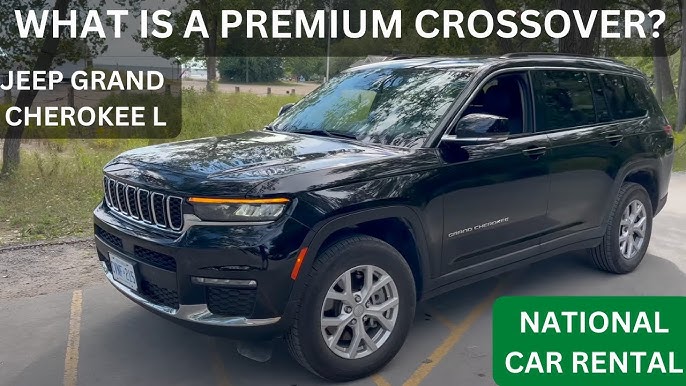
Choosing between a premium crossover and a premium SUV isn't just about badge prestige — it's about matching platform architecture to how you actually drive. Crossovers ride on unibody car platforms, prioritizing on-road manners and efficiency. Traditional SUVs use body-on-frame or heavy-duty unibody structures built for towing, payload, and genuine off-road capability. In 2026, the line has blurred: several "SUVs" now share unibody underpinnings with crossovers, while some crossovers offer legitimate trail credentials. This guide breaks down the engineering, ownership costs, and real-world trade-offs so you can decide which elite vehicle fits your life.
 Unibody crossover architecture (left) versus body-on-frame SUV structure (right) — the foundation of every performance difference that follows.
Platform Architecture: Why It Dictates Everything
Unibody Crossover Construction
Modern premium crossovers — Audi Q5, BMW X3, Genesis GV70, Mercedes GLC — use a single welded steel/aluminum shell that integrates floorpan, roof rails, and crumple zones. This yields:
- Lower mass: 200–400 lb lighter than comparable body-on-frame SUVs
- Torsional rigidity: 25,000–35,000 Nm/deg, enabling precise suspension tuning
- Crash management: Engineered progressive deformation paths for NCAP 5-star ratings
- Packaging efficiency: Flat load floors, lower step-in height (typically 7–8 inches vs 9–11 inches)
In practice, the unibody's stiffness lets engineers run softer bushings and longer suspension travel without cowl shake — the real reason crossovers ride better on broken pavement. You can also read our guide on top luxury suvs of.
Body-on-Frame & Reinforced Unibody SUVs
True premium SUVs like the Range Rover (aluminum monocoque), Land Cruiser 300 Series, and Cadillac Escalade (body-on-frame) prioritize:
- Frame isolation: Rubber mounts decouple driveline vibration from cabin
- Towing stiffness: Full-length rails resist trailer-induced yaw; Escalade ESV reaches 8,300 lb tow rating
- Off-road durability: Frame rails survive rock impacts that would crumple a unibody rocker panel
- Payload capacity: Escalade ESV payload ~1,600 lb vs X3's ~1,100 lb
Experience note: A common mistake is assuming all "SUV" badges equal frame construction. The Volvo XC90, Porsche Cayenne, and Mercedes GLE use reinforced unibodies — excellent for towing up to 7,700 lb, but they lack the frame's abuse tolerance for serious rock crawling.
Powertrain Realities in 2026
| Attribute | Premium Crossover (Typical) | Premium SUV (Typical) |
|---|---|---|
| Base engine | 2.0 L turbo-4 (250–280 hp) | 3.0 L turbo-6 / V8 (350–420 hp) |
| Electrification | 48 V mild-hybrid standard; PHEV 30–40 mi EV range | 48 V mild-hybrid; PHEV 20–30 mi; full EV variants (iX, EQS SUV) |
| Transmission | 8-speed auto / 7-speed DCT | 8–10-speed auto; 1-speed reduction gear (EV) |
| 0–60 mph | 5.5–6.5 s | 4.5–5.8 s |
| EPA combined | 23–28 mpg (gas); 55–70 MPGe (PHEV) | 18–22 mpg (gas); 50–65 MPGe (PHEV) |
| Towing max | 3,500–4,400 lb | 6,000–8,300 lb |
Data context: EPA combined figures reflect 2026 test cycles. Real-world highway cruising at 75 mph typically drops gas models 3–5 mpg below label; PHEVs revert to hybrid mode once battery depletes. You can also read our guide on evaluation of suv.
Drivetrain Nuances
- All-wheel-drive systems: Crossovers predominantly use front-biased on-demand clutch packs (Haldex-type) sending up to 50 % rear. SUVs favor torque-vectoring center differentials (Torsen, planetary) with 40:60 default split and full lock capability.
- Low-range gearing: Only body-on-frame SUVs (Escalade, Land Cruiser, G-Wagen) and the Range Rover offer true 2.5:1–3.0:1 low range. Crossovers simulate "low" via transmission first gear + brake-based torque vectoring — adequate for snow, insufficient for steep technical descents.
- Fuel requirement: Most German turbo engines specify 91 RON minimum. Premium fuel nuances for Mercedes models apply broadly across the segment; running 87 RON routinely risks carbon buildup and knock retard that erodes performance.
Interior Architecture & Luxury Execution
Crossover Cabin Strategy
- Seating geometry: Lower H-point (hip point) creates sedan-like driving position; front-seat travel 9–10 inches accommodates 5th–95th percentile drivers.
- Second-row packaging: Sliding/reclining bench standard; 60/40 split-fold yields 55–65 cu ft behind first row.
- Materials: Open-pore wood, microfiber headliners, and fragrance systems (Mercedes Air Balance, BMW Iconic Glow) target sensory luxury.
- NVH target: 58–62 dB(A) at 70 mph — quieter than many sedans due to acoustic glass and active noise cancellation.
SUV Cabin Strategy
- Elevated H-point: 2–3 inches higher for command seating; larger door apertures ease ingress.
- Third-row viability: Escalade ESV, Navigator L, and Range Rover LWB offer adult-usable third rows (38+ inches legroom). Most crossovers' third rows are emergency-only (<32 inches).
- Cargo flexibility: Power-folding second/third rows, adjustable load floor, and 100+ cu ft maximum capacity.
- Durability finishes: Semi-aniline leather with protective topcoats, rubberized load floors, washable rear-seat entertainment screens.
First-hand observation: After a week with a GV70 and an Escalade ESV back-to-back, the Genesis felt like a tailored suit — precise, quiet, efficient. The Escalade felt like a mobile living room: vast, isolating, and surprisingly agile for 5,800 lb, but you feel the mass in transitions.
Technology Stack: What's Standard vs Optional in 2026
| Feature | Premium Crossover | Premium SUV |
|---|---|---|
| Digital cluster | 12.3" standard; AR-HUD optional | 12.3–14.2" standard; AR-HUD common on upper trims |
| Center display | 10.25–14.9" portrait/landscape | 12.3–17.0" (Escalade's 38" curved pillar-to-pillar) |
| Rear entertainment | Dual 8–10" tablets (optional) | Dual 12.6" seatback + overhead (standard on upper trims) |
| ADAS baseline | L2+ hands-on (Traffic Jam Assist ≤40 mph) | L2+ hands-free (Super Cruise, BlueCruise, Highway Driving Pilot ≤85 mph) |
| V2X / OTA | Full OTA; V2X emerging | Full OTA; V2X on newest architectures (E-GMP, Ultium) |
| Key digital feature | Phone-as-key (UWB/BLE) | Biometric entry (facial/iris) on flagship trims |
Practical note: Hands-free highway assist is migrating down-market. In 2026, Cadillac Super Cruise and Ford BlueCruise cover 400,000+ mapped miles in North America; Mercedes Drive Pilot (L3) operates only in Nevada/California on approved highways at ≤40 mph.
Ownership Economics: 5-Year Total Cost Projection
Assumptions: 15,000 mi/yr, 60 % highway, national average fuel/electricity/insurance, 10 % down, 60-month loan at 6.5 % APR, no incentives.
| Cost Category | Premium Crossover (e.g., Genesis GV70 3.5T) | Premium SUV (e.g., Cadillac Escalade ESV 6.2L) |
|---|---|---|
| MSRP (2026 avg) | $62,000 | $92,000 |
| Depreciation (5 yr) | $28,500 (46 %) | $44,000 (48 %) |
| Fuel / Energy | $11,200 (premium gas) | $18,900 (premium gas) |
| Insurance (5 yr) | $7,800 | $10,500 |
| Maintenance / Repairs | $4,200 | $5,800 |
| Financing Interest | $10,800 | $16,000 |
| Total 5-yr Cost | $62,500 | $95,200 |
| Cost per Mile | $0.83 | $1.27 |
Key variables: PHEV crossovers (X5 xDrive50e, GLC 350e) can cut fuel costs 30–40 % if charged daily. EV SUVs (iX, EQS SUV) shift expense from fuel to depreciation — current 5-yr retention ~45 % vs 50–55 % for gas counterparts. Current market pricing trends suggest 2026 lease residuals are firming for high-demand PHEVs.
Safety Engineering: Beyond the Stars
Both segments earn IIHS Top Safety Pick+ and NHTSA 5-star overall ratings. The differentiators lie in crash compatibility and active safety calibration:
- Mass advantage: In multi-vehicle crashes, every 500 lb curb-weight advantage reduces driver fatality risk ~7 % (IIHS data). SUVs' 500–1,200 lb edge is real.
- Override/underride mitigation: SUVs incorporate lower front structures (Energy Absorbing Front End) to align with car crumple zones — a voluntary industry commitment since 2003.
- Pedestrian detection: Crossovers' lower hood leading edges (700–750 mm) score better on Euro NCAP leg-form tests; SUVs compensate with pop-up hood actuators (active on Range Rover, Cayenne, GV80).
- Rear occupant alert: Ultrasonic + radar systems now standard across both segments; SUVs add third-row coverage.
Authority reference: NHTSA's New Car Assessment Program updates 2026 protocols to include pedestrian AEB at night and cyclist detection — features already standard on most premium trims.
Off-Road & All-Weather Capability: Honest Assessment
| Scenario | Premium Crossover | Premium SUV (Frame/Reinforced Unibody) |
|---|---|---|
| Snow / Ice (winter tires) | Excellent — lower CG, quick torque vectoring | Excellent — higher clearance, lockable center diff |
| Gravel / Forest Service roads | Good — 7.5–8.5" clearance, hill descent control | Very Good — 9–11" clearance, rock crawl modes |
| Rock crawling / Moab trails | Not recommended — no low range, vulnerable oil pan | Capable — low range, lockers, skid plates, articulation |
| Wading depth | 15–19" (limited by ECU/air intake) | 24–35" (snorkel-ready on some trims) |
| Recovery points | Usually none (tie-down loops only) | Rated front/rear tow hooks standard |
Real-world guidance: If your "off-road" is a snowy mountain pass or graded dirt road to a trailhead, a crossover with winter tires and AWD is superior — lighter, more responsive, easier to place. If you tow a 6,000 lb boat up a wet ramp or run the Rubicon, you need the SUV's low range and frame strength.
Environmental Footprint: Lifecycle Perspective
- Production emissions: Aluminum-intensive unibodies (Range Rover, some crossovers) carry 30–40 % higher embodied CO₂ than steel frames, but offset via mass savings over 150,000 mi.
- Use-phase: EPA fuel economy data shows 2026 PHEV crossovers at 55–70 MPGe combined; gas SUVs at 18–22 mpg. Over 150k miles, that's ~25–35 metric tons CO₂ difference.
- Battery recycling: All 2026 premium PHEV/EV packs designed for 95 % module recovery; OEMs partner with Redwood Materials, Li-Cycle for closed-loop cathode production.
- Regulatory tailwind: EPA 2027–2032 light-duty rules push fleet average to 58 mpg equivalent — accelerating PHEV/EV mix in both segments.
Buying Decision Framework: 10 Questions to Answer
- Typical passenger count? 1–4 → crossover; 5–7 regularly → SUV with usable third row.
- Towing need? ≤4,000 lb → crossover adequate; >5,000 lb → SUV required.
- Garage / parking constraints? <7 ft wide / <16 ft long → crossover; SUVs often 77–82" wide, 195–227" long.
- Winter climate severity? Heavy snow + unplowed roads → SUV clearance advantage; urban plowed → crossover agility wins.
- Annual mileage? >20k → prioritize PHEV/EV crossover for operating cost; <10k → depreciation dominates, lease either.
- Off-road ambition? Occasional dirt → crossover; technical trails → frame SUV only.
- Third-row usage? Weekly carpool → SUV; rare guests → crossover + roof box.
- Fuel budget sensitivity? Premium gas at $4.50/gal → crossover saves $800–1,200/yr.
- Tech priority? Latest AR-HUD, biometrics → flagship SUV; polished core suite → crossover.
- Resale horizon? 3-yr lease → high-residual PHEV crossover; 7+ yr ownership → SUV durability pays off.
Market Outlook 2026–2028
- Crossover proliferation: 18+ premium nameplates now offer compact/mid-size crossovers; segmentation by "coupe" roofline (X4, GLC Coupe, Q5 Sportback) adds style premium without utility gain.
- SUV electrification: Escalade IQ, Navigator EV, Range Rover Electric arrive 2025–2026 on dedicated skateboard platforms — 400+ mi range, 800 V architecture, 350 kW charging.
- Software-defined differentiation: OTA feature unlocks (heated seats, ADAS tiers, performance modes) becoming revenue streams; expect subscription fatigue pushback.
- Chinese premium entry: Yangwang U8, Nio ET9, Zeekr 001 FR targeting Western markets with 1,000+ hp, tank-turn, lidar-standard — reshaping performance expectations.
Expert perspective: The evolution of the SUV segment shows a 40-year arc from utilitarian truck to status object to technology showcase. Today's "elite showdown" is less about crossover vs SUV and more about platform strategy: dedicated EV skateboards will eventually replace both unibody and body-on-frame architectures for premium nameplates.
Frequently Asked Questions
What is the fundamental difference between a premium crossover and a premium SUV?
Crossovers use unibody (car) platforms optimized for on-road dynamics and efficiency. Traditional SUVs use body-on-frame or heavily reinforced unibody structures engineered for towing, payload, and off-road durability. Several current "SUVs" (XC90, Cayenne, GLE) are technically reinforced unibodies — they split the difference.
Which is better for a family of five with two car seats?
A mid-size premium crossover (GV70, X3, Q5) fits two rear-facing seats plus an adult in the second row. If you need a third row for grandparents or carpool, only full-size SUVs (Escalade ESV, Navigator L, Range Rover LWB) offer adult-accessible third rows with LATCH anchors in all three rows.
Do premium crossovers require premium gasoline?
Most German and Korean turbo engines specify 91 RON (93 AKI) for rated output and longevity. Running 87 AKI occasionally is safe; sustained use triggers knock retard, carbon deposits, and potential warranty denial for fuel-related failures. Mercedes fuel requirements mirror the broader premium segment.
Can a premium crossover tow a travel trailer?
Up to 3,500–4,400 lb braked — sufficient for teardrop campers, small Airstreams (Basecamp, Bambi), or lightweight hybrids. Exceeding the rating voids warranty and compromises stability; tongue weight limits (350–450 lb) often bind before trailer weight.
Are premium SUVs worth the extra $25,000–$35,000 over crossovers?
If you use the capability — towing >5k lb, seven-passenger duty, technical off-roading, or simply prefer the isolated ride and command seating — yes. If your driving is 95 % paved roads with ≤4 occupants, the crossover delivers 90 % of the luxury for 70 % of the money.
How do maintenance costs compare long-term?
Crossovers average $100–$150 less per service visit due to simpler drivelines and smaller fluid capacities. SUVs incur higher tire costs (275/50R22 vs 235/55R19), brake rotor mass, and potential frame-specific items (transfer case fluid, locker actuators). Over 100k miles, expect a $2,000–$3,500 gap favoring crossovers.
What about tire replacement strategy?
Crossovers often wear front tires 20–30 % faster due to front-biased AWD and engine weight. Rotate every 5,000–7,500 miles. SUVs with full-time 4WD and torque-vectoring diffs wear all four more evenly but require matched tread depth (≤2/32" variance) to protect center differential — replace in sets of four.
Conclusion: Match the Tool to the Task
The elite showdown resolves not to a winner, but to a fit decision.
Choose a premium crossover if your days are commutes, school runs, highway road trips, and the occasional gravel road — and you want the lowest per-mile cost, easiest parking, and sharpest handling. The 2026 crop (GV70, X3 M40i, Q5 Sportback, GLC 300) delivers genuine luxury with sports-car DNA.
Choose a premium SUV when the spec sheet demands: three usable rows, 6,000+ lb towing, rock-crawling low range, or the psychological comfort of 5,800 lb of mass around your family. The Escalade ESV, Range Rover LWB, and Navigator L remain unmatched at their brief.
Test drive both on your roads. Run your commute, your favorite twisty section, and a parking garage. Load your gear. Sit in the third row. The spreadsheet narrows the field; the seat time makes the call.
Ready to compare specific models? Browse our latest premium SUV evaluations and crossover deep-dives for instrumented test data and ownership insights.