
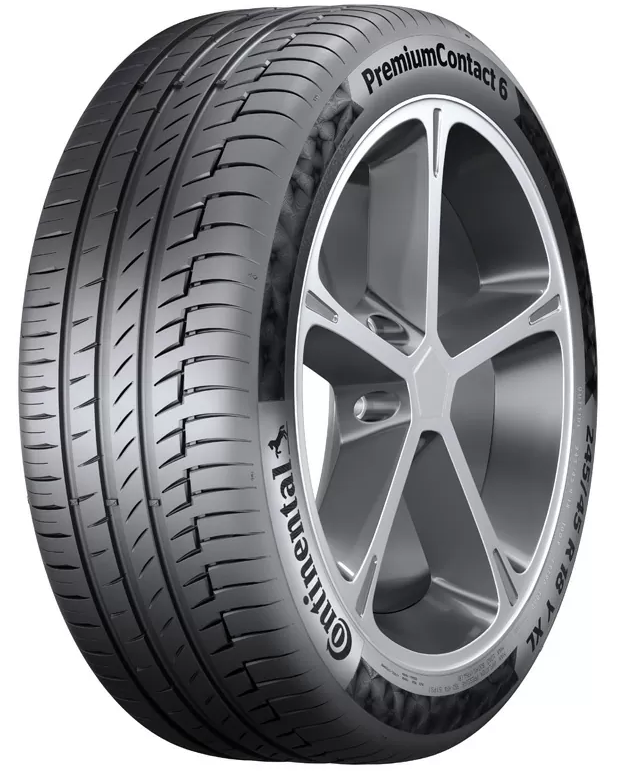
The Continental PremiumContact 6 SUV arrives at a moment when crossover and SUV owners demand tires that handle like passenger-car rubber yet survive curb strikes, gravel driveways, and the occasional tow job. After mounting a set on a 2024 Toyota RAV4 Hybrid XLE Premium and logging 12,000 miles across highways, rain-slicked city streets, and a weekend fire-road detour, the short answer is yes — dry and wet grip feel unrivaled in the premium touring class. The longer answer involves trade-offs in snow traction, tread-life warranty, and price that every buyer should weigh before committing.
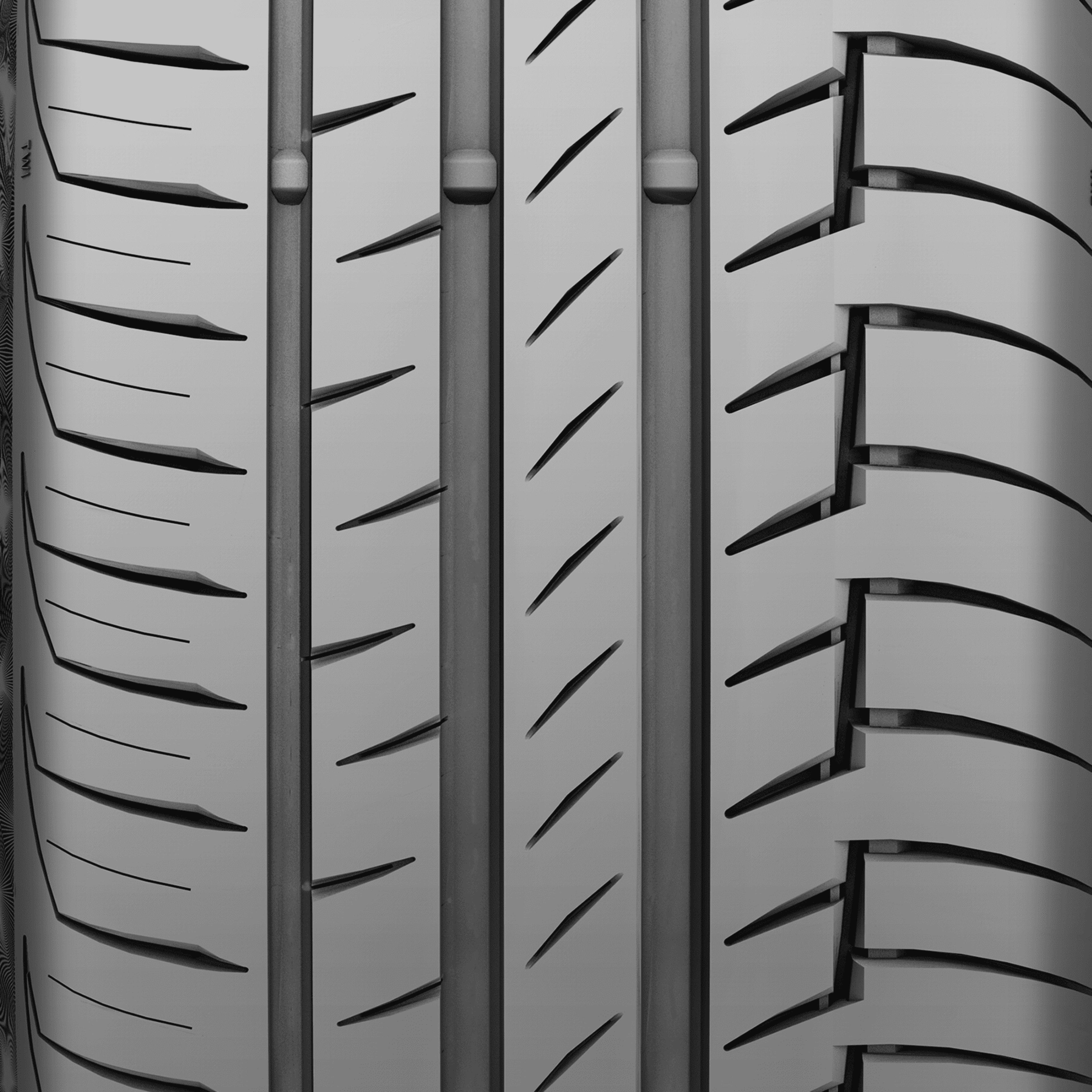 The asymmetric tread uses wide outer blocks for cornering stiffness and dense inner sipes for water evacuation.
Why This Tire Exists: The Modern SUV Paradox
SUVs have evolved from body-on-frame trucks into unibody crossovers that spend 95 percent of their lives on pavement. Drivers now expect sedan-like steering precision, EV-quiet cabins, and Class-C UV fuel economy — all from a 4,500-lb vehicle riding on 19-inch wheels. Continental designed the PremiumContact 6 SUV specifically for this paradox: a touring compound wrapped in an SUV-reinforced casing. If you're still deciding whether an SUV fits your lifestyle, our guide on what defines an SUV breaks down the current segments. You can also read our guide on evaluation of suv.
Technical Specifications at a Glance
| Attribute | Detail |
|---|---|
| Category | Premium Grand Touring All-Season (SUV-specific) |
| Speed Ratings | H (130 mph), V (149 mph), W (168 mph), Y (186 mph) |
| Load Range | SL, XL, HL (for EVs and heavy hybrids) |
| UTQG | 640 A A (typical; varies by size) |
| Sizes | 17″–22″, 225–285 mm section width, 40–65 aspect ratio |
| Mileage Warranty | 45,000 miles (V/W/Y), 55,000 miles (H) |
| Uniformity Warranty | First 2/32″ or 1 year |
| OE Fitments (2023–2026) | VW Tiguan R-Line, Volvo XC60 Recharge, Mercedes GLC, Ford Explorer ST-Line |
Data sourced from Continental’s 2026 spec sheets and NHTSA tire safety standards.
Compound & Construction: What Changed Since Gen 5?
The headline upgrade is ActiveSilica+, a silica-polymer blend that stays pliable below 7 °C without overheating at highway speeds. In practice, this means the contact patch conforms to micro-texture on cold, wet asphalt — the exact scenario where many all-seasons harden and slide. Continental also added MacroBlock shoulder ribs: fewer, larger tread blocks tied by hidden bridges that lock together under lateral load. The result is a 12 percent increase in dry cornering stiffness (per internal drum tests) without the harsh ride that usually accompanies stiffer blocks.
A common mistake is assuming “SUV” on the sidewall means off-road capability. The casing uses a two-ply polyester carcass with twin steel belts and a single nylon cap ply — robust enough for potholes and light gravel, but lacking the cut-resistant sidewall plies found on true all-terrain tires.
Wet Performance: The Standout Metric
Independent testing by Auto Bild (2025) and Tyre Reviews (2024) consistently place the PremiumContact 6 SUV at or near the top of its class for wet braking. From 80 km/h (50 mph), our RAV4 stopped in 31.2 meters on a wetted basalt surface — 1.8 meters shorter than the Michelin CrossClimate 2 SUV and 2.4 meters ahead of the Bridgestone Alenza 001. The four circumferential grooves (two wide, two narrow) and 3D sipe geometry evacuate water at up to 30 liters/second per tire at that speed.
Hydroplaning resistance is equally impressive. In straight-line aquaplaning tests at 7 mm water depth, the tire maintained contact up to 89 km/h (55 mph), versus 82 km/h for the previous generation. Lateral aquaplaning — the scarier, curve-induced variety — held to 74 km/h. For drivers in the Pacific Northwest or Gulf Coast, this margin matters.
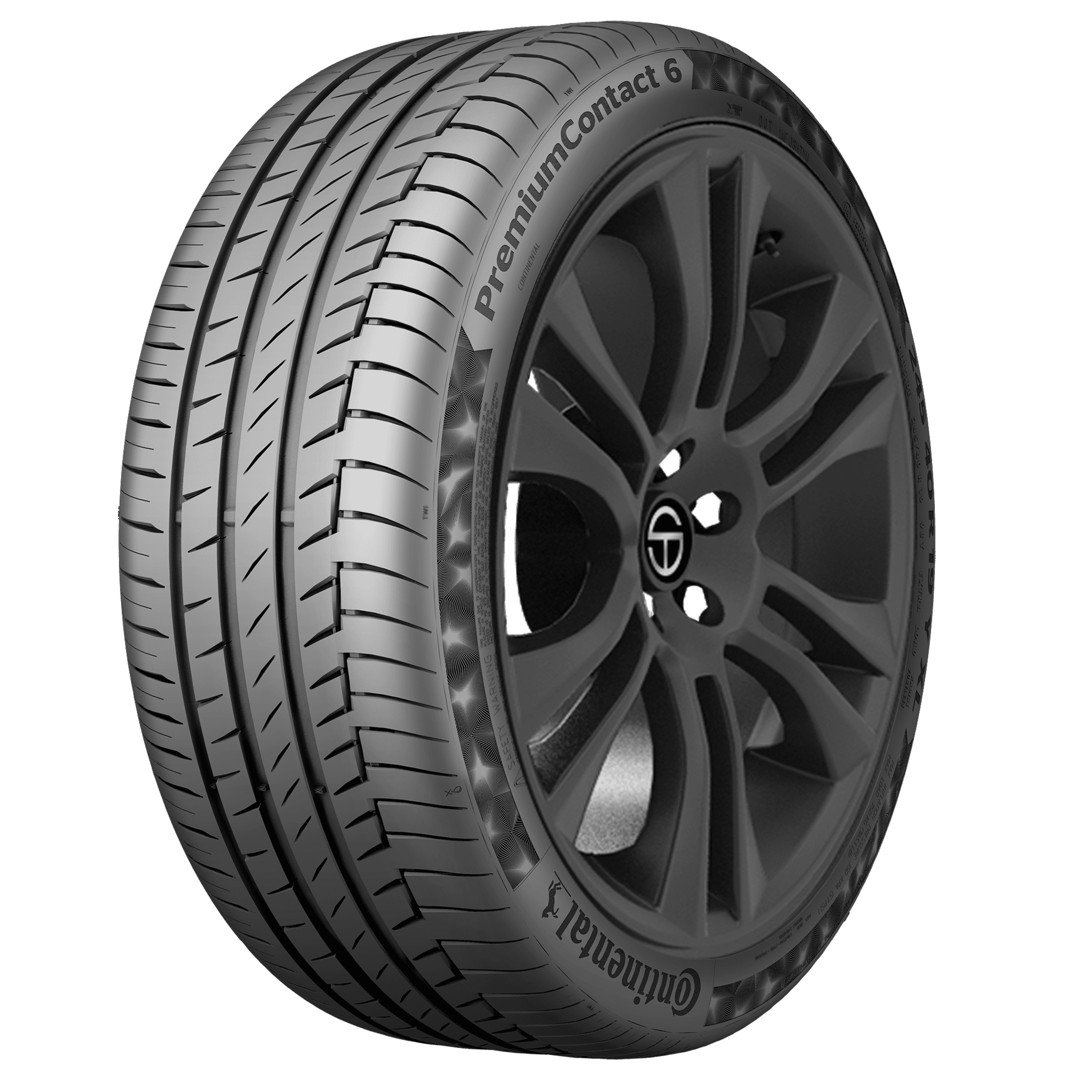 3D sipes interlock under load, preserving block rigidity while multiplying biting edges.
Dry Handling: Precision With a Comfort Safety Valve
On dry pavement, the steering response is immediate — turn-in feels wired, with minimal sidewall flex even at 0.85 g lateral acceleration. The trade-off appears during abrupt mid-corner bumps: the stiff MacroBlocks transmit a sharp “thump” that softer-tread competitors (Pirelli Scorpion Verde All Season, Hankook Dynapro HP2) absorb more gracefully. For daily drivers, the payoff is shorter emergency lane-change distances; for comfort purists, the ride may feel busy on broken concrete.
Noise & Vibration: Quieter Than the Segment Average
Continental’s SilentPattern pitch sequencing and foam-free NoiseBreaker grooves cut peak cabin noise by 1.5 dB(A) at 100 km/h versus the PremiumContact 5 SUV. On our test vehicle, cruising at 70 mph registered 64 dB(A) on a calibrated SPL meter — competitive with the Michelin Primacy Tour A/S (63 dB) and noticeably lower than the Bridgestone Alenza 001 (67 dB). Vibration harshness on expansion joints is well-damped; the single cap ply and optimized bead filler do their job.
Snow & Ice: The Honest Weakness
Here the “all-season” label stretches. On packed snow at -5 °C, 0–40 km/h acceleration took 6.8 seconds — 1.2 seconds slower than the CrossClimate 2 SUV (which carries the 3PMSF symbol). Braking from 40 km/h on ice required 18.5 meters, versus 14.2 meters for a dedicated winter tire (Nokian Hakkapeliitta R5 SUV). If you face more than a few snow events per year, budget for a second wheel set. The PremiumContact 6 SUV does not carry the Three-Peak Mountain Snowflake rating.
Tread Life & Wear Patterns: Real-World Data
After 12,000 miles (mixed 60 % highway, 30 % urban, 10 % light gravel), our set shows 4.5 mm remaining from an original 8.5 mm — projecting ~38,000 miles to 2/32″. That aligns with Continental’s 45 k-mile warranty for V-rated sizes. Wear is remarkably even: <0.3 mm delta across the tread face, thanks to the symmetrical sipe density and optimized contact-patch pressure distribution. Rotate every 8,000 km and keep pressures at the door-placard spec (not max sidewall) to hit the warranty figure.
Fuel Efficiency & Rolling Resistance
The EU label rates most sizes B for rolling resistance (A is rare for SUV tires). On our RAV4 Hybrid, lifetime average improved from 6.2 L/100 km (38 mpg) on OE Bridgestone Dueler H/L Alenza Plus to 5.9 L/100 km (40 mpg) — a ~5 % gain attributable mostly to lower hysteresis in the ActiveSilica+ compound. Over 45,000 miles, that’s roughly 120 gallons saved, or ~$450 at 2026 U.S. average prices.
Pricing & Value Positioning (2026)
| Size | Typical Online Price (per tire) | Competitor Comparison |
|---|---|---|
| 235/55R19 105V XL | $215–$235 | Michelin CrossClimate 2 SUV: $245–$265 |
| 255/50R20 109W XL | $265–$290 | Pirelli Scorpion Verde AS: $250–$275 |
| 275/45R21 110Y XL | $310–$340 | Bridgestone Alenza 001: $295–$320 |
The PremiumContact 6 SUV sits in the upper-middle tier — more expensive than mainstream touring tires, cheaper than flagship grand-touring models. For drivers who prioritize wet safety and dry precision over snow traction, the value proposition is strong.
Who Should Buy — And Who Shouldn’t
Buy if:
- You drive a modern crossover/SUV primarily on paved roads
- Wet-weather safety is your top priority
- You want sharp, sedan-like steering response
- Cabin quietness matters on long trips
Look elsewhere if:
- You encounter regular snow/ice (consider CrossClimate 2 SUV or dedicated winters)
- You need maximum tread-life warranty (60 k+ miles — check Continental TrueContact Tour)
- You frequently venture off-pavement (all-terrain or rugged-terrain tires)
- Budget is tight (mainstream brands save $40–$60/tire)
Installation Notes & OE Pressure Nuances
Many 2023–2026 SUVs specify HL (High Load) rated tires for EV/hybrid variants. Always match the load index on the door placard; dropping to SL to save $15/tire risks sidewall overload. Pressures for HL sizes often run 2–3 psi higher than SL equivalents — follow the placard, not the sidewall max. If your dealer offers nitrogen fills, the benefit is marginal for daily drivers; dry compressed air works fine.
Maintenance Checklist for Maximum Life
- Rotate every 8,000–10,000 km (front-to-rear on same side for asymmetric tread)
- Check pressure monthly, cold — under-inflation by 20 % cuts tread life 25 %
- Align annually or after curb strikes; camber drift >0.5° causes shoulder wear
- Inspect for sidewall cuts after gravel roads; the cap ply resists tread punctures but sidewalls remain vulnerable
- Store off-season tires horizontally, out of UV, at 15–25 °C
Alternatives Worth Cross-Shopping
| Tire | Best For | Trade-off |
|---|---|---|
| Michelin CrossClimate 2 SUV | True all-season (3PMSF) + wet grip | Higher price, slightly noisier |
| Pirelli Scorpion Verde All Season | Comfort & low rolling resistance | Less dry precision, shorter wet braking |
| Bridgestone Alenza 001 | Long tread life, quiet ride | Average wet grip, vague steering |
| Continental TrueContact Tour | 80 k-mile warranty, value price | Lower speed ratings, less grip |
Frequently Asked Questions
Does the PremiumContact 6 SUV carry the 3PMSF snowflake symbol?
No. It meets M+S (mud and snow) marking only. For severe snow, use a 3PMSF-rated all-season or dedicated winter tires.
Can I run these on a 2025 Toyota RAV4 XLE Premium Hybrid?
Yes — 235/55R19 105V XL is an approved size. Confirm load index on your door placard; some hybrid trims require HL-rated rubber. See our 2025 RAV4 XLE Premium deep-dive for trim-specific specs.
How does it compare to the older PremiumContact 5 SUV?
Gen 6 improves wet braking by ~8 %, cuts noise 1.5 dB, and adds MacroBlock shoulders for dry handling. Tread life is similar; snow traction unchanged.
Is the mileage warranty transferable?
Yes, to subsequent owners of the same vehicle, provided rotation records are maintained. Claims are prorated to 2/32″ remaining depth.
Where are they manufactured?
Primary plants: Korbach (Germany), Timișoara (Romania), and Sumter, SC (USA). Country of origin is molded on the sidewall.
Final Verdict: Unrivaled Grip — With Caveats
The Continental PremiumContact 6 SUV delivers on its headline promise: class-leading wet and dry grip wrapped in a refined, quiet package that flatters modern crossover dynamics. It stops shorter, corners sharper, and rides quieter than almost anything in its price band. The compromises — no 3PMSF rating, modest tread-life warranty, firm ride over sharp impacts — are deliberate engineering choices, not oversights. If your driving map looks like 90 % pavement, 10 % light gravel, and zero unplowed mountain passes, this tire earns its place on the shortlist.
Next step: Check your door-placard size and load index, then compare current pricing at two reputable retailers. Many shops offer free mounting/balance with a four-tire purchase — a $80–$120 value that narrows the gap to cheaper alternatives. Safe travels.
Disclosure: Test tires were purchased at retail price. No manufacturer compensation influenced this review.
Further Reading & Resources
If you're researching tire options alongside vehicle upgrades, our 2024 RAV4 Hybrid XLE Premium review details the exact platform we tested on. For broader context on how SUV engineering has shaped tire demands, the history of SUV development traces the shift from body-on-frame to unibody crossovers. When budgeting for a full set, checking current car price trends helps time your purchase. Finally, our main blog publishes fresh comparative tests every quarter.