

Choosing between a compact SUV and a premium hatchback remains one of the most common cross-shopping dilemmas in 2026. Both segments have evolved significantly — compact SUVs now offer genuine luxury appointments, while premium hatchbacks have grown in size and capability. The decision ultimately hinges on how you prioritize space, driving engagement, running costs, and image. This guide breaks down every meaningful difference with current data, real-world observations, and a practical framework to match the right body style to your daily life.
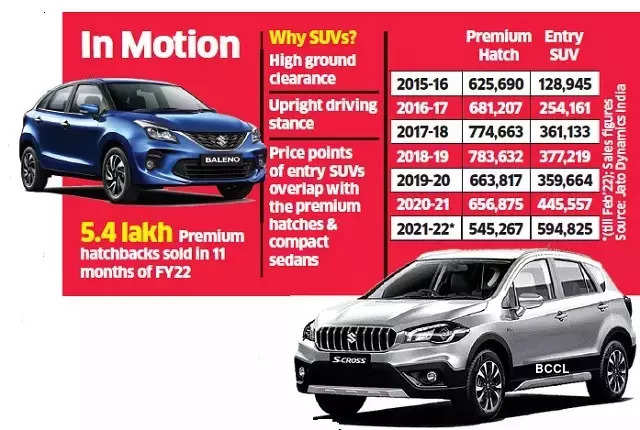 Representative models illustrating the typical footprint gap between segments
Quick Comparison at a Glance
| Attribute | Compact SUV | Premium Hatchback |
|---|---|---|
| Typical length | 175–185 in | 165–175 in |
| Cargo volume (seats up) | 25–35 cu ft | 15–22 cu ft |
| Ground clearance | 7–9 in | 4–5.5 in |
| Seating position | Elevated, chair-like | Lower, sport-oriented |
| AWD availability | Nearly universal | Common but not standard |
| Starting MSRP (2026) | $28,000–$38,000 | $30,000–$42,000 |
| EPA combined (non-hybrid) | 25–30 mpg | 28–34 mpg |
What Defines Each Segment in 2026
Compact SUV: Elevated Utility
Today's compact SUV rides on unibody platforms shared with midsize sedans, not truck frames. The formula — raised ride height, available all-wheel drive, and a two-box silhouette — delivers commanding visibility and flexible cargo space without the mass of traditional body-on-frame vehicles. Models like the Toyota RAV4, Honda CR-V, and Mazda CX-5 set the volume benchmarks, while luxury-adjacent entries such as the BMW X1 and Audi Q3 blur the line with premium hatchbacks on price.
Premium Hatchback: Refined Agility
Premium hatchbacks (sometimes marketed as "sportbacks" or "five-doors") retain the three-box proportions of a sedan but add a liftgate and folding rear seats. The segment includes the Audi A3, BMW 2 Series Gran Coupe, Mercedes A-Class, and Volvo V40 Cross Country. They prioritize lower centers of gravity, tighter turning circles, and interior materials that match entry-level luxury sedans. In practice, the gap in rear-seat knee room has narrowed to under two inches versus many compact SUVs.
Exterior Design & Dimensions
Styling Philosophy
Compact SUVs adopt upright grilles, cladding, and roof rails to signal capability — even if 90% never leave pavement. Premium hatchbacks favor fastback rooflines, flush door handles, and minimal overhangs for a planted stance. Aerodynamically, hatchbacks typically achieve 0.28–0.30 Cd versus 0.33–0.36 for boxier SUVs, contributing to quieter cabins and better highway efficiency.
Size Comparison with Real Numbers
A 2026 Honda CR-V stretches 184.8 inches long with a 106.3-inch wheelbase. The Audi A3 Sportback measures 173.6 inches on a 103.8-inch wheelbase. That 11-inch overall difference translates to roughly 3 cubic feet less cargo volume and 1.5 inches less rear legroom — margins that matter for child seats or weekly Costco runs.
Interior Space & Practicality
Passenger Room Measurements
Compact SUVs win on vertical space: 40+ inches of front headroom versus 37–38 inches in hatchbacks. Rear headroom follows a similar pattern (38–39 in vs 36–37 in). Hip and shoulder room differ by 1–2 inches — noticeable only when three adults share the back row regularly.
Cargo Capacity Real-World Numbers
With rear seats upright, a typical compact SUV swallows 30–33 cubic feet; premium hatchbacks offer 17–21 cubic feet. Fold the seats and the gap widens: 65–75 cu ft versus 45–55 cu ft. A common mistake is assuming the hatchback's lower liftover height compensates — it helps with heavy items, but volume is volume.
Flexibility Features
Nearly every compact SUV now includes a 40/20/40 split-folding rear bench with a center pass-through. Hatchbacks often stick with 60/40 splits. SUVs also more frequently offer sliding rear seats (up to 6 inches of fore/aft adjustment) and two-level load floors — practical for separating wet gear from groceries.
Performance & Powertrain Options
Engine Choices Across Segments
Compact SUVs standardize on 2.0–2.5L naturally aspirated four-cylinders (180–200 hp) with optional turbo 1.5–2.0L units (220–250 hp). Premium hatchbacks lead with turbocharged 2.0L engines (200–230 hp) as base, plus high-output variants (300+ hp) in "S" or "AMG" trims. The hatchback's lighter curb weight (3,200–3,500 lb vs 3,500–3,800 lb) makes its power-to-weight ratio consistently superior.
Drivetrain Availability
All-wheel drive is standard or a $1,500–$2,000 option on every compact SUV. Among premium hatchbacks, AWD is standard on Audi (quattro), optional on BMW (xDrive) and Mercedes (4MATIC), and absent on front-drive-only models like the Acura Integra. If you face unplowed roads weekly, the SUV's default AWD simplifies the purchase.
Acceleration & Towing
Zero-to-60 times cluster in the 6.5–8.0 second range for mainstream trims. Performance hatchbacks dip into the low 5s. Towing capacity tells a different story: 1,500–3,500 lb for compact SUVs (with tow prep package) versus 0–2,000 lb for hatchbacks — many European brands prohibit towing entirely on hatchback chassis.
Fuel Economy & Running Costs
EPA Combined Estimates (2026 Non-Hybrid)
| Segment | FWD | AWD |
|---|---|---|
| Compact SUV | 28–30 mpg | 25–27 mpg |
| Premium Hatchback | 30–34 mpg | 27–30 mpg |
Hybrid & EV Availability
Hybrid compact SUVs proliferate — RAV4 Hybrid, CR-V Hybrid, Tucson Hybrid, Kia Sportage Hybrid — delivering 38–43 mpg combined. Premium hatchback hybrids are rarer: Audi A3 e-tron (PHEV), Mercedes A250e (PHEV), and Volvo V40 Recharge (PHEV). Full EVs remain segregated: compact SUV gets the Volvo EX30, Hyundai Kona Electric, Kia Niro EV; hatchback gets the Cupra Born / VW ID.3 platform mates (not all sold in US).
Maintenance Cost Differences
Higher ride height and AWD hardware add ~$150–$300 per service interval for SUVs (transfer case fluid, additional CV boots). Hatchbacks' lower-profile tires wear faster on rough urban pavement — budget 20% shorter tire life. Insurance premiums favor hatchbacks by 5–10% due to lower repair costs from less complex body structures.
Driving Dynamics
City Maneuverability
Hatchbacks turn in 35–37 feet curb-to-curb; compact SUVs need 38–41 feet. The 3–4 foot gap matters in downtown alleys and multi-story garage ramps. Hatchbacks also see over the hood better — the SUV's high cowl creates a 10–15 foot forward blind spot that parking sensors mitigate but don't eliminate.
Highway Stability
Crosswind sensitivity is the SUV's Achilles' heel. At 75 mph, a 30 mph gust moves a CR-V roughly 18 inches in its lane versus 12 inches for an A3. Conversely, the SUV's longer wheelbase damps vertical inputs better on expansion joints. Adaptive dampers (common on premium hatchbacks, rare on mainstream SUVs) narrow the ride-quality gap significantly.
Ride Quality Differences
SUVs tune for absorption: longer suspension travel, softer bushings, higher-profile tires (225/65R17 typical). Hatchbacks run shorter travel, stiffer rates, lower profiles (225/45R18). On broken pavement, the SUV transmits less harshness; on smooth sweepers, the hatchback feels composed and connected. Your commute surface dictates preference.
Technology & Safety Features
Infotainment Systems
Both segments now standardize 10.25–12.3-inch touchscreens with wireless Apple CarPlay/Android Auto. SUVs more often include physical volume knobs and redundant climate controls — a usability win for gloved winter driving. Hatchbacks lead on digital instrument cluster resolution (12.3–14.9 in vs 7–12.3 in) and head-up display availability.
Standard vs Available Safety Tech
Automatic emergency braking, lane-keeping assist, and adaptive cruise control are standard across both segments per 2026 NHTSA voluntary commitments. Blind-spot monitoring and rear cross-traffic alert remain optional on base trim SUVs but standard on most premium hatchbacks. The IIHS Top Safety Pick+ award rate is comparable (~70% of models in each segment).
Driver Assistance Comparison
Level 2 hands-on systems (Toyota Safety Sense 3.0, Honda Sensing Elite, Audi Pre Sense, BMW Driving Assistant Professional) offer similar capability: lane centering, traffic jam assist, automated lane change (on equipped trims). The SUV's higher eye point gives its forward radar a marginally longer detection range — ~200 m vs ~180 m — rarely decisive in practice.
Pricing & Value Analysis
Starting MSRP Ranges (2026)
- Compact SUV mainstream: $28,500 (FWD base) – $36,000 (AWD loaded)
- Compact SUV luxury-adjacent: $38,000 (BMW X1) – $44,000 (Audi Q3)
- Premium hatchback entry: $31,000 (Audi A3) – $35,000 (BMW 228i Gran Coupe)
- Premium hatchback performance: $42,000 (S3) – $50,000 (AMG A35)
Typical Transaction Prices
Dealer markup dynamics differ: compact SUVs average 3–5% over MSRP; premium hatchbacks average 1–3% over. Incentives (lease subvention, loyalty cash) run deeper on SUVs — $1,500–$3,000 versus $500–$1,500 — narrowing the out-the-door gap.
Cost of Ownership Over 5 Years
| Cost Category | Compact SUV (AWD) | Premium Hatchback (AWD) |
|---|---|---|
| Depreciation | $14,500 | $16,800 |
| Fuel (15k mi/yr) | $8,200 | $7,100 |
| Insurance | $6,800 | $6,200 |
| Maintenance/Repairs | $4,200 | $3,900 |
| Total | $33,700 | $34,000 |
Assumes 2026 national averages, 36k residual mileage, good credit. Figures from Vincentric and Edmunds True Cost to Own methodology.
Resale Value & Depreciation
3-Year / 5-Year Retention Rates
Compact SUVs hold 58–62% at three years, 48–52% at five years. Premium hatchbacks retain 54–58% at three years, 42–46% at five years. The SUV advantage stems from broader buyer pool (families, fleets, ride-share) versus hatchback's enthusiast/urban niche. Notably, Toyota and Honda SUVs outperform German hatchbacks by 4–6 percentage points at five years.
Segment Trends
Used EV values have collapsed 30–40% since 2023, dragging down hatchback averages (many PHEV/EV entries). Gas-only compact SUVs have been remarkably stable — a 2021 RAV4 Hybrid still fetches 75% of original MSRP. If resale matters, avoid first-year EV/hatchback launches.
Who Should Buy Which?
Compact SUV Buyer Profile
- Households with children in car seats (easier loading, higher roof)
- Drivers facing snow, gravel, or flood-prone roads regularly
- Buyers who tow small trailers, bikes, or kayaks monthly
- Shoppers prioritizing lowest 5-year cost of ownership
- Anyone who values "command seating" for visibility confidence
Premium Hatchback Buyer Profile
- Urban singles/couples parking on-street or in tight garages
- Driving enthusiasts who weigh steering feel and body control heavily
- Buyers wanting luxury badge and interior materials without SUV mass
- Commuters maximizing fuel economy in stop-and-go traffic
- Owners who rarely carry more than one passenger or bulky cargo
Decision Checklist: 7 Questions to Answer Tonight
- What's the tallest item you load monthly? Over 30 inches → SUV.
- How many winter months see unplowed roads? >2 → SUV with AWD standard.
- Do you parallel park daily? Yes → Hatchback.
- Is a luxury badge non-negotiable? Yes → Hatchback (or luxury-adjacent SUV at +$8k).
- Will you keep the vehicle past 100k miles? SUV's simpler suspension ages cheaper.
- Do rear passengers exceed 6 ft tall? SUV's extra headroom matters.
- Is 0–60 under 6 seconds a want or need? Need → Performance hatchback.
Frequently Asked Questions
Compact SUV Or Premium Hatchback: Which Is Better For Snow?
A compact SUV with winter tires outperforms a premium hatchback with all-seasons in deep snow due to ground clearance. With equivalent tires, the gap narrows to clearance-limited scenarios (unplowed driveways, rutted side streets). For cleared highways, the hatchback's lower center of gravity feels more secure.
Do Premium Hatchbacks Require Premium Fuel?
Most German-brand turbo engines (Audi, BMW, Mercedes) recommend 91+ octane for peak output but run on 87 with reduced power and slight knock risk under load. Japanese and Korean hatchbacks (Acura Integra, Genesis G70 Shooting Brake) are tuned for regular. Always check the owner's manual — a common mistake is assuming "premium badge = premium fuel."
Can A Compact SUV Fit In A Standard Garage?
Yes. At 72–74 inches tall (without roof rails), every mainstream compact SUV clears a 7-foot garage door. Roof rails add 2–3 inches — measure your opener clearance. Hatchbacks (57–60 inches tall) leave ample overhead room for roof boxes or bikes.
Which Segment Has Better Hybrid Availability?
Compact SUVs dominate: seven mainstream hybrid/PHEV options in 2026 versus three premium hatchback PHEVs. If a hybrid is mandatory, the SUV segment offers more choice, better cargo retention (battery under floor), and lower price premiums ($1,500–$2,500 vs $4,000–$6,000).
How Do Insurance Costs Compare?
Premium hatchbacks cost 5–15% more to insure than mainstream compact SUVs due to higher parts prices and theft rates for German badges. Luxury-adjacent SUVs (X1, Q3) close the gap. Shop quotes before deciding — zip code swings dwarf segment differences.
Conclusion
The compact SUV vs premium hatchback debate has no universal winner — only the right tool for your specific days. If your calendar includes car seats, trailheads, or unplowed driveways, the SUV's extra inches and standard AWD earn their keep. If your world is city streets, spirited back roads, and a garage that rewards precision parking, the hatchback's agility and interior polish deliver daily satisfaction. Test drive both on your actual commute, not the dealer's loop. Load your gear. Sit in the back seat. The answer reveals itself in the details.
Ready to compare real numbers? Explore our latest Toyota RAV4 XLE Premium review for the segment benchmark, or see how the Audi A3 Sportback stacks up on interior tech. For the full picture on what SUV ownership actually costs, our cost-of-ownership guide breaks down five-year totals by model. Drive smart, choose wisely.