
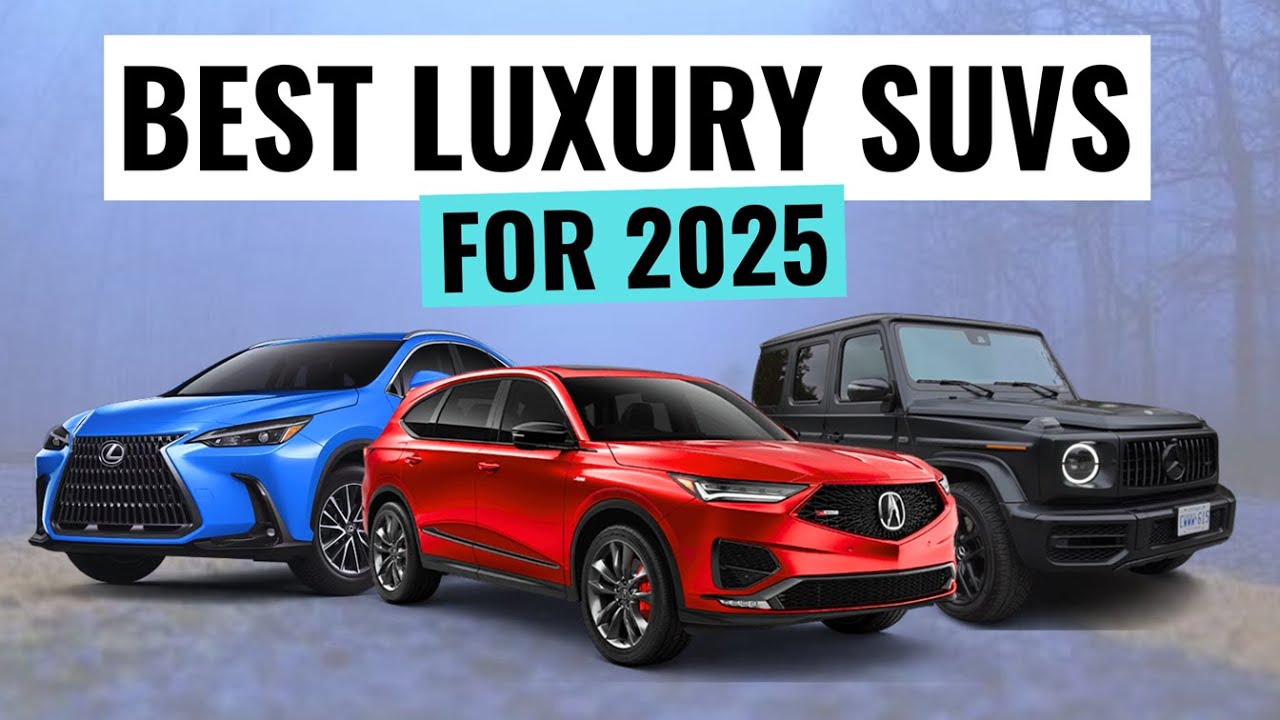
The 2025 model year delivered a wave of premium SUVs that blend handcrafted interiors, cutting‑edge driver‑assist suites, and increasingly electrified powertrains. As we move into 2026, many of those vehicles remain on dealer lots with attractive incentives, while the first 2026 refreshes are beginning to arrive. This guide breaks down what makes a premium SUV stand out today, compares the strongest 2025 contenders, and gives you a practical framework for choosing the right one for your lifestyle.
What Defines a Premium SUV in 2025?
A premium SUV is not simply a higher‑priced version of a mainstream model. Manufacturers differentiate them through:
- Materials – open‑pore wood, semi‑aniline leather, real metal trim, and active noise‑cancelling glass.
- Technology depth – augmented‑reality head‑up displays, over‑the‑air (OTA) updates, and AI‑based predictive routing.
- Powertrain breadth – plug‑in hybrid (PHEV), mild‑hybrid, and fully electric variants alongside traditional V6/V8 options.
- Brand service ecosystem – concierge maintenance, loaner fleets, and extended warranty bundles.
If you’re new to the segment, start by understanding SUV basics to see how size classes map to your daily needs.
Top Contenders for the 2025 Model Year
| Model | Base MSRP* | Powertrain Options | EPA Combined MPGe / MPG | Key Differentiator |
|---|---|---|---|---|
| BMW X5 | $65,200 | 3.0L I6 MHEV, PHEV, 4.4L V8 | 23 mpg (MHEV) / 50 MPGe (PHEV) | Sport‑tuned chassis with Integral Active Steering |
| Audi Q7 | $60,800 | 2.0L TFSI MHEV, 3.0L V6 MHEV, PHEV | 22 mpg (MHEV) / 54 MPGe (PHEV) | Virtual Cockpit Plus + MMI Touch Response |
| Mercedes‑Benz GLE | $66,150 | 2.0L I4 MHEV, 3.0L I6 MHEV, PHEV, 4.0L V8 | 21 mpg (MHEV) / 58 MPGe (PHEV) | MBUX Hyperscreen & E‑Active Body Control |
| Volvo XC90 Recharge | $56,000 | 2.0L PHEV only | 58 MPGe | Standard Pilot Assist & Google‑built infotainment |
| Lincoln Navigator | $78,000 | 3.5L Twin‑Turbo V6 | 18 mpg | 30‑way Perfect Position seats + Revel Ultima 3D audio |
| Lexus LX 600 | $88,250 | 3.5L Twin‑Turbo V6 | 17 mpg | Multi‑Terrain Select & Mark Levinson 25‑speaker system |
*Prices reflect 2025 MSRP before destination; 2026 incentives may lower effective cost.
For a deeper spec‑by‑spec view, see our side‑by‑side luxury SUV specs comparison.

2025 Lincoln Navigator showcases bold grille and LED lighting
Design & Presence
Exterior language in 2025 leans toward “quiet confidence”: slimmer LED signatures, flush door handles, and active grille shutters that close for aerodynamics. Inside, the focus is on tactile richness — hand‑stitched surfaces, ambient lighting with 64‑color palettes, and seats that offer heating, ventilation, massage, and even a “recline‑flat” mode for rear passengers. In practice, the Navigator’s third‑row legroom (36.5 in) remains the segment benchmark, while the XC90’s minimalist Scandinavian dashboard reduces visual clutter without sacrificing functionality. You can also read our guide on what is an suv.
Performance & Powertrain Options
- Mild‑hybrid (MHEV) – 48‑volt systems add 15–20 hp during acceleration and enable coasting shutdown, improving city fuel economy by ~2 mpg.
- Plug‑in hybrid (PHEV) – 20–30 mi of all‑electric range covers most daily commutes; total system output often exceeds 450 hp.
- Full EV – Not yet mainstream in this class for 2025, but the upcoming Mercedes EQG and BMW iX7 signal a 2026‑2027 shift.
All‑wheel‑drive is standard on every trim above the base, with torque‑vectoring rear differentials on the X5 M60i and GLE 580. A common mistake is assuming the V8 automatically means better towing; the PHEV’s instant electric torque often matches or exceeds conventional V8 pull‑up grades while delivering far lower emissions.
Technology & Connectivity
Infotainment screens have grown to 14–16 in, but usability hinges on software architecture. Mercedes’ MBUX Hyperscreen spans the entire dash, yet the learning curve can be steep for non‑tech owners. Audi’s MMI Touch Response uses haptic feedback that feels more like physical buttons. Volvo’s Google‑built system offers native Google Maps, Assistant, and Play Store — no phone pairing required for core navigation. You can also read our guide on luxury suv comparisons.
Driver‑assist suites now include:
- Level 2+ hands‑free highway driving (BMW’s Highway Assistant, Mercedes’ Drive Pilot in approved zones).
- Automated parking with 360° camera stitching.
- OTA updates that add new features (e.g., improved voice recognition) without dealer visits.

Video walkthrough of 2025 premium SUV infotainment
When evaluating, test the voice command latency and the ease of switching between Apple CarPlay / Android Auto and the native UI — those daily interactions matter more than spec sheets suggest.
Safety Ratings & Advanced Driver‑Assist
All six contenders earned Top Safety Pick+ from IIHS and 5‑star overall ratings from NHTSA safety ratings. Standard equipment across the board includes:
- Forward collision warning with pedestrian & cyclist detection.
- Automatic emergency braking (AEB) at speeds up to 50 mph.
- Lane‑keeping assist with road‑edge detection.
- Rear cross‑traffic alert and blind‑spot monitoring with trailer coverage.
Optional upgrades add intersection assist, evasive steering assist, and night‑vision with animal detection (available on the Navigator and LX 600). In practice, the Volvo’s Pilot Assist feels the most natural in stop‑and‑go traffic, while the BMW’s system is sharper on sweeping highways. You can also read our guide on toyota highlander hybrid suv.
Ownership Costs: Fuel, Maintenance, Depreciation
| Model | 5‑Year Fuel Cost* | Scheduled Maintenance (5 yr) | 5‑Year Depreciation |
|---|---|---|---|
| BMW X5 | $9,800 | $2,200 (incl. brake fluid) | 38 % |
| Audi Q7 | $9,300 | $2,000 | 36 % |
| Mercedes GLE | $10,100 | $2,400 (incl. synthetic oil) | 35 % |
| Volvo XC90 Recharge | $5,600 (electric) | $1,800 | 30 % |
| Lincoln Navigator | $12,400 | $2,600 | 42 % |
| Lexus LX 600 | $13,000 | $2,800 | 40 % |
*Based on 15,000 mi/yr, national average electricity/gas rates; EPA fuel‑economy data used for calculations.
Depreciation trends from 2024 price trend data show the XC90 Recharge holding value best, largely due to limited PHEV supply. Luxury brands typically include 4‑year/50,000‑mile complimentary maintenance; verify the exact coverage for your region before signing.
Buying Guide: Trim Selection, Pricing, Incentives
- Define non‑negotiables – third‑row space, towing ≥ 7,000 lb, or pure‑electric range.
- Compare trim walk‑throughs – many “Premium” trims add only aesthetic packages; the “Dynamic” or “Sport” lines often bundle adaptive suspension and performance brakes.
- Check manufacturer incentives – 2025 models frequently carry $2,000–$5,000 lease cash or 0.9 % APR financing into early 2026.
- Schedule a structured test drive – 30 min on varied roads (highway, broken pavement, tight parking). Bring a child seat or cargo box if those are daily realities.
- Negotiate the out‑the‑door price – include doc fees, dealer prep, and any mandatory accessories.
If you’re considering a Mercedes, review the Mercedes fuel‑grade guidance to avoid unnecessary premium‑fuel surcharges on MHEV models. You can also read our guide on ford hybrid suv.
2026 Outlook & What’s Coming Next
- BMW iX7 (full EV, 2026 launch) – 110 kWh pack, 300 mi EPA range, level 3 autonomy in Germany.
- Audi Q6 e‑tron – shared PPE platform, 800‑V architecture, 270 kW DC fast charge.
- Mercedes EQG – body‑on‑frame EV with four independent motors, targeting 2026 delivery.
- Volvo EX90 – already on sale in Europe, U.S. deliveries start Q2 2026; core compute on NVIDIA Orin.
Electrification will reshape the premium SUV hierarchy faster than any previous cycle. If you can wait 12–18 months, the next generation offers markedly higher electric range and faster charging — but current 2025 PHEVs remain the most pragmatic bridge for buyers who need long‑distance flexibility today.
Frequently Asked Questions
What Are The Top Premium SUVs For 2025?
The strongest all‑rounders are the BMW X5, Audi Q7, Mercedes‑Benz GLE, Volvo XC90 Recharge, Lincoln Navigator, and Lexus LX 600. Each excels in a different dimension — sport dynamics, tech integration, electric efficiency, space, or off‑road credentials. You can also read our guide on top luxury suvs of.
How Much Do Premium SUVs Cost In 2025?
Base MSRPs span roughly $56 k (XC90 Recharge) to $88 k (LX 600). Well‑equipped trims with popular packages typically land $75 k–$105 k before incentives. Lease deals in early 2026 have brought effective monthly payments down 8–12 % versus 2024.
What Features Should I Prioritize?
Prioritize standard advanced driver‑assist, OTA‑capable infotainment, adaptive air suspension, and premium audio (Revel, Burmester, Mark Levinson). Heated/ventilated front seats and a heated steering wheel are now baseline expectations.
Are Premium SUVs Fuel‑Efficient In 2025?
MHEV models achieve 20–24 mpg combined; PHEVs deliver 50–60 MPGe when charged regularly. Full‑size V8s (Navigator, LX 600) remain in the high‑teens. For the best real‑world economy, a daily charging routine with a PHEV cuts fuel spend by 40–55 %.
How Do I Choose Between A PHEV And A Traditional V6/V8?
If > 70 % of your mileage is under 30 mi round‑trip and you have home charging, the PHEV pays back its price premium in 3–4 years. For frequent towing > 7,000 lb or remote travel without charging infrastructure, the V6/V8 remains more reliable.
Conclusion
The 2025 premium SUV class delivers an unprecedented mix of luxury, technology, and electrified efficiency. Your ideal choice hinges on how you weight daily commuting, family space, towing duty, and brand service experience. Use the comparison table, test‑drive checklist, and ownership‑cost snapshot above to narrow the field, then lock in a dealer appointment while 2025 incentives are still live. Ready to compare specs side‑by‑side? Explore our side‑by‑side luxury SUV specs. For a look at how the segment evolved, see last year’s top luxury picks.