
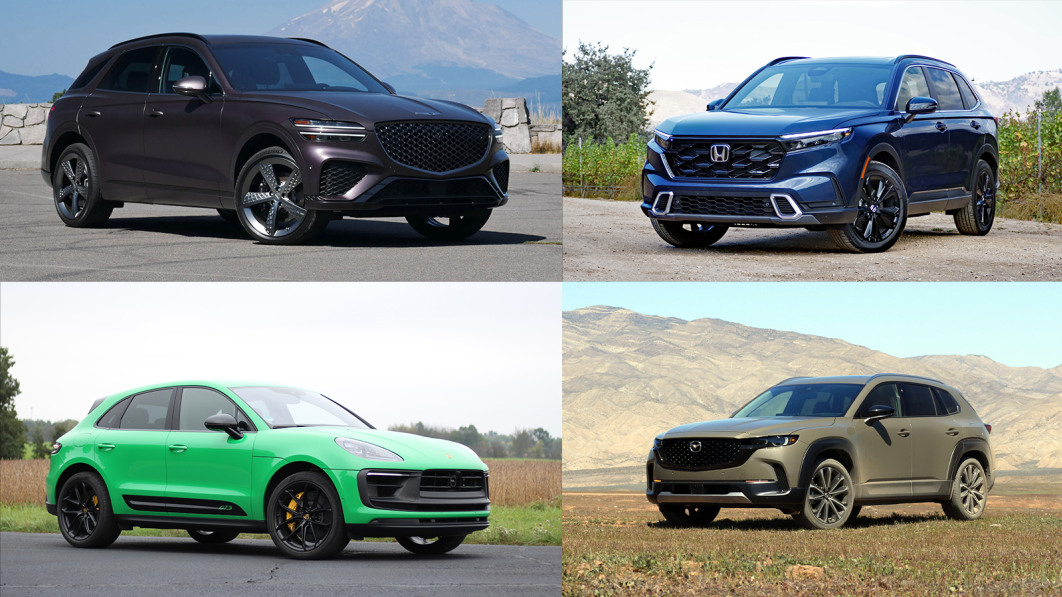
Compact SUVs remain the sweet spot for drivers who want maneuverable dimensions without sacrificing cargo room, technology, or safety. The 2025 model year brings refreshed powertrains, updated infotainment, and a broader spread of hybrid choices. Below is a thorough look at why the segment matters, what to weigh before buying, and how the leading contenders stack up.

A lineup of 2025 compact SUVs showcases the segment's variety.
Why Choose a Compact SUV?
Compact SUVs blend the parking ease of a hatchback with a higher seating position that improves visibility. In practice, the elevated hip point reduces fatigue on long commutes, while the versatile rear‑seat folding mechanisms accommodate everything from grocery runs to weekend gear. Fuel economy has climbed steadily; many non‑hybrid models now exceed 30 mpg combined, and hybrid variants push well beyond that without a noticeable power penalty. Safety suites have become standard across the board, with automatic emergency braking, lane‑keeping assist, and blind‑spot monitoring appearing even on base trims. If you’re new to the segment, our overview of what defines an SUV lays out the core attributes, and the history of the SUV shows how the class evolved from utilitarian off‑roaders to today’s refined daily drivers. You can also read our guide on invention of suv.
Key Buying Considerations
| Factor | What to Look For | Why It Matters |
|---|---|---|
| Powertrain | Turbo‑charged four‑cylinders, hybrid, or plug‑in hybrid | Balances acceleration, efficiency, and tax incentives |
| All‑wheel drive | Full‑time vs. on‑demand systems | Determines traction in snow or light off‑road use |
| Infotainment | Screen size, wireless Apple CarPlay/Android Auto, OTA updates | Reduces distraction and keeps software current |
| Cargo flexibility | Split‑folding seats, low load floor, under‑floor storage | Maximizes usable space for varied loads |
| Safety scores | NHTSA overall rating, IIHS Top Safety Pick+ | Independent verification of crashworthiness |
| Total cost of ownership | Depreciation, insurance, maintenance, fuel | A lower sticker price can be offset by higher running costs |
A common mistake is focusing solely on horsepower; torque delivery and transmission tuning often dictate real‑world responsiveness more than peak numbers.
Top Compact SUVs for 2025
1. Toyota RAV4 (including Hybrid & Prime)
The RAV4 continues to set the benchmark for reliability and resale value. Its 2.5‑liter four‑cylinder delivers smooth, linear power, while the hybrid system adds an electric motor for a combined output that feels brisk off the line. The Prime plug‑in variant offers an electric‑only range suitable for most daily commutes. Interior materials have been upgraded, and the 10.5‑inch touchscreen now supports wireless smartphone mirroring. For a deep dive on the premium XLE trim, see the RAV4 XLE Premium details. You can also read our guide on mazda hybrid suv.
2. Honda CR‑V
Honda’s latest CR‑V adopts a more angular silhouette and a 1.5‑liter turbo that produces ample low‑end torque. The continuously variable transmission (CVT) is tuned for a natural step‑feel, and the hybrid model pairs a 2.0‑liter engine with two electric motors for seamless transitions. Rear‑seat legroom is class‑leading, and the cargo floor can be lowered for extra height.
3. Mazda CX‑5
Mazda sticks with a naturally aspirated 2.5‑liter four‑cylinder and a six‑speed automatic, delivering a driving experience that feels more connected than many turbo rivals. The cabin leans upscale with available Nappa leather and a driver‑centric layout. All‑wheel drive is optional and uses a predictive torque‑vectoring system that enhances cornering confidence. You can also read our guide on ford hybrid suv.
4. Ford Escape
Ford offers three powertrains: a 1.5‑liter EcoBoost three‑cylinder, a 2.0‑liter EcoBoost four‑cylinder, and a 2.5‑liter hybrid. The Escape’s Sync 4 infotainment runs on a 13.2‑inch portrait screen with cloud‑connected navigation. Its available hands‑free liftgate and active park assist simplify urban maneuvers.
5. Subaru Forester
Standard symmetrical all‑wheel drive and 8.7 inches of ground clearance make the Forester the go‑to choice for light trail use. The 2.5‑liter boxer engine provides a low center of gravity, and the EyeSight driver‑assist suite is now standard across all trims. Cargo volume exceeds 75 cubic feet with seats folded. You can also read our guide on evaluation of suv.
6. Hyundai Tucson
Hyundai’s redesign brings a parametric grille, a 10.25‑inch digital cluster, and a choice of a 2.5‑liter four‑cylinder, a 1.6‑liter turbo hybrid, and a plug‑in hybrid. The hybrid’s 1.49‑kWh battery enables short electric‑only bursts, improving city fuel economy.
7. Kia Sportage
Sharing architecture with the Tucson, the Sportage distinguishes itself with a sharper front fascia and a slightly sportier suspension tune. The 2.5‑liter engine pairs with an eight‑speed automatic, while the hybrid uses a 1.6‑liter turbo and a 44‑kW motor. Interior ambient lighting and a panoramic curved display elevate the cabin feel. You can also read our guide on best hybrid compact suv.
Performance Comparison Table
| Model | Base Engine | Hybrid Option | AWD Standard? | EPA Combined MPG* | NHTSA Overall |
|---|---|---|---|---|---|
| Toyota RAV4 | 2.5 L I4 | 2.5 L Hybrid / Prime PHEV | Optional | 30 (gas) / 38 (hyb) | 5★ |
| Honda CR‑V | 1.5 L Turbo | 2.0 L Hybrid | Optional | 28 (gas) / 40 (hyb) | 5★ |
| Mazda CX‑5 | 2.5 L I4 | — | Optional | 27 | 5★ |
| Ford Escape | 1.5 L EcoBoost | 2.5 L Hybrid | Optional | 26 (gas) / 41 (hyb) | 5★ |
| Subaru Forester | 2.5 L H4 | — | Standard | 29 | 5★ |
| Hyundai Tucson | 2.5 L I4 | 1.6 L Turbo Hybrid / PHEV | Optional | 26 (gas) / 38 (hyb) | 5★ |
| Kia Sportage | 2.5 L I4 | 1.6 L Turbo Hybrid | Optional | 25 (gas) / 38 (hyb) | 5★ |
*EPA estimates; actual figures vary with driving style and load. For the latest fuel‑economy data, consult the EPA Fuel Economy Guide.
Hybrid & Electric Options
Hybrid variants now dominate the segment’s upper trims, delivering 30‑40 % better city mileage with negligible performance loss. Plug‑in hybrids such as the RAV4 Prime and Tucson PHEV qualify for federal tax credits (subject to income and battery‑sourcing rules) and can cover typical commutes on electricity alone. Fully electric compact SUVs—like the upcoming Chevrolet Equinox EV and Volvo EX30—are entering the market, but charging infrastructure and price premiums still make hybrids the pragmatic choice for most buyers. You can also read our guide on kia suv hybrid.
Safety Technology Overview
All seven models earn a five‑star overall rating from the National Highway Traffic Safety Administration (NHTSA) and most achieve an IIHS Top Safety Pick+ when equipped with specific headlights. Standard suites now include forward‑collision warning with pedestrian detection, lane‑departure warning with steering assist, adaptive cruise control with stop‑and‑go, and rear cross‑traffic alert. Optional upgrades add surround‑view cameras, traffic‑sign recognition, and semi‑automated highway driving aids.
Cost of Ownership & Resale Value
Depreciation remains the largest expense. Historically, the RAV4 and CR‑V retain roughly 55‑60 % of their original value after three years, outperforming many rivals. Hybrid models often enjoy slightly stronger residuals due to fuel‑savings appeal. Insurance premiums correlate with repair costs; vehicles with more advanced driver‑assist hardware can be pricier to insure. Maintenance schedules are similar across the group—oil changes every 10,000 miles for conventional engines, longer intervals for hybrids. For current market pricing trends, see our analysis of current market pricing trends. You can also read our guide on best midsize suvs for.
Frequently Asked Questions
What are the top compact SUVs for 2025?
The RAV4, CR‑V, and Escape lead sales, but the CX‑5, Forester, Tucson, and Sportage each excel in specific areas such as driving dynamics, off‑road readiness, or tech features.
Which compact SUV has the best fuel efficiency?
Hybrid versions of the RAV4, CR‑V, and Escape deliver the highest combined EPA ratings, often exceeding 38 mpg.
Are 2025 compact SUVs reliable?
Long‑term reliability data from Consumer Reports and J.D. Power consistently place the RAV4, CR‑V, and Forester at the top of the segment.
What is the most affordable compact SUV in 2025?
Base trims of the Tucson and Sportage start near the low‑$30k range, offering extensive standard equipment for the price.
Do any 2025 compact SUVs offer a plug‑in hybrid?
Yes—the RAV4 Prime, Tucson PHEV, and Escape PHEV provide 30‑40 miles of electric‑only range.
Conclusion
Choosing a compact SUV in the 2025 model year means balancing efficiency, technology, and versatility. The Toyota RAV4 and Honda CR‑V remain the safest all‑round bets, while the Mazda CX‑5 appeals to driving enthusiasts and the Subaru Forester to outdoor‑oriented buyers. Hyundai and Kia twins deliver premium interiors at a lower cost, and the Ford Escape adds a wide powertrain menu. Evaluate your daily mileage, climate, and cargo needs against the comparison table above, then schedule test drives for your top two candidates.
Ready to explore detailed trim breakdowns? Check out the 2025 RAV4 XLE Premium walkthrough and the RAV4 Hybrid XLE Premium specs for a closer look at Toyota’s premium positioning. Happy shopping!