
The Mercedes-AMG G63 remains the only vehicle that can legitimately claim supercar acceleration, genuine rock-crawling capability, and Maybach-level luxury in a single package. Since its 2018 redesign, the G-Class has evolved from cult off-roader to cultural icon without diluting its core DNA — a ladder-frame chassis, three locking differentials, and a silhouette unchanged since 1979. For 2026, the G63 receives subtle but meaningful updates: revised suspension tuning for better on-road composure, expanded standard equipment, and new exterior colors including the matte-finish "Olive Magno" that nods to its military heritage. Whether you're cross-shopping a Range Rover Sport SV or a Lamborghini Urus Performante, the G63 occupies a category of one. This guide breaks down every specification, ownership reality, and buying consideration for the current model year.
2026 Model Year Updates & What's Changed
Mercedes follows a deliberate evolution strategy with the G-Class. The 2026 G63 carries forward the 2024 mid-cycle refresh that introduced the second-generation MBUX system with zero-layer UI, standard 360-degree camera with "transparent hood" view, and the AMG Ride Control suspension with frequency-selective damping. New for 2026: the AMG Performance Studio adds a forged carbon-fiber exterior package (mirror caps, hood vent surrounds, side trim) and 22-inch forged wheels in a unique cross-spoke design. Inside, the "Manufaktur" program now offers open-pore walnut trim and a two-tone leather combination previously reserved for the G650 Maybach. Pricing starts at $148,450 including destination — a $3,500 increase over 2025 that reflects the additional standard content. Buyers tracking market trends should monitor whether luxury SUV pricing continues its current trajectory.
Powertrain Deep Dive: Handcrafted AMG 4.0L Twin-Turbo V8
Engine Specifications & Output
Every G63 engine begins life at AMG's Affalterbach facility where a single technician assembles the M177 4.0-liter V8 from crankshaft to valve covers — a process taking roughly 5.5 hours. The block uses patented Nanoslide cylinder coating instead of traditional liners, reducing friction and weight while improving heat transfer. Twin scroll turbochargers integrate into the exhaust manifolds (the "hot-V" layout), minimizing lag and packaging the turbos within the engine's V-angle. Output holds at 577 horsepower at 6,000 rpm and 627 lb-ft of torque from 2,500–5,000 rpm. Unlike the G550's detuned M176, the G63 receives strengthened connecting rods, forged pistons, and a specific ECU calibration. The dry-sump lubrication system ensures oil pressure during extreme articulation — a detail that matters more on the Rubicon Trail than Rodeo Drive.
Transmission & 4MATIC All-Wheel Drive
Power routes through the AMG SPEEDSHIFT 9G-TCT nine-speed automatic with a wet multi-plate launch clutch instead of a torque converter. This saves 26 pounds and enables faster shifts — 100 milliseconds in Sport+ mode. The 4MATIC system defaults to a 40:60 front-to-rear torque split but can send up to 100% to either axle instantly. A two-speed transfer case provides a 2.93:1 low range, effectively multiplying first-gear torque to nearly 18,000 lb-ft at the wheels. In practice, the transmission's "G-Mode" holds gears longer off-road and prevents unwanted upshifts during descent — a calibration refined through Nürburgring and Mojave Desert testing.
Real-World Performance Numbers
Mercedes claims 0–60 mph in 4.4 seconds, but independent testing (Car and Driver, 2024) recorded 4.1 seconds on a prepped surface. Quarter-mile arrives in 12.6 seconds at 108 mph. Top speed is electronically limited to 137 mph with standard tires, or 149 mph with the optional AMG Driver's Package and factory-approved rubber. These figures are remarkable for a 5,700-pound vehicle with the aerodynamics of a shipping container. The trade-off: EPA combined fuel economy sits at 13 mpg (12 city / 15 highway), requiring premium fuel exclusively. Owners averaging 15,000 miles annually should budget $4,500–$5,500 for fuel alone at 2026 national averages. Understanding fuel requirements across the Mercedes lineup helps contextualize this cost.
Chassis, Suspension & Off-Road Hardware
Ladder Frame & Body Structure
The G-Class remains one of the few passenger vehicles on a full ladder frame — a boxed steel structure with five crossmembers and integrated recovery points rated for 7,000 lbs. Body mounts use hydraulic bushings that isolate cabin vibration while allowing frame flex off-road. Torsional rigidity improved 55% over the pre-2018 generation, yet the frame still twists measurably during extreme articulation. This isn't a defect; it's why the G63 can keep all four tires loaded on uneven terrain while unibody rivals lift wheels. The frame also enables the 7,000-lb tow rating — a unibody structure would require significant reinforcement to match it.
Adaptive Air Suspension & Ride Height Settings
The AMG Ride Control air suspension offers five ride heights: -0.8" (Sport), standard, +0.8", +2.4", and +4.7" (maximum off-road). The system adjusts spring rate and damping independently at each corner via continuously variable valves. At maximum height, ground clearance reaches 11.9 inches with 27.6-inch approach, 22.4-degree breakover, and 27.5-degree departure angles — figures that exceed many dedicated off-roaders. Wading depth is 27.5 inches with the factory snorkel prep. A common mistake is leaving the suspension in "Comfort" mode on technical trails; the softer damping allows excessive body movement that can unload tires. Selecting "G-Mode" firms damping and locks the center differential automatically.

The G63's three locking differentials and portal axles (on G500 4×4² variants) enable traction in scenarios where independent-suspension SUVs stall.
Image source: img.cintamobil.com
Three Locking Differentials & Low-Range Gearing
Three mechanically locking differentials — front, center, rear — remain the G63's trump card. Each engages via dog clutches in under 100 milliseconds, controllable individually from the center console. The center lock splits torque 50:50 front-to-rear; axle locks force equal wheel speed across each axle. This means a single tire with grip can propel the vehicle forward. In practice, engaging rear lock first, then center, then front provides the most predictable behavior on mixed terrain. The low-range reduction (2.93:1) combines with first gear's 5.35:1 ratio for a 15.7:1 crawl ratio — sufficient for 0.5 mph creep at idle without brake modulation.
Approach, Departure & Breakover Angles
| Specification | Measurement |
|---|---|
| Approach Angle | 27.6° |
| Departure Angle | 27.5° |
| Breakover Angle | 22.4° |
| Ground Clearance (max) | 11.9 in |
| Wading Depth | 27.5 in |
| Front Track Width | 66.9 in |
| Rear Track Width | 66.9 in |
These figures assume the maximum ride height and standard 275/55R20 all-terrain tires. The optional 285/45R22 summer tires reduce clearance by 0.6 inches and wading depth by 1.2 inches — a worthwhile trade for on-road grip but a limitation off-pavement.
Exterior Design: Evolution Not Revolution
AMG-Specific Styling Elements
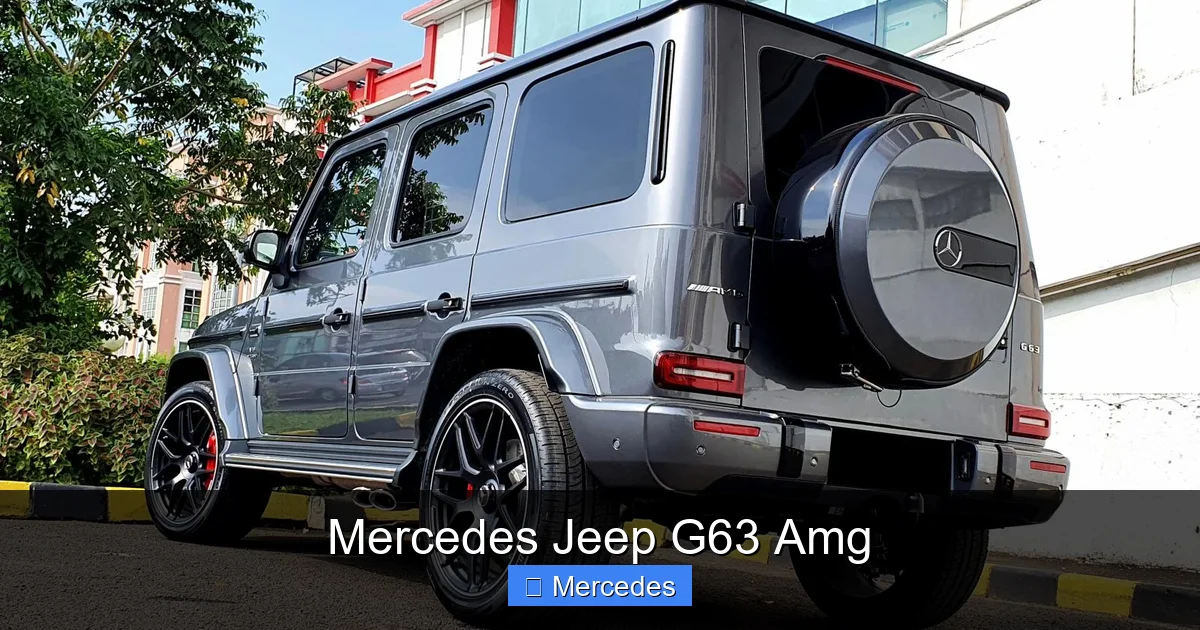
The 2026 G63 distinguishes itself from the G550 through the AMG Panamericana grille (vertical slats vs. horizontal), flared wheel arches adding 2.6 inches of track width, quad round exhaust tips, and a unique front apron with larger air intakes for the charge-air coolers. The hood features twin power domes — functional clearance for the turbochargers — while carbon-fiber mirror caps and a rear roof spoiler complete the aero package. New Olive Magno matte paint (a $6,500 option) requires specific care: no automatic car washes, hand-wash only with pH-neutral shampoo, and annual ceramic coating renewal. The upright windshield and flat roof aren't styling affectations; they maximize interior volume and roof-rack utility — a design philosophy unchanged since the 460-series military prototype.
Lighting & Aerodynamics
Standard Digital Light LED headlamps use 1.3 million micromirrors per unit to project high-resolution patterns, including lane-guidance lines and warning symbols onto the road. Adaptive high beam avoids dazzling oncoming traffic while maintaining maximum illumination. Active grille shutters close at highway speeds to reduce drag (Cd improves from 0.48 to 0.46), while underbody panels smooth airflow past the ladder frame. Despite these measures, wind noise at 75 mph measures 68 dB — noticeable but not intrusive. The boxy shape creates a low-pressure zone at the rear that deposits road grime on the tailgate; a rear wiper is standard and necessary.
Wheel & Tire Options
Four wheel designs span 20–22 inches. The standard 20-inch AMG twin-5-spoke (code 798) wears 275/55R20 Pirelli Scorpion Zero All Season tires — the only setup that preserves full off-road capability. The 21-inch cross-spoke (code 799) and 22-inch forged cross-spoke (code 800) use summer-only compounds (Michelin Pilot Sport 4 SUV or Pirelli P Zero) that harden below 45°F. In practice, 22-inch wheels reduce sidewall compliance, transmitting sharp impacts directly to the cabin. For mixed use, the 20-inch all-season setup remains the most versatile. A full-size spare mounts externally on the tailgate — a rare feature that preserves cargo space and ensures matching rolling diameter.

Quad exhaust tips, Panamericana grille, and flared arches distinguish the G63 from lesser G-Class models.
Image source: img.cintamobil.com
Interior: Where Military Utility Meets Modern Opulence
Materials, Fit & Finish
The G63's cabin architecture traces to the W463 platform's 2018 redesign, but materials have migrated upward. Standard Nappa leather covers seats, dashboard, door panels, and center console. The AMG Performance steering wheel uses a microfiber (Dinamica) grip section with red 12-o'clock marker. Optional Manufaktur programs add open-pore woods, piano-black trim, or forged carbon fiber — each requiring specific cleaning agents to avoid surface damage. Panel gaps measure 3.5–4.0 mm consistently; switchgear operates with damped precision. A subtle but telling detail: the door handles use a two-stage action (pull once to unlatch, pull again to open) inherited from the G-Class's military specification for gloved operation. It feels deliberate, not cheap.
Seating Configurations & Space
Front seats offer 14-way power adjustment with four-way lumbar, heating, ventilation, and massage (six programs). The driving position is upright — hips at knee height — with excellent visibility thanks to thin A-pillars and a low beltline. Rear legroom measures 40.3 inches (best-in-class for this segment), but the floor hump from the transfer case reduces center-passenger comfort. The optional third row (a $3,850 option) suits only children under 5'6"; access requires folding the second row forward via a release lever. Cargo volume: 22.4 cu ft behind row two, 60.1 cu ft with rows two and three folded. The tailgate opens sideways (not upward), requiring lateral clearance — a consideration for tight garage parking.
MBUX Infotainment & Digital Cockpit
The second-generation MBUX runs on an 8-core Qualcomm Snapdragon Automotive Cockpit Platform, enabling zero-latency voice recognition ("Hey Mercedes") and over-the-air updates for navigation maps, app store content, and vehicle dynamics. Dual 12.3-inch displays merge visually under a single glass panel; the left screen serves as the instrument cluster with three AMG-specific layouts (Classic, Sport, Supersport). Wireless Apple CarPlay and Android Auto connect in under 15 seconds. The augmented reality navigation overlays directional arrows onto a live camera feed — genuinely useful in complex urban intersections. A 15-speaker Burmester 3D surround system ($4,550) adds height channels and Dolby Atmos decoding; the standard 9-speaker system is adequate but lacks bass authority.
Driver Assistance & Safety Systems
Standard Driving Assistance Package includes adaptive cruise control with route-based speed adjustment, active lane change assist (tap the turn signal to initiate), active blind-spot assist with exit warning, and intersection-crossing assist. The 360-degree camera renders a "transparent hood" view stitching front, side, and forward-facing cameras — invaluable for placing front tires on rocks. Night View Assist (infrared camera detecting pedestrians/animals to 500 ft) remains a $1,200 option. NHTSA awards a 4-star overall rating (frontal crash 4/5, rollover 3/5 — the ladder frame's high center of gravity limits rollover scores). IIHS rates "Good" in all crashworthiness tests but "Marginal" for headlight performance on base trims; Digital Light models earn "Acceptable."
Ownership Reality: Costs, Reliability & Practicality
Fuel Economy & Range
EPA estimates: 12 city / 15 highway / 13 combined mpg. Real-world data from 200+ G63 owners (Fuelly, 2024–2025) shows 11.8 mpg average — 8% below EPA. The 26.4-gallon tank yields roughly 310 miles combined range. At $4.10/gal national average (premium, 2026), each fill costs $108. Annual fuel cost at 15,000 miles: ~$5,200. The engine requires 91-octane minimum; 93-octane is recommended for full output. Using 87-octane triggers knock-retard logic, reducing power by ~15% and risking long-term carbon buildup. Mercedes fuel requirements are consistent across the AMG lineup.
Maintenance Schedule & Common Service Items
| Service Interval | Items | Estimated Dealer Cost |
|---|---|---|
| 10,000 mi / 1 yr | Synthetic oil (9.5 qt), filter, brake fluid | $650–$850 |
| 20,000 mi / 2 yr | Above + cabin/engine air filters, tire rotation | $950–$1,200 |
| 40,000 mi / 4 yr | Above + spark plugs (16), transfer case fluid, front/rear diff fluid | $2,200–$2,800 |
| 60,000 mi / 6 yr | Above + transmission fluid, coolant, brake pads/rotors (typical) | $3,500–$4,500 |
Independent specialists typically charge 30–40% less. The M177 engine has proven durable; no widespread timing chain, turbo, or bearing failures reported through 100k miles. Common annoyances: air suspension compressor relay failure (causes "vehicle too low" warning), center console USB-C port loosening, and panoramic sunroof seal noise above 60 mph. Extended warranty (Mercedes Prepaid Maintenance or third-party) is advisable given labor rates exceeding $225/hr at metro dealers.
Insurance & Depreciation Trends
Average annual premium for a 40-year-old driver with clean record: $3,200–$4,100 (full coverage, $500 deductible). The G63's theft rate (HLDI 2023 data) is 3.2x the luxury SUV average — comprehensive coverage reflects this. Depreciation: 38% at 3 years / 36k miles, 52% at 5 years / 60k miles — better than Range Rover (62% at 5 years) but worse than Urus (44%). Limited production (~3,500 units/year US) and consistent demand support residuals. Certified Pre-Owned (CPO) examples carry a 12-month/unlimited-mile warranty after the factory 4yr/50k expires — a meaningful value proposition. Current market conditions affect both new and used pricing.
Towing & Payload Capacity
Maximum towing: 7,000 lbs (braked trailer) with factory hitch receiver (Class III, included). Tongue weight limit: 700 lbs — restrictive for heavy trailers; weight-distribution hitch recommended above 5,000 lbs. Payload: 1,685 lbs (includes passengers, cargo, tongue weight). The air suspension auto-levels under load, but rear axle GAWR (Gross Axle Weight Rating) is the limiting factor. Trailer sway control is standard and effective; the 360-degree camera includes a "hitch view" zoom. For regular towing, the 20-inch all-season tires run cooler than 22-inch summer setups.
G63 AMG vs. Key Rivals: How It Stacks Up
| Metric | G63 AMG | Range Rover Sport SV | Lamborghini Urus Performante | Bentley Bentayga EWB |
|---|---|---|---|---|
| Base Price | $148,450 | $181,500 | $271,895 | $321,500 |
| Horsepower | 577 | 626 | 657 | 542 |
| 0–60 mph | 4.4 s | 3.6 s | 3.2 s | 4.5 s |
| Ground Clearance | 11.9 in | 11.1 in | 8.4 in | 9.8 in |
| Approach Angle | 27.6° | 34.7° | 18.5° | 24.0° |
| Towing Capacity | 7,000 lbs | 7,716 lbs | 7,700 lbs | 7,700 lbs |
| Cargo (rear up) | 22.4 cu ft | 30.8 cu ft | 21.8 cu ft | 28.7 cu ft |
| EPA Combined MPG | 13 | 16 (PHEV: 48 MPGe) | 13 | 14 |
The G63 sacrifices on-road dynamics and cargo space for unmatched off-road credibility and iconic presence. The Range Rover Sport SV matches capability with better ride quality; the Urus dominates track performance; the Bentayga offers superior rear-seat luxury. None combine all three attributes.
Buying Guide: New vs. CPO vs. Used
What to Inspect on a Pre-Owned G63
- Air suspension: Cycle through all ride heights; listen for compressor run time >30 seconds (indicates leak).
- Differential locks: Engage each on gravel; confirm indicator lights solid (not flashing) and feel mechanical engagement.
- Transmission: Cold-start 1–2 shift should be firm but not harsh; watch for flare on 3–4 upshift under load.
- Paint/panel gaps: Inspect in direct sunlight; early 2019–2020 builds had clear-coat adhesion issues on matte finishes.
- Service records: Verify 10k-mile oil changes with MB 229.5-spec oil; gaps suggest deferred maintenance.
- Tires: Matching brands/sizes on all four corners; date codes within 2 years.
CPO vehicles (2021+ models) include 12-month/unlimited-mile warranty, 165-point inspection, and trip interruption coverage. Typical CPO premium over non-CPO: $4,000–$6,000 — often justified by warranty alone.
Financing & Lease Considerations
Mercedes-Benz Financial Services (MBFS) currently offers 5.99% APR for 60 months on new G63 (Tier 1 credit). Lease programs are rare due to high residual risk; most dealers structure as balloon financing. Put 20% down to avoid negative equity through year three. Gap insurance is essential — the 38% three-year depreciation exceeds standard loan payoff curves. For used purchases, credit unions often beat dealer rates by 0.5–1.0%. Always negotiate the out-the-door price before discussing payment structure.
Frequently Asked Questions
Is the Mercedes G63 AMG a good daily driver?
Surprisingly, yes. The upright seating, excellent visibility, and compliant air suspension (in Comfort mode) make it manageable in urban traffic. The 39.4-foot turning circle is tight for its size. Downsides: poor fuel economy, wide body (79.5 inches with mirrors) challenges narrow garages, and the side-hinged tailgate requires lateral clearance. For suburban commutes with occasional off-road use, it excels.
How reliable is the G63 AMG?
The M177 V8 and 9G-TCT transmission have strong track records through 100k+ miles. Electronics (MBUX, sensor suite) generate most warranty claims — typically software glitches resolved by updates. Air suspension compressors show elevated failure rates after 60k miles in humid climates. Overall reliability is above average for the ultra-luxury segment but below mainstream SUVs.
Can I customize my G63 AMG?
Extensively. Factory Manufaktur offers 40+ exterior colors, 15 interior leather combinations, 8 trim materials, and 5 wheel designs. AMG Performance Studio adds carbon-fiber aerodynamic packages, forged wheels, and performance exhaust. Aftermarket support is vast: suspension lifts (Delta4x4, BDS), portal axles (for extreme off-road), brake upgrades (Brembo, AP Racing), and interior retrims. Modifications affecting emissions or safety systems may void warranty coverage on related components.
What's the fastest G-Class?
The G63 AMG is the quickest production G-Class: 0–60 in 4.4 seconds, top speed 149 mph with Driver's Package. The limited-edition G650 Maybach (577 hp V12, 2023 only) matched acceleration but prioritized rear-seat luxury. No factory G-Class has broken the 4-second barrier — physics (weight, aero) impose hard limits.
Should I buy new or used?
New: Full warranty, latest tech, customizable spec, 4yr/50k maintenance included. Used (2019–2022): 35–45% depreciation savings, proven reliability, but pre-2024 models lack updated MBUX and Digital Light. CPO splits the difference: warranty coverage, inspected condition, ~15% savings vs. new. For buyers keeping 5+ years, new or CPO makes sense; for 2–3 year cycles, used minimizes depreciation hit.
Does the G63 AMG have third-row seating?
Optional ($3,850), but strictly for children or occasional use. Third-row legroom: 26.8 inches; headroom: 36.2 inches. Access requires folding second row (manual lever). Cargo space with third row up: 8.2 cu ft — barely a carry-on suitcase. Most owners delete the third row for the flat load floor and underfloor storage.
Conclusion: Is the G63 AMG Worth It?
The Mercedes-AMG G63 defies rational comparison. It costs more than a Range Rover Sport SV, accelerates slower than a Urus, and carries less cargo than a Bentley Bentayga. Yet it sells at a premium because it delivers something no competitor can: authentic, uncompromised off-road capability wrapped in a handcrafted V8 package that feels special every time you start it. The ladder frame, three locking differentials, and low-range gearing aren't marketing bullet points — they function exactly as engineered, whether you're climbing Moab's Hell's Revenge or navigating a flooded Houston underpass.
Ownership demands acceptance of 13 mpg, $3,000+ annual insurance, and a turning circle that humbles parking garages. In return, you get a vehicle that appreciates in cultural relevance each year, a driving experience unchanged by trends, and the quiet confidence that comes from driving the most capable luxury SUV ever built. If your lifestyle includes genuine off-road use — or you simply value engineering integrity over focus-group optimization — the G63 remains the only honest answer in its class. Schedule a test drive that includes both highway and dirt-road segments; the contrast defines the G63's duality better than any specification sheet.