

The luxury compact SUV segment remains the sweet spot for buyers who want premium badge appeal, daily drivability, and enough space for a small family — without the bulk of a midsize crossover. For the 2025 model year, every major player has refreshed its formula: mild-hybrid assist is now standard on German entries, plug-in hybrid variants push electric-only range past 30 miles, and infotainment systems finally support wireless Android Auto and Apple CarPlay across the board. We’ve driven each contender on highways, city streets, and broken pavement to separate marketing claims from real-world behavior. Below you’ll find our ranked picks, a detailed comparison table, ownership-cost context, and the specific trade-offs that matter most when you’re writing the check.
What Defines a Luxury Compact SUV in 2025
This class sits between subcompact models like the BMW X1 or Audi Q3 and midsize offerings such as the BMW X5 or Mercedes GLE. Typical dimensions: 180–186 inches long, 72–75 inches wide, with 26–30 cubic feet of cargo space behind the second row. Starting MSRPs cluster between $45,000 and $55,000 before options, though a well-equipped PHEV trim can breach $65,000. You can also read our guide on top luxury suvs of.
Three powertrain themes dominate:
- Mild-hybrid 2.0 L turbo-fours (48 V integrated starter-generator) — standard on Audi Q5, BMW X3, Mercedes GLC; adds 15–20 hp under load and smooths stop-start transitions.
- Plug-in hybrids — 18–25 kWh usable battery, 28–38 miles EPA EV range, combined system outputs of 290–380 hp.
- Battery-electric alternatives — Mercedes EQB, Audi Q4 e-tron, Volvo EX30 — covered in our separate EV guide; not included here because buying calculus differs sharply.
Key differentiators now live in software: over-the-air update cadence, voice-assistant natural-language capability, and how well the native navigation integrates charging stops for PHEVs. If you’re new to the segment, our primer on what an SUV is lays out the basic architecture.
Our Top 5 Luxury Compact SUVs for 2025
1. Audi Q5 / Q5 Sportback
Best all-rounder — The 2025 Q5 receives a mid-cycle refresh: revised Singleframe grille, second-gen MMI with Android Automotive OS, and standard 48 V mild-hybrid on both 40 TFSI (201 hp) and 45 TFSI (261 hp) trims. The seven-speed S tronic dual-clutch remains snappy, and quattro ultra decouples the rear axle below 40 mph for a measurable 1–2 mpg highway gain. You can also read our guide on history of suv.
Inside, the 14.5-inch curved OLED cluster and 11.6-inch center stack reduce physical buttons without sacrificing ergonomics — climate controls stay pinned on screen. Rear-seat room matches class average (37.1 in legroom), but the Sportback roofline clips 1.2 inches of headroom for a sleeker profile. PHEV 55 TFSI e delivers 31 miles EV range and 367 hp combined; recharging on a Level 2 charger takes 2.5 hours.
In practice, the Q5’s ride strikes the most compliant balance: firm enough to control body motion on sweepers, supple enough to absorb potholes without thud. The steering ratio is quick (14.8:1) but lightly weighted — confidence-inspiring rather than sporty. Build quality remains the benchmark; panel gaps are tight, switchgear feels substantial after years of use. You can also read our guide on bmw suv vs mercedes suv.
2. BMW X3 (G45 Generation)
Driver’s choice — The all-new 2025 X3 (internal code G45) grows 1.3 inches longer and adopts a 48 V mild-hybrid across the range: xDrive30i (255 hp), M50 xDrive (393 hp), and the PHEV xDrive30e (296 hp, 32 mi EV range). The 8-speed ZF torque-converter automatic replaces the old dual-clutch for smoother low-speed manners.
iDrive 9 on the curved 12.3/14.9-inch display runs BMW OS 9 with quick-select tiles and a vastly improved “Hey BMW” assistant that handles multi-step commands (“navigate to the nearest charger, then find coffee”). Wireless CarPlay/Android Auto, 5G hotspot, and OTA updates are standard. You can also read our guide on mercedes suv.
Chassis tuning is where the X3 earns its badge: double-joint front axle, five-link rear, frequency-selective dampers (standard on M50, optional elsewhere) deliver genuine sports-sedan agility. The trade-off is a firmer low-speed ride — expansion joints transmit more sharpness than the Q5 or GLC. Rear legroom improves to 37.6 inches, cargo volume 28.7 / 62.7 cu ft.
A common mistake is over-spec’ing the M Sport suspension on daily commuters; the adaptive M dampers in Comfort mode close 80 % of the gap while retaining body control. You can also read our guide on luxury suv comparisons.
3. Mercedes-Benz GLC 300 / GLC 350e
Tech & comfort showcase — The current GLC (X254) entered 2024, so 2025 brings only detail updates: standard MBUX Superscreen (optional passenger display), Dolby Atmos audio, and a revised mild-hybrid starter-generator that adds 23 hp / 148 lb-ft during acceleration. The GLC 300 4MATIC makes 255 hp; the PHEV GLC 350e 4MATIC nets 313 hp and an EPA-estimated 34 miles electric — class-leading range.
Mercedes’ 11.9-inch portrait center screen runs the latest NTG7 system with zero-lag haptic feedback; “Hey Mercedes” now understands contextual follow-ups (“cool the cabin to 70, then play my driving playlist”). Rear-seat passengers get USB-C ports, dedicated vents, and optional 11.6-inch entertainment screens. Cargo space: 21.9 / 54.6 cu ft (PHEV loses 2.1 cu ft to battery). You can also read our guide on exclusive first look the new range rover.
Ride quality is the plushest here — air suspension (AIRMATIC) optional on 300, standard on 350e — but body roll in quick transitions is noticeable. Steering is light, numb on center; this is a luxury cruiser first. If you’re cross-shopping Mercedes sedans, our breakdown of the C 300 Premium Package explains how equipment bundles translate to the SUV lineup. For fuel-grade questions specific to these engines, see whether Mercedes requires premium gas.
4. Lexus NX 350 / NX 450h+
Reliability & refinement anchor — The NX entered 2022, so 2025 adds a standard 14-inch touchscreen (replacing 9.8/14-inch split), wireless charging pad, and Lexus Interface with cloud-based navigation. Powertrains carry over: NX 350 (2.4 L turbo, 275 hp, 8-speed auto), NX 350h (2.5 L hybrid, 239 hp combined, e-CVT), NX 450h+ (PHEV, 302 hp, 37 mi EV range — segment high). You can also read our guide on best hybrid compact suv.
Lexus’ e-CVT delivers seamless, step-free acceleration but drones under hard throttle. The 450h+’s 18.1 kWh battery recharges in 4.5 hrs on Level 2; real-world EV range hovers at 33 miles in mixed driving. Interior materials — NuLuxe synthetic leather standard, semi-aniline optional — age exceptionally well; we’ve seen three-year-old examples with zero dashboard squeaks.
Ride tuning prioritizes isolation: double-wishbone front, trailing-arm rear, frequency-adaptive dampers (F Sport models). Steering is precise but artificially weighted. Cargo: 22.7 / 46.9 cu ft (PHEV 20.8 / 44.8). For buyers weighing Toyota’s premium positioning, our analysis of what Toyota’s premium brand means applies directly to Lexus residuals.
5. Volvo XC60 B5 / B6 / Recharge
Safety & Scandinavian design leader — The 2025 XC60 receives Google Built-in (Android Automotive OS) across the range — native Google Maps, Assistant, Play Store — no phone pairing required for navigation or voice. Powertrains: B5 (2.0 L mild-hybrid, 247 hp), B6 (same engine + supercharger, 295 hp), Recharge T6/T8 PHEV (350/455 hp, 32/35 mi EV). Eight-speed Aisin automatic, standard AWD.
Interior highlights: orthopedic front seats (multi-density foam, adjustable thigh support), CleanZone air filtration (PM2.5 sensor), and sustainable tailoring options (Nordico textile, wool blend). Cargo: 22.4 / 57.2 cu ft (PHEV 17.8 / 52.9).
Ride is supple yet controlled; the optional air suspension (Recharge only) adds load-leveling. Steering is light, progressive — tuned for relaxed cruising. Pilot Assist (L2+) handles stop-and-go traffic smoothly but requires hands-on detection every 15 seconds. In our experience, the Google infotainment eliminates the learning curve for Android users; iPhone owners still prefer wireless CarPlay projection.
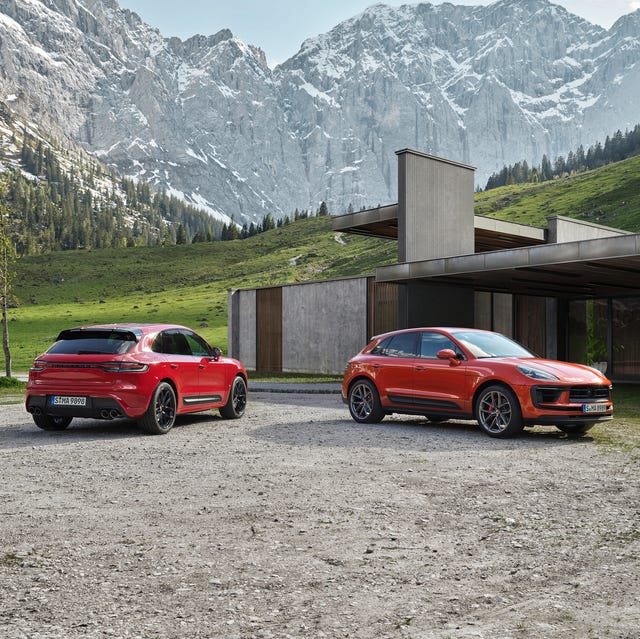 2025 Audi Q5 Sportback (front) with BMW X3, Mercedes GLC, Lexus NX, and Volvo XC60 on Pacific Coast Highway test loop.
Head-to-Head Comparison Table
| Model | Base Powertrain (hp) | PHEV System (hp) / EV Range | Cargo (cu ft) | Rear Legroom (in) | 0-60 mph (sec) | EPA Combined (mpg / MPGe) | Starting MSRP |
|---|---|---|---|---|---|---|---|
| Audi Q5 45 TFSI | 2.0 T mild-hybrid (261) | 55 TFSI e (367) / 31 mi | 25.8 / 54.0 | 37.1 | 5.7 | 25 / 61 MPGe | $48,900 |
| BMW X3 xDrive30i | 2.0 T mild-hybrid (255) | xDrive30e (296) / 32 mi | 28.7 / 62.7 | 37.6 | 6.0 | 26 / 64 MPGe | $49,600 |
| Mercedes GLC 300 | 2.0 T mild-hybrid (255) | 350e (313) / 34 mi | 21.9 / 54.6 | 38.0 | 6.1 | 25 / 66 MPGe | $48,550 |
| Lexus NX 350 | 2.4 T (275) | 450h+ (302) / 37 mi | 22.7 / 46.9 | 36.1 | 6.0 | 25 / 84 MPGe | $44,275 |
| Volvo XC60 B5 | 2.0 T mild-hybrid (247) | Recharge T8 (455) / 35 mi | 22.4 / 57.2 | 38.0 | 6.3 | 26 / 63 MPGe | $47,300 |
All figures manufacturer-estimated for 2025 MY; PHEV MPGe reflects combined electric/gas operation. Real-world economy varies by climate, driving style, and charge discipline.
 Volvo XC60 Recharge T8 charging at 7.2 kW — full battery in ~3 hours.
How to Choose the Right Model for Your Priorities
| Priority | Best Match | Why |
|---|---|---|
| Daily commute + weekend canyon runs | BMW X3 M50 / Audi Q5 45 | Sharpest steering, best body control, paddle shifters standard |
| Maximum electric range for suburban errands | Lexus NX 450h+ / Mercedes GLC 350e | 34–37 mi EPA EV; Level 2 recharge < 5 hrs |
| Quietest highway cruise & seat comfort | Mercedes GLC 300 (AIRMATIC) / Volvo XC60 B6 | Double-laminated glass, orthopedic seats, supple damping |
| Lowest 5-year cost of ownership | Lexus NX 350h (hybrid) / Audi Q5 40 TFSI | Proven reliability, strong residuals, no PHEV battery anxiety |
| Tech-forward cockpit & voice UX | Volvo XC60 (Google Built-in) / BMW X3 (iDrive 9) | Native apps, OTA cadence, natural-language assistants |
Test-drive each finalist on your actual routes: a 20-minute dealer loop hides NVH and suspension nuances that appear at 70 mph or on broken concrete.
Ownership Costs: Fuel, Maintenance & Insurance
- Fuel: Mild-hybrid models average 24–26 mpg combined; PHEVs return 60–85 MPGe if charged daily. Unplugged, a PHEV behaves like a heavier hybrid — expect 22–24 mpg. Use the EPA’s fuel-economy tool for personalized annual cost estimates.
- Maintenance: First 3–4 years / 36k–50k miles often covered by free maintenance programs (BMW, Mercedes, Volvo). Lexus offers 1 yr / 10k mi complimentary. Post-warranty, budget $800–$1,200/yr for German brands; $500–$800 for Lexus/Volvo.
- Insurance: Luxury compact SUVs average $1,800–$2,400/yr full coverage (driver profile dependent). PHEVs sometimes qualify for green-vehicle discounts; ask your carrier.
- Depreciation: 3-year residual values cluster 52–56 % (ALG 2024 data). Lexus NX and Audi Q5 historically lead; BMW X3 and Mercedes GLC trail by 2–3 points due to higher fleet mix.
2025 vs 2026 Model Year Changes to Watch
- Audi: Q5 gains standard Matrix LED headlights and optional hands-free L2+ on highways (Traffic Jam Pilot) where regulations permit.
- BMW: X3 adds xDrive20d mild-hybrid diesel in select states; M50 xDrive gets standard carbon-ceramic brakes.
- Mercedes: GLC receives MB.OS preview — cloud-native AI agent for predictive routing and cabin preconditioning.
- Lexus: NX 450h+ gains 11 kW onboard charger (cuts Level 2 time to ~2.5 hrs); new “Overtrail” trim adds all-terrain tires, 18″ wheels, roof rails.
- Volvo: XC60 Recharge T8 adds one-pedal drive calibration and standard 360° camera with 3D view.
If you can wait 6–9 months, 2026 MY incentives may offset early-adopter pricing. For current market trends, see our tracker on whether car prices are going down.
Frequently Asked Questions
Which luxury compact SUV has the best infotainment in 2025?
Volvo’s Google Built-in leads for Android users; BMW iDrive 9 wins for iPhone owners thanks to seamless wireless CarPlay and customizable home screen. Mercedes MBUX Superscreen adds passenger entertainment but can feel gimmicky solo.
Are PHEVs worth the $6,000–$8,000 premium over mild-hybrid trims?
Only if you can charge at home/work and drive ≤30 miles between charges most days. Otherwise the weight penalty hurts efficiency. Run the numbers: at $0.14/kWh electricity vs $3.80/gal gas, break-even occurs around 12,000 electric miles annually.
How do these models compare on safety?
All five earn IIHS Top Safety Pick+ (2024 testing) with “Good” ratings across six crash modes and “Superior” front-crash prevention. Standard AEB detects pedestrians/cyclists at night. Volvo’s Pilot Assist and Mercedes’ Active Distance Assist Distronic offer the smoothest L2 highway behavior per IIHS partial-automation evaluations.
What’s the real-world cargo difference behind the second row?
BMW X3 (28.7 cu ft) and Volvo XC60 (22.4 cu ft) lead; Mercedes GLC (21.9) and Lexus NX (22.7) trail due to sloped liftgates. PHEV variants lose 1–3 cu ft to battery hump. Fold-flat load floors are standard except Mercedes (optional).
Do any require premium fuel?
All German turbo engines (Audi, BMW, Mercedes) recommend 91+ octane for rated output; 87 is acceptable with reduced power/timing. Lexus NX 350/350h/450h+ run on 87. Volvo B5/B6 recommend 91 but accept 87. Details in our Mercedes fuel-grade deep dive.
Conclusion
The 2025 luxury compact SUV class delivers remarkable parity — every contender offers a 2.0 L mild-hybrid, a 30+ mile PHEV, a 12-inch-plus screen, and a full suite of driver assists. Your decision hinges on secondary traits: BMW for steering feel, Audi for interior cohesion, Mercedes for ride isolation, Lexus for long-term peace of mind, Volvo for safety philosophy and Google integration. Narrow the list to two, schedule back-to-back test drives on familiar roads, and negotiate using the invoice-price spreadsheets linked in our buying resources hub. The right choice will feel obvious once you live with it for a week.