
Choosing between a standard SUV and a premium SUV remains one of the most common dilemmas for buyers in 2026. The gap between a well-equipped mainstream model and an entry-level luxury vehicle has narrowed in features but widened in price. This guide breaks down the real differences — performance, ownership costs, technology, and long-term value — so you can match the vehicle to your actual needs, not just the badge on the grille.
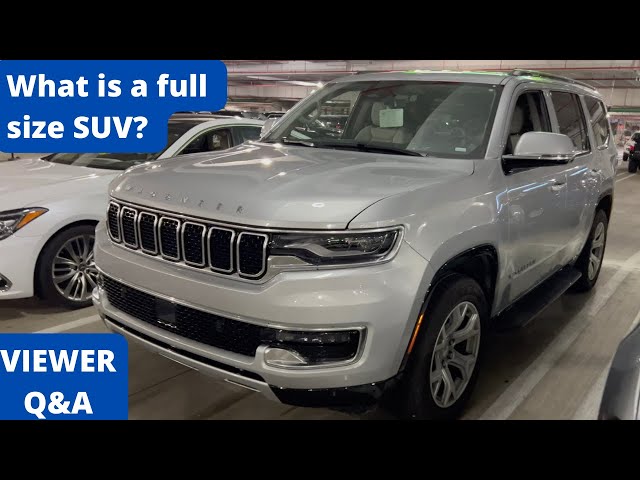
 Standard and premium SUVs often share similar silhouettes, but details reveal the divide.
What Defines a Standard SUV vs Premium SUV in 2026
Standard SUV Core Characteristics
Standard SUVs — think Toyota RAV4, Honda CR-V, Ford Escape — prioritize utility per dollar. They ride on unibody platforms shared with sedans, use turbocharged four-cylinders or hybrid powertrains, and seat five. Interiors feature cloth or synthetic leather, manual or 8-way power seats, and 7–10-inch touchscreens with wireless Apple CarPlay/Android Auto. All-wheel drive is usually optional. Starting MSRPs cluster between $28,000 and $38,000. You can also read our guide on what is an suv.
Premium SUV Defining Traits
Premium SUVs (BMW X3, Mercedes GLC, Audi Q5, Genesis GV70) start on dedicated or heavily modified platforms. Standard equipment includes turbo-four or mild-hybrid six-cylinder engines, 8–9-speed automatics, standard AWD, leather upholstery, 12+ inch digital instrument clusters, head-up displays, and 14+ speaker audio. Prices open around $48,000 and exceed $70,000 with common options.
The Gray Area: Near-Luxury and Premium Trims
A fully loaded Mazda CX-50 Turbo Premium Plus or top-trim Hyundai Santa Fe Calligraphy overlaps premium pricing ($42,000–$46,000) while keeping mainstream underpinnings. These "near-luxury" trims deliver 90% of the features for 70% of the badge price. In practice, cross-shopping these against entry-level luxury models is where most buyers find value — or confusion. You can also read our guide on luxury suv comparisons.
Price Comparison: Upfront Cost vs Long-Term Value
Purchase Price Ranges (2026 Market)
| Segment | Representative Models | Typical MSRP Range |
|---|---|---|
| Compact Standard | RAV4, CR-V, Escape, Tucson | $28,500 – $38,000 |
| Compact Premium | X3, GLC, Q5, GV70, XC60 | $48,000 – $72,000 |
| Midsize Standard | Highlander, Pilot, Grand Cherokee | $36,000 – $50,000 |
| Midsize Premium | X5, GLE, Q7, GV80 | $62,000 – $95,000 |
Destination fees ($1,200–$1,500) and dealer markups on high-demand premium models can add 3–8% above MSRP. Standard SUVs rarely see markups in 2026.
Depreciation Trajectories
Five-year depreciation tells the real cost story. Data from the latest Black Book and ALG reports show:
- Standard compact SUVs: Retain 42–48% of original MSRP
- Premium compact SUVs: Retain 48–55% of original MSRP
- Standard midsize SUVs: Retain 40–45%
- Premium midsize SUVs: Retain 45–52%
The gap narrows at the midsize level because premium buyers often lease, flooding the CPO market at year three. A common mistake is assuming premium always holds value better — some German models drop 35% in year one alone. For further reading, see iihs.org.
Total Cost of Ownership Over 5 Years
Factor in fuel, insurance, maintenance, repairs, and depreciation. For a 2026 compact example driven 15,000 miles/year:
| Cost Category | Standard (RAV4 AWD) | Premium (X3 xDrive30i) |
|---|---|---|
| Depreciation | $14,200 | $26,800 |
| Fuel (regular vs premium) | $9,800 | $13,500 |
| Insurance | $7,500 | $11,200 |
| Maintenance/Repairs | $4,100 | $7,800 |
| 5-Year Total | $35,600 | $59,300 |
Premium ownership costs roughly 65% more over half a decade. That difference buys a lot of vacations or retirement contributions.
Performance & Efficiency: Power Meets Practicality
Engine Options & Output
Standard SUVs converge on 2.0–2.5L four-cylinders (180–230 hp) or hybrid systems (215–245 hp combined). Premium SUVs offer 2.0L turbo-fours (248–268 hp), inline-sixes with 48V mild-hybrid (300–375 hp), and plug-in hybrid variants (320–400+ hp). The power gap is real: 0–60 mph takes 7.5–8.5 seconds in standard models versus 5.5–6.5 seconds in premium.
Fuel Economy Realities
EPA combined ratings for 2026 AWD compact models:
- Standard gas: 27–30 mpg (regular unleaded)
- Standard hybrid: 37–40 mpg (regular)
- Premium gas turbo-four: 23–25 mpg (premium required)
- Premium mild-hybrid six: 22–24 mpg (premium)
- Premium PHEV: 55–65 MPGe + 20–25 mpg gas-only
Premium fuel adds $0.50–$0.80/gallon nationally. Over 15,000 miles, that’s $350–$550/year extra before the efficiency penalty.
Towing & Payload Differences
Standard compact SUVs tow 1,500–3,500 lbs; premium compacts rate 3,500–4,500 lbs with factory tow packages. Midsize standard reaches 5,000 lbs; premium midsize hits 6,000–7,700 lbs. Payload follows similar spreads. If you tow a trailer monthly, the premium engineering margin matters.
Ride Quality & Handling Dynamics
Standard SUVs tune for compliance over control — softer bushings, lighter steering, more body roll. Premium models use multi-link rear suspensions, adaptive dampers (often standard), and variable-ratio steering. The difference shows up on broken pavement at 70 mph and in emergency lane changes. From experience, the premium ride feels "composed" rather than "soft" — a distinction passengers notice after two hours.
Interior Experience: Materials, Space & Technology
Seating Comfort & Material Quality
Standard: Cloth or SofTex/leatherette, 8-way power driver seat, manual lumbar, single-zone or dual-zone climate.
Premium: Genuine leather (often Nappa/Valcona), 12–16-way power with memory, 4-way power lumbar, massage functions, three-zone climate, ventilated front seats standard or cheap option.
Rear seat space is nearly identical — both segments offer 37–39 inches of legroom. The premium difference is contouring, heating/ventilation availability, and door panel materials (soft-touch vs hard plastic at knee level).
Infotainment & Connectivity
| Feature | Standard Typical | Premium Typical |
|---|---|---|
| Screen size | 8–10.25″ | 12.3–14.9″ (often curved) |
| Navigation | Connected services (subscription) | Embedded + connected, AR view |
| Voice control | Basic ("Hey Google"/Siri) | Natural language, multi-command |
| Wireless charging | Often standard | Standard, faster (15W) |
| USB ports | 3–4 (mixed A/C) | 5–6 (all USB-C, rear fast-charge) |
| OTA updates | Limited to maps/infotainment | Full vehicle domain updates |
Premium systems respond faster and integrate vehicle settings (suspension, steering, lighting) into the UI. Standard systems are catching up but still lag in graphics fidelity and latency.
Driver Assistance & Safety Tech
Standard SUVs now include automatic emergency braking, lane-keeping assist, blind-spot monitoring, and adaptive cruise as base equipment — a massive improvement from five years ago. Premium adds:
- Hands-free highway assist (Level 2+)
- Active lane change with turn signal
- Intersection turning assist
- Evasive steering assist
- Night vision (optional, rare)
- 360° camera with 3D view and trailer mode
The NHTSA and IIHS both credit these advanced systems with measurable crash reduction. In 2026 testing, premium SUVs with full suites earn "Superior" front crash prevention ratings at higher speeds than standard models with base suites.
Cabin Quietness & Climate Control
Acoustic glass (laminated side windows), active noise cancellation, and thicker insulation drop premium cabin noise 3–5 dB at highway speeds — perceptibly quieter. Three-zone climate with rear vents and dedicated controls prevents "thermostat wars" on family trips. Standard SUVs rarely offer rear temperature adjustment below the $40,000 trim.
Exterior Design: Function vs Statement
Styling Philosophy
Standard SUVs favor upright, boxy greenhouse for maximum interior volume. Premium models adopt coupe-like rooflines, aggressive grilles, and sculpted bodysides — sacrificing 1–2 cubic feet of cargo height for visual drama. Both approaches are valid; the premium look costs more to manufacture (complex stamping, multi-piece lights).
Build Materials & Finishes
Standard: High-strength steel body, aluminum hood/tailgate, chrome or painted plastic trim.
Premium: Aluminum-intensive body (doors, fenders, suspension), optional carbon fiber roof, chrome/bright metal window surrounds, laser-welded roof seams for rigidity.
Paint depth differs too. Premium brands apply 4–5 clear coat layers with ceramic options; standard uses 3. The difference shows after three winters of road salt.
Lighting & Wheel Design
Full LED matrix headlights with adaptive high beam are standard on most 2026 premium SUVs; standard models get LED reflectors with auto high-beam only. Wheel sizes: 17–19″ standard, 19–21″ premium. Larger wheels degrade ride quality and increase replacement cost ($400–$800/wheel vs $180–$300).
Safety: Standard Equipment vs Advanced Suites
Crash Test Performance
Both segments earn IIHS Top Safety Pick+ routinely. The differentiator is updated moderate overlap and updated side impact tests (introduced 2022/2023). Premium structures often exceed new thresholds by wider margins due to additional high-strength steel and aluminum castings in the B-pillar and floor.
Active Safety Systems Comparison
| System | Standard Availability | Premium Availability |
|---|---|---|
| AEB (pedestrian/cyclist) | Standard | Standard, wider speed range |
| Blind-spot monitoring | Standard | Standard + rear cross-traffic braking |
| Adaptive cruise | Standard (stop-and-go) | Standard + hands-free highway |
| Lane centering | Standard (basic) | Standard (precise, hands-free) |
| Park assist | Optional (basic) | Standard (remote, 3D view) |
| Driver monitoring | Rare | Standard (camera-based) |
Real-World Safety Data
HLDI loss data shows premium SUVs have 15–20% lower collision claim frequency than standard counterparts, partly due to driver demographics but also superior active safety calibration. The gap narrows for models sharing platforms (e.g., Toyota Highlander vs Lexus TX).
Brand Perception & Resale Value
Status Signaling & Social Context
Premium badges carry implicit assumptions about income, taste, and professional standing. In client-facing roles (real estate, consulting, sales), a German or Genesis SUV can signal competence. Standard SUVs signal practicality and financial prudence. Neither is "wrong" — but misalignment with your context creates friction.
Certified Pre-Owned Programs
Premium CPO programs add 1–2 years/unlimited miles to the original warranty, include loaner cars, and undergo 150+ point inspections. Standard CPO (Toyota Certified, HondaTrue) offers 7-year/100,000-mile powertrain and 12-month/12,000-mile comprehensive — shorter bumper-to-bumper but longer powertrain coverage. For used buyers, premium CPO reduces repair risk; standard CPO reduces long-term drivetrain risk.
Loyalty & Conquest Rates
Premium brands retain 55–65% of owners at next purchase; standard brands retain 45–55%. Conquest data shows premium buyers increasingly cross-shop Genesis, Volvo, and loaded standard models — eroding traditional German loyalty. If you plan to keep the vehicle 8+ years, brand loyalty matters less than reliability history.
Maintenance, Repairs & Reliability
Scheduled Maintenance Costs
Standard SUVs: $600–$900/year (oil, filters, tires, brakes). Many include 2-year/25,000-mile free maintenance.
Premium SUVs: $1,000–$1,800/year (synthetic oil, brake fluid, cabin microfilters, adaptive damper checks). BMW/Mercedes include 3-year/36,000-mile free maintenance; Genesis offers 3-year/36,000-mile complimentary.
Repair Frequency & Complexity
Consumer Reports 2026 reliability surveys show standard brands (Toyota, Mazda, Honda, Subaru) averaging 8–12 problems per 100 vehicles (PP100) at year three. Premium brands average 12–18 PP100, with electrical/infotainment issues leading. Complexity costs: a failed matrix LED headlight assembly runs $1,800–$2,500 vs $400–$700 for standard LED.
Warranty Coverage Differences
Standard: 3-year/36,000 bumper-to-bumper, 5-year/60,000 powertrain.
Premium: 4-year/50,000 bumper-to-bumper (Genesis: 5-year/60,000), 4-year/50,000 powertrain. Some premium brands extend corrosion perforation to 12 years unlimited miles.
How to Decide: 5 Questions to Ask Yourself
- What percentage of driving is highway vs city? Highway cruising favors premium quietness and adaptive cruise; city driving favors standard maneuverability and parking ease.
- Do you tow regularly? Over 3,500 lbs monthly → premium engineering margin. Occasional light trailer → standard with tow package.
- How long will you keep it? Under 4 years → lease premium for lower payment. 7+ years → standard avoids compounding repair costs.
- Is premium fuel a budget dealbreaker? $450–$600/year extra is real money. Calculate your mileage.
- Does the badge affect your professional or personal life? Be honest. If it does, factor that intangible value.
Conclusion
The standard vs premium SUV choice ultimately hinges on whether the daily experience upgrades — quieter cabin, sharper handling, better materials, advanced safety — justify 65% higher five-year ownership costs. For most households, a well-chosen standard SUV with a premium trim (leather, safety suite, larger screen) delivers 85% of the satisfaction at 60% of the cost. If you value driving dynamics, plan to lease, or need the towing margin, premium earns its keep. Next step: Narrow your list to three models, then schedule back-to-back test drives on the same day — your perception of the difference will sharpen immediately.
Frequently Asked Questions
Are premium SUVs more reliable than standard SUVs?
No. Data consistently shows mainstream brands (Toyota, Mazda, Honda) outrank premium brands in reliability surveys. Premium complexity increases failure points.
Do I really need premium fuel in a premium SUV?
Yes, if the manufacturer requires it. Using regular in a turbocharged premium engine risks knock, reduced power, and potential long-term damage. The savings aren't worth the risk.
Is the maintenance cost difference exaggerated?
Independent shops can service premium SUVs for 30–40% less than dealers, but specialized tools and software subscriptions still make repairs pricier. Budget 1.5× standard costs.
Which premium SUV has the best resale value?
Lexus RX, Toyota Land Cruiser, and Porsche Macan lead retention. Among Germans, the GLC-Class and X3 hold value best due to lease volume supporting CPO supply.
Can a loaded standard SUV match a base premium SUV features?
Largely yes — heated/ventilated seats, 360° camera, head-up display, and hands-free liftgate appear on top trims of RAV4, CR-V, Tucson. Missing: adaptive dampers, matrix LEDs, genuine leather, brand cachet.
How much more is insurance for a premium SUV?
Expect 30–50% higher premiums due to repair costs, theft rates, and driver profiles. Shop quotes before buying — the gap varies wildly by ZIP code and insurer.
 Premium cabins distinguish themselves through material authenticity and screen integration. —
Related Guides
If you're still weighing options, our compact SUV showdown breaks down the top mainstream contenders spec-by-spec. For buyers leaning premium, the Genesis GV70 deep dive shows how the value challenger stacks up against German rivals. And if fuel type factors into your decision, this breakdown explains exactly which engines demand premium and why.