

Choosing the right people‑mover means balancing space, comfort, capability, and long‑term cost. Premium SUVs promise a higher driving position, upscale finishes, and available all‑wheel drive, while minivans excel at low‑step entry, flexible seating, and class‑leading cargo volume. This guide breaks down every factor that matters to a 2026 family buyer so you can match the vehicle to your real‑world routine.
Quick Comparison Table
| Category | Premium SUV (typical) | Minivan (typical) |
|---|---|---|
| Seating capacity | 5‑7 | 7‑8 |
| Cargo behind 3rd row | 30‑40 cu ft | 30‑40 cu ft |
| Maximum cargo (seats folded) | 60‑80 cu ft | 80‑140 cu ft |
| Ground clearance | 7‑9 in | 5‑6 in |
| Typical combined MPG (EPA) | 18‑25 | 20‑28 |
| Starting MSRP (2026) | $55k‑$85k | $40k‑$55k |
Figures are representative ranges; always verify the specific model you’re cross‑shopping.
Design & Styling
SUV Aesthetics: Bold Presence
Premium SUVs wear sculpted bodywork, prominent grilles, and available 22‑inch wheels that signal capability. The raised beltline and available panoramic roofs give occupants a commanding view — useful on highway merges and light trails alike. You can also read our guide on evaluation of suv.
Minivan Practicality: Function First
Minivans adopt a boxy silhouette that maximizes interior volume. Sliding rear doors open wide in tight parking garages, and the low step‑in height (often under 16 in) makes loading kids, strollers, or mobility aids effortless.
 Side‑by‑side silhouette showing the SUV’s raised stance versus the minivan’s low‑floor architecture.
Performance & Driving Dynamics
SUV Power & All‑Weather Traction
Most premium SUVs offer a choice of turbo‑charged four‑cylinders, V6s, or plug‑in hybrids, paired with standard or optional all‑wheel drive. Tow ratings of 5,000‑7,500 lb are common, making them viable for boat or camper duty.
Minivan Ride Comfort & Maneuverability
Minivans tune their suspensions for a plush, isolated ride. Front‑wheel‑drive layouts keep the turning circle tight (≈38 ft), a real advantage in school‑zone drop‑offs and multi‑level garages.
 Road‑test scene highlighting the SUV’s higher ground clearance versus the minivan’s car‑like handling.
Interior Space, Seating & Flexibility
Cabin Dimensions & Seat Configurations
Premium SUVs typically deliver 40‑45 in of third‑row legroom — acceptable for teens on short hops. Minivans push that to 48‑55 in and often include a removable second‑row center seat, creating a pass‑through to the rear.
Storage Intelligence
Minivans lead with under‑floor bins, overhead consoles, and configurable seat‑back pockets. SUVs compensate with deeper front‑door pockets and optional rear‑seat entertainment screens, but total cubic footage lags behind.
Technology, Infotainment & Connectivity
Both segments now ship with 12‑inch‑plus touchscreens, wireless Apple CarPlay/Android Auto, and over‑the‑air updates. Premium SUVs tend to add head‑up displays, massaging front seats, and premium audio brands (e.g., Burmester, Bowers & Wilkins). Minivans counter with rear‑seat tablet mounts, built‑in vacuum cleaners, and tri‑zone climate controls that are easier to reach from the third row.
Safety Systems & Crash‑Test Results
Standard advanced driver‑assistance suites (automatic emergency braking, blind‑spot monitoring, lane‑keeping assist) appear on every 2026 model. Premium SUVs often add adaptive cruise with stop‑and‑go and a 360° camera system. Minivans earn top marks from the NHTSA safety ratings for their stiff passenger cells and abundant airbag coverage — many achieve a 5‑star overall rating across all trims.
Fuel Economy & Running Costs
EPA data shows minivans generally return better combined fuel economy than comparable premium SUVs. For the most current figures, consult the EPA fuel‑economy data for each specific model. Hybrid variants (e.g., Toyota Sienna Hybrid, Chrysler Pacifica PHEV) can push combined estimates into the low‑30s MPG, narrowing the gap with smaller SUV hybrids.
Total Cost of Ownership
- Depreciation: Premium SUVs lose 45‑55 % of value in five years; minivans typically retain 5‑10 % more.
- Insurance: Higher MSRP and repair complexity push SUV premiums $300‑$600 higher annually.
- Maintenance: All‑wheel‑drive systems and larger brakes add $200‑$400 per service interval on SUVs.
Ownership cost trends can shift; see recent analysis on ownership cost trends for market context.
Practicality for Daily Life
Cargo & Load‑In Ease
With all seats folded, a minivan swallows a 4‑× 8‑ft sheet of plywood flat; most SUVs require the front passenger seat to be folded forward. The minivan’s sliding doors also eliminate door‑ding risk in narrow spots.
Parking & Urban Maneuvers
A minivan’s shorter front overhang and tighter turning radius make parallel parking less stressful. Premium SUVs benefit from standard 360° cameras and automated parking assist, which partially offset their larger footprint.
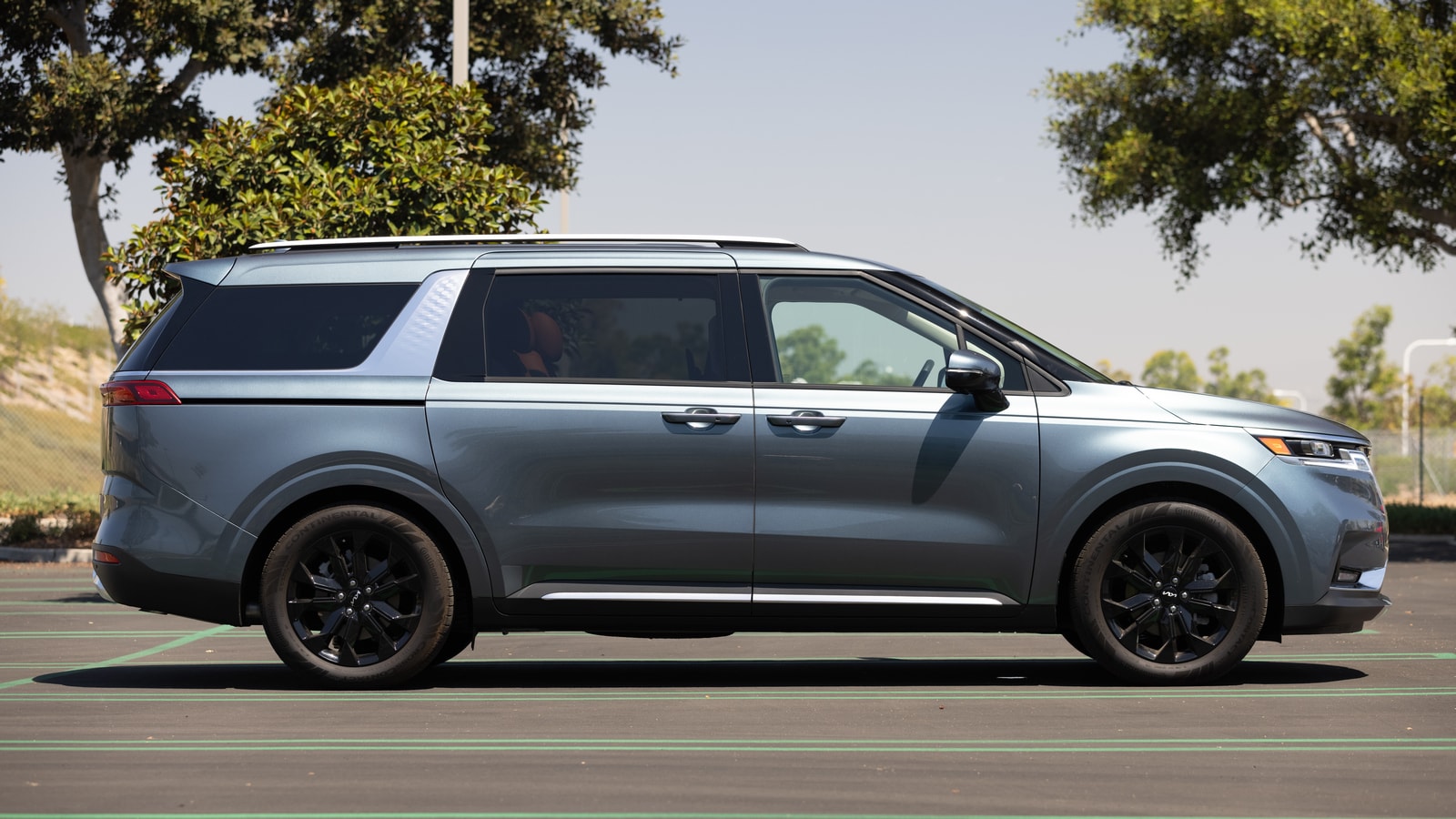 Profile view of a modern minivan showcasing the low load floor and sliding‑door aperture.
Ownership Experience: Depreciation, Insurance, Resale
Resale values for well‑maintained minivans remain strong because fleet demand (rental, ride‑share) sustains a buyer pool. Premium SUVs with desirable option packages (e.g., adaptive air suspension, premium leather) can command a premium on the used market, but only if mileage stays under 12k mi/yr. For a deeper dive into how specific models hold value, review our real‑world hybrid efficiency case study.
Electrified Options: Hybrid & Plug‑In Models
- Toyota Sienna Hybrid — standard hybrid, 36 MPG combined, 8‑passenger config.
- Chrysler Pacifica PHEV — 32 mi EV range, then 30 MPG combined.
- Premium SUV plug‑ins (e.g., BMW X5 xDrive45e, Volvo XC90 Recharge) — 18‑30 mi EV range, combined 22‑27 MPG.
If daily commutes stay under 30 mi, a minivan PHEV can run mostly on electricity while still delivering full‑size utility. For buyers weighing a compact hybrid SUV instead, our compact hybrid SUV picks outline the trade‑offs.
Buying Checklist: 7 Questions to Decide
- Typical passenger count — 5‑6 → SUV; 7‑8 → minivan.
- Primary cargo — bulky gear (bikes, kayaks) → SUV roof rails; flat‑pack boxes → minivan floor.
- Driving environment — snow‑belt, unmaintained roads → SUV AWD; suburban/school runs → minivan FWD.
- Fuel budget — prioritize MPG → minivan hybrid/PHEV.
- Tech wish‑list — head‑up display, massaging seats → premium SUV.
- Resale horizon — keep >5 yr → minivan depreciation advantage.
- Parking constraints — garage height <7 ft → minivan; curbside only → SUV cameras help.
Verdict: Which Fits Your Family?
If you value a commanding view, occasional off‑pavement travel, and a cabin that feels like a luxury lounge, a premium SUV earns its price tag. If your daily rhythm revolves around school drop‑offs, weekend sports gear, and maximizing every cubic foot of interior space, a minivan delivers superior practicality and lower total cost. Test‑drive both back‑to‑back on your actual routes — nothing replaces seat‑time.
Ready to narrow the field? Schedule a side‑by‑side drive at your local dealer this week and compare the third‑row entry height yourself.
Frequently Asked Questions
What are the main advantages of premium SUVs?
Premium SUVs combine upscale materials, available all‑wheel drive, higher towing capacity, and a driving position many find confidence‑inspiring.
How do minivans compare on passenger comfort?
Minivans offer wider third‑row seats, lower step‑in height, and sliding doors that make loading children and cargo far easier in tight spaces.
Which segment is more fuel‑efficient?
Minivans — especially hybrid and plug‑in hybrid models — generally achieve better combined MPG than similarly sized premium SUVs.
Are premium SUVs worth the extra cost?
If you regularly tow, need all‑weather traction, or prioritize a premium badge and interior finishes, the added expense can be justified. Otherwise, a well‑equipped minivan often provides better value.
Can a minivan handle light off‑road use?
Most modern minivans have modest ground clearance (≈5.5 in) and front‑wheel drive, limiting them to gravel roads and snow‑covered pavement rather than true trails.
What about insurance costs?
Expect premiums $300‑$600 higher per year on a premium SUV due to higher repair costs and vehicle value.
Do either segment offer fully electric versions today?
As of 2026, no full‑size minivan is battery‑electric in the U.S.; several premium SUVs (e.g., Cadillac Lyriq, Mercedes EQS SUV) are, but they sacrifice third‑row practicality.
Conclusion
Your family’s daily logistics — passenger count, cargo type, driving climate, and budget — should steer the decision more than badge prestige. Premium SUVs shine when adventure and image matter; minivans win on pure people‑moving efficiency and long‑term affordability. Whichever you choose, prioritize a test drive that mirrors your real routine.