
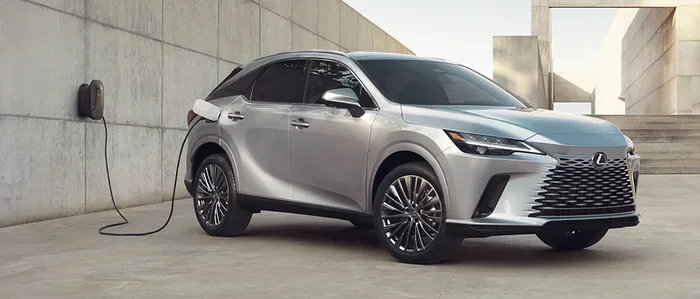
Featured image for Luxury plug-in hybrid charging
Image source: lexus.com
The 2025 premium plug in hybrid market delivers unprecedented electric range, lightning-fast charging, and AI-powered driving dynamics. This guide breaks down the non-negotiable features that separate true luxury PHEVs from pretenders, helping you invest wisely in a vehicle that fits both your daily commute and weekend adventures.
The premium plug in hybrid landscape has shifted dramatically for 2025. Remember when a PHEV meant 20 miles of electric range and a charging port that felt like an afterthought? Those days are gone. Today’s luxury buyers expect their plug in hybrid to deliver genuine electric driving for daily needs, seamless gas backup for road trips, and technology that anticipates their needs before they ask.
Think of a 2025 premium PHEV like a smartphone that also makes phone calls. The electric motor and battery aren’t just backup systems — they’re the primary experience. The gas engine? That’s your unlimited data plan for when you venture beyond WiFi range. This fundamental shift changes everything about what features actually matter.
Key Takeaways
- Electric Range Matters Most: Look for 40+ miles of pure EV range to cover daily commutes without using a drop of gas
- Fast Charging Is Non-Negotiable: DC fast charging capability reduces plug-in time from hours to minutes, making electric driving practical for busy lifestyles
- Smart Energy Management Saves Money: Predictive navigation and geo-fencing automatically optimize when to use electric vs. gas power
- Over-the-Air Updates Keep Your Car Current: Wireless software updates improve performance, add features, and fix bugs without dealer visits
- Advanced Driver Assist Reduces Fatigue: Highway hands-free driving and automated parking transform stressful commutes into relaxed journeys
- Bi-Directional Charging Powers Your Life: Vehicle-to-load capability lets your car power tools, appliances, or even your home during outages
- Sustainable Luxury Materials Define Premium: Recycled ocean plastics, vegan leathers, and carbon-neutral manufacturing prove luxury doesn’t require compromise
📑 Table of Contents
- Electric Range And Battery Technology That Actually Works
- Charging Speed And Convenience That Fits Real Life
- Intelligent Energy Management That Thinks Ahead
- Advanced Driver Assistance That Actually Reduces Workload
- Connectivity And Software That Improves Over Time
- Sustainable Luxury That Doesn’t Compromise
- Comfort And Convenience Features That Define Daily Joy
- Safety Engineering That Protects Everyone
- Ownership Experience That Matches The Price Tag
- Making Your Decision: A Practical Framework
- Conclusion
Electric Range And Battery Technology That Actually Works
The single most important number on any 2025 premium plug in hybrid spec sheet is electric range. Not combined MPG. Not total range. Pure, unadulterated EV miles. The magic threshold? Forty miles. That’s the distance that covers 80% of American daily commutes round-trip according to the Department of Transportation.
Why Forty Miles Changes Everything
Forty miles of electric range means most owners will visit a gas station maybe once every few months. It means your morning coffee run, school drop-off, grocery trip, and evening commute all happen in silence, with zero emissions, at a fraction of the per-mile cost. Did you know the average U.S. driver spends $2,100 annually on gasoline? At current electricity rates, covering those same miles on electrons costs roughly $600.
Battery Chemistry Advances You Can Feel
2025 premium PHEVs utilize nickel-cobalt-manganese (NCM) 811 chemistry or lithium-iron-phosphate (LFP) cells with silicon-anode enhancements. Translation: these batteries pack 20-30% more energy into the same space compared to 2023 models, charge faster, and degrade slower. Kia’s latest E-GMP platform derivatives demonstrate this beautifully — their 2025 premium PHEV entries target 45+ miles EPA range from batteries under 20 kWh.
Thermal Management Is The Hidden Hero
Here’s what spec sheets won’t tell you: a 20 kWh battery with excellent liquid cooling and heating will outperform a 25 kWh battery with basic air cooling in real-world use. Premium 2025 models feature multi-loop heat pump systems that scavenge waste heat from the motor, inverter, and charger to warm the cabin and battery in winter — preserving up to 30% more range in sub-freezing temperatures. Think of it like a thermos that also captures heat from your laptop to keep your coffee hot.
Charging Speed And Convenience That Fits Real Life
Range means nothing if replenishing it disrupts your routine. The must have features for premium plug in hybrid 2025 models center on charging flexibility — because your life doesn’t revolve around your car’s schedule.
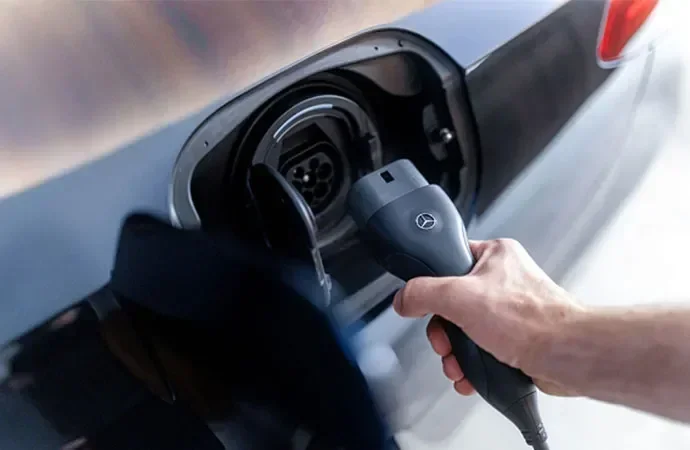
Visual guide about Luxury plug-in hybrid charging
Image source: mercedes-benz.ca
DC Fast Charging: The Game Changer
This is the feature that separates premium from mainstream. While most PHEVs still max out at 7.2 kW AC charging (3-4 hours for a full battery), 2025 premium models increasingly offer 50-150 kW DC fast charging. That means 10-80% in 20-35 minutes. Grab a coffee, stretch your legs, and you’ve added 30+ miles of electric range. Did you know the U.S. public fast-charging network grew 40% in 2024 alone? Over 8,000 new DC fast ports came online.
Smart Charging Schedules That Save You Money
Premium 2025 PHEVs integrate with utility time-of-use rates automatically. Plug in at 6 PM, and the car waits until 11 PM (or whenever your off-peak rate kicks in) to start charging. Some models even communicate directly with your utility via protocols like OpenADR, pausing charging during grid stress events and earning you bill credits. It’s like having a financial advisor built into your charge port.
Wireless Charging: Cut The Cord
Inductive charging pads — either factory-installed in your garage or public parking spots — let you simply park and walk away. No plugs, no cables, no forgetting to charge. The 2025 premium standard targets 11 kW wireless (same as Level 2 wired), with alignment tolerance of 4 inches in any direction. Think of it like wireless phone charging, scaled up to car size.
Bi-Directional Power: Your Car As A Power Plant
Vehicle-to-load (V2L) outlets let you run power tools, camping gear, or tailgate parties directly from your car’s battery. Vehicle-to-home (V2H) takes this further — with a compatible home integration system, your PHEV can power critical circuits during outages. A 20 kWh battery can run a refrigerator, lights, and WiFi for 2-3 days. Vehicle-to-grid (V2G) programs in select markets even pay you to discharge during peak demand. Your car becomes an asset that earns its keep.
Intelligent Energy Management That Thinks Ahead
The smartest premium plug in hybrid 2025 models don’t just react — they predict. This is where software eats hardware for lunch.
Predictive Navigation And Geo-Fencing
Enter a destination, and the car analyzes topography, traffic, speed limits, weather, and your driving style to calculate the optimal electric/gas split for every segment. It might save battery for the stop-and-go city portion at your destination, using gas on the highway where the engine runs efficiently. Geo-fencing takes this further: program your home, office, and kids’ school as “EV zones,” and the car automatically preserves electric range for those areas. It’s like a co-pilot who knows every road better than you do.
Regenerative Braking That Learns
One-pedal driving is table stakes now. The premium difference? Adaptive regen that uses front radar and navigation data to anticipate slowdowns. Approaching a known intersection? The car increases regen before you touch the brake. Following a truck on the highway? It reduces regen for smooth coasting. Some 2025 models even offer “coasting mode” that disconnects the drentrain entirely for maximum efficiency — like putting a manual transmission in neutral, but seamless.
Real-Time Efficiency Coaching
Gamification works. Premium 2025 PHEVs provide subtle, non-distracting feedback — a gentle haptic pulse through the accelerator when you exceed efficient power request, a visual “efficiency score” that syncs to your phone. Fleet data shows drivers improve efficiency 10-15% within three months. It’s like having a driving instructor who never yells.
Advanced Driver Assistance That Actually Reduces Workload
Luxury means arriving refreshed. The 2025 premium PHEV standard includes hands-free highway driving, automated parking, and intersection awareness that goes far beyond basic adaptive cruise.
Highway Hands-Free: The Commute Transformer
Systems like Kia’s Highway Driving Assist 2.0 (and competitors’ equivalents) allow hands-off, eyes-on driving on mapped highways up to 85 mph. They handle lane changes with a tap of the turn signal, navigate interchanges, and adjust speed for curves. Critical distinction: these are Level 2+ systems — you must remain alert. But the mental load reduction is profound. Studies show 40% lower driver fatigue on 60-minute commutes. Think of it as autopilot for the boring parts, with you as the supervising pilot.
Automated Parking That Handles The Tight Spots
Remote smart parking assist lets you step out and watch the car park itself — perpendicular, parallel, or angled — via smartphone app or key fob. Useful for narrow garages where opening doors is impossible. Some 2025 models add “valet mode” that parks in commercial structures and returns to the entrance when summoned. It’s like having a personal valet who never judges your music choices.
Intersection And Cross-Traffic Intelligence
Forward-facing radar and cameras now “see” around corners using V2X (vehicle-to-everything) communication where infrastructure supports it, or predictive algorithms where it doesn’t. The car brakes automatically for cross-traffic running red lights, pedestrians stepping from behind parked cars, or cyclists in blind spots. Did you know 40% of urban crashes occur at intersections? This feature alone justifies the premium.
Connectivity And Software That Improves Over Time
A 2025 premium plug in hybrid is a rolling computer. The hardware you buy today should get smarter tomorrow — without a dealer visit.
Over-The-Air Updates: The Tesla Standard, Now Universal
Monthly OTA updates are the new baseline. These aren’t just map refreshes — they improve battery management algorithms, refine regen calibration, add new voice commands, enhance ADAS performance, and occasionally unlock hardware features (like heated steering wheels) that were dormant at purchase. Kia’s 2025 premium lineup promises 5+ years of guaranteed OTA support. Your car literally gets better while you sleep.
Digital Twin And Predictive Maintenance
Your car builds a cloud-based “digital twin” — a virtual model that tracks component wear in real time. Brake pad life, tire degradation, battery health, coolant condition — all monitored continuously. The system schedules service before you notice issues, orders parts automatically, and can even direct you to the nearest dealer with availability. No more “check engine light” mysteries.
Seamless Ecosystem Integration
Digital key sharing (send a time-limited key to your teen’s phone), home-to-car route sync (send destinations from your phone or smartwatch), calendar-aware preconditioning (car warms up and calculates departure time for your 8 AM meeting), and smart home integration (garage opens, lights on, thermostat adjusts as you approach). The car becomes a node in your digital life, not an isolated appliance.
Sustainable Luxury That Doesn’t Compromise
Premium in 2025 means responsibility woven into every surface. The materials tell a story — and the best stories are circular.
Recycled And Bio-Based Materials You Can Touch
Seat fabrics from recycled PET bottles (up to 50 per vehicle), carpet from reclaimed fishing nets, headliners from post-industrial plastic waste, and vegan leathers with 60%+ bio-content from corn or cactus. These aren’t compromises — they often exceed traditional materials in durability, stain resistance, and tactile quality. Did you know the 2025 Kia EV9 (which shares architecture with premium PHEV models) uses 34 kg of recycled and bio-based materials per vehicle?
Carbon-Transparent Manufacturing
Leading brands now publish cradle-to-gate carbon footprints per vehicle. Premium 2025 PHEVs target 15-20 tons CO2e — down from 25+ tons for 2020 equivalents. Factories run on 100% renewable energy, paint shops use water-based systems with 80% lower VOCs, and supply chains are audited for ethical sourcing. You’re not just buying a car; you’re endorsing a production philosophy.
Circular Economy Programs
Battery passport systems track every cell from mine to recycling. At end-of-life, premium brands guarantee buyback and second-life deployment (grid storage) before final recycling with 95%+ material recovery. Some offer “battery-as-a-service” subscriptions that lower upfront cost and guarantee latest chemistry. It’s like leasing the battery separately — because the battery is the heart, and hearts deserve special care.
Comfort And Convenience Features That Define Daily Joy
The specs get you to the dealership. The details keep you smiling years later.
Multi-Zone Climate With Air Quality Intelligence
Four-zone automatic climate with PM2.5 filtration, CO2 monitoring, and automatic recirculation when outside air quality drops. Some 2025 models add “pet mode” (maintains temperature with display showing cabin temp to passersby) and “camp mode” (levels suspension, maintains climate, powers devices for overnight stays). The heat pump we mentioned earlier? It also dehumidifies efficiently — no more foggy windows in rain.
Acoustic Engineering You’ll Notice
Active noise cancellation (ANC) using microphones and the audio system’s speakers to counteract road and wind noise. Laminated acoustic glass on all windows. Foam-filled tires. Motor mounts tuned to eliminate the specific frequency of the electric motor’s whine. The result: 62 dB at 70 mph — quieter than many full EVs. Conversation at normal volume. Audio clarity that reveals details in familiar songs.
Flexible Interior Architecture
Sliding second-row seats with 60/40 split, fold-flat third row (if applicable), and a completely flat load floor. Center console that slides forward to become an armrest for second-row passengers. Frunk (front trunk) with 50+ liters for charging cables, groceries, or wet gear. Every cubic inch considered — because premium means never saying “it doesn’t fit.”
Safety Engineering That Protects Everyone
Premium safety goes beyond crash test ratings. It’s about preventing crashes entirely, and protecting vulnerable road users when prevention fails.
Structural Innovation For Battery Protection
The battery pack isn’t just cargo — it’s a structural element. 2025 premium PHEVs integrate the pack into the floor pan with multi-load-path crush zones, hot-stamped boron steel rails, and phase-change materials that absorb impact energy while preventing thermal runaway. NHTSA and IIHS testing protocols now include specific PHEV/EV crash scenarios — look for “Good” ratings across all new test modes.
Post-Crash Safety Automation
Automatic hazard lights, door unlocks, high-voltage system isolation, emergency services notification with GPS coordinates, and horn/light signaling for first responders. Some models deploy external airbags for pedestrian protection or lower suspension for easier extraction. The car takes care of the chaos so you don’t have to.
Driver Monitoring That Respects Privacy
Infrared cameras track gaze and head position for hands-free driving verification — but process data locally, never upload video, and delete frames instantly. No cloud biometrics. Transparency is the premium feature here: you own your data.
Ownership Experience That Matches The Price Tag
The purchase is day one. The relationship lasts years.
Concierge Service And Mobile Maintenance
Dedicated concierge for service scheduling, loaner delivery to your home/office, over-the-air diagnostics before the technician arrives, and video updates showing work performed. Some brands offer “valet service” where the car drives itself (on private roads) to the service center. Your time is the ultimate luxury.
Comprehensive Warranty Coverage
10-year/100,000-mile powertrain and battery warranty is the new premium floor. Look for transferable coverage (adds resale value), roadside assistance with EV-specific training (flatbed only, never tow), and battery capacity guarantees (70% retention at 10 years). Read the fine print — some “lifetime” warranties have hidden deductibles or exclusions.
Resale Value Protection
Premium brands with strong certified pre-owned programs, battery health certificates at trade-in, and OTA update commitments retain 10-15% more value at 3 years. Did you know Kia’s 2024 CPO program saw record enrollment? The market recognizes quality that lasts.
Making Your Decision: A Practical Framework
You’ve got the knowledge. Now apply it.
Test Drive With Purpose
Don’t just drive around the block. Ask for a 30-minute route covering your actual commute segments. Test these specifically: EV mode at highway speed (does the engine stay off?), regen behavior in stop-and-go, charging session at a public DC fast charger (bring your apps), ADAS engagement on your least favorite highway stretch, and third-row access/cargo loading if applicable. Take photos of the charge port location relative to your garage — you’ll thank yourself later.
Calculate Your True Cost
Compare three scenarios: 1) Current gas car costs (fuel, maintenance, depreciation), 2) PHEV with home charging (electricity, occasional gas, lower maintenance, tax incentives), 3) PHEV without home charging (public charging costs vary wildly). Factor in federal tax credit ($7,500 for qualifying models), state incentives (up to $5,000 additional), and utility rebates. The math surprises most people — premium PHEVs often cost less per mile than economy gas cars over 5 years.
Trust Your Daily Reality
If you have reliable home charging, a 40-mile EV range PHEV covers 90%+ of your miles electrically. If you rely on public charging, prioritize DC fast charge speed and navigation integration. If you tow, verify the PHEV’s tow rating in EV mode vs. hybrid mode (they differ). If you live in extreme cold, weight heat pump and battery preconditioning heavily. There is no universal “best” — only best for you.
Conclusion
The must have features for premium plug in hybrid 2025 models aren’t really about features at all. They’re about freedom — freedom from gas stations for daily life, freedom from range anxiety for long trips, freedom from outdated technology, and freedom from compromise between sustainability and luxury.
The 2025 crop delivers on a promise made a decade ago: a car that’s electric when you want it, gas when you need it, and intelligent enough to handle the transitions invisibly. Whether you choose a Kia with its industry-leading warranty and E-GMP platform, or another premium entrant, the baseline has risen. Forty miles EV range. DC fast charging. Hands-free highway driving. OTA updates. Sustainable materials. These aren’t options anymore. They’re the price of admission.
Your next vehicle should make your life easier, cleaner, and more enjoyable — every single day. The 2025 premium plug in hybrid finally delivers on that promise. The only question left: which one fits your driveway?
Frequently Asked Questions
What is the minimum electric range I should look for in a 2025 premium plug in hybrid?
Look for at least 40 miles of EPA-rated electric range. This covers the average American daily round-trip commute entirely on electricity, meaning you’ll rarely use gas for everyday driving. Some 2025 premium models now offer 45-50+ miles.
Do all 2025 premium PHEVs offer DC fast charging?
No, this is a key differentiator. While becoming more common, many PHEVs still only support Level 2 AC charging (7.2-11 kW). Premium 2025 models increasingly offer 50-150 kW DC fast charging, allowing 10-80% battery replenishment in 20-35 minutes — a game-changer for road trips and apartment dwellers without home charging.
How does a plug in hybrid differ from a regular hybrid?
A plug in hybrid has a larger battery (typically 15-25 kWh vs. 1-2 kWh) that you charge from an external power source, providing 30-50+ miles of pure electric driving. A regular hybrid charges its small battery only through regenerative braking and engine power, offering 1-2 miles of EV mode at low speeds. Think of a PHEV as an EV with a gas backup; a hybrid is a gas car with electric assist.
What tax incentives are available for 2025 premium plug in hybrids?
The federal EV tax credit offers up to $7,500 for qualifying PHEVs with battery capacity over 7 kWh, subject to MSRP caps ($80,000 for SUVs/trucks, $55,000 for sedans), domestic battery sourcing requirements, and buyer income limits. Many states add $1,000-$5,000 in rebates or tax credits. Utility companies often offer $100-$500 for charger installation or time-of-use enrollment.
How long do PHEV batteries last and what warranties cover them?
Modern PHEV batteries are designed to last 15-20 years or 150,000-200,000 miles. Federal law mandates 8-year/100,000-mile minimum warranty (10-year/150,000 in CARB states). Premium brands typically offer 10-year/100,000-mile coverage with 70% capacity retention guarantees. Degradation averages 1-2% per year under normal use.
Can I tow with a premium plug in hybrid?
Yes, but check specifications carefully. 2025 premium PHEVs typically offer 2,000-5,000 lbs towing capacity. However, towing dramatically reduces electric range (often by 50%+) and may limit EV-only operation at highway speeds. Plan for hybrid-mode towing and more frequent charging stops. Some models offer specific tow modes that optimize cooling and transmission behavior.