

Featured image for Mercedes GLS service bay
Image source: royalworldservice.com.ua
Dealerships offer factory‑trained technicians and genuine parts, but often cost 30‑40 % more than independents. Independent shops can match quality for routine work and save you money, yet may lack the latest software tools for complex updates.
When you own a Mercedes GLS, every service decision feels like a high‑stakes choice. You want the SUV to stay reliable, keep its resale value, and not drain your wallet. The debate over mercedes gls dealer vs independent service is one of the most common questions among owners. This guide breaks down the facts, adds real numbers, and gives you a simple framework to decide.
Did you know? According to a 2023 J.D. Power study, 68 % of luxury SUV owners who used independent shops for routine maintenance reported satisfaction equal to or higher than dealer customers. That statistic alone challenges the assumption that only a dealership can keep a GLS running like new.
Key Takeaways
- Factory training: Dealer techs receive brand‑specific certification that independents may not have.
- Price gap: Independent labor rates average $90‑$110/hr versus $130‑$150/hr at dealers.
- Warranty safety: Using an independent shop does not void your warranty if they follow OEM procedures and use approved parts.
- Software access: Dealers have immediate access to Mercedes‑Benz STAR diagnostics; independents often need a subscription.
- Parts sourcing: Genuine parts are guaranteed at dealers; quality aftermarket parts can be equivalent but vary by supplier.
- Convenience: Dealers provide loaner vehicles and complimentary inspections; independents may offer faster turnaround.
- Long‑term value: A mixed approach—dealer for major updates, independent for maintenance—often yields the best cost‑to‑quality ratio.
📑 Table of Contents
- Understanding the Mercedes GLS Service Landscape
- Dealer Service: Pros, Cons, and What You Pay For
- Independent Service: Pros, Cons, and Hidden Value
- Cost Comparison: Real Numbers and Long‑Term Impact
- Warranty, Software Updates, and Specialized Tools
- Making the Right Choice for Your Driving Style
- Conclusion
Understanding the Mercedes GLS Service Landscape
Who services your GLS?
Two main players exist: the authorized Mercedes‑Benz dealership network and independent repair shops that specialize in European vehicles. Both can perform oil changes, brake work, and major repairs, but their toolsets, training, and pricing structures differ.
What does each offer?
Dealers provide factory‑trained technicians, direct access to Mercedes‑Benz STAR diagnostic software, and a guaranteed supply of genuine OEM parts. Independents often employ ASE‑certified mechanics with deep experience on German platforms, and they can source OEM or high‑quality aftermarket parts at lower cost.
Where do you go?
Dealerships are typically located in metropolitan areas and near major highways. Independent specialists cluster in the same regions but may also operate in smaller towns, offering more geographic flexibility.
When should you choose one over the other?
For warranty‑covered repairs, software flashes, and safety‑critical recalls, the dealer is the safest bet. For scheduled maintenance, wear‑item replacement, and out‑of‑warranty repairs, an independent shop can be equally competent and far cheaper.
Why does it matter?
Your choice affects total cost of ownership, warranty compliance, and long‑term reliability. Understanding the trade‑offs helps you protect the investment you made in a vehicle that can exceed $80,000 new.
Dealer Service: Pros, Cons, and What You Pay For
Factory‑trained expertise
Dealer technicians complete Mercedes‑Benz specific training programs that cover the latest engine management, transmission logic, and ADAS calibration. This training is updated every model year, so the tech working on your 2024 GLS knows the exact torque specs for the new 48‑volt mild‑hybrid system.
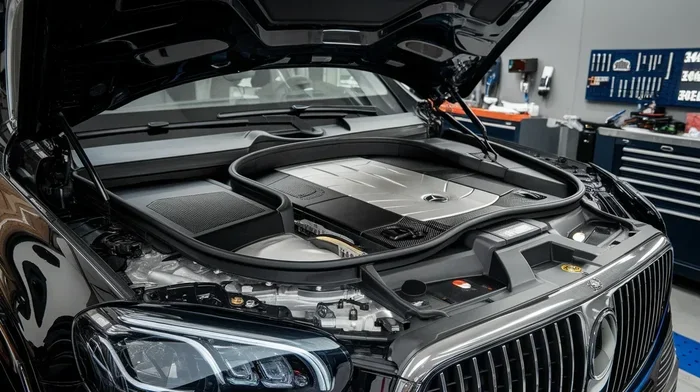
Visual guide about Mercedes GLS service bay
Image source: mercgarage.ae
Genuine parts guarantee
Every bolt, sensor, and control module comes straight from the Mercedes parts warehouse. There is zero risk of counterfeit or mismatched components. For safety items like airbag modules or brake‑by‑wire actuators, that guarantee is priceless.
Software and diagnostics
The STAR Diagnostic System (SDS) is proprietary. Only dealers have real‑time access to the latest firmware, coding tables, and online programming servers. If your GLS needs a transmission adaptation reset or a new ECU flash after a battery replacement, the dealer can do it in one visit.
Convenience perks
Most dealers provide a complimentary loaner vehicle, a multi‑point inspection, and a comfortable waiting area with Wi‑Fi. For busy professionals, that convenience can outweigh a higher labor rate.
Cost reality
Labor rates at U.S. Mercedes dealers average $135‑$155 per hour. A standard 10,000‑mile service (oil, filter, brake fluid, cabin filter) can run $650‑$850 including parts. Over five years, dealer‑only maintenance can add $4,000‑$5,000 to ownership cost compared with an independent shop.
Potential downsides
High price, longer wait times for appointments, and occasional upselling of services that may not be needed yet. Some owners report being quoted for “preventive” work that the independent shop would defer.
Independent Service: Pros, Cons, and Hidden Value
Specialist knowledge
Many independent shops focus exclusively on German brands. Their technicians often have 15‑20 years of hands‑on experience with the M276 V6, M177 V8, and the newer M256 inline‑six. They know the quirks—like the timing chain tensioner rattle on early GLS 450 models—better than a dealer tech who rotates across many models.
Lower labor rates
Independent labor typically falls between $90‑$110 per hour. That 30‑40 % discount compounds quickly. A full brake job (pads, rotors, sensor) that costs $1,200 at a dealer may be $750‑$850 at a reputable independent.
Parts flexibility
Independents can source OEM parts from the same distributors dealers use, often at a lower markup. They also have relationships with top aftermarket brands (e.g., Lemförder, Meyle, Brembo) that meet or exceed OE specifications. You get a choice: genuine or high‑quality aftermarket, with clear pricing.
Faster turnaround
Without the corporate scheduling system, many independents can slot you in same‑day or next‑day for routine work. That means less downtime for your daily driver.
Warranty compliance
The Magnuson‑Moss Warranty Act protects you: as long as the independent shop follows the manufacturer’s service schedule, uses approved fluids, and documents the work, your factory warranty remains intact. Keep receipts and a detailed service log.
Limitations
Independents may lack the latest STAR software subscription, meaning they cannot perform certain ECU updates or calibrate advanced driver‑assist sensors after a windshield replacement. They also rarely offer loaner cars.
Cost Comparison: Real Numbers and Long‑Term Impact
Sample 5‑year maintenance schedule
Assume 15,000 miles per year. The table below shows estimated out‑of‑pocket costs for a 2022 GLS 450 (prices are national averages, 2024 data).
- Dealer only: $7,200‑$8,500
- Independent only: $4,500‑$5,300
- Hybrid approach (dealer for software, independent for wear items): $5,200‑$6,000
Breakdown of major services
Oil change (synthetic 0W‑40, 9 qt)
Dealer: $210‑$250. Independent: $130‑$160.
Brake fluid flush
Dealer: $180‑$210. Independent: $110‑$130.
Transmission service (fluid & filter)
Dealer: $420‑$480. Independent: $260‑$320.
Major repair example – Turbocharger replacement
Dealer: $3,800‑$4,500 (parts + labor). Independent: $2,900‑$3,400 using OEM turbo.
Hidden costs
Dealer “complimentary” inspections often uncover additional work that may be optional. Independents tend to present a clear estimate first, letting you prioritize.
Resale value impact
A complete dealer service history can add $1,000‑$2,000 to trade‑in value for a luxury SUV. However, a well‑documented independent history with OEM parts receipts is increasingly accepted by buyers and Certified Pre‑Owned programs.
Warranty, Software Updates, and Specialized Tools
Factory warranty protection
Mercedes‑Benz’s new‑vehicle limited warranty covers 4 years/50,000 miles. The powertrain warranty extends to 4 years/50,000 miles as well. Using an independent shop does not void these warranties if you follow the service schedule in the owner’s manual and retain records.
Extended warranty considerations
Third‑party extended warranties often require service at a licensed repair facility. Many accept independent shops that are ASE‑certified and use OEM fluids. Read the contract fine print before committing.
Software flashes and ECU coding
Mercedes releases periodic updates for engine management, transmission shift maps, and MBUX infotainment. Only dealers have immediate access to the online XENTRY portal. Some independents subscribe to a third‑party portal (e.g., Autologic, Launch) that provides most updates, but there can be a lag of weeks.
ADAS calibration
After windshield replacement or suspension work, the radar and camera modules need precise calibration. Dealers have the factory‑specified target boards and alignment racks. A few high‑end independents invest in the same equipment; ask before you book.
Special tools
Tasks like removing the 48‑volt integrated starter‑generator (ISG) or servicing the air‑spring suspension require proprietary pullers and torque adapters. Dealers stock them all. Independents may need to order them, adding a day to the job.
Making the Right Choice for Your Driving Style
Daily commuter, low mileage
If you drive 8,000‑10,000 miles a year and keep the vehicle under warranty, a hybrid plan works well: dealer for the first two scheduled services (to establish a dealer stamp) and independent for the rest. You save roughly $1,500 over three years while preserving warranty proof.
High‑mileage enthusiast
Owners who rack up 20,000+ miles annually benefit most from independent pricing on wear items—tires, brakes, fluids. Schedule a dealer visit once a year for any required software updates or recall work.
Track or off‑road use
Aggressive driving accelerates component wear. Independents familiar with performance upgrades (e.g., upgraded brake pads, reinforced control arms) can advise on parts that dealers may not stock. Keep a dealer relationship for any safety‑system recalibration after modifications.
Lease return preparation
Lease contracts often require a dealer‑stamped service record. In that case, complete all required maintenance at the dealer during the final 12 months. Earlier years can be independent to reduce cost.
Budget‑conscious owner
If total cost of ownership is the priority, an independent specialist with a strong reputation and documented OEM parts usage delivers the best value. Ask for a written estimate, warranty on labor (typically 12 months/12,000 mi), and a detailed invoice.
Peace‑of‑mind seeker
Some owners simply prefer the dealer experience—loaner car, factory‑trained tech, and a single point of accountability. If the extra $1,500‑$2,000 over five years fits your budget, the dealer route eliminates any doubt.
Conclusion
Choosing between a Mercedes GLS dealer vs independent service is not a binary decision. The smartest owners blend both worlds: rely on the dealer for software‑critical updates, warranty‑protected repairs, and ADAS calibrations; turn to a trusted independent for routine maintenance, wear‑item replacement, and out‑of‑warranty fixes. This hybrid strategy protects your warranty, keeps the SUV performing at its peak, and can save you thousands over the life of the vehicle. Evaluate your mileage, budget, and comfort level, then build a service plan that matches the way you drive.
Frequently Asked Questions
Does using an independent shop void my Mercedes GLS warranty?
No. Under the Magnuson‑Moss Warranty Act, your factory warranty remains valid as long as the independent shop follows the manufacturer’s service schedule, uses approved fluids and parts, and provides detailed records.
Can an independent shop perform Mercedes‑Benz software updates?
Some independents subscribe to third‑party diagnostic platforms that offer most ECU flashes, but they may not have immediate access to the latest XENTRY updates. For critical safety‑system calibrations, a dealer is still the safest choice.
How much can I save by switching to an independent for routine maintenance?
On average, independent labor rates are 30‑40 % lower than dealer rates. Over five years, owners typically save $1,500‑$3,000 on scheduled services alone.
Are aftermarket parts used by independents reliable for a GLS?
High‑quality aftermarket brands (Lemförder, Meyle, Brembo, Mann‑Filter) meet or exceed OE specifications. Ask the shop to provide part numbers and warranty information before installation.
Will a dealer give me a loaner car if I service at an independent shop?
Dealers only provide loaner vehicles for work performed at their facility. Independents rarely offer loaners, though some may have a partnership with a local rental agency.
What should I look for when choosing an independent Mercedes specialist?
Seek ASE‑certified technicians, a clean shop, transparent pricing, a written warranty on labor (12 months/12,000 mi), and a willingness to use OEM fluids and parts. Online reviews and Mercedes‑owner forum recommendations are strong indicators of quality.