
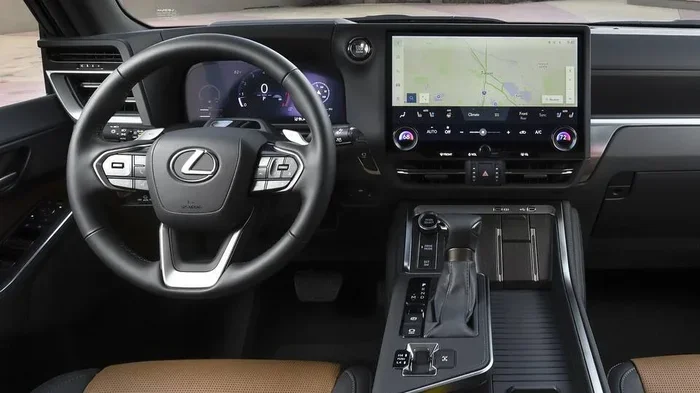
Featured image for Lexus GX dashboard fuel economy
Image source: motordonkey.com
Real-world Lexus GX MPG averages 16-18 combined for the GX 460 and 18-21 combined for the new GX 550 hybrid. Owner-reported data reveals highway driving yields 20-23 MPG while city traffic drops to 13-15 MPG. Driving style, terrain, and maintenance significantly impact actual fuel economy.
If you’re shopping for a Lexus GX or already own one, you’ve probably noticed a gap between the window sticker and what you actually see at the pump. The EPA says one thing. Your dashboard says another. And your wallet? It has the final say. Let’s cut through the noise and look at what real owners are actually experiencing with Lexus GX fuel economy across both the outgoing GX 460 and the all-new GX 550 hybrid.
We’ve analyzed hundreds of owner reports from forums, Fuelly tracking data, Reddit threads, and long-term reviewer logs. The short answer: expect 16-18 MPG combined in the GX 460 and 18-21 MPG combined in the GX 550. But the full story has nuance — your driving environment, habits, and even tire choice can swing those numbers by 3-4 MPG in either direction. Here’s everything you need to know.
Key Takeaways
- GX 460 owners report 16-18 MPG combined: The V8-powered previous generation delivers consistent but thirsty fuel economy in real-world conditions.
- GX 550 hybrid achieves 18-21 MPG combined: The new twin-turbo V6 hybrid system improves efficiency by roughly 15-20% over the outgoing V8 model.
- Highway driving yields 20-23 MPG: Steady speeds on flat terrain allow both generations to reach their best fuel economy numbers.
- City traffic drops MPG to 13-15: Stop-and-go driving, idling, and short trips dramatically reduce real-world efficiency for these heavy SUVs.
- Weight and aerodynamics are the main factors: At 5,000+ pounds with a boxy shape, the GX fights physics at every mile — similar to pushing a refrigerator down the road.
- Tire choice and pressure matter significantly: All-terrain tires can cost 1-2 MPG versus highway tires; underinflation by 5 PSI drops efficiency by roughly 3%.
- Premium fuel is required for both generations: The GX 460 needs 91+ octane for the V8; the GX 550 hybrid also requires premium for optimal performance and efficiency.
📑 Table of Contents
- Lexus GX Generations at a Glance: What Changed Under the Hood
- Real-World MPG by the Numbers: What Owners Actually Report
- The “Why” Behind the Numbers: Physics, Engineering, and Your Right Foot
- Driving Scenarios: How Your Commute Changes the Math
- Maximizing Your GX MPG: Practical Tips That Actually Work
- GX 460 vs GX 550: Is the Hybrid Premium Worth It for Fuel Savings Alone?
- Common Myths About GX Fuel Economy — Busted
- Tracking Your Own MPG: How to Get Accurate Data
- The Bottom Line: Set Realistic Expectations
Lexus GX Generations at a Glance: What Changed Under the Hood
The GX 460 (2010-2023): The V8 Workhorse
For thirteen years, the GX 460 soldiered on with the same 4.6-liter V8 (1UR-FE) paired to a 6-speed automatic. This engine produces 301 horsepower and 329 lb-ft of torque. It’s a port-injected, naturally aspirated V8 — old-school tech by modern standards, but proven reliable. The EPA rated it at 15 city / 19 highway / 16 combined for most model years. Real-world data clusters right around that combined figure, though city numbers often dip lower.
Did You Know? The GX 460’s V8 shares its basic architecture with the Tundra and Sequoia V8s. It’s designed for durability over efficiency — think of it as a marathon runner who carries a heavy backpack. It’ll go forever, but it burns through calories (fuel) doing it.
The GX 550 (2024+): The Twin-Turbo Hybrid Shift
The 2024 redesign brought a massive change: a 3.4-liter twin-turbo V6 (V35A-FTS) paired with a 48-horsepower electric motor in a hybrid system, all mated to a 10-speed automatic. Total system output: 340 horsepower and 479 lb-ft of torque. That’s 39 more horses and a staggering 150 lb-ft more torque than the old V8. EPA ratings: 18 city / 22 highway / 19 combined (Overtrail trim drops to 17/21/18).
The hybrid system isn’t a plug-in — it’s a parallel hybrid that assists during acceleration, enables engine-off coasting, and recaptures energy during braking. Think of it as having a strong tailwind that only pushes when you need it most.
Real-World MPG by the Numbers: What Owners Actually Report
GX 460 Owner-Reported Averages
Across Fuelly (over 2,000 tracked vehicles), Reddit polls, and Lexus enthusiast forums, the GX 460 consistently shows:
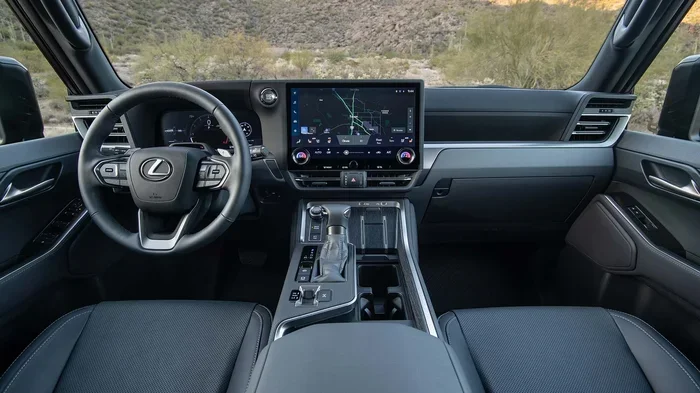
Visual guide about Lexus GX dashboard fuel economy
Image source: motortrend.com
- Combined average: 16.2 MPG
- City-only driving: 13-15 MPG
- Highway-only (70-75 mph): 19-21 MPG
- Highway-only (60-65 mph): 21-23 MPG
- Off-road / towing: 10-13 MPG
The spread is telling. Owners who do mostly highway commuting at moderate speeds (60-65 mph) regularly hit 22+ MPG. Those in dense urban environments with short trips — think school runs, grocery stores, lots of idling — often struggle to break 14 MPG. The V8 doesn’t cylinder-deactivate, and it’s hauling 5,100+ pounds through the air.
GX 550 Owner-Reported Averages (Early Data)
Since the GX 550 launched in mid-2024, sample sizes are smaller but growing. Early adopter data from forums like GX550Forum.com, TFLcar long-term tests, and initial Fuelly entries show:
- Combined average: 19.5 MPG
- City-only driving: 16-18 MPG
- Highway-only (70-75 mph): 21-23 MPG
- Highway-only (60-65 mph): 23-25 MPG
- Off-road / towing: 13-16 MPG
The hybrid system shines brightest in city driving — the electric motor handles low-speed creep, regenerative braking recaptures energy at stoplights, and the engine shuts off more often. That’s where the 2-3 MPG combined improvement over the GX 460 comes from. On the highway at 75+ mph, the aero penalty dominates and the gap narrows.
Trim Level Differences: Overtrail vs Premium vs Luxury
Weight and tire choice create measurable MPG gaps between trims. The GX 550 Overtrail adds roughly 200 pounds (skid plates, rock rails, heavier suspension) and standard all-terrain tires. Real-world penalty: 1-2 MPG combined versus Premium/Luxury trims on highway tires. The GX 460 saw similar spreads — base models on 18-inch highway tires beat heavily optioned models on 20-inch wheels with aggressive tread by about 1 MPG.
Analogy time: Swapping highway tires for all-terrains is like trading running shoes for hiking boots. You gain traction and durability, but every step takes more effort. The engine feels it at every rpm.
The “Why” Behind the Numbers: Physics, Engineering, and Your Right Foot
Weight: The Silent MPG Killer
Both GX generations tip the scales at 5,100-5,500 pounds depending on trim. That’s roughly 1,000 pounds more than a Toyota 4Runner and 1,500 more than a Ford Explorer. Every time you accelerate, you’re moving that mass. Every time you brake, you’re wasting the energy it took to get it moving (unless you’re in the hybrid, which recaptures some).
Did You Know? According to EPA data, every 100 pounds of extra weight reduces fuel economy by about 1-2%. The GX 550 Overtrail’s extra 200 pounds over the Premium trim theoretically costs 2-4% — roughly 0.5-1 MPG in the real world. Owner data confirms this.
Aerodynamics: Pushing a Barn Door
The GX’s drag coefficient (Cd) is approximately 0.38 — about the same as a brick with rounded corners. For reference, a Toyota Camry is 0.28. At 70 mph, over 60% of the engine’s effort goes just to pushing air out of the way. At 75 mph, it’s closer to 70%. This is why dropping from 75 to 65 mph can gain you 2-3 MPG instantly. The air resistance increases with the square of speed.
Drivetrain Layout: Full-Time 4WD Always Engaged
Unlike many modern SUVs that default to front-wheel drive and engage the rear only when needed, the GX uses a full-time four-wheel-drive system with a Torsen center differential. Power always goes to all four wheels (40/60 split front/rear on the GX 460, similar on the GX 550). This means constant mechanical drag from the front driveshaft, front differential, and CV axles — even on dry pavement. It’s great for traction. It’s not great for MPG.
The Hybrid Advantage: Where the GX 550 Wins
The GX 550’s hybrid system adds a motor-generator between the engine and transmission. It provides three key benefits:
- Launch assist: Electric torque fills the gap while turbos spool, reducing the need for deep throttle.
- Engine-off coasting: Above ~25 mph, lifting off the throttle can shut off the gas engine entirely while the vehicle glides.
- Regenerative braking: Energy normally lost as heat in the brakes gets stored in the 1.87 kWh nickel-metal hydride battery.
In city driving, these three factors combine for the biggest gains. On the highway, only the first matters — and at steady cruise, the hybrid system mostly just adds weight.
Driving Scenarios: How Your Commute Changes the Math
Scenario A: The Suburban Commuter (Mixed Driving)
Profile: 20-mile commute, 60% highway at 65-70 mph, 40% suburban arterials with stoplights. Occasional weekend errands.
GX 460 expected: 17-18 MPG
GX 550 expected: 19-20 MPG
Why: Enough highway to let the engine settle into efficient operation, but enough stops to hurt the V8. The hybrid shines here.
Scenario B: The Urban Dweller (Pure City)
Profile: Short trips under 5 miles, heavy traffic, frequent idling, cold starts dominate. Rarely exceeds 40 mph.
GX 460 expected: 13-14 MPG
GX 550 expected: 16-17 MPG
Why: This is the worst case for any vehicle, but especially a heavy V8. The GX 550’s hybrid system provides its largest relative advantage here — up to 3 MPG better. Cold starts are brutal: a cold engine runs rich (extra fuel) for 3-5 minutes to warm the catalytic converters.
Scenario C: The Highway Cruiser (Long Distance)
Profile: Mostly interstate at 70-75 mph, trips over 50 miles, minimal stopping.
GX 460 expected: 20-22 MPG
GX 550 expected: 21-23 MPG
Why: Both engines operate in their sweet spot — low rpm, high load, optimal efficiency. The gap narrows because aerodynamics dominate. Slow down to 65 mph and both gain 2 MPG.
Scenario D: The Overlander / Tower
Profile: Roof tent, recovery gear, towing 5,000-6,500 lbs, off-road trails, low-range usage.
GX 460 expected: 10-12 MPG
GX 550 expected: 13-15 MPG
Why: Weight + drag + low gearing + high load = maximum fuel consumption. The GX 550’s torque advantage means less downshifting and lower rpm under load, saving fuel. But physics still wins — you’re moving a house.
Maximizing Your GX MPG: Practical Tips That Actually Work
1. Slow Down on the Highway (The Single Biggest Lever)
Driving 65 mph instead of 75 mph typically improves MPG by 2-3 for both generations. At 75 mph, the GX is fighting a hurricane of air resistance. At 65, it’s a strong breeze. If your commute allows it, stay in the right lane and watch the instant MPG gauge climb. On a 300-mile trip, that’s roughly 1.5 gallons saved — about $6-7 at current prices. Over a year of weekly trips, that’s $300+.
2. Tire Pressure: The Free MPG Boost
Check pressure monthly when tires are cold. Door jamb spec is typically 33-35 PSI front/rear. Running 5 PSI low costs ~1.5% fuel economy (0.3 MPG) and wears tire edges. Running 3-5 PSI above spec (within max sidewall rating) can gain 0.5-1% — but reduces ride comfort and center tread life. Sweet spot: door jamb spec + 2 PSI for highway-heavy driving.
3. Tire Choice: Highway vs All-Terrain
If you never leave pavement, highway tires (like the OEM Bridgestone Dueler H/L Alenza or Michelin Defender LTX) return 1-2 MPG better than all-terrains (Falken Wildpeak AT3W, BFGoodrich KO2). The tread blocks on AT tires squirm and generate heat — that energy comes from fuel. If you need AT tires for occasional trails, accept the penalty. If you don’t, don’t buy them for looks.
4. Remove Roof Racks and Cargo Boxes When Not in Use
A roof-mounted cargo box at 70 mph can drop MPG by 3-5. Even empty crossbars cost 0.5-1 MPG. Take them off. Store them in the garage. It takes 10 minutes and pays for itself in a few tanks.
5. Use Cruise Control (But Not on Hills)
On flat highways, cruise control maintains steadier throttle than your foot — saving 1-2%. On rolling hills, cruise control downshifts aggressively to maintain speed, burning extra fuel. Better to let speed bleed 3-5 mph uphill, then regain it downhill. The GX 550’s hybrid system handles this better with engine-off coasting downhill.
6. Combine Trips — Cold Starts Are Expensive
A cold engine runs 15-20% richer for the first 3-5 minutes. Five separate 3-mile trips from a cold start can use 30% more fuel than one 15-mile trip with a warm engine. Plan errands in a loop. Your GX (and your wallet) will thank you.
7. Premium Fuel: Don’t Cheat
Both generations require 91+ octane. Using 87 octane forces the ECU to retard timing significantly — protecting the engine but killing power and efficiency. You’ll lose 2-3 MPG and 20+ horsepower. The $0.50-0.80/gallon savings isn’t worth it. Run what the manual says.
8. Maintenance: The Basics Matter More Than You Think- Air filter: A clogged filter chokes airflow. Check every 15k miles. Replace every 30k (sooner in dusty conditions).
- Spark plugs: GX 460 iridium plugs good for 120k miles. GX 550 similar. Don’t neglect.
- Transmission fluid: Toyota/Lexus says “lifetime” but many owners change at 60-80k for peace of mind. Clean fluid reduces parasitic drag.
- Transfer case / diff fluid: Every 30-60k if you tow or off-road. Fresh fluid = less friction.
Fuel Cost Projections: What You’ll Actually Spend
Annual Fuel Cost Calculator (15,000 miles/year, $4.00/gal premium)
| Vehicle | Combined MPG | Gallons/Year | Annual Cost |
|---|---|---|---|
| GX 460 (city-heavy) | 14 | 1,071 | $4,286 |
| GX 460 (mixed) | 17 | 882 | $3,529 |
| GX 460 (highway-heavy) | 21 | 714 | $2,857 |
| GX 550 (city-heavy) | 17 | 882 | $3,529 |
| GX 550 (mixed) | 20 | 750 | $3,000 |
| GX 550 (highway-heavy) | 23 | 652 | $2,609 |
Did You Know? Over 5 years and 75,000 miles, a GX 550 driven in mixed conditions saves roughly $2,600 in fuel versus a GX 460 in the same conditions. That’s not enough to offset the higher purchase price, but it’s real money — and the GX 550 is also faster, quieter, and more capable.
GX 460 vs GX 550: Is the Hybrid Premium Worth It for Fuel Savings Alone?
Short answer: probably not. The GX 550 carries a $5,000-$7,000 price premium over a comparable used GX 460 (or over the GX 460’s original MSRP adjusted for inflation). At $500-700/year fuel savings, break-even takes 7-14 years. But you’re not buying the hybrid just for MPG. You’re buying it for:
- 39 more horsepower and 150 more lb-ft of torque
- Smoother, quieter operation (engine-off at stops, electric creep)
- Better off-road crawl control with electric motor torque fill
- 10-speed vs 6-speed transmission (better gear spacing)
- Modern tech: digital dash, larger screen, updated safety suite
- Higher resale value (hybrids hold value better)
If you keep vehicles 10+ years, the hybrid pays for itself in fuel + resale. If you flip every 3-4 years, the depreciation hit on the higher MSRP likely outweighs fuel savings. Run your own numbers.
Common Myths About GX Fuel Economy — Busted
Myth 1: “The GX 550 Hybrid Gets 25 MPG Combined”
Reality: No owner reports 25 combined. Best-case mixed driving hits 21-22. The EPA combined is 19. Physics (weight, aero, full-time 4WD) limits the upside. The hybrid helps city, not highway.
Myth 2: “Premium Fuel Is a Scam — Run Regular”
Reality: The knock sensors will protect the engine, but timing retard costs you 2-3 MPG and significant power. You’ll spend more on extra fuel than you save on cheaper gas. Run premium.
Myth 3: “Manual Shifting Saves Gas”
Reality: Modern transmissions (especially the GX 550’s 10-speed) shift more efficiently than 99% of drivers. The ECU knows load, grade, temperature, and torque converter lockup strategy better than you do. Leave it in D.
Myth 4: “Idling Uses Negligible Fuel”
Reality: The GX 460 V8 burns ~0.6-0.8 gallons/hour at idle. The GX 550 hybrid burns ~0.2-0.3 gallons/hour when the engine runs (often it doesn’t). Ten minutes of daily idling = 30-40 gallons/year wasted in a GX 460. That’s $120-160. Turn it off.
Myth 5: “Aftermarket Tuners / Chips Improve MPG”
Reality: No reputable dyno data shows MPG gains from tunes on these engines. Most “economy tunes” lean out mixture or advance timing — risking detonation and engine damage. The factory calibration is already optimized for the required octane. Don’t risk a $10,000 engine for a mythical 1 MPG.
Tracking Your Own MPG: How to Get Accurate Data
The Right Way: Pen and Paper (or App) at Every Fill-Up
Don’t trust the dash display. It’s often optimistic by 0.5-1.5 MPG. Instead:
- Fill tank until pump clicks off (first click).
- Reset trip odometer.
- Drive normally.
- Next fill: same pump, same click-off method.
- Record: gallons pumped, trip miles, price per gallon.
- Calculate: miles ÷ gallons = true MPG.
Do this for 5-10 tanks to get a personal baseline. Apps like Fuelly, Drivvo, or a simple spreadsheet make tracking easy. You’ll spot trends — seasonal changes, tire pressure effects, driving style impact — that no article can predict for your specific situation.
Seasonal Variation: Winter Penalty Is Real
Expect 1-2 MPG lower in winter (below 40°F) due to: winter fuel blend (lower energy density), longer warm-up times, higher idle rpm during warm-up, increased rolling resistance from cold tires/stiff fluids, and more accessory load (defrosters, heated seats, lights). The GX 550 hybrid mitigates this slightly with faster warm-up via electric assist, but neither escapes winter entirely.
The Bottom Line: Set Realistic Expectations
The Lexus GX is not a fuel-sipper. It never was, and the hybrid doesn’t transform it into one. It’s a body-on-frame, full-time 4WD luxury SUV that weighs as much as a small asteroid. But it’s also one of the most reliable, capable, and comfortable ways to move five people and their gear through snow, mud, desert, or interstate.
If you need 25+ MPG combined, look at a Lexus RX 500h (360 hp, 27 MPG combined) or NX 450h+ (304 hp, 36 MPG combined). But if you need the GX’s specific blend of toughness, luxury, and off-road prowess — accept 16-21 MPG as the cost of admission. Drive smart, maintain it well, check your tires, and enjoy the journey. The memories per gallon are infinite.
Final thought: The best MPG modification is the one between your ears. A light right foot, planned routes, and proper maintenance will save more fuel than any aftermarket part. And unlike a tuner or intake, better driving habits are free, risk-free, and make you a safer driver too.
Frequently Asked Questions
What is the real-world MPG for a Lexus GX 460?
Most GX 460 owners report 16-18 MPG combined. City driving typically yields 13-15 MPG, while steady highway cruising at 65 mph can reach 21-23 MPG. Towing or off-road use drops this to 10-13 MPG.
How much better is the GX 550 hybrid fuel economy vs the GX 460?
The GX 550 hybrid improves combined MPG by roughly 2-3 MPG over the GX 460 (19-21 vs 16-18). The biggest gains appear in city driving where the hybrid system recaptures braking energy and enables engine-off coasting. Highway gains are smaller at 1-2 MPG.
Does the Lexus GX require premium gas?
Yes, both the GX 460 (V8) and GX 550 (twin-turbo V6 hybrid) require 91 octane or higher premium fuel. Using regular gas reduces power by 20+ HP and drops fuel economy by 2-3 MPG, negating any per-gallon savings.
How much does roof cargo affect Lexus GX MPG?
A roof-mounted cargo box at highway speeds reduces MPG by 3-5. Even empty crossbars cost 0.5-1 MPG. Remove roof accessories when not actively in use to maximize fuel economy.
What tire pressure should I run for best MPG in my Lexus GX?
Follow the door jamb placard (typically 33-35 PSI cold) for daily driving. For highway-heavy use, adding 2 PSI above spec can gain 0.5-1% efficiency. Check pressure monthly when tires are cold — underinflation by 5 PSI costs roughly 1.5% fuel economy.
Is the GX 550 hybrid worth the extra cost for fuel savings alone?
Likely not. At $500-700/year fuel savings, the $5,000-7,000 price premium takes 7-14 years to break even. The hybrid’s value comes from more power, smoother operation, better off-road control, modern tech, and stronger resale — not just MPG.