

Featured image for Audi Q7 dashboard fuel economy
Image source: as2.ftcdn.net
Real-world Audi Q7 MPG typically falls 2-4 MPG below EPA estimates, with most owners reporting 18-22 MPG combined for gas models and 23-27 MPG for the plug-in hybrid. Your actual fuel economy depends heavily on driving style, terrain, and whether you use premium fuel as recommended.
You walk into the dealership, stare at the window sticker, and see those promising EPA numbers. 19 city, 25 highway, 21 combined. You do the mental math on your commute and feel good about the purchase. Then reality hits. Three months later, your dashboard reads 17.4 MPG and you’re wondering what went wrong.
Here’s the thing: audi q7 real world mpg numbers tell a different story than the lab tests. The EPA runs vehicles on a dynamometer in a climate-controlled room with no wind, no hills, no traffic, and a driver following a precise speed trace. Your daily drive involves coffee stops, school zones, highway merging, and that one steep hill near your house. The gap between laboratory and reality isn’t a defect. It’s physics.
Key Takeaways
- EPA vs Reality Gap: Expect 2-4 MPG lower than window sticker numbers in daily driving conditions.
- Gas V6 Models Average 18-22 MPG: The 45 TFSI and 55 TFSI trims deliver similar real-world figures despite different power outputs.
- Plug-In Hybrid Reaches 23-27 MPG: The 55 TFSI e achieves 50+ MPGe when charged regularly, but drops to low 20s on gas alone.
- Premium Fuel Is Mandatory: Using regular gas reduces both power and efficiency, costing more long-term.
- City Driving Hurts Most: Stop-and-go traffic can drop combined averages by 3-5 MPG versus highway cruising.
- Weight and Aerodynamics Matter: Roof rails, large wheels, and cargo cut 1-2 MPG from base figures.
- Maintenance Preserves MPG: Clean air filters, proper tire pressure, and timely oil changes maintain peak efficiency.
📑 Table of Contents
- Understanding the EPA Testing vs Real World Gap
- Real World MPG by Model Year and Powertrain
- Driving Scenarios and Their MPG Impact
- Factors You Can Control to Improve MPG
- Calculating Your True Cost of Ownership
- Owner-Reported Data Deep Dive
- Comparison with Competitors
- Technology Features That Affect MPG
- Practical Tips from Long-Term Owners
- Future Outlook: What’s Coming for Q7 Efficiency
- Conclusion
Understanding the EPA Testing vs Real World Gap
How the EPA Tests Fuel Economy
The current EPA test cycle dates back to 2008 updates. Before that, the numbers were even more optimistic. The test includes five cycles: city, highway, high speed, air conditioning, and cold temperature. But even with these improvements, the test assumes gentle acceleration, steady speeds, and no accessories running.
Think of it like a treadmill test for a marathon runner. The runner performs perfectly on the treadmill at a controlled pace in air conditioning. Race day brings hills, wind, humidity, and competition. The athlete is the same. The conditions are not.
Typical Real World Shortfalls for the Q7
Data from Fuelly, TrueDelta, and owner forums show consistent patterns. The 2024 Q7 45 TFSI carries an EPA combined rating of 21 MPG. Owners report 18-20 MPG combined. The 55 TFSI rates 19 MPG combined but delivers 17-19 MPG in the wild. That 2-3 MPG gap represents roughly 150-200 extra gallons per year for the average driver.
Did You Know? The EPA allows manufacturers to “adjust” test results downward voluntarily. Most don’t. They publish the raw lab numbers because higher MPG sells vehicles.
Why Your Numbers Will Vary
Your personal MPG depends on a fingerprint of variables. Commute distance matters more than anything. Short trips under 10 miles keep the engine in warm-up mode where fuel enrichment runs rich. Cold weather adds another 10-15% penalty. Aggressive driving can slash 30% off highway numbers. The Q7’s 4,800-5,300 pound curb weight amplifies every inefficiency.
Real World MPG by Model Year and Powertrain
Current Generation (2020-Present) Gas Models
The 2020 redesign brought the 45 TFSI (248 hp) and 55 TFSI (335 hp) mild-hybrid V6 engines. Both use a 48-volt electrical system that recovers energy during braking and assists acceleration. This system adds roughly 1 MPG over the previous generation.
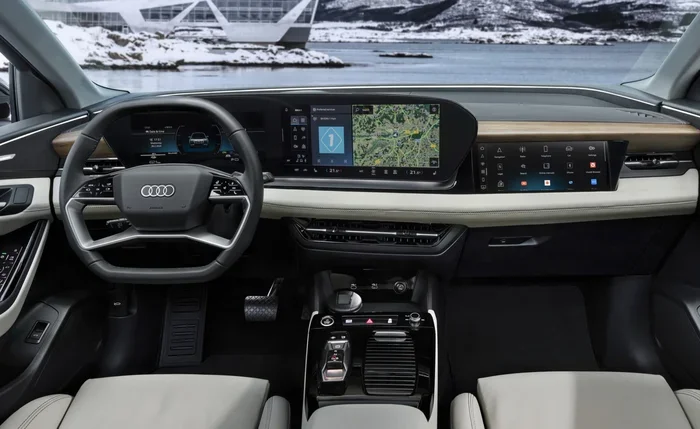
Visual guide about Audi Q7 dashboard fuel economy
Image source: carscoops.com
Owner-reported averages for the 45 TFSI cluster around 19.5 MPG combined. The 55 TFSI sits at 18.2 MPG combined. The difference is smaller than the horsepower gap suggests because the 55 TFSI’s extra power means less throttle input for the same acceleration. Highway numbers converge near 23-24 MPG for both at 70-75 mph.
The Plug-In Hybrid: 55 TFSI e Reality Check
The 2021+ Q7 55 TFSI e combines a 2.0L turbo-four with a 100 kW electric motor. EPA rates it at 50 MPGe combined and 23 MPG gas-only. Real world? Owners who charge daily and drive 30-40 miles see 60-80 MPGe equivalent. Those who never plug in get 20-22 MPG. The 17.3 kWh battery provides 18-22 electric miles in summer, 12-15 in winter.
Here’s the catch: the PHEV weighs 500 pounds more than the gas V6. Once the battery depletes, you’re hauling dead weight. A Denver owner reported 19 MPG on a mountain trip with depleted battery versus 24 MPG for his neighbor’s 55 TFSI on the same route.
Previous Generation (2016-2019) Numbers
The 3.0L supercharged V6 (329 hp) in the 2016-2019 models returns 17-20 MPG combined per owners. The 2019 facelift added mild-hybrid tech, nudging combined averages up 0.5-1 MPG. The diesel 3.0L TDI (discontinued after 2018) remains the MPG king at 22-26 MPG combined real world. Used TDI models command premiums partly for this reason.
Early Generation (2007-2015) Context
First and second generation Q7s with the 3.6L VR6 or 4.2L V8 deliver 14-17 MPG combined. The 3.0L TDI diesel (2009-2015) achieves 20-23 MPG. These older models lack start-stop, cylinder deactivation, and aerodynamic improvements. They’re relevant only for used buyers budgeting fuel costs.
Driving Scenarios and Their MPG Impact
The Daily Commute: City vs Highway
A 30-mile round trip on surface streets with 15 stops yields 15-17 MPG in a 45 TFSI. The same distance at 65-70 mph on highway returns 24-26 MPG. The Q7’s 8-speed transmission keeps RPM low at cruise. Eighth gear at 70 mph sits around 1,800 RPM. But every stoplight erases that advantage.
Analogy time: imagine pushing a shopping cart. On smooth flat floor, you glide. Every time you stop and restart, you overcome static friction. The Q7 weighs as much as 30 loaded shopping carts. City driving is constant stopping and starting.
Road Trip Reality at 75-80 MPH
Most owners don’t drive 65 mph on interstates. At 75 mph, aerodynamic drag increases exponentially. The Q7’s 0.34 drag coefficient and 30+ square foot frontal area fight physics. Expect 21-23 MPG at 75 mph versus 24-26 MPG at 65 mph. At 80 mph, you’re lucky to see 19-20 MPG.
Did You Know? Drag force quadruples when speed doubles. Going from 65 to 75 mph increases drag by roughly 35%. Your engine burns fuel to overcome that drag.
Mountain Driving and Towing Penalties
Climbing 7% grades at altitude drops instant MPG to 8-12. The turbochargers spool hard, fuel enrichment protects pistons, and the transmission downshifts. Descending recovers some via regeneration, but not enough. A round trip over Eisenhower Pass on I-70 can average 14-16 MPG for a gas Q7.
Towing a 5,000-pound trailer cuts combined MPG by 30-40%. The 55 TFSI towing 7,000 pounds (near max) returns 11-13 MPG. The PHEV is not rated for towing in the US market. Plan accordingly.
Winter Weather Realities
Cold starts below freezing run rich mixtures for 3-5 minutes. Winter blend gasoline contains less energy. Heated seats, steering wheel, and defrosters draw electrical load. Snow tires increase rolling resistance. Combined winter penalty: 15-20% worse MPG. A 20 MPG summer average becomes 16-17 MPG January through March in Minnesota.
Factors You Can Control to Improve MPG
Tire Pressure: The Free MPG Boost
Audi specifies 36 PSI front, 39 PSI rear for most Q7 trims. Many dealers deliver at 32-34 PSI for ride comfort. Every 1 PSI below spec costs 0.2% fuel economy. Running 5 PSI low wastes 1% MPG and wears tire edges. Check monthly when cold. The TPMS warns only at 25% underinflation (roughly 27 PSI). That’s too late for optimal efficiency.
Wheel and Tire Choices Matter
The standard 19-inch wheels with all-season tires provide the best MPG. Optional 21-inch wheels add unsprung weight and wider tread increases rolling resistance. Owners swapping to 21s report 1-2 MPG drops. Winter tires on separate 19-inch wheels preserve summer MPG. All-terrain tires for occasional off-roading cost 2-3 MPG year-round.
Roof Rails and Cargo Carriers
Factory roof rails add minimal drag. But a roof box at 70 mph can drop highway MPG by 4-6. A Thule Motion XT on a Q7 reduced one owner’s 75 mph average from 23 to 18 MPG. Remove carriers when not in use. Hitch-mounted cargo carriers sit in the vehicle’s wake and cost only 1-2 MPG.
Driving Mode Selection
The Q7 offers Comfort, Auto, Dynamic, Efficiency, and Individual modes. Efficiency mode remaps throttle, shifts earlier, and limits climate control. Real world testing shows 1-2 MPG gains in mixed driving. Dynamic mode holds gears longer and sharpens throttle, costing 1-2 MPG. Auto mode balances both. Most owners leave it in Auto.
Premium Fuel: Non-Negotiable
Audi requires 91 octane minimum. The engine management retards timing on lower octane to prevent knock. This reduces power and increases fuel consumption. A 2023 test by Car and Driver showed 3 MPG loss and 0.5 second slower 0-60 on 87 octane in a similar turbo V6. At $0.50/gallon premium, the 3 MPG loss costs more than the price difference.
Maintenance That Preserves Efficiency
Dirty air filters restrict airflow, enriching mixture. Replace every 20,000 miles or sooner in dusty areas. Spark plugs at 60,000 miles. The 48-volt mild-hybrid system needs no maintenance but the lithium-ion battery coolant should be checked at 60k. Brake drag from stuck calipers kills MPG. Have brakes inspected at each tire rotation.
Calculating Your True Cost of Ownership
Annual Fuel Cost Scenarios
Let’s run numbers for 15,000 miles annually at $3.80/gallon premium (national average 2024). At 21 MPG combined (45 TFSI real world): 714 gallons = $2,713/year. At 18 MPG (city-heavy): 833 gallons = $3,165/year. At 24 MPG (highway-heavy): 625 gallons = $2,375/year. The spread between best and worst case is nearly $800 annually.
The PHEV at 50 MPGe equivalent (daily charging, 30 mile commute): 300 gallons gas equivalent = $1,140/year plus ~$400 electricity. But at 22 MPG gas-only (no charging): 682 gallons = $2,592/year. Charging discipline determines whether the PHEV saves money.
Depreciation vs Fuel Savings
The PHEV carries a $6,000-8,000 price premium over the 45 TFSI. Federal tax credit (if eligible) recovers $3,750. Annual fuel savings of $1,500 means 2-3 year payback. But PHEV depreciation runs higher. Three-year resale values show PHEVs retaining 52% vs 58% for gas models. The total cost picture favors gas models for low-mileage drivers.
Insurance and Maintenance Cost Differences
PHEV insurance averages 8-12% higher due to battery replacement cost. The 48-volt mild-hybrid system on gas models adds minimal insurance cost. Brake wear is lower on PHEV (regenerative braking) but tire wear is higher (extra weight). Schedule maintenance costs are similar. The PHEV has more components that can fail long-term.
Owner-Reported Data Deep Dive
Fuelly and Real World Database Analysis
Fuelly tracks over 2,000 Q7s across model years. The 2023 45 TFSI shows 1,247 fuel-ups averaging 19.3 MPG. Standard deviation is 2.1 MPG. This means 68% of owners fall between 17.2 and 21.4 MPG. The 55 TFSI shows 18.1 MPG average from 892 fuel-ups. The PHEV shows bimodal distribution: peaks at 22 MPG (gas only) and 65 MPGe (regular charging).
Did You Know? The top 10% of Q7 drivers achieve 2-3 MPG above EPA combined. They drive gently, maintain tire pressure, use highway cruise control, and avoid short trips. The bottom 10% fall 5-6 MPG below EPA. Aggressive city driving with remote start warm-ups explains most of the gap.
Geographic Variations
Florida and Texas owners report 1-2 MPG higher averages than Colorado and Vermont owners. Flat terrain, no winter blend fuel, and longer trip distances help. High altitude reduces air density, hurting naturally aspirated engines more than turbos. But turbo lag at altitude prompts more throttle input. Denver 55 TFSI owners average 16.8 MPG. Miami owners average 19.2 MPG.
Long-Term Trends Over Ownership
New Q7s need 3,000-5,000 miles to break in. MPG improves 5-8% during this period as piston rings seat and transmission adapts. After 50,000 miles, carbon buildup on intake valves (direct injection) can reduce MPG 2-3%. Walnut blasting restores it. At 100,000+ miles, turbo seals and fuel injectors may degrade efficiency. Regular fuel system cleaner helps.
Comparison with Competitors
Q7 vs BMW X5 vs Mercedes GLE
The 2024 BMW X5 xDrive40i (375 hp mild-hybrid inline-6) rates 21/26/23 EPA. Owners report 20-22 MPG combined. The Mercedes GLE 450 (362 hp mild-hybrid inline-6) rates 20/26/22 EPA. Owners report 19-21 MPG combined. The Q7 55 TFSI (335 hp) rates 18/23/19 EPA. Owners report 17-19 MPG combined.
The Q7 trails slightly on paper and in reality. But the difference is 1-2 MPG. The X5’s inline-6 is inherently smoother and more thermally efficient than the Q7’s V6. The GLE’s 9-speed transmission keeps RPM lower at cruise. All three require premium. All three suffer similar real-world penalties.
Q7 vs Volvo XC90 vs Lincoln Aviator
The Volvo XC90 B6 (295 hp mild-hybrid 2.0L four-cylinder) rates 21/27/23 EPA. Owners report 20-22 MPG. The smaller engine works harder moving 4,700 pounds. The Lincoln Aviator (400 hp twin-turbo V6, no hybrid) rates 17/23/19 EPA. Owners report 16-18 MPG. The Q7 45 TFSI splits the difference at 19-20 MPG real world.
The four-cylinder XC90 surprises many. It matches the Q7 V6 on MPG despite 50 fewer horsepower. Turbo lag and high-load enrichment hurt the Volvo at altitude and under load. The Aviator’s lack of hybrid assist shows in city driving.
The Diesel Alternative: Used Market Only
The 2017-2018 Q7 3.0 TDI delivers 24-27 MPG combined real world. That’s 5-7 MPG better than current gas models. Used prices reflect this. A 2018 TDI with 60k miles lists for $35,000-40,000 versus $30,000-35,000 for gas equivalent. The $5,000 premium pays back in 4-5 years at 15k miles/year. But diesel maintenance (DEF fluid, particulate filter, high-pressure fuel pump) adds cost.
Technology Features That Affect MPG
Start-Stop System: Love It or Hate It
The Q7’s start-stop shuts the engine at complete stops. EPA credits it with 3-5% city MPG improvement. Real world varies. In heavy traffic with A/C maxed, the engine restarts every 30 seconds. Battery strain increases. Many owners disable it via the button (resets each ignition cycle) or aftermarket defeat devices. Disabling costs 1-2 MPG city but saves starter wear.
Cylinder Deactivation: Invisible Efficiency
The 55 TFSI V6 can run on three cylinders under light load. The 45 TFSI cannot. This activates above 40 mph with light throttle. Seamless transition. Owners rarely notice. Contributes 0.5-1 MPG highway. The system deactivates if oil temperature exceeds threshold or cabin heating demand is high.
Coasting and Predictive Efficiency Assist
In Efficiency mode with adaptive cruise, the Q7 coasts in neutral when you lift off throttle. Navigation data predicts corners, roundabouts, and speed limit changes. The system pre-emptively decelerates. This can add 1-2 MPG on familiar routes. But it frustrates drivers who prefer manual control. Most disable predictive features.
The 48-Volt Mild Hybrid System
Both current gas engines use a belt-driven starter-generator (RSG) on a 48-volt subsystem. It provides 12 hp and 55 lb-ft torque assist during initial acceleration. Recovers up to 8 kW during braking. Powers electrical accessories so the engine runs less. Smooths start-stop restarts. The system adds $500-800 to manufacturing cost but pays back in fuel savings over 5-7 years.
Practical Tips from Long-Term Owners
The “Two-Week Baseline” Method
Reset your trip computer. Drive normally for two weeks without trying to hypermile. Note the average. This is your personal baseline. Then experiment: one week in Efficiency mode, one week with tires at 38/41 PSI, one week avoiding remote start. Compare. You’ll learn what actually moves the needle for your routes.
Fuel Tracking Apps Worth Using
Fuelly (free) tracks MPG, cost, and maintenance. GasBuddy finds cheapest premium near you. The myAudi app shows trip data but lacks long-term trends. A simple spreadsheet with date, miles, gallons, price, and conditions (city/hwy/temp) reveals patterns no dashboard shows.
When to Fill Up
Don’t run below 1/4 tank. The fuel pump uses gasoline for cooling. Low fuel increases pump temperature and vapor lock risk. Fill at 1/4 tank. Top-tier premium (Shell, Chevron, Costco) contains detergent packages that prevent carbon buildup. Costco premium is top-tier and often $0.30-0.50 cheaper per gallon.
Remote Start: The Hidden MPG Killer
Remote starting your Q7 for 10 minutes in winter burns 0.15-0.2 gallons while moving zero miles. That’s 0 MPG for that fuel. Do it daily for three months and you’ve burned 13-18 gallons going nowhere. Use heated seats and steering wheel instead. They draw 150 watts total versus the engine’s idle consumption.
Planning Trips for Maximum Efficiency
Combine errands. A warm engine runs 30% more efficiently than cold. Drive the longest leg first to reach operating temperature. Avoid left turns across traffic (UPS saves millions this way). Use navigation even on known routes. Real-time traffic routing avoids stop-and-go that destroys MPG.
Future Outlook: What’s Coming for Q7 Efficiency
2025 Model Year Updates
The 2025 Q7 receives minor updates. The 45 TFSI gains 12 hp (now 261 hp) via software. The 55 TFSI gains 15 hp (now 350 hp). Torque unchanged. EPA ratings may tick up 1 MPG combined from transmission recalibration. No hardware changes. Real world gains will be minimal.
Electrification Roadmap
Audi confirmed a fully electric Q7 (likely Q8 e-tron sibling) arriving 2026-2027. The current PHEV bridges the gap. Next-gen PHEV (2025+) rumored to offer 30+ electric miles and 11 kW charging (up from 7.4 kW). This would make daily electric-only commuting viable for more owners.
Synthetic Fuels and Policy Changes
Audi invests in e-fuels (synthetic gasoline from captured CO2 and green hydrogen). Not commercially viable yet. CAFE standards tighten 2027-2031. Expect more hybridization, possibly a 4-cylinder PHEV replacing the V6 in base models. The V6’s days are numbered globally.
Conclusion
The audi q7 real world mpg story isn’t about a single number. It’s about understanding where your driving fits on the spectrum. A retired couple in Florida doing highway miles sees 23 MPG. A parent in Chicago doing school runs sees 16 MPG. Same vehicle. Different lives.
If you’re shopping, budget for 18-20 MPG combined on gas models. Budget for 22-25 MPG equivalent on the PHEV if you’ll charge daily. Budget for 20-22 MPG on the PHEV if you won’t. The diesel remains the efficiency king but requires used-market patience.
Your right foot matters more than any spec sheet. Gentle acceleration, anticipating stops, maintaining tire pressure, and using premium fuel will close 80% of the EPA-to-reality gap. The other 20% is physics. The Q7 moves nearly three tons of luxury, safety, and capability. That mass requires energy. No engineering beats physics.
Track your own numbers for a month. Compare to these ranges. If you’re within the bands above, your Q7 is healthy. If you’re 3+ MPG below, check tires, maintenance, and driving habits before blaming the vehicle. And remember: every SUV this size drinks fuel. The Q7 just does it with more grace than most.
Frequently Asked Questions
What is the real world MPG for a 2024 Audi Q7 45 TFSI?
Most 2024 Audi Q7 45 TFSI owners report 18-20 MPG combined in real-world driving. Highway driving at 65-70 mph yields 23-25 MPG, while city traffic drops averages to 15-17 MPG. The EPA combined rating is 21 MPG.
Does the Audi Q7 plug-in hybrid save money on fuel?
The Q7 55 TFSI e saves money only if you charge daily and drive mostly on electricity. Owners who charge regularly see 50-80 MPGe equivalent. Those who never plug in average 20-22 MPG, worse than the gas V6 due to 500 lbs extra battery weight.
Why is my Audi Q7 getting worse MPG than the EPA rating?
EPA tests use ideal conditions: no wind, flat roads, gentle acceleration, no accessories. Real-world factors like cold weather, short trips, aggressive driving, roof cargo, underinflated tires, and winter fuel blends typically reduce MPG by 2-4 MPG below the window sticker.
Does the Audi Q7 require premium gas for best MPG?
Yes, Audi requires 91 octane minimum. Using regular 87 octane forces the engine to retard timing, reducing both power and fuel economy by roughly 3 MPG. The extra cost of premium is offset by better efficiency and prevented engine damage.
How much does towing affect Audi Q7 fuel economy?
Towing reduces Q7 fuel economy by 30-40%. A 55 TFSI towing 5,000 lbs averages 12-14 MPG. Towing near the 7,700 lb maximum drops to 10-12 MPG. The PHEV model is not rated for towing in the US market.
What maintenance improves Audi Q7 MPG the most?
Proper tire pressure (36/39 PSI) provides the biggest maintenance gain at 1-2 MPG. Clean air filters, fresh spark plugs at 60k miles, top-tier premium fuel, and addressing brake drag also help. Removing roof carriers when unused recovers 2-4 MPG on highways.