
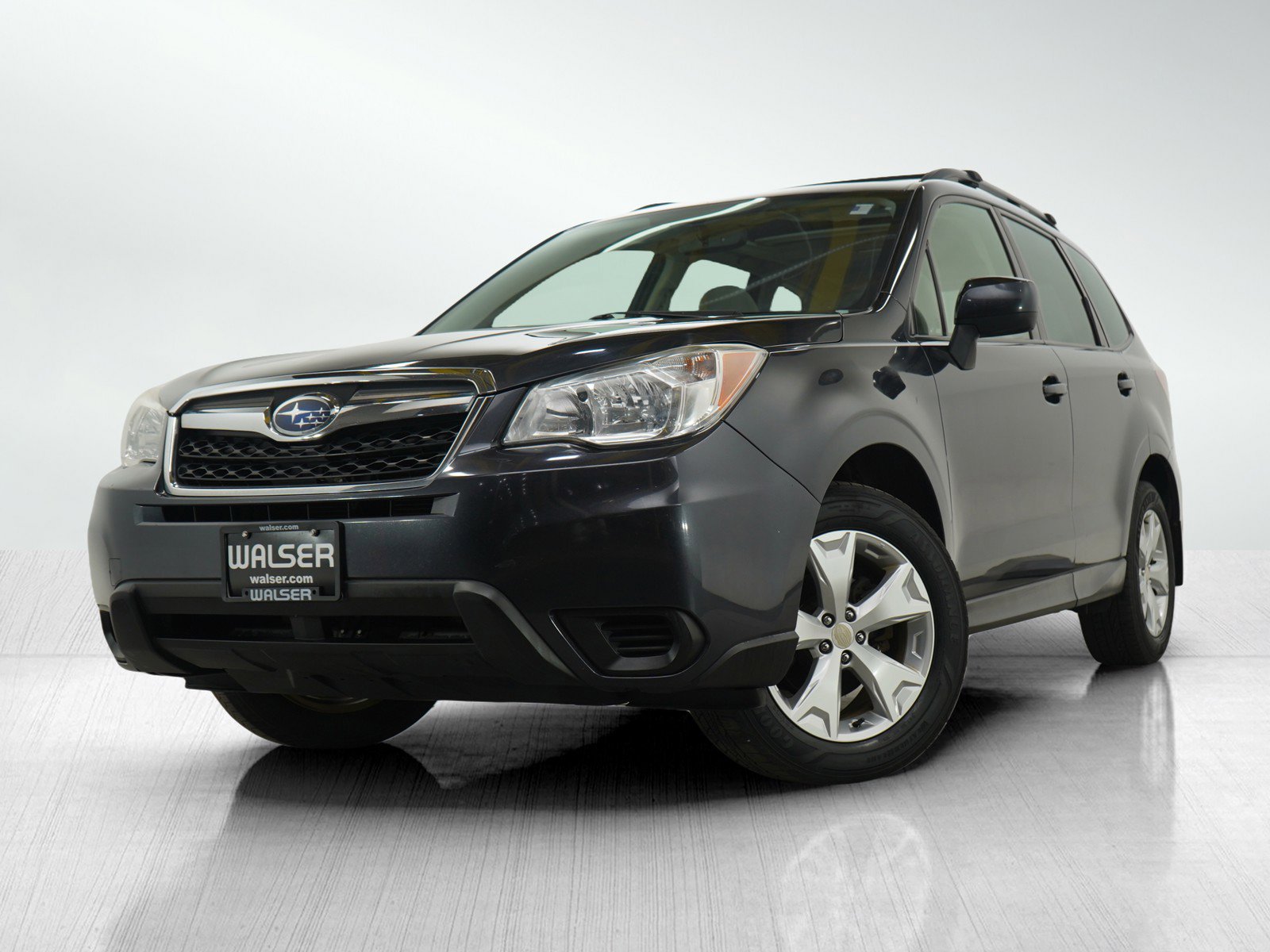
The sixth-generation Subaru Forester (2024+) simplifies the lineup, but the choice between the base 2.5i and the Premium trim still trips up buyers. Both share the same 2.5-liter boxer-four, standard symmetrical all-wheel drive, and the Subaru Global Platform. The Premium adds roughly $2,800–$3,200 in equipment — heated seats, a power driver’s seat, a larger touchscreen, blind-spot monitoring, and roof rails — that many owners consider essential within the first winter. This guide breaks down every functional difference so you can decide whether the upgrade pays for itself in daily use.
 Base 2.5i shown with 17-inch steel wheels and black door handles — typical dealer lot presentation.
Quick Comparison Summary
| Feature | Forester 2.5i (Base) | Forester Premium |
|---|---|---|
| 2025 MSRP (incl. destination) | $29,895 | $32,995 |
| Touchscreen | 7.0″ | 11.6″ portrait |
| Audio | 4-speaker | 6-speaker |
| Driver’s seat | Manual 6-way | Power 10-way + lumbar |
| Front seats | Cloth, non-heated | Cloth, heated |
| Blind-spot monitoring | ❌ | ✅ Standard |
| Rear cross-traffic alert | ❌ | ✅ Standard |
| Roof rails | ❌ | ✅ Black |
| Wheels | 17″ steel w/ covers | 18″ alloy |
| Keyless access | Push-button start only | Push-button + door-handle touch |
| Auto-dimming rearview mirror | ❌ | ✅ |
Prices reflect 2025 model year with $1,295 destination; regional incentives may narrow the gap.
Understanding the Forester Trim Hierarchy (2024–2026)
Subaru dropped the old “Base / Premium / Sport / Limited / Touring / Wilderness” ladder for a cleaner four-trim structure: 2.5i, Premium, Sport, Wilderness. The 2.5i and Premium sit at the volume end of the range — fleet buyers and private shoppers who want AWD utility without the Sport’s 18″ dark-alloy wheels or the Wilderness’s lifted suspension. If you’re cross-shopping a Toyota RAV4 XLE Premium or a 2025 RAV4 Hybrid XLE Premium, the Forester Premium is the direct counterpart in feature content. For more on this, see our guide on best premium suv in usa.
Experience note: In the Northeast, dealers often stock more Premiums than 2.5i units because the heated-seat take-rate exceeds 85 %. A 2.5i may require a factory order, adding 6–8 weeks.
Exterior Differences: More Than Wheel Size
Both trims share identical sheet metal, but the details change the daily experience:
- Wheels & tires: 2.5i rides on 17″ steel wheels with plastic covers (225/60R17). Premium gets 18″ machine-finished alloys (225/55R18) — slightly firmer ride, sharper turn-in, and a wider replacement-tire selection.
- Roof rails: Premium includes black flush-mount rails rated for 150 lb dynamic load. On the 2.5i, rails are a $325 port-installed accessory; skipping them limits roof-box compatibility.
- Exterior trim: Door handles and mirror caps are body-color on Premium vs. black on 2.5i. No fog lights on either trim (moved to Sport and above).
- Glass: Privacy glass on rear quarters and liftgate is standard across the board.
Powertrain & Performance: Identical Mechanicals
| Spec | Value (both trims) |
|---|---|
| Engine | 2.5 L FB25D direct-injection flat-four |
| Output | 180 hp @ 5,800 rpm / 178 lb-ft @ 4,400 rpm |
| Transmission | Lineartronic CVT with 8-step manual mode |
| AWD system | Symmetrical full-time, active torque split |
| 0–60 mph | ~9.1 sec (Car & Driver, 2024 Premium) |
| EPA combined | 28 mpg (26 city / 33 highway) |
| Towing | 1,500 lb (braked) |
The CVT holds ratios well on grades, and X-Mode (single-setting on these trims) manages wheel slip effectively on loose surfaces. Real-world fuel economy clusters around 26–27 mpg mixed — within 1 mpg of EPA. Premium’s 18″ tires cost ~$120 more per corner at replacement time; budget accordingly.
Practical observation: The 2.5-liter feels adequate around town but runs out of breath on high-altitude highway passes. If you regularly tow a small trailer or carry four adults + gear at elevation, test-drive at altitude before committing.
Interior & Comfort: Where Premium Earns Its Name
Seating & Adjustability
- 2.5i: Manual 6-way driver (height, fore/aft, recline), 4-way passenger. Cloth trim is durable but thin; no lumbar.
- Premium: 10-way power driver (adds 2-way power lumbar), 4-way manual passenger. Heated front seats (3 settings) — the single feature owners cite most often as “worth the upgrade.”
Climate & Convenience
| Feature | 2.5i | Premium |
|---|---|---|
| Dual-zone auto climate | ✅ | ✅ |
| Rear HVAC vents | ✅ | ✅ |
| Heated steering wheel | ❌ | ❌ (Sport+ only) |
| Auto-dimming mirror | ❌ | ✅ |
| Keyless entry (door touch) | ❌ | ✅ |
| Cargo cover | ❌ | ✅ |
Cargo Space (identical)
- Behind 2nd row: 28.9 cu ft
- 2nd row folded: 70.9 cu ft (flat load floor with 60/40 split)
- Liftover height: 29.5″ — low for the class.
Technology & Infotainment Deep Dive
Screen & Interface
- 2.5i: 7.0″ horizontal touchscreen (Starlink legacy UI). Wireless Apple CarPlay / Android Auto standard. Physical volume knob, but no customizable home screen.
- Premium: 11.6″ portrait touchscreen (new Starlink 2.0). Wireless CarPlay/Android Auto, built-in navigation (TomTom maps, 3-yr free updates), over-the-air updates, and a customizable widget layout. The larger screen shows more of the backup camera feed and splits audio/climate panels side-by-side.
Audio
- 2.5i: 4-speaker system — acceptable for podcasts, thin on bass.
- Premium: 6-speaker Harman Kardon-tuned system — noticeably clearer mids and dedicated tweeters in the A-pillars.
Connectivity
- Both: 2 front USB-A (charge/data), 2 rear USB-C (charge only), 4G LTE hotspot (3-month / 3 GB trial), Subaru STARLINK Safety Plus (1-yr free).
- Premium adds: Wireless phone charger (Qi, 15 W) ahead of the shifter — a small but daily-used feature.
Safety: Standard vs. Available Features
Every 2024+ Forester earns an IIHS Top Safety Pick+ (with specific headlights) and NHTSA 5-star overall. The driver-assist suite (EyeSight 4.0) is identical on both trims:
- Adaptive cruise control w/ lane centering
- Pre-collision braking (vehicle/pedestrian/cyclist)
- Lane-departure / lane-keep / sway warning
- Automatic high beams
- Lead-vehicle start alert
Premium-exclusive active safety:
- Blind-spot detection (BSD)
- Rear cross-traffic alert (RCTA)
- Reverse automatic braking (RAB) — applies brakes if an obstacle is detected while backing at <9 mph
Data point: IIHS reports BSD + RCTA reduce lane-change crashes by 14 % and backing crashes by 22 %. On a family hauler, that alone justifies the Premium bump for many buyers.
Pricing Analysis: 2024–2026 MSRP & Real-World Costs
| Model Year | 2.5i MSRP | Premium MSRP | Delta | Typical Dealer Discount (2025) |
|---|---|---|---|---|
| 2024 | $29,695 | $32,795 | $3,100 | $500–$1,000 off Premium |
| 2025 | $29,895 | $32,995 | $3,100 | $750–$1,200 off Premium |
| 2026* | $30,195 | $33,295 | $3,100 | TBD |
*2026 figures projected from Subaru’s typical $300 annual increase.
Cost-to-feature verdict: The Premium’s equipment (heated seats, BSD/RCTA, power seat, roof rails, larger screen, wireless charger) would cost >$4,500 as dealer accessories on a 2.5i. Even at full MSRP delta, Premium is the better value — provided you’ll use the features. For more on this, see our guide on cadillac xt6 premium luxury suv.
Resale insight: Three-year ALG residual for Premium runs ~2 % higher than 2.5i, effectively returning $600–$800 of the upcharge at trade-in.
 Legacy-generation Premium interior shown for reference — current 11.6″ portrait screen replaces this 7″ unit.
Ownership Experience: Reliability, Maintenance & Fuel Economy
Maintenance Schedule (normal service)
| Interval | Service | Est. Cost (dealer) |
|---|---|---|
| 6 mo / 6k mi | Oil & filter (0W-20 synthetic), tire rotate, inspect | $95–$135 |
| 30k mi | Cabin/engine air filters, brake fluid | $220–$280 |
| 60k mi | CVT fluid (inspect), spark plugs | $350–$420 |
| 100k mi | Coolant, transfer case / rear diff fluids | $450–$550 |
The FB25D uses a timing chain (no belt), and head-gasket issues that plagued older 2.5s are resolved. Common TSBs: CVT judder logic update (software), rear gate strut noise (revised struts). No pattern failures on 2024+ models yet. For further reading, see caranddriver.com.
Real-World Fuel Economy (Fuelly, 1,200+ 2024–25 Foresters)
- Average: 26.4 mpg
- 25th–75th percentile: 24.8 – 28.1 mpg
- Best tank reported: 32.7 mpg (highway, level, 65 mph)
- Winter penalty: –1.5 to –2.5 mpg in northern states
How They Compare to Key Rivals
| Competitor (similarly equipped) | Starting MSRP | AWD Standard? | Heated Seats Std? | BSD Std? | Cargo (seats up) |
|---|---|---|---|---|---|
| Forester Premium | $32,995 | ✅ | ✅ | ✅ | 28.9 cu ft |
| Toyota RAV4 XLE Premium | $34,575 | ✅ | ✅ | ✅ | 37.6 cu ft |
| Honda CR-V EX-L AWD | $35,200 | ✅ | ✅ | ✅ | 39.3 cu ft |
| Hyundai Tucson SEL AWD | $32,325 | ✅ | ✅ | ✅ | 38.7 cu ft |
| Mazda CX-5 2.5 S Preferred | $33,670 | ✅ | ✅ | ✅ | 30.9 cu ft |
The Forester trails in raw cargo volume but leads in visibility (upright greenhouse, low beltline), standard AWD (others charge $1,400–$1,500 on base trims), and ground clearance (8.7″ vs. 7.5–8.0″). If you prioritize snow-country confidence over maximum luggage space, the Forester Premium remains a top pick.
Which Trim Should You Buy? Decision Framework
Choose the 2.5i if:
- You live in a mild climate and won’t use heated seats.
- You have roof-rack accessories that clamp to bare rails (Yakima/Thule towers work on flush rails too).
- You’re buying for a fleet or teen driver where durability > comfort.
- You can negotiate a >$2,500 discount off 2.5i MSRP, making the effective gap >$5,500.
Choose the Premium if:
- You experience actual winter — heated seats + BSD/RCTA are daily safety/comfort wins.
- You want the 11.6″ screen with native nav (works offline, no phone tether).
- You’ll carry bikes/kayaks/roof boxes — factory rails are stronger and cleaner than aftermarket.
- You plan to keep the vehicle 5+ years; the residual advantage narrows the lifetime cost gap.
Pro tip: In November–December, Subaru often runs “Premium Value Package” regional incentives that bundle all-weather liners, cargo tray, and wheel locks — effectively free accessories that tip the math further toward Premium.
Frequently Asked Questions
Does the Forester 2.5i have blind-spot monitoring?
No. Blind-spot detection, rear cross-traffic alert, and reverse automatic braking are Premium-exclusive on the 2024–2026 Forester. They cannot be dealer-installed on the 2.5i.
Is the 11.6″ screen worth it over the 7″?
Yes, if you use Apple CarPlay / Android Auto daily. The portrait layout shows more map context, splits climate controls permanently on the right third, and supports OTA map updates. The 7″ unit requires a phone for navigation and feels dated beside rivals.
Can you add roof rails to the 2.5i later?
Yes — Subaru sells flush-mount black rails (part #E361SXC000) for ~$325 plus ~1 hour install. They match the Premium rails cosmetically and carry the same 150 lb dynamic rating.
What’s the real-world towing experience with the 2.5 L?
At the 1,500 lb limit, expect 3rd-gear equivalent CVT ratios on grades, 18–20 mpg while towing, and noticeable engine noise. A lightweight pop-up camper (1,200 lb) is fine; a loaded 1,500 lb utility trailer on mountain roads tests patience. Trailer sway control is standard.
How does the Forester’s AWD compare to RAV4’s?
Subaru’s symmetrical full-time system sends torque to all four wheels continuously (60/40 front/rear default, variable). Toyota’s Dynamic Torque Vectoring AWD is part-time — front-drive until slip is detected, then up to 50 % rear. In steady snow or gravel, the Forester feels more planted; the RAV4 saves ~1 mpg in dry driving.
Conclusion & Next Steps
The 2024–2026 Forester 2.5i is a competent, honest compact SUV — but the Premium trim delivers the features most owners use every day: heated seats, blind-spot monitoring, a modern infotainment screen, and factory roof rails. Unless your budget is immovable or you genuinely won’t use those items, the Premium’s ~$3,100 upcharge pays back in comfort, safety, and resale.
Next steps:
- Schedule back-to-back test drives (2.5i then Premium) on the same road loop — focus on seat comfort, screen readability, and BSD alert timing.
- Check current regional offers on Subaru’s site; Premium incentives often narrow the effective price gap to ~$2,000.
- Compare insurance quotes — BSD/RCTA can lower premiums 3–5 % with some carriers.
- Explore the Subaru Forester buyer’s guide for deeper dive on Sport and Wilderness trims if your needs shift toward off-pavement capability.
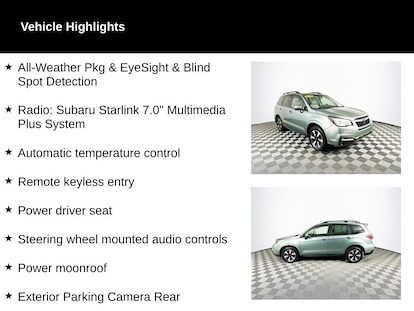 Premium trim with factory roof rails and 18″ alloys — the visual differentiators most buyers notice first.
Sources: EPA Fuel Economy Guide (fueleconomy.gov), IIHS/HLDI Forester ratings, Subaru 2025 Model Year Dealer Order Guide, ALG Residual Value Forecast Q1 2025.