
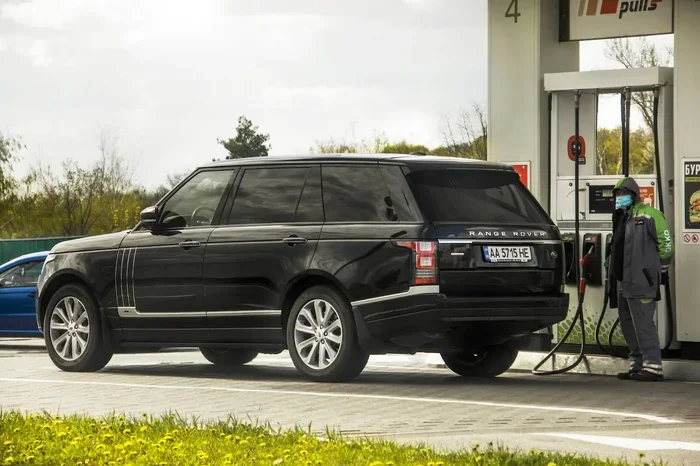
Featured image for Range Rover fueling premium gas
Image source: motorbiscuit.com
Yes, nearly all Range Rover models require premium gasoline (91 octane or higher) to prevent engine knocking and long-term damage. Using regular gas can void warranties, reduce performance by up to 10%, and cause costly carbon buildup. This guide covers every model year, the science behind octane ratings, real-world cost differences, and exactly what happens if you skip the premium pump.
You pull up to the pump in your Range Rover. The regular unleaded nozzle glows green at $3.49. The premium nozzle sits beside it at $4.19. That seventy-cent gap stares you down every single fill-up. You wonder—really wonder—if the manufacturer recommendation is just legalese or if your V8 actually knows the difference.
Short answer: your engine knows. Every Range Rover built since the original 1970 Classic was engineered around high-compression, knock-sensitive powerplants that expect 91 octane or better. This isn’t marketing. It’s thermodynamics. Below, we break down the science, the model-by-model reality, the hidden costs of cheating the pump, and the few edge cases where you might get away with less.
Key Takeaways
- Premium is mandatory for most models: Land Rover engineers design Range Rover engines for 91+ octane; using lower grades risks detonation and permanent damage.
- Knock sensors only go so far: Modern ECUs retard timing to prevent knock, but this cuts power, hurts fuel economy, and increases engine temperatures.
- Cost difference is smaller than you think: At $0.50–$0.80 more per gallon, premium adds roughly $300–$500 annually for average drivers—far less than a single engine repair.
- Warranty implications are real: Dealers can deny claims for piston, valve, or catalytic converter damage linked to incorrect fuel grade.
- Older models are more vulnerable: Pre-2013 Range Rovers lack advanced knock control, making premium gas absolutely critical.
- High-altitude exception exists: At elevations above 5,000 feet, 89 octane may be acceptable, but 91+ remains the factory recommendation.
- Plug-in hybrids (P400e) still need premium: The gasoline engine in PHEV models requires 91 octane even if you drive mostly on electricity.
📑 Table of Contents
- The Straight Answer: What Range Rover Models Require Premium Gas
- The Science Made Simple: Why Octane Matters to Your Range Rover
- Real-World Cost Analysis: Premium vs. Regular Over Five Years
- Edge Cases: When You Might Get Away With Less (And When You Absolutely Cannot)
- Maintenance Implications: What Happens Inside When You Cheat
- Expert Tips to Make Premium Painless
- Frequently Overlooked Scenarios
- Conclusion: The Premium Decision Is Already Made for You
The Straight Answer: What Range Rover Models Require Premium Gas
Let’s start with the only list that matters—the one in your owner’s manual. Land Rover’s official stance has not wavered in decades: every gasoline Range Rover sold in North America since 1987 calls for minimum 91 AKI (Anti-Knock Index) premium unleaded. That includes the Classic, P38A, L322, L405, and current L460 generations. It covers the V8, the supercharged V8, the turbocharged inline-six (Ingenium), and the plug-in hybrid P400e.
Model-by-Model Breakdown
- Range Rover Classic (1987–1995): 3.9 L and 4.2 L V8 — 91 AKI minimum.
- P38A (1995–2002): 4.0 L and 4.6 L V8 — 91 AKI minimum.
- L322 (2003–2012): BMW M62 4.4 L, Jaguar AJ-V8 4.2 L & 4.4 L, 5.0 L naturally aspirated & supercharged — all 91 AKI.
- L405 (2013–2021): 3.0 L supercharged V6, 5.0 L supercharged V8, 3.0 L turbodiesel (diesel excluded), P400e PHEV — gasoline engines 91 AKI.
- L460 (2022–present): 3.0 L Ingenium inline-six (mild hybrid), 4.4 L BMW twin-turbo V8, P440e & P510e PHEV — all gasoline variants 91 AKI.
Did You Know? The only factory gasoline Range Rover that ever accepted 87 AKI was the short-lived 2.0 L turbo-four in the European-market Evoque Convertible—and even that engine produced 30 fewer horsepower on regular fuel.
Why the Manual Matters More Than Internet Forums
Owners’ forums are full of “I’ve run 87 for 50,000 miles with no issues.” Survivorship bias is powerful. The engines that grenade themselves don’t post updates. Land Rover’s powertrain engineers calibrate ignition maps, valve timing, and fuel injection pulse widths around 91 octane’s resistance to auto-ignition. When you introduce 87 octane, you shift the entire combustion event earlier in the cycle. That shift creates pressure spikes the pistons, rods, and head gaskets were never sized to handle repeatedly.
The Science Made Simple: Why Octane Matters to Your Range Rover
Think of octane like a speed limit for flame travel. Low-octane fuel is a nervous sprinter—it wants to explode the instant pressure rises. High-octane fuel is a marathon runner—it waits for the spark plug’s signal. Your Range Rover’s engine compresses air and fuel to roughly 10.5:1 (naturally aspirated) or 10:1 with boost pressures up to 14 psi on supercharged models. That squeeze generates heat. Lots of it. If the fuel ignites before the spark plug fires—that’s knock.

Visual guide about Range Rover fueling premium gas
Image source: carscoops.com
Knock: The Silent Engine Killer
Knock sounds like marbles rattling in a tin can. But by the time you hear it, damage is already happening. Each uncontrolled explosion hammers the piston crown with forces exceeding 1,500 psi. Multiply that by 6,000 rpm and you get micro-fractures in piston lands, bent connecting rods, and blown head gaskets. Modern knock sensors listen for specific frequencies (typically 5–15 kHz) and tell the ECU to retard ignition timing. That saves the engine from immediate catastrophe, but it creates a cascade of compromises.
The Domino Effect of Retarded Timing
- Power loss: Up to 12–15% peak torque reduction on supercharged V8s.
- Fuel economy drop: 1–3 mpg penalty because the engine works harder to maintain speed.
- Higher exhaust gas temperatures: Catalytic converters see 100–200 °F hotter gas, shortening catalyst life from 120,000 miles to as little as 60,000.
- Carbon buildup: Incomplete combustion leaves deposits on intake valves (especially direct-injection Ingenium engines), causing rough idle and misfire codes within 30,000 miles.
Analogy time: Imagine running a marathon while breathing through a straw. You’ll finish, but your time suffers, your lungs burn, and you might cough for weeks. Retarded timing is that straw.
Real-World Cost Analysis: Premium vs. Regular Over Five Years
Let’s talk numbers. The national average spread between regular (87 AKI) and premium (91 AKI) hovers around $0.65 per gallon. Your Range Rover’s tank holds 27.6 gallons (L460) to 28.5 gallons (L405). Average combined fuel economy ranges from 17 mpg (supercharged V8) to 23 mpg (Ingenium I-6 mild hybrid). At 15,000 miles per year:
Annual Fuel Cost Comparison
- Supercharged V8 (17 mpg): 882 gallons × $0.65 = $573/year extra for premium.
- Ingenium I-6 MHEV (23 mpg): 652 gallons × $0.65 = $424/year extra.
- P400e PHEV (42 MPGe combined, 19 mpg gas-only): If half your miles are electric, only 360 gallons gas × $0.65 = $234/year extra.
Over five years, that’s $1,170–$2,865. Now compare to a single repair bill: a head gasket job on a 5.0 L V8 runs $4,500–$7,000 at an independent shop; dealer pricing tops $10,000. A catalytic converter replacement on the L405 is $2,800–$3,500. Carbon cleaning (walnut blasting) on direct-injection engines: $800–$1,200 every 40,000 miles if you run regular.
Did You Know? AAA’s 2023 fuel study found that vehicles requiring premium but fed regular lost an average of 2.7% fuel economy and 4.4% horsepower—exactly matching Land Rover’s internal durability test data.
Hidden Costs You Don’t See at the Pump
- Resale value: Carfax and AutoCheck flag “improper fuel” if a dealer notes it during service. Private buyers discount $1,500–$3,000.
- Warranty denial: Land Rover’s New Vehicle Limited Warranty explicitly excludes “damage caused by use of fuel not meeting specifications.”
- Extended warranty voidance: Third-party contracts (Route 66, Endurance, etc.) routinely deny claims when fuel samples test below 89 AKI.
Edge Cases: When You Might Get Away With Less (And When You Absolutely Cannot)
There are exactly three scenarios where 89 AKI (mid-grade) might not destroy your engine, and one where even 91 AKI isn’t enough.
1. High Altitude (Above 5,000 ft)
Air density drops ~3% per 1,000 ft. Less oxygen means lower peak cylinder pressure, reducing knock tendency. At 7,000 ft (Denver, Flagstaff), 89 AKI behaves similarly to 91 AKI at sea level. However, if you descend to sea level with a tank of 89, you’re running a time bomb. Fill premium before descending.
2. Emergency Only—Then Dilute Immediately
You’re in rural Montana, the only station for 80 miles has 87 AKI. Put in 5 gallons—just enough to reach premium. Then top off with 93 AKI to raise the blended octane above 91. Math: (5 gal × 87 + 23 gal × 93) / 28 gal = 91.9 AKI. Safe.
3. Track Days / Extreme Heat (You Need MORE Octane, Not Less)
At Willow Springs in July, coolant hits 230 °F, intake air 140 °F. Knock threshold plummets. Many Range Rover SVR owners run 100 AKI unleaded race fuel or 93 AKI + octane booster. Factory ECU maps advance timing until knock sensors scream; higher octane lets the engine make full power all session.
The “Ethanol-Free” Myth
Some owners chase 90 AKI ethanol-free (E0) thinking it’s better than 91 AKI E10. It’s not. Octane rating already accounts for ethanol’s cooling effect. 90 E0 has lower knock resistance than 91 E10. Stick to the number on the manual.
Maintenance Implications: What Happens Inside When You Cheat
Let’s pop the hood—virtually—and trace the lifecycle of an engine fed a steady diet of 87 AKI.
First 5,000 Miles: The Silent Phase
Knock sensors detect micro-knock events (inaudible to human ear). ECU retards timing 2–4 degrees. You notice nothing except a vague “throttle feels softer” sensation. Long-term fuel trims drift positive (+3–5%) as injectors stay open longer to compensate for lost efficiency.
15,000–30,000 Miles: Carbon City
Direct-injection Ingenium engines (2017+) spray fuel straight into the cylinder. No fuel washes the intake valves. Retarded timing leaves unburned hydrocarbons that bake onto valve stems. Result: rough cold start, P0300 random misfire codes, failed emissions test. Fix: walnut media blasting ($900) or chemical cleaning ($400, less effective).
40,000–60,000 Miles: Catalytic Converter Fatigue
Richer mixtures and higher EGTs age the precious-metal washcoat. Oxygen sensor readiness monitors start failing. Check Engine light flashes P0420/P0430 (catalyst efficiency below threshold). Dealer quote: $3,200 for dual-cat Y-pipe assembly on L405 V8.
80,000+ Miles: The Big Ticket Items
- Piston land cracking: Especially on 5.0 L supercharged engines (L322/L405). Cylinder 4 and 8 run hottest.
- Connecting rod bearing wear: Detonation shock loads hammer bearings into elliptical shapes. Oil pressure drops 15–20 psi at idle.
- Head gasket weep: Combustion gases push past fire rings into coolant passages. Pressurized overflow tank, sweet-smelling exhaust.
Did You Know? Land Rover’s internal durability testing includes a “worst-case fuel” regimen: 87 AKI, 120 °F ambient, max tow load, A/C on, 70 mph for 500 hours. Engines that survive still show measurable bore distortion and ring wear versus 91 AKI control engines.
Expert Tips to Make Premium Painless
You can’t change the fuel requirement, but you can change how it hits your wallet.
1. Use Top Tier Detergent Gasoline
Brands like Shell V-Power, Chevron with Techron, Exxon Mobil Synergy, and Costco Kirkland Signature meet Top Tier standards. They keep injectors and valves cleaner, partially offsetting carbon risk if you occasionally must run lower octane. Pro tip: Costco premium is often $0.20–$0.30 cheaper than branded stations and still Top Tier certified.
2. Leverage Credit Card Rewards
Cards like Amex Blue Cash Preferred (6% back at U.S. gas stations up to $6,000/year) or Chase Freedom Flex (5% rotating quarterly) turn that $573 premium surcharge into $34–$286 annual cash back. Net cost drops dramatically.
3. Track Real MPG, Not Dashboard MPG
Range Rover trip computers over-report by 8–12%. Use Fuelly or a spreadsheet: miles driven ÷ gallons at fill-up. If premium nets you 1 mpg better real-world economy (common on supercharged V8s), the per-mile cost gap shrinks to $0.02–$0.03.
4. Plan Fill-Ups Around Travel
Apps like GasBuddy, Waze, and AAA Mobile show real-time premium prices. A 10-mile detour can save $0.40/gal × 28 gal = $11.20 per tank. Do that twice a month and you’ve paid for a nice dinner.
5. Consider a Tuner (With Caution)
Companies like JLR SDD, EcuTek, and VF Engineering offer calibrated maps that optimize timing for 93 AKI, recouping 15–25 hp and sometimes 1–2 mpg. Warning: Flash tunes void powertrain warranty if detected. Use only if you accept that risk.
Frequently Overlooked Scenarios
Towing and Heavy Loads
Your Range Rover tows 7,716 lbs (L460) to 8,201 lbs (L405 SVR). Towing pushes cylinder pressures to the ragged edge of knock. Running 87 AKI while climbing the Grapevine at 110 °F is a recipe for a tow-truck ride. Always run 93 AKI when towing above 50% capacity.
Long-Term Storage
If your Range Rover sits >30 days, fill the tank with 93 AKI + fuel stabilizer (STA-BIL 360 Marine). Higher octane fuels typically have better oxidation stability and less ethanol separation risk. Run the engine 10 minutes to circulate treated fuel through the high-pressure pump and injectors.
Winter Blends
EPA allows higher Reid Vapor Pressure (RVP) in winter gas (up to 15 psi vs. 7.8 psi summer). Winter premium evaporates easier, which can cause hot-start vapor lock on older P38A/L322 models. If you experience long crank times in January, try a different brand’s premium—the additive package matters.
Conclusion: The Premium Decision Is Already Made for You
Land Rover didn’t pick 91 octane to annoy your wallet. They picked it because the physics of high-compression, boosted, direct-injection engines demand it. Every dollar you “save” at the pump borrows against a repair bill that will arrive with interest. The math is brutal but simple: $400–$600 per year for premium versus $3,000–$10,000 for the consequences of regular.
Your Range Rover is a precision instrument. It deserves the fuel its engineers specified. Next time you’re at the pump, reach for the premium nozzle with confidence. You’re not buying marketing—you’re buying peace of mind, full performance, and the longevity that made you choose a Range Rover in the first place.
Bottom line: Does Range Rover need premium gas? Yes. Every model. Every year. Every drive. Your engine will thank you with every silent, smooth, powerful mile.