
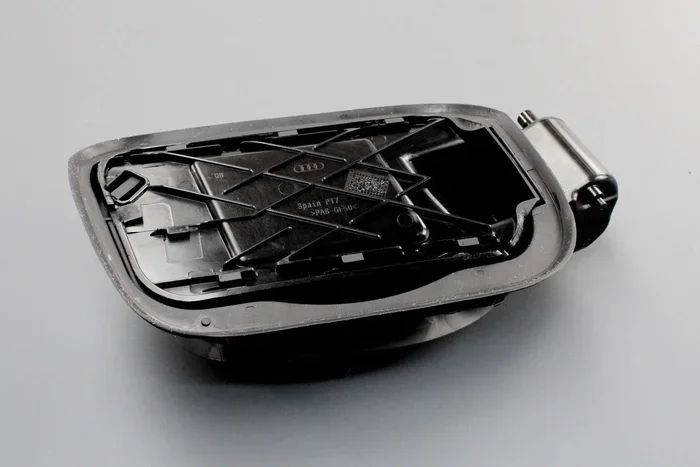
Featured image for Audi Q8 fuel door
Image source: partshaus.co.uk
The Audi Q8 requires premium gasoline (91 octane or higher) for optimal performance and engine longevity. Using regular fuel can reduce power, decrease fuel economy, and potentially cause long-term engine damage from knocking. While the vehicle will run on lower octane in emergencies, Audi strongly recommends premium for all driving conditions.
You pull up to the pump in your Audi Q8, credit card in hand, and stare at the three buttons. Regular. Mid-grade. Premium. The price difference stares back at you — sometimes 60, 80, even 90 cents per gallon. Your wallet whispers “regular.” Your owner’s manual screams “premium.” So what’s the real answer? Does Audi Q8 need premium gas, or is it just a suggestion designed to squeeze more money from luxury owners?
Let’s cut through the noise right now. The short answer: yes, the Audi Q8 requires premium gasoline. Not “recommends.” Requires. Every single model, every single trim, every single model year since the Q8 launched in 2019. But understanding why — and what actually happens if you don’t — separates informed owners from those who learn the hard way.
Think of your Q8’s engine like a high-performance athlete. You wouldn’t feed an Olympic sprinter junk food and expect gold-medal times. Your twin-turbocharged V6 (or V8 in the RS Q8) is engineered with precise tolerances, high compression ratios, and sophisticated timing that demands fuel with specific anti-knock properties. Premium isn’t a luxury tax. It’s the nutritional requirement your engine was built around.
Key Takeaways
- Premium Required: Audi specifies 91 octane minimum (93 recommended) for all Q8 models and model years.
- Performance Impact: Regular gas reduces horsepower, torque, and fuel efficiency by 3-5% or more.
- Engine Protection: Lower octane increases risk of pre-detonation (knocking), which can damage pistons and valves over time.
- Cost Difference: Premium costs ~$0.50-$0.80 more per gallon, adding roughly $150-$250 annually for average drivers.
- Emergency Use Only: 87 octane is acceptable temporarily but should be replaced with premium ASAP.
- Warranty Considerations: Consistent use of improper fuel could complicate warranty claims for engine-related issues.
- All Trims Affected: From the base 45 TFSI to the RS Q8, every variant requires premium gasoline.
📑 Table of Contents
- What Octane Rating Does the Audi Q8 Require?
- Why Does the Audi Q8 Need Premium Gas? The Engineering Explained
- What Happens If You Put Regular Gas in an Audi Q8?
- The Real Cost Difference: Premium vs. Regular for Q8 Owners
- Top Tier Gasoline: Why Brand Matters as Much as Octane
- Common Myths About Audi Q8 Fuel Requirements
- Seasonal and Altitude Considerations
- Fueling Best Practices for Q8 Owners
- Warranty and Fuel: What Audi Covers (And Doesn’t)
- Frequently Asked Questions About Audi Q8 Fuel
- Conclusion: Premium Is Protection, Not Punishment
What Octane Rating Does the Audi Q8 Require?
Every Audi Q8 sold in North America carries the same fuel requirement stamped on the fuel door and printed in the owner’s manual: minimum 91 AKI (Anti-Knock Index) octane. Audi recommends 93 AKI where available for maximum performance. This applies across the entire lineup — the 45 TFSI, 55 TFSI, SQ8, and RS Q8 all share this requirement.
The AKI rating you see on American pumps (typically 87, 89, 91, 93) averages two testing methods: Research Octane Number (RON) and Motor Octane Number (MON). In Europe, you’ll see only RON numbers — 95 or 98 RON — which roughly correspond to our 91 and 93 AKI. So if you’re importing a Q8 or driving abroad, 95 RON is your minimum.
Breaking Down the Q8 Lineup Fuel Requirements
Let’s look at each variant, because there’s a common misconception that “less powerful” models might accept regular gas.
- Audi Q8 45 TFSI (2019-present): 2.0L turbocharged inline-4, 261 hp — requires 91 AKI minimum
- Audi Q8 55 TFSI (2019-present): 3.0L twin-turbo V6, 335 hp — requires 91 AKI minimum
- Audi SQ8 4.0 TFSI (2020-present): 4.0L twin-turbo V8, 500 hp — requires 91 AKI minimum, 93 AKI recommended
- Audi RS Q8 (2020-present): 4.0L twin-turbo V8, 591 hp — requires 93 AKI for full output
- Audi Q8 e-tron (2024+): Fully electric — no gasoline required (obviously)
Did You Know? The 3.0L V6 in the 55 TFSI uses a 10.5:1 compression ratio with twin-scroll turbochargers. That combination creates cylinder pressures that demand premium fuel’s resistance to uncontrolled combustion. The 2.0L in the 45 TFSI runs 9.6:1 compression but adds a turbocharger pushing significant boost — same requirement, different engineering path.
Where to Find Your Specific Requirement
Three places confirm this for your exact vehicle:
- Fuel door label: Open the charging/fuel door — a sticker inside reads “PREMIUM UNLEADED GASOLINE ONLY / MIN 91 AKI”
- Owner’s manual: Section “Refueling” or “Technical Data” — same specification
- Instrument cluster: Some model years display a “Premium Fuel Recommended” reminder at startup
Why Does the Audi Q8 Need Premium Gas? The Engineering Explained
Here’s where most articles stop. They tell you “it’s required” but not why. Understanding the why changes this from a rule you follow to a decision you understand.

Visual guide about Audi Q8 fuel door
Image source: partshaus.co.uk
The Knocking Problem: An Analogy
Imagine a row of dominoes. Each domino represents a flame front spreading across your combustion chamber after the spark plug fires. In a perfect world, that flame front moves smoothly — domino by domino — pushing the piston down with steady force.
Now imagine someone flicks the middle of the row. Dominoes fall from both directions and collide in the center with a sharp crack. That collision is engine knock (also called detonation or pre-ignition). The fuel-air mixture spontaneously ignites from pressure and heat before the spark plug’s flame front reaches it. Two flame fronts collide. Pressure spikes violently. The piston, connecting rod, and bearings take a hammer blow instead of a smooth push.
Premium gasoline’s higher octane rating means it resists this spontaneous ignition better. It waits for the spark plug. It burns in a controlled wave. Your engine’s knock sensors can detect the tiniest hint of knock and retard ignition timing to prevent damage — but that costs you power and efficiency.
Turbocharging Multiplies the Need
The Q8 doesn’t just have high compression. It has forced induction. Turbochargers compress intake air before it enters the cylinders. Compressed air is hotter air. Hotter air + fuel = higher tendency to auto-ignite.
Think of it like this: a naturally aspirated engine breathes at atmospheric pressure (14.7 psi at sea level). The Q8’s turbos can push 15-20+ psi of additional pressure. That’s roughly doubling the air density — and the heat — inside the cylinder before combustion even starts. The fuel must withstand that environment without lighting off early.
Direct Injection Adds Complexity
Every Q8 engine uses gasoline direct injection (GDI). Fuel sprays directly into the combustion chamber at 2,900+ psi, not into the intake ports. This cools the charge (good for knock resistance) but creates stratified mixtures — pockets of richer and leaner fuel-air ratios. The lean pockets are knock magnets. Premium fuel’s chemical stability handles this variability better.
Did You Know? Audi’s 3.0L V6 in the Q8 55 TFSI produces 369 lb-ft of torque from just 1,370 RPM. That massive low-end torque comes from high boost at low RPM — exactly the condition where knock risk is highest. Premium fuel enables that torque curve.
What Happens If You Put Regular Gas in an Audi Q8?
This is the question everyone really wants answered. Let’s be honest: you’ve probably done it once by accident. Or you’re considering it to save money. Here’s the unvarnished reality.
Immediate Effects (First Tank)
Your Q8 will run on 87 octane. The engine control module (ECM) detects knock via piezoelectric sensors bolted to the engine block. When knock appears, the ECM retards ignition timing — firing the spark plugs later in the cycle. This reduces peak cylinder pressure and stops the knock.
But retarded timing has consequences:
- Power loss: 10-20+ horsepower and 15-30 lb-ft of torque gone
- Sluggish throttle response: Turbo lag increases as the ECM limits boost to control knock
- Worse fuel economy: You’ll burn more fuel to produce the same power — often 3-5% worse MPG
- Rough idle and hesitation: Especially noticeable during cold starts and light acceleration
One tank won’t destroy your engine. The protection systems work. But you’re driving a neutered version of the vehicle you paid for.
Medium-Term Effects (Weeks to Months)
Consistent regular gas use creates a cascade of issues:
- Carbon buildup: Retarded timing means incomplete combustion. More unburned hydrocarbons bake onto intake valves (a known GDI issue) and piston crowns
- Catalytic converter stress: Richer mixtures and misfires from knock suppression overheat the cats — $2,000+ per bank to replace
- Knock sensor fatigue: Constant knock detection cycles the sensors beyond design intent
- Transmission adaptation: The ZF 8-speed learns reduced torque output and shifts differently, sometimes harshly
Long-Term Damage (Months to Years)
This is where real money gets spent:
- Piston land cracking: Repeated knock events hammer the thin piston ring lands until they fracture
- Rod bearing wear: Pressure spikes from detonation accelerate bearing clearance growth
- Ring land failure: Broken ring lands score cylinder walls — engine rebuild territory ($8,000-$15,000+)
- Turbocharger damage: Excessive exhaust gas temperatures from retarded timing cook turbo bearings and turbine wheels
Real World Example: A 2020 Q8 55 TFSI owner ran 87 octane for 18 months / 22,000 miles. Dealer diagnosed “excessive carbon buildup” and “irregular combustion events” at 45,000 miles. Intake valve cleaning ($800) and software update helped, but compression test showed 8% variance between cylinders — early warning of ring land stress. Owner switched to 93 AKI; variance stabilized.
The “Emergency Only” Provision
Audi’s manual includes a specific clause: “If premium unleaded gasoline is not available, you may use regular unleaded gasoline (87 AKI) temporarily. Drive at moderate speeds and avoid heavy acceleration. Refill with premium as soon as possible.”
Key phrase: “temporarily” and “moderate speeds.” This isn’t permission for daily use. It’s a “get me to the next station with 91 octane” provision.
The Real Cost Difference: Premium vs. Regular for Q8 Owners
Let’s talk numbers. The price gap between regular and premium varies by region, season, and station brand. But we can calculate the actual annual impact.
National Average Math (2024 Data)
- Regular (87 AKI): ~$3.45/gallon
- Premium (91-93 AKI): ~$4.15/gallon
- Spread: ~$0.70/gallon
Q8 55 TFSI real-world combined MPG: ~20 MPG (EPA combined is 19, owners report 18-22).
Average annual mileage: 12,000 miles.
Annual fuel cost at 20 MPG:
- Regular: 600 gallons × $3.45 = $2,070
- Premium: 600 gallons × $4.15 = $2,490
- Difference: $420/year
But wait — regular gives you 3-5% worse economy. At 4% worse (19.2 MPG):
- Regular adjusted: 625 gallons × $3.45 = $2,156
- True difference: $334/year
That’s $28/month or $6.40/week. For a vehicle with a $75,000+ MSRP.
Regional Variations
In California, the spread narrows to ~$0.50 (premium ~$4.80, regular ~$4.30). Annual difference drops to ~$240. In the Midwest, spreads can hit $1.00+. Annual difference reaches $600.
Pro Tip: Costco, Sam’s Club, and major grocery chains (Kroger, Safeway, HEB) often have the smallest premium spread — sometimes $0.40-$0.50. Their premium is also Top Tier certified (more on that below).
The Hidden Cost of “Saving” at the Pump
One carbon cleaning service: $600-$1,200.
One catalytic converter (per bank, Q8 has two): $1,800-$2,500 installed.
One turbocharger replacement: $2,500-$4,000+.
Engine rebuild from detonation damage: $10,000-$18,000.
Even at the highest premium spread, you’d need to drive 20+ years to equal one major repair. The math simply doesn’t support regular gas.
Top Tier Gasoline: Why Brand Matters as Much as Octane
Here’s something many Q8 owners miss: octane rating is only half the equation. The detergent package in your fuel matters enormously for a direct-injection engine.
What Is Top Tier Gasoline?
Top Tier is a performance standard backed by BMW, General Motors, Honda, Toyota, Volkswagen/Audi, and others. It requires:
- Higher detergent concentration (2-3x EPA minimum)
- No metallic additives (which harm catalysts and oxygen sensors)
- Deposit control on intake valves, fuel injectors, and combustion chambers
- Testing on actual engines, not just lab bench tests
Why GDI Engines Like the Q8’s Desperately Need It
Remember: direct injection sprays fuel into the cylinder, not onto the intake valves. In port-injected engines, fuel washed the back of the intake valves clean every cycle. GDI valves get zero fuel wash. They bake in 400°F+ heat with only PCV (crankcase ventilation) oil mist and EGR (exhaust gas recirculation) soot for company.
Result: intake valve deposits. They restrict airflow, cause misfires, kill fuel economy, and trigger check engine lights. Top Tier fuel’s enhanced detergents travel through the PCV system and EGR in vapor form, reaching those valves and keeping them clean.
Did You Know? Audi’s own technical service bulletins reference Top Tier fuel for preventing “carbon buildup on intake valves” — the #1 drivability complaint on 3.0L TFSI engines. Non-Top Tier fuel accelerates this by 40-60% based on SAE studies.
Top Tier Brands (Partial List)
- Shell (V-Power Nitro+ is excellent)
- Chevron (with Techron)
- Exxon / Mobil (Synergy Supreme+)
- BP (Amoco Ultimate)
- Costco / Kirkland Signature
- Kwik Trip / Kwik Star
- Holiday Stations
- Sinclair
- QuikTrip
- And ~60+ others — look for the green Top Tier logo on the pump
Avoid: Unbranded “independent” stations, off-brand discounters, and any pump without the Top Tier logo. The $0.05-$0.10 savings per gallon isn’t worth the valve cleaning bill.
Common Myths About Audi Q8 Fuel Requirements
Let’s debunk the internet wisdom that costs owners money.
Myth 1: “Modern Knock Sensors Make Premium Optional”
Reality: Knock sensors are a safety net, not a tuning strategy. They react to knock after it starts. Each detected event means combustion already went wrong. The ECM retards timing to stop it — but damage accumulates at the microscopic level before the sensor even fires. Running on the knock sensor is like driving with your check engine light on and saying “the car still moves.”
Myth 2: “I’ll Just Use an Octane Booster”
Reality: Most bottle boosters raise octane by 2-3 points per gallon of treatment. To turn 87 into 91, you’d need 1-2 bottles per tank ($15-$30/tank). That’s more expensive than just buying premium. Worse: many boosters use MMT (methylcyclopentadienyl manganese tricarbonyl) which leaves red-orange deposits on oxygen sensors and catalytic converters — triggering emissions codes and damaging $1,000+ components.
Myth 3: “Premium Gas Has More Energy / Better MPG”
Reality: Premium has slightly less energy per gallon than regular (by ~1-2%). The MPG gain comes from optimal timing and boost, not energy density. If your engine doesn’t require premium (like a Honda CR-V), premium gives zero benefit. In the Q8, premium enables the calibration the engineers designed.
Myth 4: “The 2.0L Turbo (45 TFSI) Doesn’t Need Premium”
Reality: Same requirement. The 2.0L TFSI runs high boost (up to 22 psi) on a relatively high compression ratio for a turbo engine (9.6:1). It’s actually more knock-sensitive at low RPM/high load than the V6. Audi’s own documentation is unambiguous: 91 AKI minimum.
Myth 5: “E85 / Ethanol Blends Are Fine If Octane Is High”
Reality: The Q8 is not a flex-fuel vehicle. E15 (15% ethanol) is approved. E85 (51-83% ethanol) will damage fuel system components not designed for alcohol concentrations that high — seals, pumps, injectors. Stick to E10 (standard pump gas) or E15 where labeled. Never E85.
Seasonal and Altitude Considerations
Fuel requirements shift with conditions. Smart Q8 owners adjust.
Summer vs. Winter Blends
Winter gasoline has higher volatility (Reid Vapor Pressure) for cold starts. This slightly lowers knock tendency. Summer fuel is less volatile. In hot climates (Arizona, Texas, Florida summers), your Q8 is more knock-prone. 93 AKI becomes more valuable than 91.
High Altitude Driving
At 5,000+ feet, air density drops. Naturally aspirated engines lose power and knock risk decreases. But the Q8’s turbos compensate by spinning faster to maintain boost. Cylinder pressures stay high. Knock risk remains. Premium requirement doesn’t change at altitude.
Did You Know? Denver-area Audi dealers still specify 91 AKI minimum. The turbocharger effectively “sea-levels” the engine. Some owners report 91 AKI is harder to find in mountain towns — plan ahead on road trips.
Track Days and Heavy Towing
The Q8 isn’t a track car, but some owners do HPDE events. The SQ8 and RS Q8 definitely see track time. Under sustained high load (track laps, towing 7,700 lbs up a grade), cylinder temperatures soar. 93 AKI is mandatory for these conditions. Even 91 AKI may trigger timing pull. RS Q8 owners: run 93 or race fuel only on track.
Fueling Best Practices for Q8 Owners
Beyond “buy premium,” here are habits that protect your investment:
1. Don’t Let the Tank Run Low
Fuel cools the in-tank pump. Below 1/4 tank, the pump runs hotter and picks up sediment. The Q8’s saddle-style tank (two lobes around the driveshaft) makes this worse — one lobe can run dry while the other has fuel, causing the pump to cavitate. Fill at 1/4 tank.
2. Avoid “Topping Off” After the Click
The EVAP (evaporative emissions) system uses a charcoal canister to capture fuel vapors. Overfilling forces liquid gasoline into the canister, saturating the charcoal. Result: check engine light, failed emissions test, $400+ canister replacement. Stop at the first click.
3. Use the Right Nozzle
Diesel nozzles are larger than gasoline nozzles — but they can fit in the Q8’s filler neck with force. One moment of distraction = $12,000 fuel system flush. The Q8’s filler neck has a misfuel inhibitor (flapper door), but it’s not foolproof. Read the pump. Every time.
4. Fuel Additives: Only If Needed
If you consistently use Top Tier premium, you don’t need additives. If you’ve run non-Top Tier or suspect carbon buildup, one bottle of Techron Concentrate Plus or BG 44K per 5,000 miles helps. Don’t overdo it — excess solvent can degrade fuel pump seals.
5. Track Your Fuel Economy
Reset Trip 2 at every fill. Calculate actual MPG: miles driven / gallons pumped. A sudden 10%+ drop signals a problem — bad gas, failing sensor, or developing mechanical issue. Early detection saves thousands.
Warranty and Fuel: What Audi Covers (And Doesn’t)
This is the question nobody asks until they’re at the service desk.
The Magnuson-Moss Warranty Act
Federal law prevents manufacturers from voiding your warranty simply because you used non-OEM parts or fluids — unless they can prove the aftermarket item caused the failure. For fuel: if you run 87 octane and your engine suffers detonation damage, Audi can and will deny the claim. The manual explicitly states the requirement. The ECM logs knock events, timing retard, and fuel trim data. That data is discoverable.
What the Dealer Sees
When a technician connects the ODIS (Offboard Diagnostic Information System) scanner:
- Knock sensor activation count (lifetime and recent)
- Ignition timing retard history (degrees and duration)
- Fuel trim adaptations (long-term and short-term)
- Misfire counters per cylinder
- Boost pressure actual vs. requested
Chronic knock retard + misfires + lean fuel trims = “customer used improper fuel.” Claim denied.
Good Faith Matters
One tank of 87 octane because you were in rural Montana and the only station had 87 and diesel? Document it (receipt, photo, date, mileage). Audi NA customer service has discretion for genuine emergencies. Habitual use? No sympathy.
Frequently Asked Questions About Audi Q8 Fuel
We’ll cover the formal FAQ section at the end, but here are quick hits:
Can I mix 87 and 93 to get 91?
Mathematically, yes — 50/50 yields ~90 AKI. But you’re guessing at the pump’s actual ratings, and you lose Top Tier detergent consistency. Just buy 91 or 93.
Does the Q8 hybrid (55 TFSI e) need premium?
Yes. The 3.0L V6 in the plug-in hybrid has the same requirement. Electric mode doesn’t change the engine’s needs.
What about ethanol-free premium?
Excellent choice if available (often at marinas, airports, some rural stations). Ethanol attracts water and reduces energy content. Ethanol-free 91 AKI is ideal — but hard to find and expensive ($0.50-$1.00 premium over E10).
Can I use race fuel (100+ octane)?
Unleaded race fuel (100-104 AKI) is safe and can add 10-20 hp on tuned RS Q8s. Leaded race fuel destroys oxygen sensors and catalytic converters — illegal for street use anyway. Stick to pump 93 for daily driving.
Conclusion: Premium Is Protection, Not Punishment
Does Audi Q8 need premium gas? Unequivocally, yes. This isn’t marketing. It’s physics. The twin-turbocharged, direct-injected, high-compression engines under the Q8’s hood were designed, calibrated, and validated around 91+ AKI fuel. Every system — ignition timing, boost control, valve timing, transmission mapping, catalyst light-off strategy — assumes that fuel.
Running regular doesn’t make you a rebel. It makes you the owner of a slower, thirstier, dirtier, and increasingly fragile $80,000 SUV. The annual savings of $300-$400 evaporate the moment you need one carbon cleaning, one catalytic converter, or — heaven forbid — one engine.
Feed your Q8 what it was born to drink. Top Tier 91 AKI minimum, 93 AKI preferred. Your engine, your wallet, and your peace of mind will thank you.
Bottom line: The pump doesn’t ask “regular or premium?” It asks “protect your investment or gamble with it?” You know the answer.