

The Mercedes-Benz G-Class is a legendary luxury SUV, but the G500 and G63 AMG serve very different purposes. The G500 offers refined comfort, impressive fuel efficiency, and everyday usability, making it ideal for those who want a luxurious daily driver with off-road prowess. In contrast, the G63 AMG is a high-performance beast, packing a powerful twin-turbo V8 engine, track-ready dynamics, and aggressive styling for enthusiasts seeking raw power and prestige.
Whether you’re commuting through the city or conquering rugged trails, each model brings its own strengths to the table. This comparison will help you understand the key differences in performance, luxury features, driving experience, and value to determine which G-Class best suits your lifestyle and needs.
The Mercedes-Benz G-Class has long been one of the most distinctive and revered SUVs on the road. Since its debut in 1979, the G-Wagen has stood out not just for its boxy silhouette and go-anywhere capability, but also for its blend of luxury, durability, and unmistakable presence. Whether parked at a red carpet event or navigating muddy trails in Moab, the G-Class commands attention.
Now, when it comes to choosing between two of the most popular versions—the Mercedes-Benz G500 and the G63 AMG—drivers are faced with a fascinating dilemma. At first glance, they may look similar, but beneath the surface lies a world of differences in performance, engineering, and intended use. The G500 is the refined, capable daily driver, while the G63 AMG is the high-octane, performance-oriented icon. Understanding the nuances between these two powerhouses can help you decide which one truly fits your lifestyle.
This article dives deep into every aspect of the G500 versus G63 AMG comparison, from engine specs and interior luxury to off-road prowess and real-world ownership experience. By the end, you’ll have a clear picture of which model aligns best with your priorities—whether you’re drawn to comfort, speed, prestige, or versatility.
Key Takeaways
- Engine & Performance: The G500 uses a 4.0L twin-turbo V8 producing 416 hp, while the G63 AMG’s 4.0L twin-turbo V8 delivers 577 hp with significantly faster acceleration and top speed.
- Driving Experience: The G500 focuses on comfort and refinement, offering a smoother ride and better fuel economy, whereas the G63 AMG prioritizes sporty handling and aggressive performance.
- Luxury & Interior: Both offer premium interiors with high-end materials, but the G63 AMG includes more performance-focused features like sport seats and AMG-specific trim elements.
- Off-Road Capability: Both models excel off-road thanks to the iconic boxy design, locking differentials, and advanced 4MATIC+ system—ideal for adventurers and urban explorers alike.
- Price & Value: The G500 starts at a lower price point, offering excellent value for a luxury off-roader, while the G63 AMG commands a premium for its performance and exclusivity.
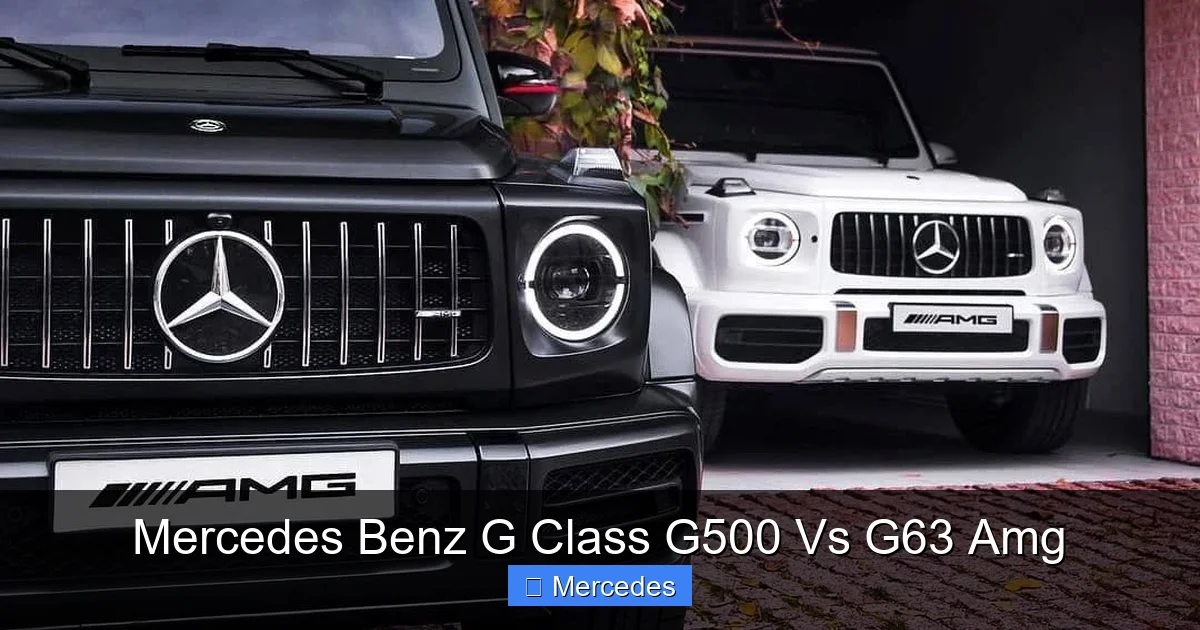
- Exterior Design: The G63 AMG features bold AMG styling cues like flared fenders, quad exhaust tips, and exclusive wheel designs, setting it apart from the more understated G500.
- Ownership Experience: The G63 AMG appeals to thrill-seekers and collectors, while the G500 suits drivers who value comfort, reliability, and long-term ownership satisfaction.
Quick Answers to Common Questions
Which is faster, the G500 or G63 AMG?
The G63 AMG is significantly faster, accelerating from 0 to 60 mph in 4.5 seconds compared to the G500’s 5.3 seconds, thanks to its more powerful engine and sport-tuned transmission.
Can the G500 handle off-road trails?
Absolutely. Both the G500 and G63 AMG have three locking differentials, 4MATIC+ AWD, and robust suspension, making them equally capable on dirt, rocks, and mud.
Is the G63 AMG louder inside?
Yes, especially in sport mode. The G63 AMG’s exhaust note and firmer suspension create a more engaging, sometimes louder cabin experience compared to the G500’s quieter, more refined environment.
Are the interiors of the G500 and G63 AMG different?
They share premium materials and MBUX tech, but the G63 AMG adds Alcantara, carbon fiber accents, and sportier seats for a more performance-focused feel.
Which has better fuel economy?
The G500 has slightly better real-world fuel efficiency due to its lower output engine and focus on refinement, though both models are similar in official EPA ratings.
📑 Table of Contents
- Performance: Power Under the Hood
- Luxury and Interior Design
- Off-Road Capability: Conquering Any Terrain
- Design and Exterior Styling
- Fuel Efficiency and Environmental Impact
- Ownership Cost and Resale Value
- Which One Should You Choose?
- Final Thoughts
Performance: Power Under the Hood
At the heart of any vehicle comparison lies performance, and the difference between the G500 and G63 AMG couldn’t be more dramatic.
Engine Specifications
The G500 is powered by a 4.0-liter twin-turbocharged V8 engine, producing 416 horsepower and 458 lb-ft of torque. This engine is paired with a smooth 9-speed automatic transmission and all-wheel drive. It’s designed to deliver strong acceleration and confident cruising without sacrificing efficiency.
In contrast, the G63 AMG features the same 4.0-liter twin-turbo V8 but tuned for maximum performance. With 577 horsepower and 627 lb-ft of torque, the G63 AMG accelerates from 0 to 60 mph in just 4.5 seconds, compared to the G500’s respectable but less aggressive 5.3 seconds. The G63 also boasts a higher top speed of 155 mph (electronically limited), while the G500 tops out at 130 mph.
Transmission and Drivetrain
Both models come standard with Mercedes’ 4MATIC+ all-wheel-drive system, which includes a center differential and locking front and rear differentials for superior traction. However, the G63 AMG adds an AMG SPEEDSHIFT TCT 9G transmission with paddle shifters and multiple driving modes—Sport, Sport+, Race, and Individual—allowing drivers to customize throttle response, suspension, and exhaust sound.
The G500’s transmission is more focused on smoothness and efficiency, ideal for daily commutes and long highway drives. While it lacks the aggressive shift logic of the G63, it still provides seamless gear changes and excellent low-end torque for overtaking or climbing hills.
Real-World Driving Experience
Behind the wheel, the G500 feels planted, composed, and effortless. The steering is precise, and the ride quality remains comfortable even on rough terrain. It’s the kind of SUV that makes you feel like you’re gliding over bumps rather than bouncing through them.
The G63 AMG, on the other hand, delivers a more visceral experience. The engine growls audibly, especially in sport mode, and the chassis responds quickly to inputs. You can feel the difference in weight distribution and suspension tuning—this car is built to handle corners with confidence and launch off the line with authority.
For example, if you’re merging onto the highway in heavy traffic, the G500’s turbo spool-up is quick but subtle. The G63, however, bites instantly, giving you that extra boost of confidence when you need to merge safely.
Luxury and Interior Design
Visual guide about Mercedes Benz G Class G500 Vs G63 Amg
Image source: i.pinimg.com
Inside both the G500 and G63 AMG, Mercedes pours in premium materials, cutting-edge technology, and thoughtful craftsmanship. But the philosophy behind the interiors differs slightly.
Materials and Craftsmanship
The G500 features a luxurious cabin with high-quality leather, wood trim, and soft-touch surfaces. Options include Nappa leather upholstery, heated and ventilated front seats, and ambient lighting. The dashboard layout is clean and intuitive, with dual 12.3-inch displays for the instrument cluster and infotainment system.
The G63 AMG takes luxury up a notch with performance-inspired elements. Alcantara headlinings, carbon-fiber accents, and sportier bucket seats with embossed AMG logos are standard. The steering wheel is wrapped in microfiber suede for better grip during spirited driving.
Both models support MBUX (Mercedes-Benz User Experience), offering voice control, navigation, Apple CarPlay, Android Auto, and over-the-air updates. The audio systems range from the standard Burmester surround sound to optional upgrades with even more speakers and enhanced bass.
Space and Practicality
Despite their boxy shape, both G-Class models offer generous passenger space. Front and rear legroom is ample, and the third row (optional) provides seating for two small adults or children. Cargo space behind the second row is about 22 cubic feet, expandable to nearly 60 cubic feet with seats folded.
One practical tip: The G63 AMG’s aggressive suspension setup means the ride height is slightly higher off the ground, which can make getting in and out easier in some situations. However, the G500’s softer ride might feel more comfortable for passengers during long trips.
Technology Features
Both vehicles come loaded with tech:
– Adaptive cruise control
– Active brake assist
– Lane keeping assist
– Blind-spot monitoring
– 360-degree camera
– Parking assistance
The G63 AMG adds AMG Track Pace, a feature that records lap times, g-forces, and braking data—perfect for track days or performance driving enthusiasts.
Off-Road Capability: Conquering Any Terrain
Visual guide about Mercedes Benz G Class G500 Vs G63 Amg
Image source: i.pinimg.com
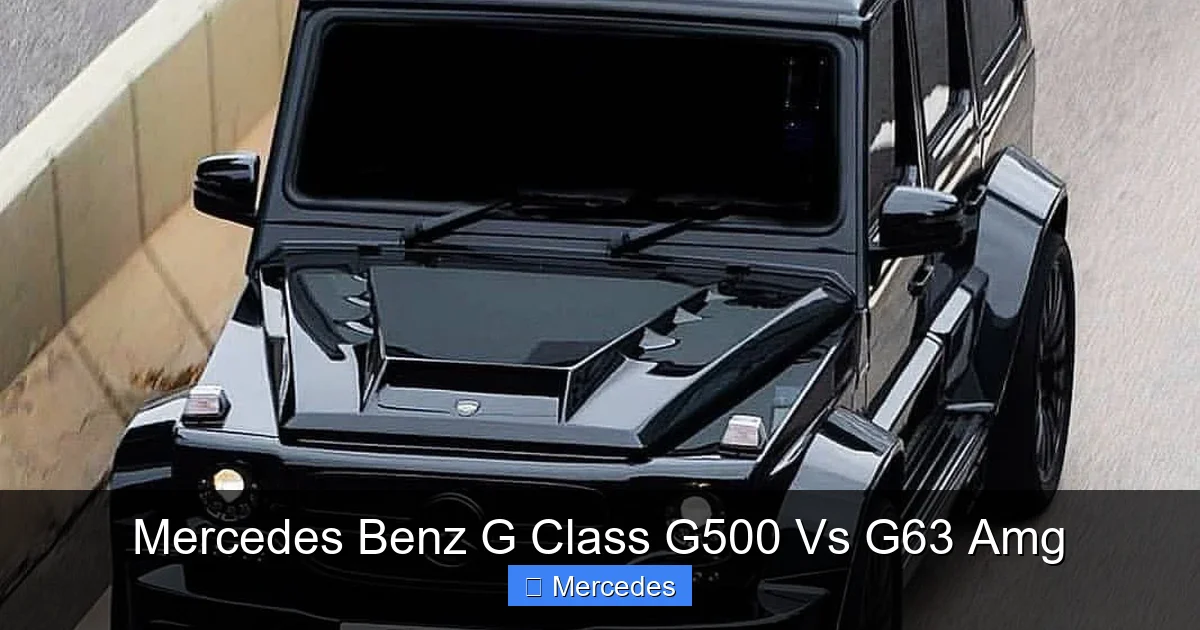
One of the G-Class’s greatest strengths is its unmatched off-road ability. Both the G500 and G63 AMG share core off-road technologies, making them equally capable in challenging environments.
Four-Wheel Drive System
Both models feature the EQ Boost-enhanced 4MATIC+ system, which distributes power dynamically between the front and rear axles. The three locking differentials (front, center, and rear) ensure maximum traction in mud, sand, snow, or rock crawling scenarios.
You can manually lock or unlock each differential via a switch on the dashboard—ideal for customizing your approach based on terrain. For instance, if you’re stuck in deep sand, locking all three differentials helps prevent wheel spin.
Ground Clearance and Approach Angles
With 10.2 inches of ground clearance, the G-Class clears most obstacles with ease. The approach angle is approximately 35 degrees, allowing it to climb steep inclines without scraping the front bumper.
The departure angle is similarly impressive at 29 degrees, meaning you can back down rocky trails without worrying about the rear axle hitting the ground.
Off-Road Modes and Technology
Both cars offer several off-road driving modes:
– Offroad Comfort: Optimized for soft terrain, balancing comfort and capability.
– Offroad High Speed: For sandy or gravel roads at moderate speeds.
– Tunnel Mode: Activates when driving through tight spaces like tunnels or narrow trails.
– Hill Descent Control: Automatically regulates speed when going downhill.
A helpful tip: Use the trail view system—a 360-degree camera that shows obstacles around the vehicle—when navigating technical off-road courses. It’s available on both models and works wonders in low-light or dusty conditions.
Design and Exterior Styling
While the G-Class design remains largely unchanged since its introduction, Mercedes has refined the exterior details to distinguish between the G500 and G63 AMG.
Front and Rear Fascias
The G500 features a more subdued grille with chrome slats and LED headlights. Its bumpers are functional but understated, with integrated fog lights and skid plates.
The G63 AMG sports a larger, more aggressive grille with black mesh and prominent AMG badging. The front fascia includes wider air intakes, flared wheel arches, and signature quad circular headlights with LED matrix technology.
At the rear, the G63 AMG has a sportier bumper with dual exhaust outlets and a more muscular stance. The taillights are also unique, featuring dynamic turn signals that sweep from inside to outside.
Wheels and Aerodynamics
Standard wheels on the G500 are typically 19 or 20 inches, with aerodynamic covers to reduce drag. The G63 AMG comes with larger, multi-spoke forged wheels (20 or 22 inches), often finished in black or silver. These contribute to better handling and a more aggressive look.
Aesthetic tip: Many owners upgrade to matte black or bronze wheel finishes for added visual flair, especially on the G63 AMG.
Customization Options
Both models offer extensive customization through Mercedes’ Designo program, allowing buyers to choose from exclusive paint colors, leather trims, and wood veneers. The G63 AMG also offers AMG Night Package or Carbon Fiber Package for darker, sportier aesthetics.
For example, adding the Carbon Fiber Package to the G63 AMG replaces plastic trim with real carbon fiber, enhancing the cabin’s high-tech, motorsport-inspired vibe.
Fuel Efficiency and Environmental Impact
Efficiency is becoming increasingly important in the luxury SUV market, and both the G500 and G63 AMG have made strides in this area—though their goals differ.
EPA Estimates
According to the EPA, the G500 achieves 11 mpg city / 15 mpg highway / 13 mpg combined. While not a fuel-sipping crossover, it’s significantly more efficient than older G-Class models.
The G63 AMG fares worse at 11 mpg city / 15 mpg highway / 13 mpg combined—identical numbers—but this doesn’t tell the full story. The G63’s engine produces far more power, so you’re paying a bigger environmental cost per mile driven.
EQ Boost Mild Hybrid System
Both models feature the EQ Boost mild-hybrid system, which adds up to 21 horsepower and improves fuel economy by recapturing energy during braking. It also allows for start-stop functionality and glide mode, where the engine shuts off at stoplights.
This system is particularly beneficial in urban environments, where frequent stops maximize energy recovery. Over time, this can add up to noticeable savings at the pump.
Sustainability Considerations
Mercedes is gradually introducing more sustainable materials into the G-Class lineup. For example, recycled plastics and eco-leather are now options in both models. Additionally, the brand has committed to reducing CO2 emissions across its fleet.
If environmental impact is a priority, consider pairing your G-Class with Mercedes’ ECO start/stop button and using eco driving modes to reduce fuel consumption.
Ownership Cost and Resale Value
Owning a G-Class isn’t cheap, but understanding the long-term costs can help you budget wisely.
Pricing Comparison
As of 2024, the base MSRP for the G500 starts around $135,000, while the G63 AMG begins near $147,000. With options, either model can easily exceed $200,000.
The G63 AMG commands a premium due to its performance enhancements, limited availability, and stronger resale value.
Depreciation and Resale
Historically, the G-Class retains value exceptionally well. According to industry reports, both models depreciate slower than average luxury SUVs. After three years, a G500 might retain over 60% of its value, while the G63 AMG could keep closer to 65% due to demand.
Tip: Keep maintenance records and consider certified pre-owned inspections if buying used. A well-maintained G-Class can last 200,000+ miles with proper care.
Maintenance and Insurance
Annual maintenance costs are similar, averaging $2,000–$3,000 per year depending on usage. However, the G63 AMG’s performance components (brakes, tires, suspension) may require more frequent servicing.
Insurance premiums are higher for the G63 AMG due to its performance rating, repair costs, and theft risk. Expect to pay 10–15% more annually for the G63 compared to the G500.
Which One Should You Choose?
Deciding between the G500 and G63 AMG comes down to your lifestyle, priorities, and how you plan to use the vehicle.
If You Value Comfort and Refinement…
Choose the G500. It’s the ideal companion for daily commuting, family trips, and weekend getaways. Its smoother ride, better fuel economy, and quieter cabin make it perfect for long-distance travel.
If You Crave Performance and Prestige…
Go with the G63 AMG. Whether you’re carving mountain passes or turning heads at a car meet, the G63 delivers an exhilarating experience with unmistakable AMG flair.
Hybrid Scenarios
Many owners opt for the G500 as their primary vehicle and reserve the G63 AMG for special occasions. Others buy the G63 as a statement piece, knowing it’s less practical for everyday use but impossible to ignore.
Ultimately, both are icons in their own right. The G500 proves you don’t need loud engines to make a statement, while the G63 AMG shows that power and elegance can coexist.
Final Thoughts
The Mercedes-Benz G-Class continues to defy trends, remaining relevant decades after its debut. Between the refined G500 and the wild G63 AMG, there’s something for everyone—whether you prioritize comfort, capability, or sheer excitement.
The G500 shines as a versatile, luxurious daily driver with serious off-road chops. The G63 AMG stands as a performance legend, blending street cred with track-day thrills. No matter which you choose, you’re investing in a machine that turns heads, builds memories, and handles anything life throws its way.
Before making your decision, test drive both models if possible. Spend time behind the wheel, explore the options, and trust your instincts. After all, the best car isn’t always the fastest—it’s the one that feels right for you.
Frequently Asked Questions
What is the main difference between the G500 and G63 AMG?
The G500 is a refined, efficient luxury SUV with strong performance, while the G63 AMG is a high-powered, sport-focused variant with a more aggressive design and track-ready dynamics.
Can I use the G500 for daily commuting?
Yes, the G500 is ideal for daily use due to its comfortable ride, modern tech, and good fuel economy, making it a practical choice for urban and suburban drivers.
How much does a new G63 AMG cost?
The base price starts around $147,000, but with options and packages, it can exceed $200,000, making it one of the priciest variants in the G-Class lineup.
Do both models have the same off-road features?
Yes, both the G500 and G63 AMG come with three locking differentials, 4MATIC+ AWD, and multiple off-road driving modes, ensuring top-tier trail capability.
Is the G63 AMG harder to maintain than the G500?
The G63 AMG may require more frequent servicing due to its performance components, but both models share many parts and benefit from Mercedes’ reliable service network.
Which G-Class has better resale value?
The G63 AMG typically retains value slightly better than the G500 due to higher demand among enthusiasts and collectors, though both depreciate slower than average luxury SUVs.