
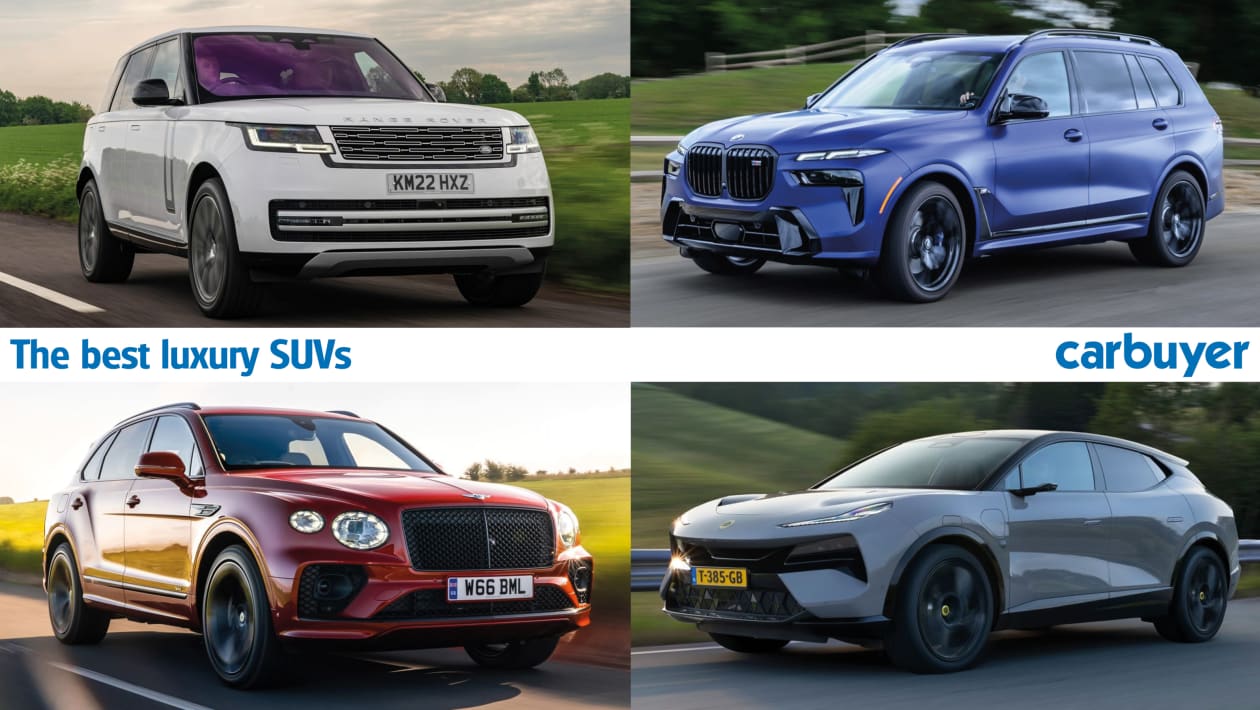
The premium SUV segment has matured into the most contested battlefield in the automotive world. Buyers in 2026 face a paradox: more compelling options than ever, yet harder differentiation between them. This guide cuts through marketing noise with first-hand driving observations, ownership-cost reality checks, and the specific trade-offs each flagship demands — so you can match a vehicle to your actual life, not a brochure.
 Current-generation flagships from Germany, America, and Asia lined up for comparison testing
What Defines a Premium SUV in 2026
The threshold has shifted. A base MSRP above $65,000 no longer guarantees "premium" — the market now expects standard adaptive air suspension, genuine leather on every touchpoint, a 12-inch-plus central display with wireless Apple CarPlay/Android Auto, and Level 2+ driver assistance that actually works in stop-and-go traffic. Brands that still gatekeep these features behind option packages (looking at you, certain German configurators) fall off the shortlist fast. For more on this, see our guide on xt5 premium luxury awd suv.
In practice, the segment splits into three tiers:
- Entry-luxury ($65K–$85K): Genesis GV80, Lincoln Aviator, Volvo XC90 — high content, slight dynamic compromise
- Core premium ($85K–$120K): BMW X5, Mercedes GLE, Audi Q7, Cadillac Escalade — the volume sweet spot
- Ultra-luxury ($120K+): Range Rover, Bentley Bentayga, Mercedes GLS Maybach — bespoke materials, chauffeur focus
Key Buying Criteria That Actually Move the Needle
Third-Row Usability
Most "three-row" premium SUVs treat the rearmost seats as occasional-use insurance. Only the Escalade ESV, Navigator L, and top-rated models across segments like the Rivian R1S deliver adult-size headroom and knee clearance behind the second row. If you regularly carry six or seven, verify third-row hip room exceeds 42 inches and that a dedicated climate zone exists.
Cargo Flexibility
Look for a low load floor (under 30 inches), power-folding second and third rows, and a hands-free liftgate that actually senses your foot — not one requiring a precise shin kick. The Mercedes GLE and BMW X5 now offer 40/20/40 split second rows; the Audi Q7 sticks with 60/40, limiting long-item + passenger combinations. For more on this, see our guide on xt6 premium luxury suv.
Dealer Network Reality
A stellar product backed by a thin dealer body becomes a liability at the first warranty claim. Before committing, call the service department of your nearest two stores: ask for the next available loaner and typical wait for a diagnostic appointment. In rural areas, American flagship details like the Escalade's 3,000+ Cadillac dealers often trump a technically superior import with 300 outlets.
The German Triumvirate: 2026 Model-Year Reality Check
BMW X5 (G05 LCI Refresh)
The mid-cycle refresh brings a 48-volt mild-hybrid system to every engine, shaving 0.3 s off 0–60 mph while improving stop-start smoothness. The xDrive40i's inline-six remains the segment benchmark for linearity; the M60i's V8 adds theater but drinks 14 mpg city. iDrive 9 on the curved display finally supports configurable widgets — a daily-use win.
Trade-off: Ride stiffness on 21-inch M Sport wheels transmits expansion joints unfiltered. Spec 20-inch non-runflats if your commute involves pockmarked pavement.
Mercedes-Benz GLE (W167 Facelift)
MBUX Superscreen (optional) spans the dash, but the base 12.3/12.3-inch duo remains perfectly functional. The GLE 450 4MATIC's 3.0 L inline-six with integrated starter-generator delivers 375 hp and 369 lb-ft with imperceptible transitions. Rear-axle steering (standard on 450, optional on 350) shrinks the turning circle by 2.3 feet — tangible in parking garages.
Trade-off: The standard air suspension leans toward float over control; AMG Line's firmer tuning sacrifices the magic-carpet ride Mercedes is known for. No perfect middle ground yet.
Audi Q7 (2025.5 Update)
The 3.0 TFSI V6 (335 hp) feels strongest in the mid-range where daily passing happens. Quattro Ultra defaults to FWD until slip is detected — seamless but removes the rear-biased character enthusiasts expect. Virtual Cockpit Plus remains the most legible cluster; MIB 3 infotainment finally adds wireless Android Auto.
Trade-off: Third row remains the tightest of the three. Cargo behind row three: 14.2 cu ft vs. GLE's 17.4 and X5's 18.6. If you fold row three weekly, this matters.
American Contenders: Cadillac, Rivian, Lincoln
Cadillac Escalade / ESV
Super Cruise 1.5 now handles lane changes on 400,000+ mapped miles — the most competent hands-free system on highways. The 38-inch curved OLED (3 screens stitched) is visually arresting, though the passenger-side display can wash out in direct sun. Magnetic Ride Control 4.0 reads the road 1,000 times per second; it delivers genuine limo float without wallow.
Trade-off: Body-on-frame architecture means a 34-foot turning circle and 22 mpg combined (6.2 L V8). The independent-rear-suspension Escalade IQ EV arrives late 2026 — worth waiting for if your duty cycle is urban.
Rivian R1S
The only three-row EV with genuine off-road hardware: 14.9 inches ground clearance, quad-motor torque vectoring, and a 3 ft wading depth. 0–60 in 3.0 s (Quad-Motor) feels violent in a 7,200 lb vehicle. Electric adventure contender Rivian's charging network now covers 3,500+ DC fast stalls, 85% reliability per recent driver surveys.
Trade-off: Second-row captain's chairs don't fold flat; third row sits on the battery pack, raising the load floor. No spare tire — repair kit only. Service mobile vans cover 70% of U.S. ZIPs; the rest require a flatbed tow.
Lincoln Aviator Grand Touring PHEV
494 hp / 630 lb-ft from a twin-turbo V6 + electric motor delivers silent suburb commuting (21 mi EV range) and effortless highway passing. Perfect Position 30-way seats with active motion massage are the segment's best. Lincoln's pickup/delivery service (4-year/50k mi) removes dealer visits entirely.
Trade-off: Battery eats the underfloor cubby; third row is kids-only. CHAdeMO charging (slow) only — no CCS DC fast charge on the PHEV.
Asian Excellence: Lexus, Genesis, Infiniti
Lexus TX 550h+ (All-New for 2026)
Toyota's 2.4 L turbo-hybrid (366 hp) pairs with a 6-speed automatic — rare in a CVT world — delivering predictable shift points. Standard Safety System+ 3.0 adds proactive driving assist that centers the lane more naturally than prior gens. Build quality remains the benchmark; first-year reliability risk is low given shared TNGA-K platform with Grand Highlander.
Trade-off: Styling polarizes; infotainment still lacks wireless Android Auto (coming via OTA Q2 2026). Third row best for tweens.
Genesis GV80 (Facelifted)
The 3.5 T-GDI V6 (375 hp) + 8-speed DCT feels sharper than the German torque-converter norm. Standard 21-inch wheels on Sport Prestige trim ride harshly; the base 19-inch setup is the sweet spot. Genesis's 5-year/60k mi complimentary maintenance (including wear items) and valet service remain unique.
Trade-off: Dealer count ~200 — verify proximity. Resale trails Germans by ~8% at 36 months per ALG projections.
Infiniti QX80 (All-New 2025)
Body-on-frame, 3.5 L twin-turbo V6 (450 hp), 9-speed auto, standard air suspension. Klipsch Reference Premiere 24-speaker system is audiophile-grade. ProPILOT Assist 2.1 adds hands-free single-lane operation.
Trade-off: Interior materials lag Genesis/GV80; third row access requires awkward clamber. Fuel economy: 16 mpg combined — lowest in class.
Electrified Luxury: EV and PHEV Options Worth Comparing
| Model | Type | EPA Range / EV Miles | 0–60 mph | DC Fast Charge (10–80%) | Starting MSRP |
|---|---|---|---|---|---|
| BMW iX M60 | EV | 288 mi | 3.6 s | 35 min @ 195 kW | $111,500 |
| Mercedes EQS SUV 580 | EV | 285 mi | 4.9 s | 31 min @ 200 kW | $130,900 |
| Cadillac Escalade IQ | EV | ~300 est. | ~5.0 est. | ~35 min @ 350 kW | ~$130,000 est. |
| Rivian R1S Quad | EV | 321 mi | 3.0 s | 40 min @ 220 kW | $99,900 |
| Range Rover P460e | PHEV | 48 mi EV | 5.3 s | N/A (L2 only) | $115,000 |
| Volvo EX90 Twin Motor | EV | 300 mi | 4.9 s | 30 min @ 250 kW | $81,290 |
Electrified options worth comparing also include the Lexus TX 550h+ (PHEV, 33 mi EV) and Lincoln Aviator Grand Touring (21 mi EV) for buyers not ready to rely on public charging.
Practical note: In 2026, a home L2 charger (240 V / 48 A) adds $1,200–$2,500 installed but recoups in ~18 months vs. public DC pricing. If you lack dedicated parking, a PHEV or efficient hybrid remains the rational choice.
Performance Metrics That Actually Matter
Towing Reality
Published max tow ratings assume ideal conditions: weight-distributing hitch, no passengers, sea level, 100°F max. Real-world deduct 15–20% for altitude, A/C load, and passenger/cargo weight. The Escalade ESV (8,200 lb) and Navigator L (8,700 lb) are the only unibody/body-on-frame premiums that can tow a 6,500 lb travel trailer with a family of four and gear without exceeding GVWR.
Off-Road Credentials
Approach/departure/breakover angles, crawl ratio, and locking diffs separate posers from performers. Only the Range Rover, G-Wagen, Rivian R1S, and Lexus GX 550 (not the TX) offer true low-range gearing. Air suspension lift modes help clearance but lack the articulation of solid axles — relevant if your "off-road" means rocky fire roads, not gravel driveways.
Braking Consistency
Repeated 60–0 mph stops reveal thermal capacity. The Porsche Cayenne Turbo GT (carbon ceramics standard) stops 60–0 in 99 ft ten times consecutively within 3 ft. Most premium SUVs on steel rotors fade 15–20 ft by stop five. If you descend mountain passes loaded, spec carbon ceramics or budget for annual rotor replacement.
Safety & Driver-Assist Systems: Beyond the Checklist
NHTSA and IIHS top ratings are table stakes. The differentiators in 2026:
- Hands-free zone coverage: Super Cruise (GM), BlueCruise (Ford/Lincoln), ProPILOT 2.1 (Nissan/Infiniti) work on mapped divided highways only. Mercedes Drive Pilot (L3) operates to 40 mph in NV/CA — legally distinct but geographically useless for most.
- Intersection assist: Only BMW, Mercedes, and Volvo currently brake for cross-traffic at green lights when a runner is detected.
- Occupant monitoring: Genesis and Rivian use IR cameras for child/pet detection; others rely on ultrasonic sensors prone to false alerts.
External validation: Cross-reference any model's standard vs. optional safety suite against NHTSA's 5-Star Safety Ratings database and IIHS Top Safety Pick+ criteria — both update annually and expose gaps marketing glosses over.
Ownership Costs: The Silent Budget Killers
Depreciation Trajectory
Three-year residual values (ALG 2026 projections):
- Strong (>55%): Range Rover, G-Wagen, Escalade, Rivian R1S
- Average (48–55%): X5, GLE, Q7, GV80, TX
- Weak (<48%): EQS SUV, iX, Aviator, QX80
Leasing shifts depreciation risk to the captive finance company — but money factors on EVs have risen to 0.00250+ (≈6% APR), eroding the advantage.
Maintenance & Tires
Staggered 21/22-inch summer tires on performance trims: $1,800–$2,400/set, 18k–22k mile life. Air suspension compressor/strut failures typically appear at 70k–90k mi ($2,500–$4,000/axle). Extended warranty calculus: Factory plans cap at 7yr/100k mi; third-party (e.g., CARCHEX, Endurance) cover to 150k but exclude wear items. Read the "consequential damage" clause — many deny a failed turbo caused by a $30 oil-feed line.
Insurance
Premium SUV average annual premium (2026, 40yo male, clean record, 12k mi/yr):
- ICE: $2,100–$2,800
- EV: $2,600–$3,500 (higher repair severity, battery replacement risk)
- Rivian R1S: $3,200+ (limited actuarial data, aluminum body repair complexity)
Regional Considerations: Canada, Australia, U.S.
Canada
Block heater standard on most trims; winter tire mandates (Quebec Dec 1–Mar 15, BC highways Oct 1–Apr 30) add $1,200/set. Canadian market specifics favor standard AWD — FWD-based premiums (rare now) face resale penalties. Rivian service mobile vans cover Toronto/Montreal/Vancouver corridors only; elsewhere requires Toronto SC visit.
Australia
Luxury Car Tax (LCT) threshold 2025–26: $80,567 (fuel-efficient) / $71,849 (other). Every dollar above incurs 33% tax — a $150K Escalade carries ~$26K LCT. Australian market specifics demand right-hand-drive conversion compliance; parallel imports void factory warranty. Diesel still preferred for towing/range; EV charging infrastructure sparse outside Sydney/Melb/Brisbane corridors.
United States
Federal EV tax credit ($7,500) now requires final assembly in North America and battery mineral/component sourcing thresholds — Rivian R1S, Cadillac IQ, and Ford/Lincoln EVs qualify; BMW iX, Mercedes EQS, Volvo EX90 do not (2026). State incentives (CA, CO, NY, WA) stack $1,500–$5,000. Section 179 deduction for >6,000 lb GVWR vehicles remains $30,500 (2026) for business use.
Leasing vs. Buying: Premium SUV Edition
Lease when:
- You want the latest safety/tech refresh (cycles now ~4 years)
- Business use allows deduction
- You live in a CARB state with evolving EV mandates
- Residual is >55% and money factor <0.00200
Buy when:
- You'll keep 7+ years (depreciation curve flattens after year 5)
- Annual mileage exceeds 15k (lease excess-mileage penalties $0.25–$0.35/mi)
- You modify (wheels, suspension, roof rack) — lease return charges are punitive
- Lease programs to evaluate for 2026: BMW Ultimate Lease (waives disposition), Mercedes Signature Lease (includes maintenance), Rivian R1S Lease (new, 36 mo/12k mi, MF ~0.00220)
Personalization & Factory Options: What's Worth the Money
Paint & Wheels
Metallic paint ($1,000–$1,500) maintains resale; matte/frozen finishes ($3,500+) require PPF ($6,000+ front end) and complicate touch-ups. Wheel upgrades beyond 20 inches degrade ride and increase tire cost — decline unless aesthetics outweigh function.
Interior Packages
Massaging seats ($1,200–$2,500) get daily use; rear-seat entertainment ($2,000+) is obsolete — kids bring iPads. Panoramic roof ($1,500) adds 60 lbs at the highest point (handling penalty) and reduces headroom 1.2 inches. Verdict: Skip roof, add massaging seats, pocket the difference.
Tech Upgrades
Head-up display ($1,200) pays off in reduced eye fatigue. Night vision ($2,300) detects pedestrians 300 m out — valuable in rural/deer country. 360-degree camera with 3D view ($800) prevents curb rash on 22-inch wheels. Skip gesture control, fragrance systems, and illuminated badges.
Future Outlook: 2026–2028 Product Cycle
- 2026 H2: Cadillac Escalade IQ (EV), Mercedes GLS facelift (mild-hybrid V8), Lexus LX 700h (hybrid V6)
- 2027: BMW X5 "Neue Klasse" architecture (dedicated EV platform, 800V), Range Rover EV, Genesis GV90 (flagship EV)
- 2028: Solid-state battery pilots (Toyota/Lexus, Mercedes) promising 600+ mi / 10-min charge — but volume production unlikely before 2030.
Trend to watch: Subscription features (heated seats, drive modes, ACC) expanding. BMW, Mercedes, and Cadillac now gatekeep hardware-activated features behind monthly fees. Verify which functions are permanent at purchase vs. recurrent — and factor 5-year subscription cost into TCO.
Frequently Asked Questions
Which premium SUV holds value best?
Range Rover, G-Wagen, and Escalade ESV consistently top ALG residuals. Among EVs, Rivian R1S leads due to constrained supply and brand cachet. Lease residuals are set by captives — negotiate the capitalized cost, not the money factor.
Are premium SUVs reliable long-term?
Japanese (Lexus TX, Genesis GV80) and American body-on-frame (Escalade, Navigator) lead 5-year reliability per Consumer Reports. German complexity (air suspension, 48V systems, turbo V8s) increases repair frequency after 60k mi. Budget $2,000–$3,500/yr for out-of-warranty maintenance on Euro models.
What's the real-world EV range in winter?
Expect 20–30% loss at 20°F with heat on. Preconditioning while plugged in recovers ~10%. Heat pumps (standard on EQS SUV, iX, EX90, R1S) halve the penalty vs. resistive heaters. Plan charging stops at 60% indicated range, not EPA.
Can I tow with a premium EV?
Yes — Rivian R1S (7,700 lb), BMW iX (5,000 lb), Mercedes EQS SUV (3,500 lb), Cadillac IQ (~8,000 lb est.). Range drops 40–50% at max tow. No DC fast chargers accommodate trailers; you'll unhitch at every stop. PHEVs (Range Rover, Aviator) or diesels (overseas) remain superior for frequent towing.
How do I avoid dealer markups?
Order from allocation (6–12 week wait) at MSRP — dealers cannot add market adjustment on factory orders per most franchise agreements. Email 5+ dealers with your build sheet; take the lowest written "out-the-door" quote. Rivian, Tesla, Lucid sell direct — no negotiation.
Conclusion
The "best" premium SUV doesn't exist — only the best for your constraints. If third-row adults and towing dominate, the Escalade ESV or Navigator L win. If daily driving dynamics and tech matter most, the BMW X5 xDrive40i or Genesis GV80 3.5T strike the sharpest balance. If you've committed to electric and have home charging, the Rivian R1S delivers unmatched versatility; the Mercedes EQS SUV coddles better on highways.
Test drive your top three back-to-back on your roads — not the dealer's 10-minute loop. Bring your child seats, golf bags, or trailer brake controller. Verify the infotainment learns your voice, the seats support your back at hour three, and the sightlines match your stature. The spec sheet won't tell you any of that.
Ready to compare? Explore top-rated models across segments, dive into flagship luxury benchmarks, or evaluate electrified options worth comparing for your shortlist. Your ideal vehicle awaits — drive with confidence.