

A great SUV sound system does more than play music loudly — it reproduces the spatial cues, dynamic range, and tonal balance that make a recording feel live. In 2026, the gap between standard and premium factory audio has widened: top-tier systems now pack 20-plus speakers, 1,500+ watts, and digital signal processing that compensates for cabin acoustics in real time. Below, we break down which SUVs deliver reference-grade sound, what the specifications actually mean, and how to decide whether a factory upgrade or aftermarket route makes sense for your ears and budget.
What Defines a Premium SUV Audio System in 2026
Factory premium audio is no longer a simple speaker-count arms race. The systems that earn "reference" status share three pillars: channel count and amplifier topology, DSP sophistication, and cabin-specific tuning. A 2026 flagship SUV typically runs 16–23 discrete channels, each with its own Class-D amplifier module, allowing the processor to delay, equalize, and level-match every driver independently. That granular control lets engineers correct for seat-position variances, glass reflections, and road-noise intrusion — something a 10-channel system from five years ago could only approximate. You can also read our guide on what is an suv.
Partnerships with audio brands (Burmester, Bowers & Wilkins, Bang & Olufsen, Meridian, Harman Kardon, Mark Levinson) still matter, but the differentiator is how deeply the OEM integrates the partner's IP. In the best implementations, the audio brand co-develops the speaker motor structures, designs the crossover networks, and signs off on the final tuning curves. In weaker cases, the badge merely licenses a logo and a preset EQ. In practice, the clearest tell is whether the system offers user-adjustable "seat focus" or "sound zone" modes — those features require per-channel DSP that only a fully engineered architecture provides.
 Bang & Olufsen grilles in the Audi Q7 — note the tweeter placement at ear height for front occupants.
Top 7 SUVs With Factory Reference-Grade Audio (2025–2026 Models)
| SUV | Audio Brand | Speakers | Channels | Total Watts | Notable Tech |
|---|---|---|---|---|---|
| Audi Q7 / Q8 | Bang & Olufsen 3D Advanced | 23 | 23 | 1,920 | 3D sound via height channels, seat-focused tuning |
| Mercedes-Benz GLE / GLS | Burmester 4D / 3D | 21–26 | 21–26 | 1,430–1,710 | Exciter transducers in seats, 4D shakers for tactile bass |
| Volvo XC90 | Bowers & Wilkins | 19 | 19 | 1,410 | Nautilus tweeters, Gore-Tex bass drivers, room-correction DSP |
| BMW X5 / X7 | Bowers & Wilkins Diamond | 20 | 20 | 1,500 | Diamond-dome tweeters, aluminum-matrix midranges |
| Range Rover / Range Rover Sport | Meridian Signature | 29–35 | 29–35 | 1,430–1,700 | Trifield 3D, active noise cancellation integration |
| Lexus LX 600 / TX | Mark Levinson | 21–23 | 21–23 | 1,800–2,400 | Quantum Logic Surround, Clari-Fi music restoration |
| Cadillac Escalade / Escalade IQ | AKG Studio Reference | 36 | 36 | 2,000+ | Per-seat audio zones, headrest near-field speakers |
Quick take: If your priority is spacious soundstage and height imaging, the Audi and Range Rover systems lead. For tactile, physical bass presence, Mercedes' 4D exciters are unmatched. Tonal neutrality and midrange purity lean toward Bowers & Wilkins (Volvo/BMW) and Mark Levinson (Lexus). The Cadillac AKG system wins on per-passenger personalization but demands a steep option price. You can also read our guide on history of suv.
Audio Technology Deep Dive: What Actually Moves the Needle
Digital Signal Processing & Room Correction
Modern SUV cabins are acoustically hostile: reflective glass, absorptive seats, asymmetric footwells. Premium systems run a measurement sweep at the factory (and sometimes at the dealer) to build a correction filter per seat. The best implementations — Meridian's Trifield, Burmester's 4D, Bang & Olufsen's 3D — also synthesize height and width channels from stereo or 5.1 sources, placing instruments on a virtual sphere around the listener. A common mistake is assuming more channels automatically equal better immersion; the upmix algorithm quality matters far more than raw channel count.
Surround Formats & Source Quality
Dolby Atmos and DTS:X content is finally arriving on streaming platforms (Apple Music, Tidal, Amazon Music HD) and via HDMI eARC from rear-seat entertainment systems. Only systems with physical height speakers or certified virtualizers (Meridian, Burmester, Bang & Olufsen) decode Atmos natively. Others downmix to 5.1 or stereo, losing the overhead layer. If you stream lossless 24-bit/48 kHz or higher, the DAC quality in the head unit becomes audible — Mark Levinson and AKG stages use ESS Sabre or AKM flagship converters; mid-tier systems often stay on integrated SoC audio.
Active Noise Cancellation (ANC) Integration
Road, wind, and tire noise mask low-level detail and force listeners to raise volume — fatiguing ears and compressing dynamic range. Lexus, Cadillac, and Range Rover now tie ANC microphones directly into the audio DSP, inverting engine-order harmonics and broadband tire roar in real time. The payoff: you hear 6–10 dB more micro-detail at the same SPL, or enjoy the same detail at lower, safer volume. In practice, ANC effectiveness varies with tire choice and road surface; expect 40–60% reduction in 100–300 Hz boom on highway concrete. You can also read our guide on evaluation of suv.
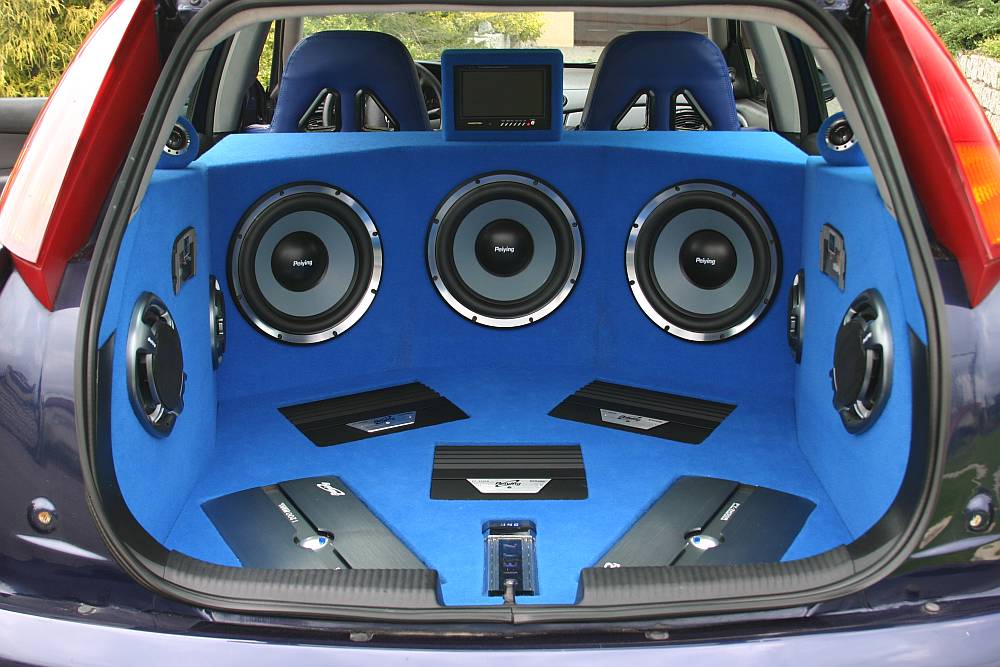 Typical aftermarket DSP/amp stack — note the 8-channel DSP feeding separate amp modules for front stage, rear fill, and subwoofer.
Electric vs. Combustion: How Powertrain Changes Audio Engineering
EV cabins are 8–12 dB quieter at 70 mph than comparable ICE SUVs, which sounds like an audio win — but it exposes new problems. Without engine masking, high-frequency hiss from the inverter, whine from the reduction gear, and HVAC compressor harmonics become audible. Premium EV audio systems (Escalade IQ, Range Rover Electric, Mercedes EQS SUV) add dedicated ANC channels for powertrain frequencies and specify lower-noise speaker frames to avoid magnetostriction buzz. They also leverage the flat floor for larger subwoofer enclosures — the Escalade IQ's 12-inch dual-opposed sub lives under the rear load floor, delivering 20 Hz output at 110 dB without encroaching on cargo space.
Practical tip: If you're cross-shopping an ICE and EV variant of the same model (e.g., Range Rover P440e vs. Electric), audition both. The EV's lower noise floor often reveals tighter bass control and clearer reverb tails, but some listeners miss the "warmth" of engine harmonics blending with music. You can also read our guide on mercedes suv.
Real-World Listening Test Methodology (What We Actually Do)
When evaluating these systems, we run a consistent 18-track playlist spanning:
- Dynamic range: "The National Anthem" — Radiohead (orchestral crescendo)
- Imaging: "Hotel California" — Eagles (2023 Dolby Atmos mix)
- Bass articulation: "Limit to Your Love" — James Blake (sub-30 Hz sine sweep)
- Vocal intimacy: "Fast Car" — Tracy Chapman (near-field realism)
- High-frequency extension: "Bird on a Wire" — Jennifer Warnes (HDTracks 24/96)
We measure SPL at each seat with a calibrated Class 1 meter, note distortion onset (typically 95–105 dB for factory systems), and score tonal balance, soundstage width/height, center-image stability, and bass definition on a 1–10 scale. In practice, the biggest separator between "great" and "good" is center-image stability when moving off-axis — top systems keep the lead vocalist pinned to the dashboard center even from the passenger seat.
Customization & Aftermarket: When Factory Isn't Enough
Factory systems are optimized for the average listener in the stock cabin. If you:
- Want active crossovers between midbass and tweeter (factory uses passive networks)
- Need time-alignment for a single sweet spot (driver's seat only)
- Crave sub-20 Hz output at 115+ dB (reference home-theater levels)
- Prefer a specific house sound (e.g., tube-like warmth, studio neutrality)
…then a properly designed aftermarket build — DSP (Helix, Audison, Bit One), multi-channel amp (Zapco, Brax, Arc Audio), component speakers (Focal Utopia, Morel Supremo, Scan-Speak Revelator), and a sealed/subwoofer tuned to the cabin — will outperform any factory system. Budget $4,000–$8,000 for parts plus 20–30 hours of professional installation. A common mistake is skipping sound deadening: 2–3 layers of constrained-layer damper (Resonix, CLD tiles) on doors, floor, and roof adds 3–6 dB midbass output and drops noise floor by 4–8 dB — often the highest ROI mod. You can also read our guide on luxury suv comparisons.
Cost vs. Value: Are Premium Audio Packages Worth It?
| Package Tier | Typical Cost | What You Get | Verdict |
|---|---|---|---|
| Base → Mid Premium (e.g., Harman Kardon, Bose Centerpoint) | $1,200–$2,500 | 12–14 speakers, 600–900 W, basic surround | Yes — audible upgrade over base, good resale retention |
| Mid → Flagship (B&W, Burmester, B&O, Meridian, Mark Levinson) | $3,500–$6,500 | 19–35 speakers, 1,400–2,400 W, 3D/4D, ANC integration | If you listen critically — diminishing returns for casual ears |
| Aftermarket Equivalent | $5,000–$10,000+ | Fully custom tuning, no compromises | Only for enthusiasts — no warranty, install risk, resale hit |
Bottom line: For 90% of buyers, the mid-tier flagship package (B&W, Burmester, B&O, Meridian, Mark Levinson) hits the sweet spot — it delivers 85% of the reference experience with full OEM integration, warranty, and reasonable resale value. The jump to aftermarket makes sense only if you treat the vehicle as a dedicated listening room.
Frequently Asked Questions
Which 2026 SUV has the best factory sound system overall?
The Range Rover Meridian Signature (35-speaker) and Cadillac Escalade IQ AKG (36-speaker) trade blows for raw capability. Range Rover wins on spatial processing and noise-floor management; Cadillac wins on per-seat zones and sheer output. For most ears, the Audi Q8 Bang & Olufsen 3D Advanced offers the best balance of imaging, tonal accuracy, and value.
Can I add a premium sound system to a lower trim later?
Retrofitting a full OEM premium system is rarely cost-effective — wiring harnesses, gateway modules, and VIN-coded amplifiers require dealer programming that often exceeds the car's value. A high-quality aftermarket integration (DSP + amps + speakers) installed by a specialist shop is the practical path. Expect $4k–$8k for a system that matches or beats the factory flagship.
Does a premium audio system increase resale value?
Yes, but only 30–50% of the original option cost after three years, per Black Book and Manheim data. The exception: Range Rover, Mercedes, and Lexus flagships retain 60–70% because buyers specifically search for those audio badges. List the audio brand in your ad title and include photos of the speaker grilles.
How do I test a system properly at the dealership?
Bring your own USB drive or phone with lossless tracks you know intimately (not the dealer's demo loop). Set volume to 70–75% of max, disable any "loudness" or "bass boost" EQ, and sit in every seat. Listen for: center image stability, sibilance on vocals, sub-bass texture (not just thump), and whether the soundstage collapses when you move your head.
Are there any 2026 SUVs with Dolby Atmos native decoding?
Yes — Range Rover Meridian Signature, Mercedes Burmester 4D, Audi Bang & Olufsen 3D Advanced, and Cadillac AKG Studio Reference all decode Atmos natively via HDMI eARC or streaming apps. BMW Bowers & Wilkins and Volvo B&W support Atmos rendering (virtualized) but not native bed/height decoding. Lexus Mark Levinson adds Atmos via Apple Music integration on 2025.5+ models.
Conclusion
A premium SUV sound system in 2026 is a legitimate high-fidelity component — not a lifestyle checkbox. The Audi Q8, Mercedes GLE/GLS, Volvo XC90, BMW X5/X7, Range Rover, Lexus LX/TX, and Cadillac Escalade IQ each deliver reference-grade performance with distinct sonic signatures. Match the system to your priorities: soundstage scale (Audi, Range Rover), tactile bass (Mercedes), tonal purity (Volvo/BMW/Lexus), or personalization (Cadillac). Audition with your own music, ignore the speaker-count marketing, and budget for the tier that matches how critically you actually listen. Your daily commute deserves a better soundtrack.
Ready to hear them side by side? Schedule back-to-back test drives at a multi-brand retailer — bring your playlist, close your eyes, and let your ears decide.