
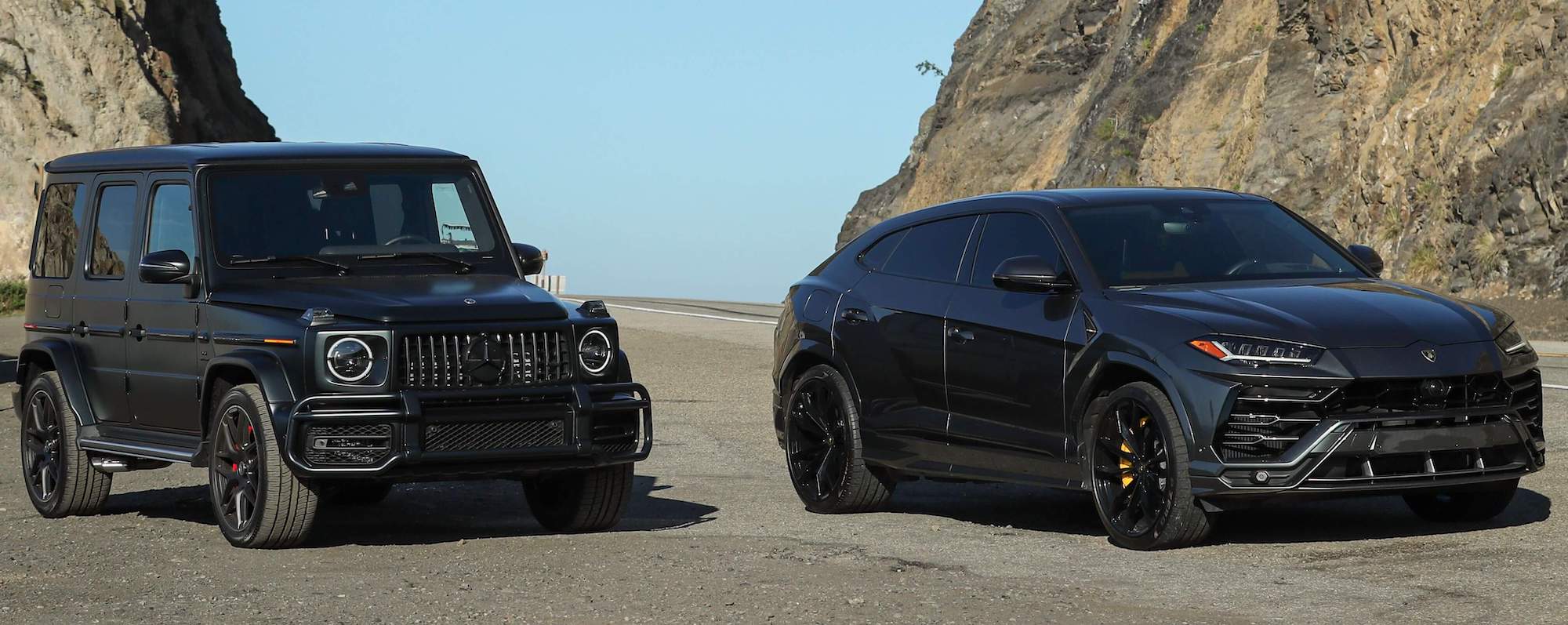
Choosing tires for an SUV isn't just about finding something that fits — it's about matching the contact patch to the way you actually drive. A three-row family hauler that sees mostly highway miles demands something very different from a body-on-frame rig that tackles forest service roads on weekends. Premium tires cost more upfront, but they return that investment through shorter stopping distances, quieter cabins, longer tread life, and often measurably better fuel economy. This guide breaks down the current market by category, explains the specifications that matter, and gives you a practical framework for picking the right set.
Why Premium Tires Matter for SUVs
SUVs carry more weight, sit higher, and often put power through all four corners. Those traits amplify every tire characteristic: flex under load, heat buildup at speed, noise transmission into the cabin, and the leverage that tread blocks have on steering response. A budget tire that feels adequate on a sedan can feel vague, loud, and prone to premature wear on an SUV. In practice, the difference shows up most clearly in panic stops on wet pavement and in the confidence you feel when a lane change becomes necessary at 70 mph. Premium compounds also resist chunking and tearing better when you inevitably clip a pothole or graze a curb. You can also read our guide on history of suv.
 Side-by-side comparison of highway, all-terrain, and winter tread designs for SUV applications.
Understanding Tire Specifications for SUVs
Before comparing models, decode the placard on your driver's door jamb and the markings on the sidewall. The three numbers that matter most are load index, speed rating, and UTQG treadwear grade.
| Specification | What It Tells You | SUV-Specific Guidance |
|---|---|---|
| Load Index (e.g., 113) | Maximum weight per tire at rated pressure | Never go below the OE index; higher is fine but may stiffen ride |
| Speed Rating (e.g., H, V, W) | Sustained speed capability | Match or exceed OE; dropping a letter can void insurance in some regions |
| UTQG Treadwear (e.g., 720) | Relative wear rate vs. reference tire | Compare only within same brand; 600+ indicates long-life touring compound |
| Traction/Temp Grades (AA/A/B, A/B/C) | Wet grip & heat dissipation | AA traction and A temperature are baseline for premium SUV tires |
If you're unsure what your vehicle requires, start with what the manufacturer specifies rather than upsizing on guesswork. You can also read our guide on top luxury suvs of.
Top Premium SUV Tire Categories
No single tire excels everywhere. Manufacturers tune compounds and tread geometry for specific envelopes. Below are the four categories that cover 95 % of SUV use cases, with representative 2026 models that consistently rank high in independent testing.
All-Season Grand Touring — Daily Comfort & Long Life
Built for highway cruising, quiet cabins, and 60,000–80,000 mile warranties. These use silica-rich compounds that stay pliable in cool rain but resist overheating on summer interstates.
| Model | Warranty (mi) | Notable Trait | Best For |
|---|---|---|---|
| Michelin Defender LTX M/S2 | 70,000 | EverTread™ compound resists chip/tear | Three-row crossovers, suburban commuters |
| Continental CrossContact LX25 | 70,000 | EcoPlus+ tech lowers rolling resistance | Fuel-conscious drivers, electric SUVs |
| Bridgestone Alenza AS Ultra | 80,000 | QuietTrack™ noise cancellation | Luxury SUVs where cabin hush is priority |
All-Weather / All-Season Performance — Year-Round Grip With Winter Bite
Carry the Three-Peak Mountain Snowflake (3PMSF) symbol, meaning they meet severe-snow traction standards. Trade-off: slightly shorter tread-life warranties (50,000–60,000 mi) and firmer ride.
| Model | 3PMSF | Warranty (mi) | Standout Feature |
|---|---|---|---|
| Michelin CrossClimate2 | Yes | 60,000 | V-Formation tread locks for dry handling |
| Goodyear Assurance WeatherReady 2 | Yes | 60,000 | Evolving traction grooves open as tire wears |
| Vredestein Quatrac Pro | Yes | 50,000 | Asymmetric pattern tuned for EU wet standards |
Dedicated Winter — Maximum Cold-Weather Safety
Softer compounds and aggressive siping stay grippy below 7 °C (45 °F). Run them only in season; summer heat destroys tread life in weeks. Mount on a second wheel set to simplify changeovers.
Top picks: Nokian Hakkapeliitta 10 SUV (studded option), Bridgestone Blizzak DM-V3, Michelin X-Ice Snow SUV.
All-Terrain / Off-Road — Pavement Manners Meet Trail Capability
Thicker sidewalls, deeper voids, and cut-resistant compounds. Expect more road noise and 1–2 mpg penalty versus highway tires. Look for "AT" (all-terrain) rather than "MT" (mud-terrain) unless you spend most miles off-pavement.
| Model | Ply Rating | 3PMSF | Ideal Use Split |
|---|---|---|---|
| Falken Wildpeak AT4W | SL / XL | Yes | 70 % road / 30 % trail |
| BFGoodrich KO3 | LT / XL | Yes | 60 % road / 40 % trail |
| General Grabber A/TX | SL / XL | Yes | 50 % road / 50 % trail |
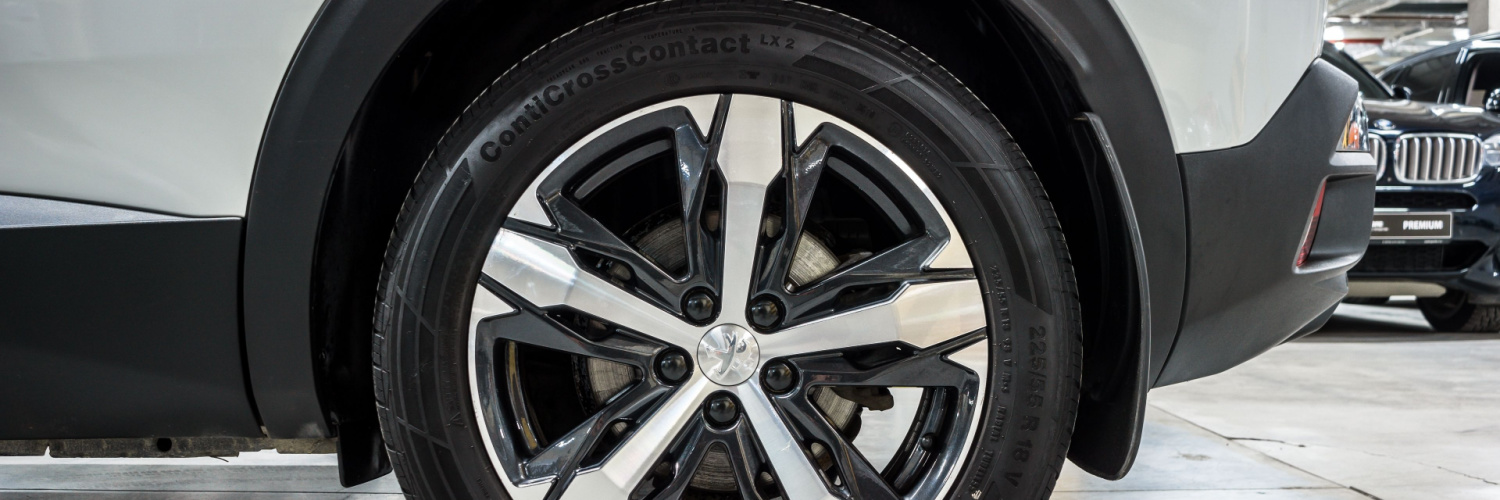 Falken Wildpeak AT4W on a 2024 Toyota 4Runner — a common match for drivers splitting time between commute and fire roads.
How to Match Tires to Your Driving Needs
Ask three questions before shortlisting:
- What percentage of miles are highway vs. gravel vs. snow-packed? Be honest — most owners overestimate off-road use.
- Do you tow or carry heavy loads regularly? If yes, prioritize LT-metric or XL-load tires with reinforced belts.
- How much cabin noise can you tolerate? Grand touring tires can be 3–5 dB quieter than all-terrains at 65 mph.
A common mistake is buying aggressive all-terrains for a vehicle that never leaves pavement — you pay for noise and fuel penalty without ever using the traction. Conversely, fitting grand touring tires on a rig that sees monthly forest-service roads invites sidewall punctures and hydroplaning on muddy grades.
Reading Tire Sidewall Markings
Beyond the size string (e.g., 265/60R18 110H), look for:
- DOT date code — last four digits = week/year of manufacture. Avoid tires older than 18 months.
- M+S vs. 3PMSF — M+S is a geometry claim; 3PMSF is a tested performance standard.
- OE markings (MO, MO1, N0, * etc.) — indicate factory tuning for specific brands. Not required, but can preserve ESC calibration.
Price Ranges and Value Considerations (2026 Estimates)
| Category | Typical Set-of-4 Price (installed) | Cost per 1,000 Warranty Miles* |
|---|---|---|
| Grand Touring | $850–$1,200 | $12–$15 |
| All-Weather | $950–$1,350 | $16–$22 |
| Dedicated Winter | $900–$1,400 | N/A (seasonal) |
| All-Terrain | $1,000–$1,600 | $14–$20 |
*Lower is better. Calculate: (installed price) ÷ (warranty miles ÷ 1,000). Rebates from manufacturers or retailers (often $60–$100 per set) can shift value significantly — check current offers before buying.
Installation, Break-In, and Alignment
Professional mounting protects TPMS sensors and ensures bead seating. After installation:
- Torque wheels to spec in a star pattern; re-check after 50–100 miles.
- Align if old tires showed uneven wear or if suspension work was done. A $120 alignment saves $600 in premature tire replacement.
- Break in new tires for 300–500 miles — avoid hard cornering and panic stops while release agents wear off and compounds seat.
For vehicles with staggered fitments or directional tires, confirm rotation pattern before leaving the shop. Some Toyota SUV trims run square setups that allow full cross-rotation, maximizing tread life.
Maintenance Practices That Extend Tire Life
| Interval | Action | Why It Matters |
|---|---|---|
| Monthly | Check pressure cold (incl. spare) | 1 psi drop ≈ 0.2 % fuel economy loss |
| 5,000–7,500 mi | Rotate per owner's manual pattern | Equalizes wear, preserves warranty |
| 6 months | Inspect tread depth (4/32" min for wet safety) | Legal 2/32" is too late for hydroplaning resistance |
| Annually | Balance check if vibration appears | Prevents cupping, protects suspension bushings |
Store seasonal sets horizontally in opaque bags, off concrete, in a cool dry place. UV and ozone degrade sidewalls faster than tread wear.
Fuel Efficiency Impact: Rolling Resistance Explained
Rolling resistance (RR) accounts for 4–11 % of fuel consumption in light trucks. Low-RR tires use silica-silane compounds and optimized belt angles to reduce hysteresis — energy lost as heat when the tire flexes. The EPA's SmartWay program and NHTSA tire fuel efficiency ratings provide comparative data. In practice, switching from a high-RR all-terrain to a grand touring tire can return 1–2 mpg on a midsize SUV, saving $150–$300 per year at current fuel prices. Electric SUVs benefit proportionally more because every watt-hour counts toward range.
Safety Technologies in Modern Premium Tires
- Run-flat / Self-sealing — Mobility after puncture; trade-offs include stiffer ride and limited repair options. Common on BMW X-series and Mercedes GLE.
- Acoustic foam liners — Cut cavity resonance by 3–5 dB; standard on many EV-focused tires (e.g., Pirelli Scorpion Verde AS Plus).
- Adaptive siping — 3D interlocking sipes stiffen under braking but flex for snow grip. Michelin's EverGrip and Continental's TractionPlus are examples.
- Wear indicators at 4/32" and 2/32" — Visual cues for wet-safety threshold vs. legal minimum.
 Close-up of 3PMSF symbol and DOT date code — verify both before purchase.
Frequently Asked Questions
What Are The Best Premium SUV Tires For Mixed Driving?
For 80 % pavement / 20 % light trail, the Falken Wildpeak AT4W and Michelin CrossClimate2 cover the widest envelope with 3PMSF certification and civilized road manners.
How Long Do Premium SUV Tires Actually Last?
Real-world data shows grand touring tires often deliver 85–100 % of warranty mileage if rotated and inflated correctly. All-terrains average 60–75 % due to chunking on rocky surfaces. Track your own cost per mile — it's the only metric that matters.
Can I Mix Tire Brands Or Categories?
Never mix categories (e.g., winter front / all-season rear) — it destabilizes ESC. Mixing brands of the same category is acceptable if load/speed ratings match, but matching sets preserve predictable handling.
Do Premium Tires Improve Towing Stability?
Yes. XL/LT load-range tires with stiffer sidewalls reduce trailer sway and maintain steering precision at GVWR. Check your door-jamb placard for the required load index when towing.
When Should I Replace Tires Based On Age?
Most manufacturers recommend replacement at 6 years regardless of tread depth; 10 years maximum. The rubber oxidizes, hardening and cracking internally. The DOT code is your definitive reference.
Conclusion
The "best" premium SUV tire is the one that aligns with your actual driving envelope — not the one with the highest marketing budget. Grand touring tires win for quiet, efficient highway miles. All-weather tires earn their keep where winters are real but not extreme. All-terrains belong on vehicles that genuinely leave pavement. Whichever category fits, buy from a retailer that includes road-hazard warranty, free rotations, and alignment checks; those services often outweigh a $20 price difference per tire. Measure your decision in cost per safe mile, and you'll rarely regret the choice.
Ready to compare specific models for your vehicle? Explore our latest SUV reviews and tire match guides for make-specific recommendations.
Related Guides for Deeper Research
If you're shopping for a specific vehicle, our model-level reviews break down factory tire specs, optional wheel sizes, and real-world owner feedback. The 2025 RAV4 XLE Premium overview details the Michelin Primacy Tour A/S fitment and its snow traction limits. For body-on-frame buyers, the 4Runner TRD Off-Road Premium breakdown explains why the stock Falken Wildpeak AT3W often gets swapped before 30,000 miles. Luxury shoppers can cross-reference the Mercedes C300 Premium Package analysis for run-flat versus mobility-kit trade-offs. Finally, if fuel cost is the deciding factor, our gas-price trend tracker contextualizes how rolling-resistance savings compound over a 60,000-mile ownership cycle.