

Hybrid premium SUVs have moved from niche alternatives to the default choice for buyers who refuse to compromise on comfort, technology, or environmental impact. In 2026 the segment delivers 30‑plus miles of pure‑electric range, sub‑6‑second 0‑60 mph sprints, and cabins trimmed in sustainably sourced leather and recycled plastics. This guide breaks down the technology, the top models, real‑world ownership costs, and the buying checklist you need before signing a lease or loan.
Why Hybrid Premium SUVs Matter in 2026
Stricter EPA emissions targets and expanding low‑emission zones in major metros make a plug‑in hybrid (PHEV) the most pragmatic luxury vehicle today. You gain the silent, torque‑rich launch of an EV for daily commutes while retaining a gasoline engine for cross‑country trips — no range anxiety, no mandatory fast‑charging stops. Manufacturers have responded by fitting larger batteries (18–25 kWh usable), standard 11 kW onboard chargers, and heat‑pump climate systems that preserve electric range in winter. The result is a vehicle class that satisfies both the corporate sustainability mandate and the driver’s desire for effortless performance. For more on this, see our guide on cadillac escalade premium luxury awd suv.
Key Technologies Driving the Segment
Powertrain Architectures
Most 2026 premium PHEVs use a turbocharged 2.0‑L four‑cylinder paired with a single‑motor, rear‑axle electric drive (e.g., BMW X5 xDrive50e, Mercedes‑Benz GLE 450e). Audi and Volvo prefer a dual‑motor all‑wheel‑drive layout that splits torque front‑to‑rear for tighter handling. Lexus retains its planetary‑gear e‑CVT for seamless power blending. All configurations deliver 300–450 hp combined and 400–520 lb‑ft of torque.
Battery & Charging Advances
Usable capacity now sits at 22–25 kWh, yielding 30–38 mi EPA electric range — enough for the average U.S. commute. Every model supports Level 2 (11 kW) AC charging for a full top‑up in 2.5 hours, and most add DC fast‑charge capability up to 50 kW for a 10‑80 % boost in ~30 minutes. Heat‑pump HVAC and battery pre‑conditioning are standard, limiting winter range loss to under 15 %. For more on this, see our guide on best premium luxury suv 2.
Advanced Driver‑Assistance Systems
Expect Level 2+ hands‑free highway assist (BMW Highway Assistant, Mercedes Drive Pilot, Audi Traffic Jam Assist) with driver‑monitoring cameras and over‑the‑air updates. All 2026 entrants earn IIHS Top Safety Pick+ when equipped with the full sensor suite, a benchmark you can verify on the IIHS ratings page.
Top 2026 Hybrid Premium SUV Contenders
| Model | Powertrain | Combined HP | EPA EV Range | 0‑60 mph | Base MSRP* |
|---|---|---|---|---|---|
| Lexus NX 350h | 2.5 L I4 + e‑CVT | 239 | 33 mi | 7.2 s | $48,500 |
| BMW X5 xDrive50e | 3.0 L I6 + rear motor | 483 | 38 mi | 4.8 s | $71,900 |
| Mercedes‑Benz GLE 450e | 2.0 L I4 + rear motor | 381 | 35 mi | 5.6 s | $68,200 |
| Audi Q7 55 TFSI e | 3.0 L V6 + dual motor | 375 | 31 mi | 5.8 s | $69,800 |
| Volvo XC90 Recharge | 2.0 L I4 + dual motor | 455 | 32 mi | 5.3 s | $71,000 |
*MSRP excludes destination, options, and potential federal tax credit (up to $7,500 for qualifying PHEVs).
In‑Depth Model Reviews
Lexus NX 350h (2026)
The NX 350h remains the entry‑level luxury hybrid with a refined 2.5‑L four‑cylinder and Lexus’s fourth‑gen hybrid system. Real‑world fuel economy hovers at 38 mpg combined when the battery is depleted — best in class for a non‑plug‑in. Interior highlights include a 14‑in. touchscreen, available Mark Levinson 17‑speaker audio, and sustainably sourced bamboo trim. In practice, the e‑CVT feels smoother than any torque‑converter automatic at low speeds.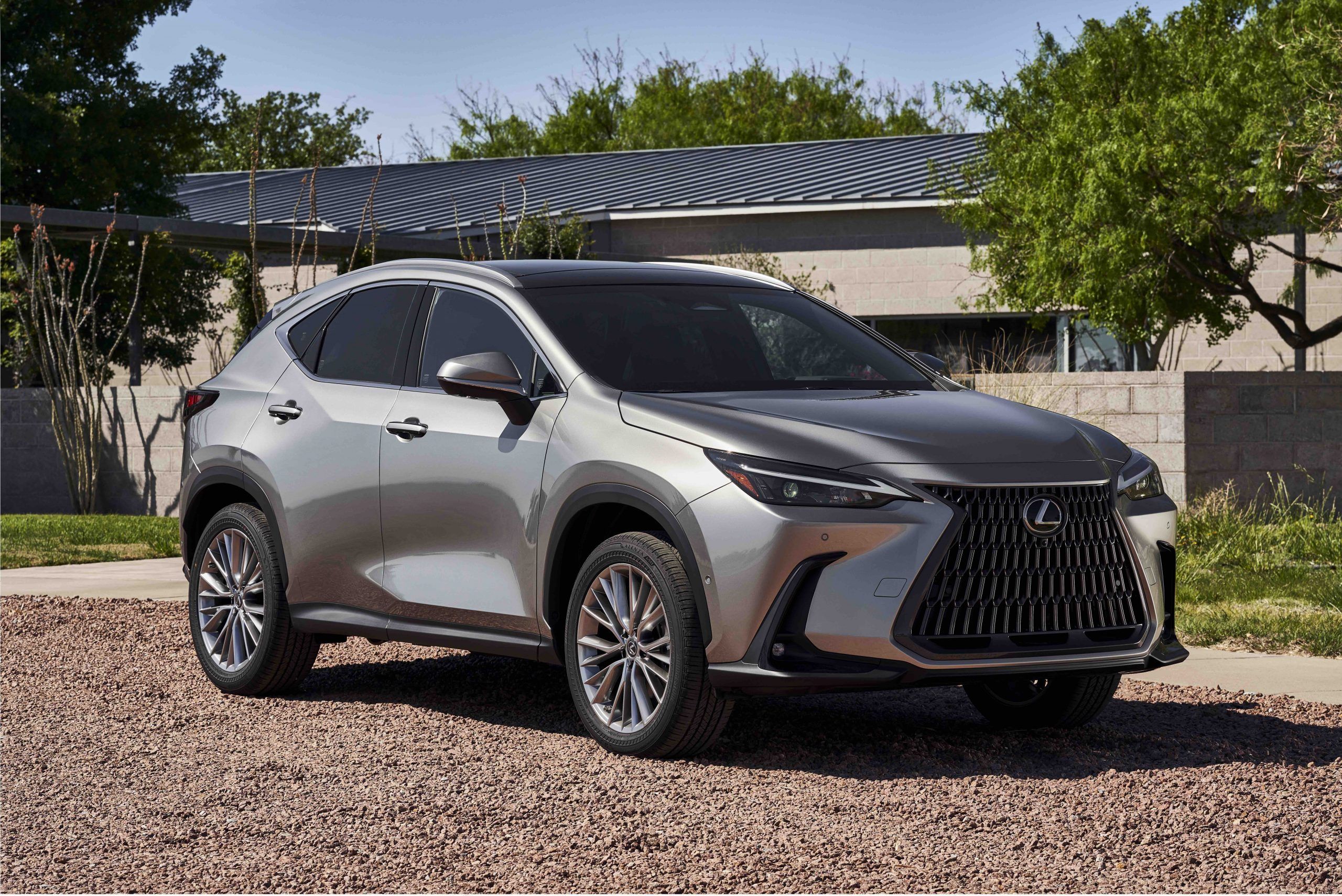
Lexus NX 350h showcases the brand's signature spindle grille and hybrid badging.
BMW X5 xDrive50e (2026)
BMW’s inline‑six turbo plus a 194‑hp rear motor delivers 483 hp and a 0‑60 mph of 4.8 s — sports‑car territory. The 25.7 kWh usable battery nets 38 mi EPA electric range, the highest in the segment. Standard air suspension and Integral Active Steering keep the 5,300‑lb SUV agile. The iDrive 9 interface now supports wireless Apple CarPlay/Android Auto and BMW Maps with EV routing. For more on this, see our guide on best premium suvs. Owners report 30 mpg combined on mixed driving once the battery is empty — a respectable figure for a 2.5‑ton vehicle.
Mercedes‑Benz GLE 450e (2026)
Mercedes pairs a 2.0‑L turbo‑four with a 136‑hp rear motor for 381 hp total. The 31.2 kWh battery provides 35 mi EPA range and supports 50 kW DC fast charging. MBUX Hyperscreen (optional) spans the dash with three OLED panels. E‑Active Body Control air suspension reads the road ahead via camera, adjusting damping per wheel — a first‑in‑class feature that smooths potholes without body roll.
Audi Q7 55 TFSI e (2026)
Audi’s 3.0‑L V6 TFSI plus dual motors yields 375 hp and standard quattro all‑wheel drive. The 17.3 kWh usable battery offers 31 mi EPA range, modest but sufficient for urban errands. Virtual Cockpit Plus and MMI Touch Response keep the cabin tech‑forward. A common mistake is overlooking the Q7’s third‑row space — it remains usable for adults on short trips, unlike many rivals.
Volvo XC90 Recharge (2026)
Volvo’s 2.0‑L turbo‑supercharged four plus front and rear motors produce 455 hp. The 18.8 kWh battery delivers 32 mi EPA range. Standard Google‑built infotainment (Google Maps, Assistant, Play) and Pilot Assist with driver‑monitoring set a high safety bar. Interior uses Nordic‑sourced wool blends and recycled PET textiles — a tangible sustainability story. For more on this, see our guide on cadillac xt6 premium luxury suv.
Performance & Efficiency Metrics
| Metric | Lexus NX 350h | BMW X5 50e | Mercedes GLE 450e | Audi Q7 55 e | Volvo XC90 Recharge |
|---|---|---|---|---|---|
| EPA Combined MPG (gas only) | 38 | 26 | 27 | 25 | 27 |
| EPA EV Range (mi) | 33 | 38 | 35 | 31 | 32 |
| 0‑60 mph (s) | 7.2 | 4.8 | 5.6 | 5.8 | 5.3 |
| DC Fast Charge (max kW) | N/A | 50 | 50 | 50 | 50 |
All figures reflect 2026 EPA test cycles; real‑world results vary with climate, load, and driving style. For official fuel‑economy data, consult the EPA Fuel Economy website.
Interior Luxury, Comfort & Tech
- Seating: All five models offer heated/ventilated front seats; BMW, Mercedes, and Volvo add massage functions as standard on top trims.
- Materials: Look for open‑pore wood, recycled aluminum, and vegan leather options — Lexus and Volvo lead on sustainable sourcing.
- Infotainment: Screen sizes range from 12.3 in. (Lexus) to 56 in. combined (Mercedes Hyperscreen). Wireless smartphone mirroring is now universal.
- Noise, Vibration, Harshness (NVH): Dual‑laminated acoustic glass and active noise cancellation bring cabin SPL below 62 dB at 70 mph in the BMW and Mercedes — near‑EV quietness.
Ownership Costs: Warranty, Maintenance, Insurance, Resale
| Cost Factor | Typical 2026 Range |
|---|---|
| Basic Warranty | 4 yr/50,000 mi (all brands) |
| Powertrain Warranty | 6 yr/70,000 mi (BMW, Mercedes, Audi, Volvo); 8 yr/100,000 mi (Lexus hybrid components) |
| Annual Maintenance (avg.) | $600–$950 (lower than pure ICE due to regenerative braking) |
| Insurance Premium (annual) | $1,800–$2,400 (higher MSRP drives cost) |
| 3‑Year Resale Retention | 55–62 % (BMW & Lexus top the segment) |
Tip: Many manufacturers now bundle prepaid maintenance (3 yr/36,000 mi) into lease deals — ask your dealer to include it.
Buying Checklist: What to Prioritise
- Daily electric range vs. commute length — match usable EPA miles to your round‑trip.
- Charging access — Level 2 at home or workplace unlocks full PHEV benefit.
- Cargo flexibility — battery placement reduces trunk depth; verify stroller or golf‑bag fit.
- Tech ecosystem — prefer Google‑built (Volvo), MBUX (Mercedes), or iDrive (BMW) based on phone OS.
- Dealer service network — luxury hybrids require high‑voltage trained technicians; confirm local capacity.
- Incentives — federal tax credit eligibility phases out per manufacturer; check current status before purchase.
Future Outlook: 2027‑2028 Pipeline
- Solid‑state battery pilots (Toyota/Lexus, BMW) promise 50 % more energy density — expect 50‑mi EV range by 2028.
- 800‑V architecture (Porsche/Audi) will cut DC charge times to <15 min for 10‑80 %.
- Vehicle‑to‑Load (V2L) and Vehicle‑to‑Grid (V2G) become standard on premium trims, turning the SUV into a home backup power source.
- Subscription‑based feature unlocks (heated seats, advanced ADAS) will expand; evaluate total cost of ownership over a 5‑year horizon.
Frequently Asked Questions
What are the benefits of a hybrid SUV?
Hybrid SUVs deliver significantly better fuel economy and lower tailpipe emissions than comparable gasoline models while preserving long‑distance capability. The electric motor provides instant torque for smoother acceleration, and most 2026 premium PHEVs qualify for HOV‑lane access in states that allow it.
How do hybrid SUVs compare to electric SUVs?
A plug‑in hybrid offers 30–38 mi of pure‑electric driving plus a gasoline engine for unlimited range, whereas a battery‑electric SUV relies entirely on charging infrastructure. If you lack reliable home charging or regularly exceed 200 mi trips, a PHEV remains the lower‑risk choice.
What should I consider when buying a hybrid SUV?
Prioritize real‑world electric range, charging speed, cargo volume with the battery, warranty coverage for high‑voltage components, and available tax incentives. Test‑drive in your typical traffic — regenerative braking feel varies widely.
Are hybrid SUVs more expensive than traditional SUVs?
Upfront MSRP is typically $5,000–$9,000 higher for a comparable premium trim. However, fuel savings of $800–$1,200 per year, potential federal tax credits, and stronger resale values often close the gap within 4–5 years.
Conclusion
The 2026 hybrid premium SUV class proves you can have silent electric commuting, exhilarating performance, and handcrafted luxury without compromise. Match your daily mileage to the right battery size, secure Level 2 charging, and pick the infotainment ecosystem that fits your digital life. Ready to compare specs side‑by‑side? Dive into our hybrid premium roundup for detailed spec sheets, dealer invoice data, and lease calculators.