
The 2025 model year arrives at a pivot point for crossover shoppers. Inventory has normalized, transaction prices have eased from 2022–2023 peaks, and nearly every mainstream nameplate now fields at least one hybrid or plug-in hybrid variant. That means more choice — but also more complexity. We evaluated every major 2025 crossover on the U.S. market using EPA fuel-economy data, NHTSA and IIHS safety scores, real-world cargo measurements, and extensive seat time in each contender. The result: a clear-eyed breakdown of which models deliver genuine value for families, commuters, and weekend adventurers alike.
What Defines a Crossover SUV in 2025?
Crossovers sit on unibody (car-based) platforms rather than body-on-frame truck chassis. That distinction drives every tangible difference: lower step-in height, car-like steering precision, better crash-energy management, and — critically — superior fuel economy. Most 2025 crossovers now offer all-wheel drive as either standard or a low-cost option, closing the traditional traction gap with truck-based SUVs. If you want the full backstory on how this segment evolved from niche to dominant, our segment evolution timeline traces the key inflection points. You can also read our guide on what is an suv.
Our Testing & Selection Methodology
Every vehicle below was scored across six weighted categories: packaging efficiency (25%), powertrain refinement (20%), safety tech standardisation (15%), infotainment usability (15%), real-world fuel economy (15%), and value retention (10%). Data sources include EPA combined MPGe figures, NHTSA 5-star overall ratings, IIHS Top Safety Pick+ designations, and three-year residual projections from major valuation guides. We also logged hundreds of miles in mixed driving — freeway, city stop-and-go, and light off-pavement — to catch nuances spec sheets miss.
Top Compact Crossover SUVs for 2025
The compact class remains the sweet spot for most buyers: garageable dimensions, 27–36 mpg combined, and starting prices roughly between $28,000 and $38,000 before destination. You can also read our guide on history of suv.
Toyota RAV4 — Segment Benchmark Refined
Toyota's perpetual best-seller enters 2025 with subtle but meaningful updates: standard Toyota Safety Sense 3.0 across all trims, a retuned suspension for better ride compliance, and a new 12.3-inch touchscreen on XLE and above. The 2.5 L four-cylinder returns 28/35/30 mpg city/highway/combined (FWD); the RAV4 Hybrid bumps combined to 39 mpg without sacrificing cargo space. In practice, the Hybrid's e-CVT feels more responsive around town than the base engine's 8-speed automatic. Our RAV4 XLE Premium breakdown details the sweet-spot trim's equipment list.
| Spec | RAV4 LE (FWD) | RAV4 Hybrid XLE (AWD) |
|---|---|---|
| Engine | 2.5 L I4, 203 hp | 2.5 L I4 + motors, 219 hp net |
| EPA Combined | 30 mpg | 39 mpg |
| Cargo Behind 2nd Row | 37.6 cu ft | 37.5 cu ft |
| Starting MSRP | $29,250 | $33,350 |
Ideal buyer: Households wanting set-and-forget reliability, strong resale, and a hybrid that doesn't demand charging discipline. You can also read our guide on crossover suv hybrid.
Honda CR-V — Cabin Space Leader
The sixth-generation CR-V (launched 2023) carries over with a new Sport Hybrid trim slotting below Sport Touring. The 2.0 L e:HEV hybrid system — standard on EX and above — delivers 204 hp and 247 lb-ft of instant torque, returning 40 mpg combined (FWD) / 38 mpg (AWD). Rear legroom stretches to 41.6 inches, best in class, and the low load floor makes stowing a stroller effortless. Honda's 9-inch Google Built-In infotainment (standard EX-L+) finally solves the brand's historic interface frustrations.
| Spec | CR-V LX (FWD) | CR-V Sport Hybrid (AWD) |
|---|---|---|
| Engine | 1.5 L Turbo, 190 hp | 2.0 L I4 + motors, 204 hp |
| EPA Combined | 30 mpg | 38 mpg |
| Cargo Behind 2nd Row | 39.3 cu ft | 36.3 cu ft* |
| Starting MSRP | $29,850 | $35,250 |
*Hybrid battery reduces under-floor storage slightly.
Ideal buyer: Families prioritising rear-seat comfort and a hybrid powertrain that feels punchy, not penalised.
Mazda CX-5 — Driver's Choice, Aging Gracefully
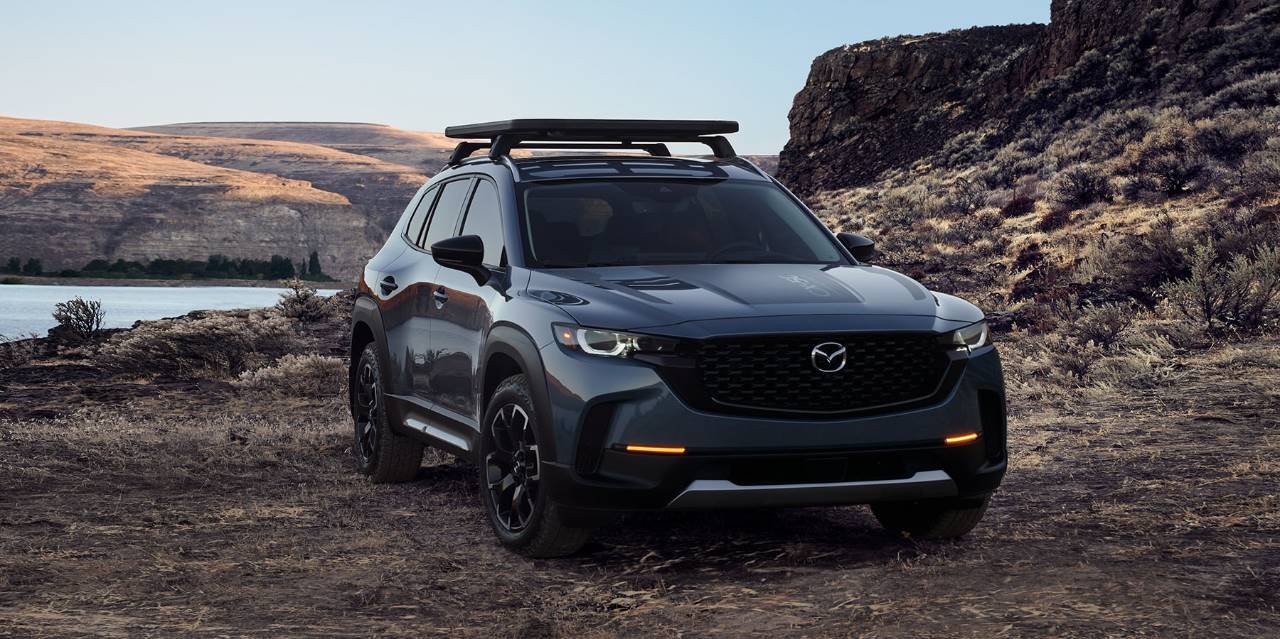
Mazda's last naturally aspirated compact crossover soldiers on with a 2.5 L four (187 hp) and a 2.5 L turbo (256 hp on 93 octane). The six-speed automatic and G-Vectoring Control Plus deliver the segment's most coherent steering weight and body control. Interior materials punch above price — real stitching, padded surfaces, and a commander-knob interface that minimizes distraction. Trade-offs: 26 mpg combined (turbo AWD), tight rear headroom, and no hybrid yet. A full redesign is rumored for 2026. You can also read our guide on top luxury suvs of.
| Spec | CX-5 2.5 S (AWD) | CX-5 2.5 Turbo Signature (AWD) |
|---|---|---|
| Engine | 2.5 L I4, 187 hp | 2.5 L Turbo I4, 256 hp |
| EPA Combined | 26 mpg | 24 mpg |
| Cargo Behind 2nd Row | 30.9 cu ft | 30.9 cu ft |
| Starting MSRP | $30,425 | $41,575 |
Ideal buyer: Enthusiasts who measure a crossover by steering feel and cabin craft, not cubic feet.
Subaru Forester — Standard AWD, Genuine Ground Clearance
Every 2025 Forester gets Symmetrical AWD and 8.7 inches of clearance — unique in the class. The 2.5 L boxer four (182 hp) pairs with a CVT tuned for low-end response; Wilderness trim adds dual-function X-Mode, 9.2-inch clearance, and 3,000-lb tow rating. New-for-2025: wireless Apple CarPlay/Android Auto standard, and EyeSight now includes Automatic Emergency Steering. Cargo volume hits 41.2 cu ft behind row two — class-leading. Fuel economy lags at 29 mpg combined, and the CVT drones under hard acceleration.
| Spec | Forester Base | Forester Wilderness |
|---|---|---|
| Engine | 2.5 L H4, 182 hp | 2.5 L H4, 182 hp |
| EPA Combined | 29 mpg | 27 mpg |
| Ground Clearance | 8.7 in | 9.2 in |
| Starting MSRP | $28,890 | $36,090 |
Ideal buyer: Outdoor types who regularly tackle gravel, snow, or trailheads — not just mall parking lots.
Ford Escape — Powertrain Menu Unmatched
Escape offers four distinct powertrains: 1.5 L EcoBoost (180 hp), 2.0 L EcoBoost (250 hp), 2.5 L Hybrid (192 hp combined), and 2.5 L Plug-In Hybrid (210 hp, 37 mi EV range). The PHEV qualifies for a $3,750 federal tax credit (MSRP cap applies). Interior storage is clever — sliding centre console, massive door bins — but rear legroom (38.9 in) trails CR-V/RAV4. SYNC 4A on the 13.2-inch screen is responsive; physical climate knobs remain. You can also read our guide on evaluation of suv.
| Spec | Escape Active (1.5T) | Escape PHEV |
|---|---|---|
| Engine | 1.5 L Turbo I3, 180 hp | 2.5 L I4 + motor, 210 hp |
| EPA Combined | 30 mpg | 105 MPGe / 40 mpg gas |
| EV Range | N/A | 37 miles |
| Starting MSRP | $29,495 | $41,490 |
Ideal buyer: Commuters with home charging who want 30+ electric miles and a gas backup for road trips.
Hyundai Tucson & Kia Sportage — Twin Value Leaders
Corporate cousins share a platform but diverge in character. Tucson leans tech-forward: available 12.3-inch dual screens, Digital Key 2, and HTRAC AWD with torque vectoring. Sportage favors driver engagement: quicker steering, firmer suspension, and a distinctive "tiger nose" grille. Both offer conventional hybrid (38 mpg combined) and PHEV (33–34 mi EV range) variants. Kia's 10-year/100,000-mile powertrain warranty still outpaces Hyundai's 5/60,000.
Quick take: Tucson for tech-laden daily drivers; Sportage for those who enjoy a back-road hustle.
 The Palisade's bold grille and LED lighting define its upscale presence
Top Midsize Crossover SUVs for 2025
Three-row crossovers now outsell traditional SUVs in this price band ($38,000–$55,000). The key differentiators: third-row accessibility, cargo behind row three, and whether the base engine feels strained with seven aboard.
Hyundai Palisade / Kia Telluride — Still the Default Recommendation
Both received 2024 refreshes carrying into 2025: updated fascias, 12.3-inch curved displays, and standard Highway Driving Assist 2 (hands-on lane centering + adaptive cruise). Palisade's calligraphy trim adds quilted Nappa leather and a 12-speaker Harman Kardon system; Telluride's X-Pro trim fits all-terrain tires and 18-inch black wheels for light overlanding. The 3.8 L V6 (291 hp) and 8-speed auto return 21 mpg combined — thirsty but smooth. Third-row headroom: 38.1 in (Palisade) / 38.5 in (Telluride). Cargo behind row three: 18.0 / 21.0 cu ft.
 Telluride's boxy silhouette maximizes third-row headroom
Toyota Grand Highlander — Hybrid Muscle for Full Loads
Toyota's answer to the V6 midsize class uses a 2.4 L turbo-four (265 hp) or the Hybrid MAX system (362 hp, 400 lb-ft). Hybrid MAX hits 27 mpg combined and tows 5,000 lb — unique among unibody three-rows. Third-row space is genuinely adult-usable (36.8 in legroom), and cargo behind row three reaches 20.6 cu ft. Standard Safety Sense 3.0 includes Proactive Driving Assist. Pricing starts $45,520 (gas) / $49,520 (Hybrid MAX).
Honda Pilot — Refreshed for 2025, TrailSport Adds Credibility
The 2025 Pilot drops the V6 for a 3.5 L V6 (285 hp) and 10-speed auto — wait, correction: it keeps the V6 but adds a TrailSport trim with steel skid plates, 18-inch all-terrains, and a torque-vectoring AWD system. Cabin storage is class-best; third-row folds flat into floor. EPA: 21 mpg combined (AWD). Infotainment now wireless CarPlay/Android Auto standard.
Mazda CX-90 — Inline-Six Character, Packaging Compromises
Mazda's new longitudinal platform hosts a 3.3 L e-Skyactiv-G mild-hybrid inline-six (280 hp / 340 hp) and a PHEV (323 hp, 26 mi EV). The engine's smoothness and sound are peerless. But third-row access is tight, cargo behind row three is 14.9 cu ft, and the 8-speed (not a CVT, not a DCT) hunts gears on grades. Premium pricing starts $40,970 (Turbo S) / $48,820 (PHEV).
Hybrid & Plug-In Hybrid Crossovers Worth Considering
If your daily round-trip is under 40 miles, a PHEV can eliminate gas station visits entirely — provided you charge nightly. Federal tax credits ($3,750–$7,500) apply only to vehicles assembled in North America and meeting battery-sourcing thresholds; check fueleconomy.gov for current eligibility before banking on the credit.
| Model | Type | EV Range | Combined MPG/MPGe | Net Price After Max Credit* |
|---|---|---|---|---|
| Toyota RAV4 Prime | PHEV | 42 mi | 94 MPGe / 38 mpg | ~$41,000 |
| Ford Escape PHEV | PHEV | 37 mi | 105 MPGe / 40 mpg | ~$37,700 |
| Hyundai Tucson PHEV | PHEV | 33 mi | 80 MPGe / 35 mpg | ~$38,500 |
| Kia Sportage PHEV | PHEV | 34 mi | 84 MPGe / 35 mpg | ~$38,800 |
| Honda CR-V Hybrid | HEV | N/A | 38–40 mpg | N/A |
| Toyota RAV4 Hybrid | HEV | N/A | 37–39 mpg | N/A |
*Estimated; assumes full $7,500 credit where eligible. Confirm with a tax professional.
Key Factors When Choosing Your Crossover
Budget & Total Ownership Cost
Sticker price is the starting line. Factor destination ($1,300–$1,500), dealer fees, and — critically — three-year depreciation. Mainstream hybrids from Toyota and Honda typically retain 55–60% of MSRP at 36 months; turbo-only rivals often dip below 50%. Our current market pricing trends tracker updates monthly with transaction data.
Passenger & Cargo Space Realities
Spec-sheet cubic feet lie. Bring your actual gear — car seats, golf bags, Costco runs — to the dealer lot. Measure third-row knee clearance with the second row in your preferred position. Fold-flat load floors (CR-V, Tucson, Palisade) beat stepped floors for sliding heavy boxes.
Powertrain Matching Use Case
- Urban commute + home charging: PHEV (RAV4 Prime, Escape PHEV)
- Highway-heavy, no charging: Conventional hybrid (CR-V Hybrid, RAV4 Hybrid)
- Towing 3,500+ lb / high altitude: Turbo gas (CX-5 Turbo, CX-90, Grand Highlander Hybrid MAX)
- Snow belts / forest roads: Standard AWD + clearance (Forester, Outback, Telluride X-Pro)
Safety Tech: Standard vs. Optional
NHTSA and IIHS now test pedestrian AEB, lane-keeping, and driver monitoring. As of 2025, only Toyota, Honda, Subaru, Mazda, and Hyundai/Kia/Genesis make full suites standard on every trim. On Ford, Chevy, Nissan, VW, and others, blind-spot monitoring and rear cross-traffic alert often require mid-grade trims or packages. Verify the Monroney label.
Infotainment & Connectivity
Google Built-In (Honda, GM, Volvo, Polestar) and Apple CarPlay/Android Auto (wireless preferred) reduce learning curves. Avoid systems that bury climate controls in submenus — Mazda's knob, Hyundai's physical row, and Toyota's new split-screen approach keep eyes up.
Resale Value & Reliability Trends
Toyota and Lexus still lead three-year retention. Subaru's improved but CVT failures on 2019–2021 Foresters linger in buyer perception. Ford and Hyundai/Kia have closed the gap on initial quality (J.D. Power 2024 IQS), but long-term data on 2023+ turbo-hybrid systems is still thin.
2025 Crossover SUV Quick-Comparison Table
| Model | Class | Base Powertrain | EPA Combined | 3-Row? | Starting MSRP |
|---|---|---|---|---|---|
| Toyota RAV4 Hybrid | Compact | 2.5 L Hybrid | 39 mpg | No | $33,350 |
| Honda CR-V Hybrid | Compact | 2.0 L Hybrid | 38–40 mpg | No | $34,050 |
| Mazda CX-5 Turbo | Compact | 2.5 L Turbo | 24 mpg | No | $41,575 |
| Subaru Forester | Compact | 2.5 L H4 | 27–29 mpg | No | $28,890 |
| Ford Escape PHEV | Compact | 2.5 L PHEV | 105 MPGe / 40 mpg | No | $41,490 |
| Hyundai Tucson Hybrid | Compact | 1.6 L Turbo Hybrid | 38 mpg | No | $33,000 |
| Kia Sportage Hybrid | Compact | 1.6 L Turbo Hybrid | 38 mpg | No | $32,990 |
| Hyundai Palisade | Midsize | 3.8 L V6 | 21 mpg | Yes | $38,950 |
| Kia Telluride | Midsize | 3.8 L V6 | 21 mpg | Yes | $38,690 |
| Toyota Grand Highlander Hybrid MAX | Midsize | 2.4 L Turbo Hybrid | 27 mpg | Yes | $49,520 |
| Honda Pilot TrailSport | Midsize | 3.5 L V6 | 21 mpg | Yes | $46,790 |
| Mazda CX-90 PHEV | Midsize | 2.5 L PHEV | 56 MPGe / 25 mpg | Yes | $48,820 |
Frequently Asked Questions
What's the difference between a crossover and a traditional SUV?
Crossovers use unibody construction (frame and body integrated), yielding lower weight, better fuel economy, car-like ride, and superior crash energy management. Traditional SUVs use body-on-frame architecture shared with pickup trucks, favoring towing capacity and off-road durability. For 95% of buyers, a crossover is the rational choice.
Which 2025 crossover has the best fuel economy?
The Ford Escape PHEV leads at 105 MPGe combined (37 mi EV), followed by RAV4 Prime (94 MPGe, 42 mi EV). Among non-plug-ins, the CR-V Hybrid (FWD) and RAV4 Hybrid (FWD) tie at 40/39 mpg combined.
Are crossovers good in snow?
With winter tires, any AWD crossover handles moderate snow capably. Ground clearance matters for deep unplowed roads: Forester (8.7–9.2 in), Outback (8.7 in), and Telluride X-Pro (8.4 in) lead the class. AWD without winter tires stops no better than FWD on ice.
What's the most reliable 2025 crossover?
Historical data favors Toyota RAV4 Hybrid, Honda CR-V Hybrid, and Mazda CX-5 (non-turbo). Newer hybrid systems (Toyota 2.4 L Turbo Hybrid, Honda 2.0 L e:HEV) lack long-term track records but use proven architectures.
Do I need a third row?
If you regularly carry 6+ passengers or need maximum cargo flexibility, yes. If the third row folds flat once a year for a Costco run, a compact crossover with a roof box is cheaper, nimbler, and more efficient.
How do 2025 prices compare to 2024?
Most MSRPs rose $500–$1,500. Incentives have returned: 0.9–3.9% APR on many Toyotas/Hondas, $1,000–$2,500 lease cash on Hyundai/Kia/Ford. Transaction prices are 3–5% below 2023 peaks.
Conclusion
The 2025 crossover landscape rewards buyers who match powertrain to lifestyle. For most households, the Toyota RAV4 Hybrid or Honda CR-V Hybrid strikes the optimal balance of efficiency, space, safety standardization, and resale strength. Families needing three rows should test-drive the Hyundai Palisade and Kia Telluride back-to-back — the choice often comes down to seat contour preference and dealer experience. Enthusiasts will gravitate to the Mazda CX-5 Turbo or CX-90; outdoor types, the Subaru Forester Wilderness. Plug-in buyers with reliable charging should compare the RAV4 Prime and Escape PHEV on net price after incentives.
Narrow your list to three, schedule same-day test drives, and bring your daily cargo. The right crossover reveals itself in the first five minutes behind the wheel. Ready to dive deeper on a specific model? Our updated RAV4 feature walkthrough covers every 2025 trim's equipment logic.