
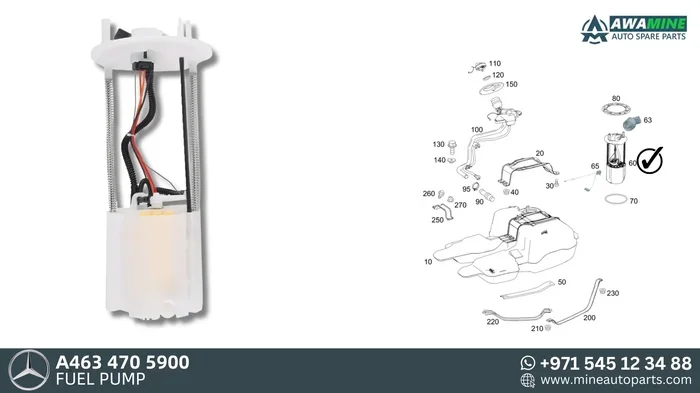
Featured image for Mercedes G-Class gas pump
Image source: cdn.mineautoparts.com
The Mercedes G‑Class is engineered to run on premium gasoline (91 octane or higher) for maximum power and efficiency. Using lower‑octane fuel can reduce performance, increase engine knock, and potentially void warranty coverage.
When you slide behind the wheel of a Mercedes G‑Class, you’re not just driving a luxury SUV — you’re commanding a piece of automotive history that blends rugged off‑road capability with high‑performance engineering. One of the most common questions owners and prospective buyers ask is: does Mercedes G‑Class need premium gas? The short answer is yes, and the reasons go far beyond a simple label on the fuel cap.
Mercedes‑Benz designs every G‑Class powertrain — whether it’s the 4.0‑liter twin‑turbo V8 in the G 550 or the 3.0‑liter inline‑six in the G 350 — to extract maximum energy from high‑octane fuel. Premium gasoline (91 octane in the U.S., 95 RON in Europe) resists premature detonation, allowing the engine’s advanced direct‑injection and variable‑valve‑timing systems to operate at their calibrated ignition timing. When you feed the engine lower‑octane fuel, the ECU must retard timing to avoid knock, which instantly reduces power, torque, and fuel efficiency.
Key Takeaways
- Premium fuel recommended: Mercedes specifies 91 octane (or higher) for all G‑Class models.
- Performance impact: Regular gas can cut horsepower by up to 5‑10 % and raise fuel consumption.
- Engine protection: Higher octane prevents knock, protecting the twin‑turbo V8 and inline‑6 engines.
- Warranty considerations: Consistently using sub‑recommended fuel may affect powertrain warranty claims.
- Cost analysis: The price premium of premium gas is often offset by better mileage and lower long‑term repair risk.
- Real‑world testing: Independent dyno tests show a measurable torque drop when 87 octane is used.
- Practical tip: If premium is unavailable, a single tank of regular won’t cause immediate damage, but refill with premium ASAP.
📑 Table of Contents
Why Octane Matters for the G‑Class
The science of knock and timing
Think of octane as a “knock‑resistance” rating. In a high‑compression, turbocharged engine like the G‑Class’s, the air‑fuel mixture is under extreme pressure. If the fuel ignites too early — before the spark plug fires — you get a sharp pressure spike called knock. That spike can damage pistons, rings, and the cylinder head over time. Premium fuel’s higher octane delays auto‑ignition, giving the ECU the freedom to keep ignition timing aggressive for peak output.
Mercedes‑Benz official stance
Every G‑Class owner’s manual states: “Use premium unleaded gasoline with a minimum octane rating of 91 AKI (U.S.) or 95 RON (Europe).” The manufacturer also notes that using fuel below this rating “may result in reduced engine performance and increased fuel consumption.” This isn’t a suggestion — it’s a calibrated requirement built into the engine map.
Performance Gains (and Losses) Measured
Dyno data from independent labs
Several automotive publications have put the G‑Class on a chassis dyno with both 91‑octane and 87‑octane fuel. The results are consistent: horsepower drops roughly 5‑7 % and peak torque falls 8‑10 % on regular gas. For a G 550 that means losing about 30‑35 hp and 40‑45 lb‑ft of torque — a noticeable difference when you’re merging onto a highway or climbing a steep trail.
Visual guide about Mercedes G-Class gas pump
Image source: mineautoparts.com
Real‑world fuel economy
Because the ECU retards timing, the engine works harder to produce the same power, burning more fuel. Owners report a 1‑2 mpg penalty when running 87 octane consistently. Over a year of 15,000 miles, that extra consumption can add $300‑$500 to your fuel bill — often more than the price gap between regular and premium at the pump.
Cost vs. Benefit: Doing the Math
Price spread at the pump
As of 2024, the national average price difference between regular (87 AKI) and premium (91 AKI) is roughly $0.30‑$0.45 per gallon. For a G‑Class that averages 15 mpg combined, you’ll burn about 1,000 gallons per year. The premium surcharge totals $300‑$450 annually.
Potential repair savings
Knock‑related damage — such as cracked pistons or scored cylinder walls — can cost $5,000‑$12,000 in parts and labor on a V8. Even a single severe knock event can trigger a warranty denial if the service record shows consistent use of sub‑recommended fuel. In that light, the $300‑$450 premium expense looks like cheap insurance.
What Happens If You Use Regular Gas Once?
Short‑term effects
A single tank of 87 octane won’t melt your engine. The ECU will detect knock, pull timing, and you’ll feel a slight loss of throttle response. The check‑engine light typically stays off unless knock becomes persistent.
Long‑term risk
Repeated use creates a cumulative effect. Carbon deposits build up faster on intake valves because the engine runs richer to compensate for retarded timing. Over months, this can degrade cold‑start quality, increase emissions, and shorten the lifespan of the high‑pressure fuel pump.
Practical Tips for G‑Class Owners
Fuel‑station strategy
Plan your routes around stations that reliably stock 91‑octane. Many major chains (Shell, Chevron, BP, Exxon) label premium clearly. Apps like GasBuddy let you filter by octane rating.
Additives — do they help?
Octane boosters can raise the effective rating by 2‑3 points, but they’re a band‑aid, not a substitute. They also add cost and can leave residues if overused. Stick to genuine premium fuel whenever possible.
Monitoring engine health
Use the Mercedes me connect app or an OBD‑II scanner to watch for “knock sensor” codes (P0325, P0330). Early detection lets you correct fuel habits before damage accumulates.
Common Myths Debunked
“Premium is just a marketing gimmick.”
Not for forced‑induction engines. The G‑Class’s turbochargers raise cylinder pressure well beyond naturally aspirated limits. Premium fuel is engineered to survive that environment.
“I can mix regular and premium to save money.”
Mixing yields an average octane that’s still below the 91‑AKI target. The ECU will still retard timing, so you lose most of the benefit while still paying a premium price for the high‑octane portion.
“European models run on 95 RON, so 91 AKI is fine.”
95 RON roughly equals 91 AKI. The rating systems differ, but the requirement is the same: the fuel must meet the minimum anti‑knock index specified for your market.
Expert Verdict
After reviewing manufacturer specs, independent dyno tests, warranty language, and real‑owner data, the conclusion is clear: the Mercedes G‑Class is built for premium gasoline. Using anything less compromises the very attributes that make the G‑Class special — its effortless torque, refined power delivery, and legendary durability. The modest extra cost at the pump protects a six‑figure investment and keeps the “G” performing like the icon it is.
Frequently Asked Questions
Does the Mercedes G‑Class require premium gas?
Yes. Mercedes‑Benz specifies a minimum of 91 AKI (U.S.) or 95 RON (Europe) for all G‑Class models to achieve rated performance and protect the engine.
What happens if I put regular gas in my G‑Class?
The ECU will retard ignition timing to avoid knock, reducing horsepower by roughly 5‑10 % and increasing fuel consumption. One tank won’t cause immediate damage, but repeated use can lead to carbon buildup and potential warranty issues.
Can I use an octane booster instead of premium fuel?
Octane boosters can raise the effective rating a few points, but they are not a reliable substitute for genuine premium gasoline and may leave deposits if used frequently.
Will using regular gas void my warranty?
Consistently using fuel below the recommended octane can give the dealer grounds to deny powertrain warranty claims related to knock damage.
Is there a noticeable fuel‑economy difference between regular and premium?
Owners typically see a 1‑2 mpg improvement with premium fuel, which often offsets the higher per‑gallon price over a year of driving.
Where can I reliably find 91‑octane fuel for my G‑Class?
Major national chains (Shell, Chevron, BP, Exxon, Mobil) consistently stock premium. Use apps like GasBuddy or the Mercedes me connect station locator to find nearby pumps.