
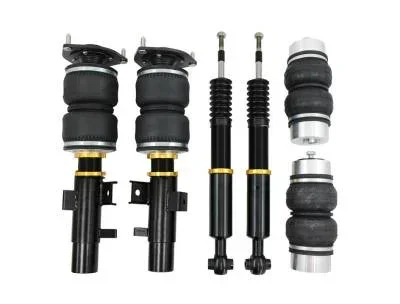
Featured image for Genesis GV80 air suspension closeup
Image source: d2bdmotorwerks.com
Replacing the air suspension on a Genesis GV80 typically costs between $2,500 and $5,500 depending on which components fail and whether you choose dealer or independent repair. The system includes air springs, compressor, and electronic control module — each with different failure rates and price points. Early detection of warning signs like uneven ride height or compressor noise can save thousands by preventing cascading damage to other components.
You’re cruising down the highway in your Genesis GV80, enjoying that signature cloud-like ride, when suddenly the dashboard lights up like a Christmas tree. “Suspension System Service Required.” Your heart sinks. You’ve heard the horror stories about air suspension repairs costing a small fortune. But before you panic, let’s talk about what you’re actually facing — because knowledge is your best defense against surprise repair bills.
The Genesis GV80 air suspension replacement cost isn’t a single number. It’s a range that depends on what failed, where you live, who does the work, and whether you caught the problem early. Think of it like going to the doctor — a simple infection treated early costs pennies compared to emergency surgery after it spreads. Your GV80’s air suspension works the same way. This guide breaks down every cost factor, warning sign, and money-saving strategy so you can make smart decisions without getting taken for a ride.
Key Takeaways
- Average total replacement cost ranges from $2,500 to $5,500 for parts and labor combined, with dealer pricing at the higher end and independent shops offering 20-30% savings.
- Individual air springs cost $400-$800 each while the compressor assembly runs $600-$1,200 and the control module adds $300-$600 if replacement is needed.
- Most GV80 air suspension failures occur between 50,000-80,000 miles though premature failures can happen as early as 30,000 miles in harsh climates or rough road conditions.
- Extended warranty and certified pre-owned coverage often includes air suspension components — verify your coverage before paying out of pocket.
- Aftermarket conversion kits to coil springs cost $1,500-$2,500 installed and eliminate future air system failures but sacrifice the adaptive ride quality.
- Regular maintenance like compressor filter changes every 30,000 miles can extend system life by 2-3 years and prevent premature compressor burnout.
- DIY replacement is possible for experienced mechanics but requires specialized scan tools for calibration — improper installation risks safety system errors and voided warranties.
📑 Table of Contents
- Understanding the GV80 Air Suspension System
- Real-World Genesis GV80 Air Suspension Replacement Cost Breakdown
- Warning Signs Your Air Suspension Is Failing
- Diagnosis: Finding the Real Problem
- Repair Options: From OEM to Conversion Kits
- Preventive Maintenance: Extending System Life
- Warranty, Insurance, and Protection Plans
- Buying a Used GV80: Air Suspension Due Diligence
- Frequently Asked Questions About GV80 Air Suspension
- Making the Smart Financial Decision
- The Bottom Line on GV80 Air Suspension Costs
Understanding the GV80 Air Suspension System
How Air Suspension Works — The Simple Version
Imagine your GV80 is sitting on four heavy-duty balloons instead of metal springs. That’s essentially what air suspension does. Each corner has an air spring — a rubber bladder reinforced with fabric that holds pressurized air. An electric compressor pumps air into a reservoir tank, and a valve block directs that air to each corner as needed. Height sensors at each wheel tell the electronic control module (ECM) exactly how high the car sits. The computer adjusts pressure thousands of times per second to keep the ride level whether you’re solo or loaded with passengers and luggage.
Did You Know? The GV80’s air suspension can adjust ride height by up to 1.6 inches between Comfort and Sport modes. That’s like having two completely different vehicles in one — a luxury cruiser and a planted performance SUV.
Key Components and Their Roles
Your GV80’s system has five main players. The air springs (sometimes called air bags or struts) do the heavy lifting — literally. They support the vehicle weight and absorb bumps. The compressor is the heart, pumping air into the system. The valve block acts like a traffic controller, sending air where it’s needed. Height sensors are the eyes, measuring ride height at each corner. The ECM is the brain, making split-second decisions based on sensor data, driving mode, speed, and load.
When one component fails, it often stresses the others. A leaking air spring forces the compressor to run overtime, which burns it out faster. A stuck valve can over-inflate one corner, damaging that air spring. This cascade effect is why early diagnosis saves so much money.
GV80-Specific Design Features
Genesis engineered the GV80’s system with some clever touches. The compressor has an integrated dryer to remove moisture — critical because water in the lines freezes in winter and corrodes valves. The air springs use a multi-ply rubber construction designed for 100,000+ mile durability. The ECM integrates with the vehicle’s stability control, adjusting damping rates in real-time through the electronically controlled dampers that work alongside the air springs.
Here’s something most owners don’t realize: the GV80 doesn’t have traditional shock absorbers. The air springs handle both springing and damping duties, with the ECM controlling internal valves in each strut to adjust firmness. This integrated design saves weight and space but means when an air spring fails, you’re replacing both the spring and damper as one unit.
Real-World Genesis GV80 Air Suspension Replacement Cost Breakdown
Dealer vs. Independent Shop Pricing
Let’s start with the numbers everyone wants. At a Genesis dealership, expect $3,800 to $5,500 for a complete system overhaul — all four air springs, compressor, valve block, and labor. Independent specialists who focus on European and luxury Asian vehicles typically charge $2,800 to $4,200 for the same work. That’s a 20-30% savings just by choosing the right shop.
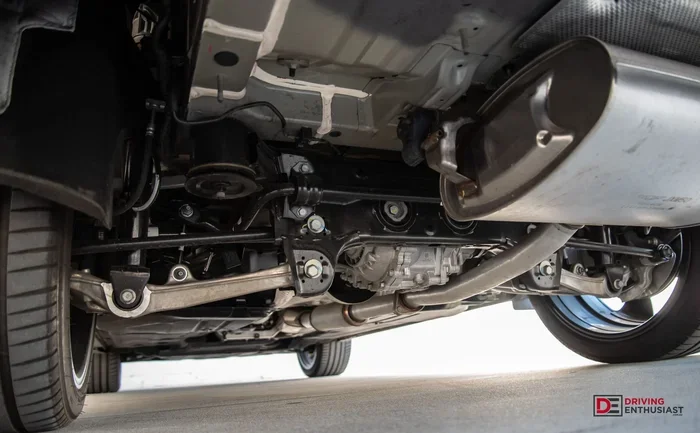
Visual guide about Genesis GV80 air suspension closeup
Image source: drivingenthusiast.com.au
Why the difference? Dealers use 100% OEM parts at full list price and charge $180-$220 per hour labor. Independents often use OEM-equivalent parts from suppliers like Arnott, Bilstein, or Continental — the same companies that make Genesis parts — at 60-75% of dealer cost. Their labor rates run $120-$160 per hour. Both should offer at least a 12-month/12,000-mile warranty on parts and labor.
Component-by-Component Cost Analysis
Most repairs don’t require replacing everything. Here’s what each piece costs installed:
- Single air spring/strut assembly: $850-$1,300 (parts $400-$800 + labor $450-$500)
- Compressor assembly with dryer: $900-$1,500 (parts $600-$1,200 + labor $300-$300)
- Valve block/solenoid pack: $600-$1,000 (parts $300-$600 + labor $300-$400)
- Height sensor (per corner): $250-$400 (parts $100-$200 + labor $150-$200)
- ECM replacement and programming: $800-$1,400 (parts $300-$600 + programming $500-$800)
- Air line/hose repair: $300-$600 depending on accessibility
Pro Tip: If one air spring fails, replace them in pairs (both front or both rear). The labor overlap saves $300-$400 versus doing them separately months apart. The remaining springs on that axle have the same age and mileage — they’re living on borrowed time.
Geographic Price Variations
Where you live matters more than you’d think. Labor rates in San Francisco, New York, and Los Angeles run 30-40% higher than in the Midwest or Southeast. A complete GV80 air suspension job that costs $3,200 in Dallas might hit $4,500 in San Francisco. Parts pricing varies less — maybe 5-10% — because most shops order from the same national distributors.
Climate plays a role too. Northern states with road salt see more valve block corrosion and air line deterioration. Southern states with intense heat experience faster rubber degradation in air springs. Desert climates? Sand intrusion kills compressors faster. These regional factors affect both failure rates and repair complexity.
Model Year and Trim Differences
The 2021-2023 GV80 models share the same basic air suspension architecture. The 2024 refresh introduced updated compressor software and revised air spring mounting points that reduce noise transmission. Early 2021 models had a higher compressor failure rate — Genesis issued a technical service bulletin (TSB) for updated compressor firmware. If you own a 2021, ask your dealer to check for open TSBs before paying for diagnostics.
The 3.5T twin-turbo models sit slightly lower and stiffer from the factory, which puts marginally more stress on the air springs. Over 100,000 miles, this translates to roughly 10-15% shorter air spring life compared to the 2.5T models. Not a huge difference, but worth knowing if you’re buying used.
Warning Signs Your Air Suspension Is Failing
The “Morning Lean” — Classic First Symptom
You walk out to your GV80 in the morning and notice one corner sitting lower than the others. Maybe the driver’s front is two inches down. You start the car, wait a minute, and it rises to normal height. This is the number one early warning sign of an air spring leak. The rubber has developed a small crack or the crimp ring is seeping. Overnight, air escapes. The compressor refills it on startup. But each cycle wears the compressor harder.
Think of it like a slow tire leak. You can keep airing it up, but the nail is still there. The difference? A tire costs $200. An air spring costs $1,000+ installed. And a burned-out compressor adds another $1,200.
Compressor Noise Changes
Get familiar with your GV80’s normal compressor sound. It’s a low, steady hum — like a quiet vacuum cleaner in the next room — that runs for 15-30 seconds after startup or when you add passengers. Warning sounds include: loud grinding (bearing failure), rapid cycling on/off every few seconds (leak somewhere), running continuously for minutes (major leak or stuck valve), or complete silence when the car should be leveling (compressor dead or fuse blown).
Did You Know? The GV80 compressor is rated for roughly 50,000 cycles. A healthy system cycles 5-10 times per day. A system with a leak might cycle 50-100 times daily. Do the math — a leak can age your compressor 10x faster.
Dashboard Warnings and What They Mean
The GV80 gives you several warnings. “Suspension System Service Required” is the generic catch-all. “Vehicle Height Adjusted” appears when the system detects an abnormal ride height and compensates. “Suspension Disabled — Drive Carefully” means the ECM has detected a critical fault and locked the system at a safe pressure — you’ll have a harsh, bouncy ride with no adaptive damping.
Here’s the key: don’t ignore “Vehicle Height Adjusted” just because the car seems fine. That message means the system is working overtime to compensate. Every extra cycle shortens component life. Get it scanned within a week.
Ride Quality Changes
You know how your GV80 feels. If it suddenly feels floaty, bouncy, or harsh over bumps you know well, something’s wrong. Excessive body roll in corners, nose-dive under braking, or rear squat under acceleration all point to pressure loss or damping failure. The air springs contain internal valves that control damping — when those fail, you lose both spring and shock function simultaneously.
Uneven Tire Wear Patterns
This one sneaks up on people. A leaking air spring changes that corner’s ride height and alignment angles. The tire wears on the inside or outside edge in a distinctive feathered pattern. By the time you notice it at rotation time, you’ve ruined a $300 tire and still need the suspension repair. Check your tire tread monthly — it’s a free diagnostic tool.
Diagnosis: Finding the Real Problem
Why Proper Diagnostics Save Money
Here’s a scenario: Your rear left corner is low. Shop A replaces the air spring — $1,100. Two weeks later, the compressor fails from overwork — $1,300. Shop B spends 90 minutes diagnosing, finds the air spring leak and a weak compressor, replaces both — $2,200. Same outcome, but Shop B saved you a second tow, second appointment, and the risk of being stranded.
Always pay for proper diagnostics. A good shop will use a Genesis-compatible scan tool (like Autel MaxiSys, Launch X431, or the factory GDS) to read live data: target vs. actual ride heights, compressor run times, valve states, and stored fault codes. They’ll also do a soap-bubble leak test on every air line and fitting. This takes 60-90 minutes and costs $150-$250 — money that prevents $1,000+ mistakes.
Common Fault Codes and Their Meanings
The GV80 stores specific codes that pinpoint issues:
- C1801-C1804: Height sensor circuit faults (one per corner)
- C1810: Compressor over-temperature / over-run
- C1815: Compressor relay circuit fault
- C1820-C1823: Air spring solenoid valve faults (per corner)
- C1830: Pressure sensor circuit fault
- C1840: Valve block communication error
- C1850: System pressure not reaching target
A single code rarely tells the whole story. C1810 (compressor over-run) usually means a leak elsewhere forced the compressor to work too hard. The compressor is the victim, not the culprit. This is why parts-swapping based on codes alone fails.
DIY Diagnosis Basics
If you’re mechanically inclined, you can do preliminary checks. With the car on level ground, engine off, measure from the center of each wheel to the fender lip. Write down all four measurements. Start the car, let it complete its self-leveling (about 60 seconds), measure again. Any corner more than 10mm (3/8 inch) off spec indicates a problem.
Listen at each corner while a helper cycles through drive modes. You should hear air hissing briefly as valves adjust. Continuous hissing = leak. No sound when mode changes = stuck valve or dead compressor. Spray soapy water on air line connections and the air spring crimp rings — bubbles reveal leaks.
Safety Warning: Never work under a vehicle supported only by air suspension. The system can deflate suddenly. Always use jack stands at the factory lift points. The GV80 weighs 4,800-5,200 pounds — this isn’t optional.
Repair Options: From OEM to Conversion Kits
Option 1: Full OEM Replacement at Dealer
This is the “nuclear option” — most expensive but simplest. You drop the car off, get a loaner, pick it up fixed with a 12-month/12,000-mile nationwide warranty. Genesis dealers use genuine parts with the latest revisions. If your GV80 is under the 5-year/60,000-mile basic warranty or 10-year/100,000-mile powertrain warranty (which covers the compressor as part of the propulsion-adjacent systems), this costs you $0.
Even out of warranty, dealers sometimes offer “goodwill assistance” for known issues — especially on 2021 models with the compressor TSB. Ask nicely. Bring service records showing you maintained the vehicle. Loyalty matters.
Option 2: Independent Specialist with OEM Parts
Many former dealer techs open their own shops. They buy genuine Genesis parts at wholesale (often 20-30% below retail) and charge lower labor rates. You get the same parts, same expertise, better price. Look for shops with ASE Master Technicians and specific Genesis/Hyundai/Kia experience. Ask for references from other GV80 owners.
The trade-off: warranty is typically shop-only, not nationwide. If you’re traveling and something fails, you’re dealing with a new shop. For most owners who stay local, this is the sweet spot.
Option 3: Quality Aftermarket Components
Companies like Arnott, Bilstein, and Continental (the actual OEM supplier for many Genesis parts) sell remanufactured and new aftermarket air springs and compressors. Arnott’s GV80 air springs run $350-$550 each vs. $600-$800 for genuine. Their compressors are $450-$700 vs. $800-$1,100. With labor, you save $800-$1,500 on a full system job.
Quality varies. Stick with brands that offer 2+ year warranties and have been in the air suspension business for 20+ years. Avoid no-name Amazon/eBay specials — they use thinner rubber, weaker crimp rings, and often don’t fit precisely, causing premature wear.
Option 4: Coil Spring Conversion Kits
This is the “never worry about air suspension again” option. Companies like Strutmasters and Arnott sell passive coil spring kits designed specifically for the GV80. Installed cost: $1,800-$2,800. You lose adaptive ride height, automatic load leveling, and drive mode suspension changes. You gain mechanical simplicity, zero compressor failures, zero leaks, and a system that likely outlasts the vehicle.
The ride quality is surprisingly good — modern progressive-rate springs and matched dampers mimic the comfort mode well. But you lose the “magic carpet” feel in Comfort mode and the planted feel in Sport. For owners planning to keep their GV80 past 150,000 miles, conversion often makes financial sense. The first air suspension repair pays for most of the conversion.
Critical: Conversion requires coding the ECM to disable air suspension faults, or you’ll have permanent dash warnings. Some states’ safety inspections flag disabled safety systems. Research your local laws first.
Option 5: DIY Replacement
If you’re an experienced DIYer with a lift, scan tool, and spring compressors, you can replace air springs for parts cost only — roughly $1,600-$2,400 for all four corners using quality aftermarket. The compressor and valve block are easier — 2-3 hours each with basic tools.
The catch: you need a bidirectional scan tool to calibrate the system after repair. The ECM must relearn ride heights, compressor characteristics, and valve flow rates. Without calibration, the system will hunt, error, or default to a safe mode. Tools like Autel MS906 or Launch X431 Pro3 cost $800-$1,200 — worth it if you plan multiple repairs, not for a one-time job.
Preventive Maintenance: Extending System Life
The 30,000-Mile Compressor Service
This is the single most impactful maintenance item. The compressor intake filter clogs with dust, pollen, and road debris. A clogged filter makes the compressor work harder, run hotter, and die sooner. Genesis doesn’t list this in the maintenance schedule — but every air suspension specialist recommends it.
The service: remove compressor, replace intake filter (part cost $25-$40), inspect dryer desiccant (replace if saturated — $60-$100), check mounting bushings, clean heat sink fins. Labor: 1 hour. Total: $150-$250. Do this every 30,000 miles or 3 years. It can add 2-3 years to compressor life.
Air Line and Fitting Inspection
Rubber air lines dry-rot and crack. Plastic fittings become brittle. Once a year (or at every tire rotation), have a shop visually inspect every visible air line and connection. Spray soapy water on fittings while the system cycles. A $15 fitting replaced early prevents a $1,000 air spring replacement later when the line bursts and the spring collapses onto the tire.
Height Sensor Linkage Care
The height sensors attach to the control arms via small plastic links. These can pop off or break from road debris. A disconnected sensor tells the ECM that corner is at full extension — the system dumps air from that corner trying to “lower” it. Result: a slammed corner and confused computer. Check linkages at every oil change. Takes 30 seconds.
Software Updates
Genesis periodically releases ECM firmware updates that improve compressor management, valve response, and fault detection. These are free at any dealer. Ask for “suspension system software updates” at every visit. The 2021 compressor TSB fix was a software update — owners who got it saw compressor failures drop dramatically.
Driving Habits That Preserve the System
Simple habits make a difference. Don’t use the “Jack Mode” (maximum height) for daily driving — it extends air springs to their limit, accelerating wear. Avoid parking with wheels turned to full lock — this stresses air lines at the strut tops. If you’re loading heavy cargo, use the “Load Leveling” mode (if equipped) rather than letting the system figure it out reactively.
Did You Know? The GV80’s air suspension performs a self-check every time you unlock the doors. If you unlock and lock repeatedly without starting, the compressor may cycle unnecessarily. Start the car within 2 minutes of unlocking to let the system complete its initialization.
Warranty, Insurance, and Protection Plans
Factory Warranty Coverage
The GV80’s 5-year/60,000-mile new vehicle warranty covers air suspension defects in materials and workmanship. The 10-year/100,000-mile powertrain warranty covers the compressor (considered part of the propulsion support systems). Corrosion perforation warranty (7-year/unlimited miles) covers air spring mounting points if they rust through.
Key phrase: “defects in materials and workmanship.” Wear and tear isn’t covered. If your air spring fails at 65,000 miles, Genesis will argue it’s wear. But if it fails at 35,000 miles with a manufacturing defect (mold flaw, bad crimp), it’s covered. Document everything.
Certified Pre-Owned (CPO) Benefits
Genesis CPO vehicles get a 10-year/100,000-mile powertrain warranty from the original in-service date plus a 1-year/unlimited-mile comprehensive warranty from purchase date. This comprehensive portion covers air suspension. If you’re buying a used GV80, CPO status is worth $2,000-$3,000 in potential suspension coverage alone.
Extended Warranty Considerations
Third-party extended warranties (Endurance, CarShield, etc.) vary wildly. Most exclude air suspension or cover only the compressor. Read the fine print. Look for “suspension” explicitly listed in covered components. Dealer-offered Genesis Protection Plans are more expensive but cover air suspension comprehensively. For a GV80 you’ll keep past 80,000 miles, a factory-backed plan often pays for itself with one major repair.
Insurance and Road Hazard Coverage
Standard auto insurance doesn’t cover mechanical failure. But if you hit a pothole and destroy an air spring, your collision coverage applies (minus deductible). Some tire/wheel protection plans from dealers or credit cards cover suspension damage from road hazards. Check your benefits — Chase Sapphire Reserve, Amex Platinum, and several dealer plans include this.
Buying a Used GV80: Air Suspension Due Diligence
Pre-Purchase Inspection Checklist
Never buy a used GV80 without a pre-purchase inspection (PPI) that specifically addresses air suspension. A generic “150-point inspection” often misses suspension issues. Insist on:
- Cold-start height check (measure all four corners before and after startup)
- Scan tool live data review (target vs. actual heights, compressor run time)
- Fault code history (not just current codes — cleared codes leave history)
- Compressor current draw test (high draw = worn motor)
- Air spring visual inspection for cracking, dry rot, or rubbing marks
- Test drive in all drive modes over varied surfaces
Cost: $200-$400 at a specialist. The best money you’ll spend.
Red Flags in Vehicle History
Carfax/AutoCheck showing: multiple suspension-related visits, compressor replacement under 50k miles, “vehicle height adjusted” warnings in service notes, alignment services paired with suspension work (suggests ride height issues), or accident history with rear/side impact (can damage valve block and lines).
Negotiating Leverage
If the PPI reveals early signs — slight morning lean, compressor running longer than spec, one height sensor reading off — you have leverage. Get a written repair estimate from a specialist. Deduct that amount (plus 20% for hassle factor) from the purchase price. Or require the seller to fix it before sale with a receipt from a qualified shop.
High-Mileage GV80 Ownership Strategy
Buying a GV80 with 80,000+ miles? Budget $3,000-$4,000 for air suspension work in the first 20,000 miles of your ownership. It’s not “if” — it’s “when.” Factor this into your purchase price. Many high-mileage GV80s are priced as if the suspension is perfect. It rarely is.
Frequently Asked Questions About GV80 Air Suspension
Can I drive with a failed air suspension?
If the system defaults to “limp mode” (fixed pressure, no adaptation), you can drive carefully to a shop. The ride will be harsh, handling unpredictable, and you risk damaging tires, wheels, and the remaining air springs. If a spring has completely collapsed and the tire contacts the fender, do not drive — call a tow truck. The $150 tow saves a $2,000 body repair.
How long does air suspension replacement take?
A single air spring: 2-3 hours. Compressor: 2-3 hours. Full system (4 springs, compressor, valve block): 8-10 hours — typically a full shop day. Add 2-3 hours if the shop needs to order parts. Dealers often have GV80 parts in stock; independents may need 1-2 days for delivery.
Will aftermarket parts void my warranty?
Under the Magnuson-Moss Warranty Act, using aftermarket parts does not void your factory warranty unless the manufacturer proves the aftermarket part caused the failure. However, dealers may deny warranty claims on related components if they see non-OEM parts. Document everything. Keep receipts showing parts meet OEM specs.
Can I replace just the air spring bladder, not the whole strut?
Technically yes — “bladder kits” exist for $150-$250. But the labor is nearly identical to replacing the full strut assembly, and you reuse the old damper, upper mount, and bump stop. False economy. The GV80’s integrated strut design means the damper wears with the spring. Replace the complete assembly.
Does the GV80 have a “jack mode” for tire changes?
Yes. In the vehicle settings menu under “Suspension,” select “Jack Mode.” This disables automatic leveling and locks the current ride height. The system will not lower if a wheel is removed. Always use Jack Mode before lifting the vehicle. Forgetting this can cause the system to over-extend the opposite air spring, damaging it.
What’s the difference between the GV80 and G90 air suspension?
The G90 uses a more complex system with active hydraulic dampers plus air springs. The GV80 uses passive dampers integrated into the air struts with electronic valve control. G90 parts are not interchangeable. G90 repairs typically cost 30-50% more due to system complexity.
Making the Smart Financial Decision
Let’s bring this home with a decision framework. You’re facing a repair quote. How do you choose?
Scenario A: GV80 under 60,000 miles, single air spring leak. Go to the dealer. Fight for goodwill coverage. If denied, use an independent with OEM parts. Cost: $0-$1,300. Don’t convert to coils yet — the rest of the system has plenty of life.
Scenario B: GV80 at 85,000 miles, compressor dead, two air springs leaking. Get quotes for full OEM replacement ($3,500-$4,500) vs. quality aftermarket ($2,500-$3,200) vs. coil conversion ($2,000-$2,800). If keeping the car 3+ years, conversion wins financially. If selling in 1-2 years, aftermarket repair preserves resale value better.
Scenario C: GV80 at 120,000 miles, multiple failures, planning to keep 5+ years. Coil conversion is the clear winner. You’ll spend $2,500 once vs. $3,500+ every 30,000-40,000 miles for air system repairs. The math is brutal but honest.
Scenario D: CPO GV80 at 45,000 miles with warning light. Dealer all the way. It’s covered. Don’t overthink it.
The Bottom Line on GV80 Air Suspension Costs
The Genesis GV80 air suspension replacement cost is significant — there’s no sugarcoating that. But it’s manageable with the right approach. Early detection saves 50-70% versus catastrophic failure. A $200 diagnostic today prevents a $4,000 tow-and-repair tomorrow. Quality independent shops save 20-30% over dealers without sacrificing parts quality. And for long-term owners, coil conversion eliminates the entire category of future expenses.
Your GV80 is a remarkable vehicle. The air suspension is a big part of what makes it special — that effortless glide, the automatic load leveling, the mode-switching personality. With proper care, it delivers 100,000+ miles of that magic. Neglect it, and it becomes the most expensive maintenance item you’ll ever face.
Check your ride heights monthly. Listen to your compressor. Service the filter every 30,000 miles. And when warning lights appear, act fast. Your wallet — and your GV80 — will thank you.