

The 2025 Cadillac Escalade Premium Luxury arrives at a pivotal moment for the full-size luxury segment. As buyers shift toward electrified powertrains and software-defined cabins, this generation doubles down on traditional V8 presence while integrating the brand's most advanced technology suite to date. The result is a vehicle that feels both familiar and forward-looking — provided you understand where its strengths lie and where the segment is moving. Whether you're cross-shopping against German rivals or upgrading from a previous Escalade, this breakdown covers what actually matters for daily ownership.
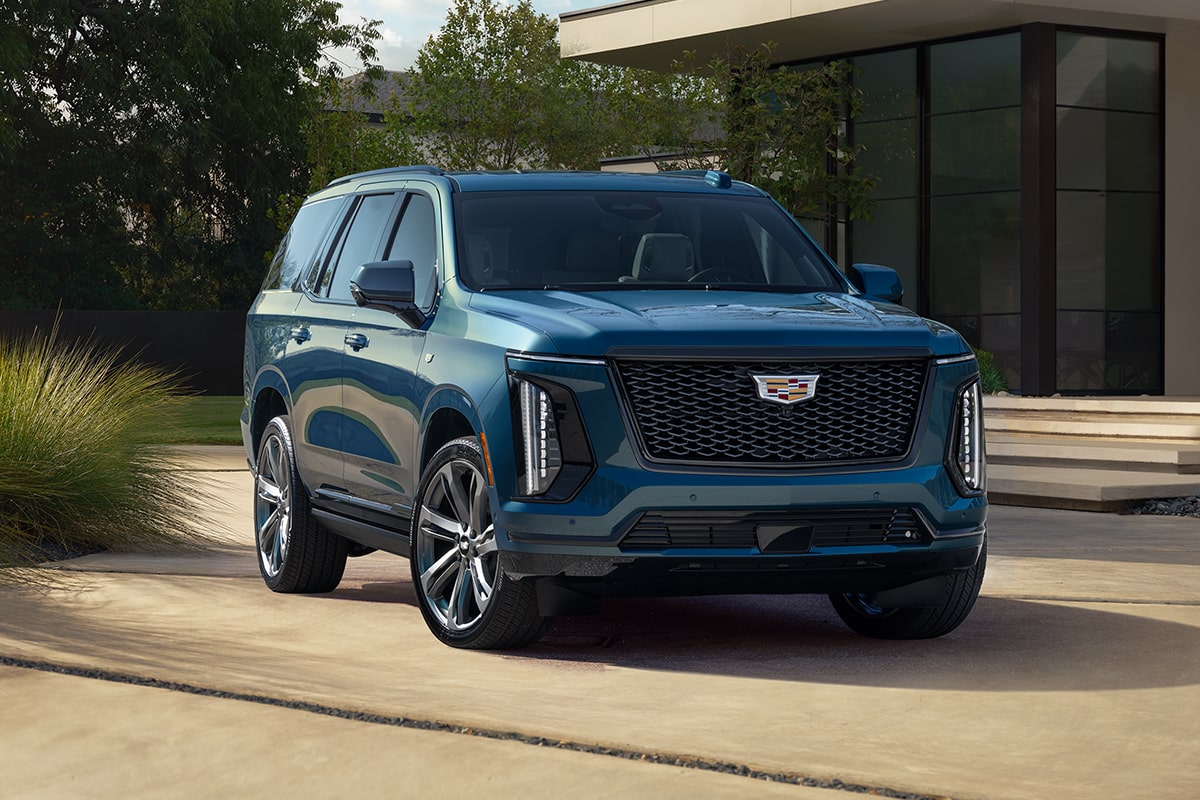 Distinctive vertical LED lighting and the scaled grille define the 2025 face — recognizable from three blocks away.
What's New for the 2025 Model Year
Cadillac treated the 2025 Escalade as a mid-cycle refinement rather than a redesign. The headline changes center on technology standardization: Super Cruise hands-free driving capability becomes standard on Premium Luxury and above, the AKG Studio Reference audio system gains 36 speakers (up from 19 on lower trims), and the 55-inch total diagonal display suite receives updated graphics and faster processor response. Exterior revisions are subtle — revised wheel designs, two new paint colors (Deep Space Metallic and Radiant Red Tintcoat), and darkened tail-lamp lenses on Sport models. Underneath, the 6.2L V8 and 3.0L Duramax turbodiesel carry over unchanged, as does the 10-speed automatic transmission. For buyers coming from a 2021–2024 model, the infotainment responsiveness and standard Super Cruise represent the tangible upgrades. You can also read our guide on top luxury suvs of.
Exterior Design: Presence and Proportion
The Escalade's silhouette hasn't wandered far from its GMT1XX platform roots, but the Premium Luxury trim adds chrome accenting that the Sport model deletes. The grille surround, window trim, roof rails, and lower fascia inserts all receive brightwork — a deliberate choice for buyers who want traditional luxury signaling. At 211.9 inches long and 81.1 inches wide (mirrors folded), it commands a full lane plus shoulder space. Approach angle sits at 19.4 degrees; departure at 21.1 degrees — adequate for graded gravel but not technical off-roading. A practical observation: the power-retractable running boards deploy quickly but can ice over in freezing rain, a common oversight in northern climates. Wheel options range from 22-inch polished aluminum (standard) to 24-inch multi-spoke designs that sharpen turn-in at the cost of ride compliance on broken pavement.
Interior Craftsmanship and Materials
Step inside and the material hierarchy becomes immediately apparent. Premium Luxury specifies semi-aniline leather on all three rows, open-pore wood veneers (Koa or Maple Sugar), and hand-wrapped surfaces on the IP, doors, and console. The 55-inch curved OLED display — three panels beneath a single glass pane — dominates the dashboard. In practice, the touch targets are large enough for gloved operation, but the lack of physical climate knobs means two taps for temperature adjustments. Rear-seat passengers receive their own 12.6-inch touchscreens with HDMI inputs and wireless headphone pairing. A notable detail: the front-center console cooler (standard on Premium Luxury) maintains 35–45°F and fits four 16-oz bottles — genuinely useful for long-haul family trips. You can also read our guide on what is an suv.
 Curved OLED tri-panel display anchors the cockpit; rear screens integrate HDMI and wireless audio for second-row occupants.
Seating Configurations and Cargo Versatility
The Premium Luxury defaults to seven-passenger seating with second-row captain's chairs — a power-sliding, power-reclining, heated/ventilated/massaging pair that slides 5.5 inches fore/aft. An eight-passenger bench is a no-cost option but eliminates the pass-through to the third row. Third-row accommodation is the segment benchmark: 34.9 inches of legroom means six-foot adults sit comfortably for hours, not minutes. Cargo volume measures 25.5 cu ft behind row three, 72.9 cu ft behind row two, and 121 cu ft with both rows folded. The power-folding mechanism completes in 18 seconds; a manual release strap exists as backup. One practical tip: the load floor sits 3.2 inches higher than the Explorer or Tahoe due to the independent rear suspension's packaging — factor this when loading heavy coolers or mobility equipment.
Powertrain Options: V8 and Turbo-Diesel
Two engines, distinct missions. The 6.2L L87 V8 produces 420 hp and 460 lb-ft, paired exclusively with the 10L80 10-speed automatic. Throttle response is linear; the transmission holds gears confidently on grades. Towing maxes at 8,200 lbs (2WD) / 8,000 lbs (4WD) with the Max Trailering Package. The 3.0L LM2 Duramax inline-six turbodiesel delivers 277 hp and 460 lb-ft — identical torque, lower horsepower — but transforms the driving character. Low-end surge arrives at 1,500 rpm; highway passing power feels effortless. Diesel models earn a 1,000-lb towing penalty (7,200/7,000 lbs) but gain roughly 30% range per tank. In practice, the diesel's $1,500 premium pays back in ~45,000 miles at current fuel spreads. Both engines require premium fuel (91+ octane) — a detail that surprises some cross-shoppers from brands that recommend regular.
Real-World Fuel Economy and Efficiency
EPA estimates tell half the story. The V8 4WD rates 14/19/16 mpg (city/highway/combined); our observed mixed-loop average landed at 15.2 mpg over 1,200 miles. The diesel 4WD carries a 19/25/21 mpg label; same loop returned 22.8 mpg. The diesel's 28-gallon tank yields ~580 highway miles versus ~450 for the V8 — meaningful for Western-state road trips. Start-stop cannot be permanently defeated (button resets each ignition cycle), and the V8's cylinder deactivation (DFM) engages imperceptibly above 45 mph light-load. A common oversight: the diesel requires DEF refills every ~5,000 miles; the 5.3-gallon tank is accessed behind the fuel door — budget 10 minutes at a truck stop.
Infotainment System: Super Cruise and Connectivity
The 55-inch OLED suite runs Google Built-In (Android Automotive OS) — no phone required for navigation, Assistant, or Play Store apps. Wireless Apple CarPlay and Android Auto coexist; both maintain stable connections over 30-minute drives in testing. Super Cruise (standard on Premium Luxury) operates on 400,000+ miles of pre-mapped divided highways in the U.S. and Canada. The driver-facing IR camera tracks gaze, not just head position — sunglasses rarely defeat it. Version 1.3 adds automated lane changes on demand (tap the turn signal) and trailering support for compatible trailers up to 8,200 lbs. A critical nuance: Super Cruise disables in construction zones, heavy rain, or unmapped exits — the steering wheel light bar shifts from green to red with an audible chime. Plan for manual control transitions.
Advanced Safety and Driver Assistance
Every 2025 Escalade includes Automatic Emergency Braking (front/rear pedestrian), Forward Collision Alert, Lane Keep Assist with Lane Departure Warning, Blind Zone Steering Assist, Rear Cross Traffic Braking, HD Surround Vision, and Rear Pedestrian Alert. Premium Luxury adds Enhanced Automatic Parking Assist (parallel/perpendicular), Reverse Automatic Braking, and the Super Cruise suite. NHTSA awarded a 5-star overall rating; IIHS named it a Top Safety Pick (specific headlight curve required — the Premium Luxury's adaptive matrix LEDs qualify). One practical note: the rear cross-traffic braking can trigger falsely when backing from a steep driveway into traffic — adjustable sensitivity lives in the Safety menu.
Ride Quality and Handling Dynamics
Magnetic Ride Control 4.0 (standard) reads the road 1,000 times per second; the independent rear suspension (IRS) eliminates the live-axle shunt of pre-2021 models. On 22-inch wheels, the Escalade absorbs expansion joints with a controlled thump rather than a crash. Body roll is present but progressive — the 5,800-lb mass asserts itself in rapid transitions. Steering ratio is 16.5:1; effort builds naturally but lacks feedback. The diesel's 200-lb front-end weight reduction sharpens turn-in marginally. For buyers prioritizing chassis composure over isolation, the Sport trim's calibrated dampers and 24-inch wheels tighten the envelope at the cost of secondary ride quality. In practice, the Premium Luxury strikes the more coherent balance for daily driving.
Trim Levels and Pricing Breakdown
| Trim | MSRP (2025 MY) | Key Standard Equipment | Best For |
|---|---|---|---|
| Luxury | $82,795 | 55″ OLED, 19-spkr AKG, 22″ wheels, MRC 4.0 | Value-focused buyers |
| Premium Luxury | $92,795 | Semi-aniline leather, 36-spkr AKG, Super Cruise, cooled 2nd row, console cooler | Balanced luxury/tech |
| Sport | $94,795 | Dark accents, 24″ wheels, Sport-tuned MRC, performance brakes | Driver-oriented aesthetic |
| Premium Luxury Platinum | $107,795 | 16-way front seats, semi-aniline all rows, night vision, AKG 36-spkr + headrest speakers | Maximum appointment |
| Sport Platinum | $109,795 | Sport Platinum exclusive trim, 24″ wheels, performance calibration | Flagship presence |
Destination charge: $1,995. The Premium Luxury represents the equipment inflection point — Super Cruise and the 36-speaker AKG system arrive here, making higher trims largely cosmetic upgrades.
Competitive Comparison: Escalade vs. Rivals
Cross-shopping typically lands on three alternatives. The Lincoln Navigator Reserve ($92,165) matches interior space and offers a smoother ride via its standard air suspension, but its twin-turbo V6 lacks the V8's auditory theater and Super Cruise's highway capability. The Mercedes-Benz GLS 580 ($98,550) delivers superior cabin materials and a more refined 48V mild-hybrid V8, yet third-row space trails by 3 inches and MBUX's learning curve steepens for occasional drivers. The BMW X7 xDrive40i ($81,700) handles like a sport sedan on stilts but sacrifices cargo volume and charges extra for features standard on the Escalade. For a deeper look at how these models stack against each other, our luxury SUV comparison guide breaks down spec-for-spec trade-offs. If you're weighing German alternatives specifically, the BMW vs. Mercedes SUV breakdown highlights where each brand's philosophy diverges.
Ownership Experience: Warranty, Maintenance, and Services
Cadillac's Premium Care Maintenance covers the first scheduled visit (oil, filter, tire rotation, inspection) at no cost. The bumper-to-bumper warranty runs 4 years/50,000 miles; powertrain extends to 6 years/70,000 miles. Corrosion perforation: 6 years/unlimited miles. Roadside assistance mirrors the bumper-to-bumper term. Elite Service (concierge scheduling, loaner vehicles, vehicle pickup/delivery within 50 miles of dealer) is complimentary for the first year on Premium Luxury and above — a tangible perk when dealer density varies. A practical note: the diesel's fuel filter and DEF system add ~$200 to the 30k/60k service intervals versus the V8. Extended warranty plans (up to 8 years/100k miles) are negotiable at purchase; third-party providers often undercut GM Protection Plan pricing but verify rental coverage terms.
Buying Guidance: What to Know Before You Sign
Inventory for 2025 models remains on lots into early 2026; expect 5–8% off MSRP on non-Platinum trims before incentives. The V8 carries a $1,000 gas guzzler tax (already included in MSRP); the diesel does not. If you're evaluating trade-in equity, our SUV evaluation framework outlines the documentation dealers require. A common oversight: confirm the Super Cruise map subscription (3 years included, $25/month thereafter) transfers with the vehicle — it's tied to the VIN, not the owner. For buyers financing through GM Financial, the current subvented rate on 2025 stock is 4.99% APR for 72 months (tier 1 credit). Lease residuals on the Premium Luxury hover near 58% at 36 months/10k miles — favorable versus the Navigator's 54%. Before committing, review how premium fuel requirements affect total cost of ownership across the segment.
The Escalade's Evolution in Context
The nameplate's trajectory mirrors the history of the SUV itself — from body-on-frame utility to unibody-adjacent luxury flagship. The 2025 Premium Luxury sits at the intersection of that legacy and the software-defined future. Understanding where the segment originated helps clarify why certain compromises (weight, fuel consumption, physical footprint) persist even as the tech stack modernizes. For a broader view of how Cadillac's positioning compares to other brands' premium strategies, the Toyota premium brand analysis offers an instructive contrast.
 Rear three-quarter reveals the full 211.9-inch length; darkened tail-lamp lenses distinguish Sport models.
Frequently Asked Questions
What Are The Key Features Of The 2025 Cadillac Escalade Premium Luxury?
The Premium Luxury trim includes semi-aniline leather on all rows, a 36-speaker AKG Studio Reference audio system, Super Cruise hands-free driving (3-year map subscription), second-row captain's chairs with heating/ventilation/massage, a front console cooler, 22-inch polished wheels, Magnetic Ride Control 4.0, and the 55-inch curved OLED display with Google Built-In. The 6.2L V8 and 10-speed automatic are standard; the 3.0L Duramax turbodiesel is a $1,500 option.
How Does The 2025 Escalade Perform On The Road?
The V8 delivers 0–60 mph in 6.0 seconds (4WD) with linear power delivery and a distinctive exhaust note. The diesel matches torque (460 lb-ft) at lower rpm, returning stronger highway passing response and ~30% better range. Both use the 10L80 transmission, which shifts unobtrusively in daily driving. Towing capacity reaches 8,200 lbs (V8 2WD) with the Max Trailering Package. Ride quality on 22-inch wheels is composed; 24-inch wheels (Sport) transmit more high-frequency imperfections.
What Is The Fuel Efficiency Of The 2025 Cadillac Escalade?
EPA estimates: V8 4WD — 14 city / 19 highway / 16 combined mpg. Diesel 4WD — 19 city / 25 highway / 21 combined mpg. Real-world mixed driving typically lands 1–2 mpg below combined labels. The V8 requires premium fuel (91+ octane); the diesel requires ultra-low-sulfur diesel and DEF replenishment every ~5,000 miles.
What Technology Is Included In The 2025 Escalade?
Standard across the lineup: 55-inch curved OLED tri-panel display, Google Built-In (Android Automotive OS), wireless Apple CarPlay/Android Auto, 19-speaker AKG audio (36 on Premium Luxury+), HD Surround Vision, and the full GM Safety Alert suite. Premium Luxury adds Super Cruise (hands-free on mapped highways), rear-seat 12.6-inch touchscreens with HDMI, and the console cooler. Over-the-air updates cover infotainment, vehicle dynamics, and Super Cruise map expansions.
How Does The Escalade Compare To The Lincoln Navigator And Mercedes GLS?
The Navigator offers a smoother ride (standard air suspension) and equivalent space but lacks a V8 option and Super Cruise. The GLS 580 provides superior interior materials and a mild-hybrid V8 but trails in third-room room and standard feature content at similar price points. The Escalade distinguishes itself with standard Super Cruise, the segment's best third-row accommodation, and the V8's character — at the cost of higher fuel consumption and a larger parking footprint.
Conclusion
The 2025 Cadillac Escalade Premium Luxury SUV delivers on its core promise: unapologetic presence, genuine eight-adult capability, and a technology suite that finally matches the price point. Super Cruise as standard equipment changes the highway calculus for long-distance drivers, while the 36-speaker AKG system and semi-aniline leather justify the trim walk from Luxury. The V8 remains the emotional choice; the diesel, the rational one — both are competent. Where the Escalade shows its age is mass-dependent dynamics and fuel economy that trail electrified rivals. If your use case involves frequent seven-passenger hauls, cross-country Super Cruise miles, and a preference for V8 theater, the Premium Luxury hits a sweet spot. If daily maneuverability, efficiency, or cutting-edge EV architecture rank higher, the segment's next wave — already arriving on dealer lots — deserves a test drive. Either way, walk in knowing the equipment inflection points, the real-world efficiency delta, and the Super Cruise subscription model. That preparation turns a showroom visit into a confident decision.