
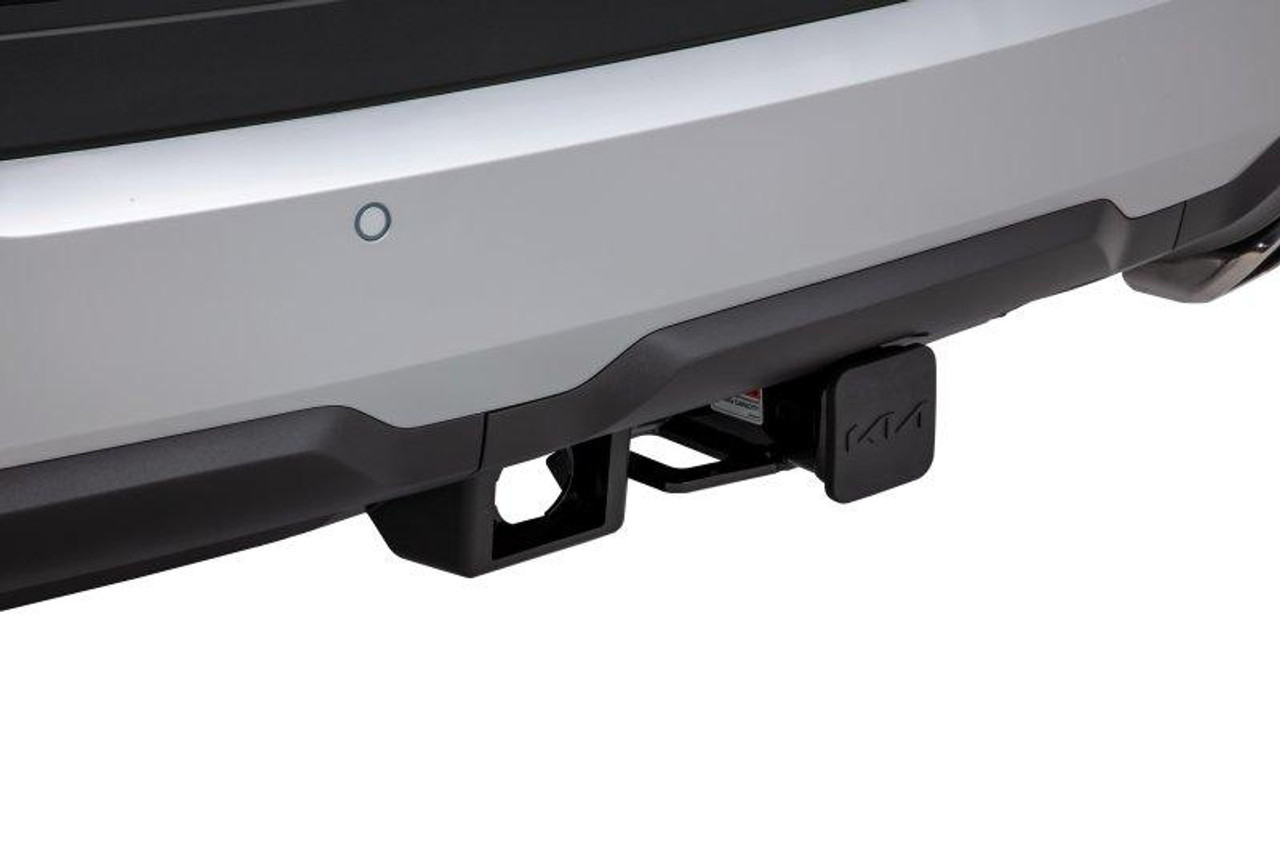
The 2024 Kia Telluride remains a top choice for families who need three‑row space and genuine towing capability. While the SUV ships without a factory‑installed hitch, a Class III receiver and 7‑pin connector are straightforward upgrades that unlock a 5,000‑lb maximum rating. This guide covers specifications, installation options, wiring, maintenance, and the accessories that make every tow safer and smoother.
Towing Capacity & Hitch Class
| Specification | Detail |
|---|---|
| Maximum towing capacity | 5,000 lb (2,268 kg) |
| Gross combined weight rating (GCWR) | 9,500 lb (4,309 kg) |
| Recommended hitch class | Class III (2‑in receiver) |
| Receiver size | 2 in × 2 in |
| Factory wiring | 7‑pin round connector (pre‑wired for trailer lights) |
| Weight‑distribution ready | Yes – compatible with WD hitches |
A Class III hitch handles the Telluride’s full rating without requiring a weight‑distribution (WD) system for loads under ~3,500 lb. For heavier trailers, a WD hitch redistributes tongue weight to the front axle, improving steering feel and braking stability. For more on this, see our guide on toyota gr86 premium automatic coupe review specs features.
See the latest SUV insights for more on how class ratings affect real‑world performance.
Factory vs. Aftermarket Hitch
Kia does not install a hitch at the factory. Dealers typically offer a Kia‑branded receiver that matches the vehicle’s mounting points and includes the 7‑pin harness. Aftermarket brands (CURT, Draw‑Tite, etrailer) provide equivalent strength, often at a lower price, and may include a built‑in integrated wiring module that plugs directly into the Telluride’s OEM connector.
When comparing options, verify:
- Bolt pattern matches the 2024‑2026 Telluride chassis (four M12 bolts).
- Finish (e‑coat or powder coat) for corrosion resistance in salty climates.
- Warranty – most reputable aftermarket hitches carry a limited lifetime warranty.
Choosing the Right Hitch
Weight‑Distribution (WD) Hitch
- When to use: trailer GVWR > 3,500 lb or tongue weight > 350 lb.
- Benefit: restores front‑axle load, reduces sway, improves braking.
Sway‑Control Hitch
- When to use: high‑profile trailers (campers, boat trailers) prone to cross‑wind sway.
- Benefit: friction or cam‑based damping reduces lateral movement.
Fixed vs. Removable Ball Mount
- Fixed: cleaner look, slightly higher ground clearance.
- Removable: easier rear‑gate access, can store ball mount in cargo area.
Installation Overview
Typical DIY time: 1.5–2 hours
Tools: 17 mm socket, torque wrench (90 lb‑ft), 13 mm wrench, dielectric grease, zip ties
- Raise the rear on jack stands; remove the spare‑tire cover for access.
- Align the hitch with the four factory mounting holes (two per side).
- Insert M12 bolts with supplied washers; hand‑tighten.
- Torque to 90 lb‑ft in a criss‑cross pattern.
- Connect the 7‑pin harness – plug the OEM connector into the hitch’s wiring module; secure with zip ties away from exhaust.
- Reinstall spare‑tire cover and lower the vehicle.
- Test all trailer lights (running, brake, turn, reverse) before loading.
If you lack a torque wrench or feel uncomfortable working under the vehicle, a professional installer typically charges $150–$250 and provides a work order for warranty purposes. For more on this, see our guide on toyota 4runner sr5 premium review specs features.

etrailer Class III receiver mounted on a 2024 Telluride, showing the 2‑in receiver and integrated 7‑pin plug.
Wiring & Electrical Integration
The Telluride’s body‑control module supplies a dedicated 7‑pin circuit (pins: 12 V, ground, left/right turn, brake, reverse, auxiliary). Most aftermarket hitches include a plug‑and‑play module that taps this circuit without splicing.
Key points:
- Apply dielectric grease to each pin to prevent corrosion.
- Verify the trailer brake controller (if equipped) receives a clean 12 V signal on the blue wire.
- For trailers with LED lights, add a load‑resistor or use a controller that supports low‑current detection.
For official towing safety standards, consult the NHTSA towing guidelines.
Maintenance & Inspection
| Interval | Action |
|---|---|
| Every 5,000 mi / 6 months | Inspect hitch bolts for proper torque; re‑torque if needed. |
| Before each tow | Check receiver for cracks, corrosion, or bent pin holes. |
| Annually | Clean 7‑pin connector with electrical contact cleaner; apply dielectric grease. |
| After off‑road or salt exposure | Rinse hitch and wiring; inspect for rust on mounting brackets. |
A quick visual check catches loose hardware before it becomes a safety issue.
Accessories to Enhance Towing
- Trailer brake controller (e.g., Tekonsha Prodigy P3) – proportional braking for smoother stops.
- Sway‑control kit – friction or dual‑cam; essential for high‑profile campers.
- Extended towing mirrors – clip‑on or power‑folding; improve rearward visibility.
- Hitch lock – prevents theft of the ball mount or entire receiver.
- Weight‑distribution shank – matches your WD hitch to the 2‑in receiver.

Torklift EcoHitch with integrated wiring, showing clean routing along the Telluride’s frame rails.
Real‑World Towing Scenarios
| Load | Approx. Weight | Recommended Setup |
|---|---|---|
| 18‑ft fishing boat + trailer | 3,200 lb | Class III hitch, standard ball mount, brake controller |
| 24‑ft travel trailer (dry) | 4,200 lb | Class III + weight‑distribution hitch, sway control |
| Two‑place ATV trailer | 1,800 lb | Class III, fixed ball mount, no WD needed |
| Utility trailer with landscaping gear | 2,500 lb | Class III, removable ball mount, brake controller |
Always confirm the trailer’s GVWR and tongue weight (10‑15 % of GVWR) before hitching.
Safety Checklist (Pre‑Trip)
- ☐ Hitch bolts torqued to spec.
- ☐ 7‑pin connector fully seated; all lights functional.
- ☐ Trailer brakes engage smoothly (test at 5 mph).
- ☐ Tire pressures set to vehicle and trailer specs.
- ☐ Load secured; tongue weight within 10‑15 % range.
- ☐ Mirrors adjusted for trailer width.
- ☐ Emergency kit (chocks, fire extinguisher, reflective triangles) onboard.
Frequently Asked Questions
What is the maximum towing capacity of the 2024 Kia Telluride?
5,000 lb when equipped with a Class III receiver and proper weight‑distribution for heavier loads.
Does the 2024 Telluride come with a factory tow hitch?
No. Kia offers a dealer‑installed accessory; aftermarket equivalents are widely available.
Can I install a hitch myself?
Yes, with basic hand tools and a torque wrench. Professional installation is recommended if you lack a lift or torque equipment. For more on this, see our guide on toyota gr86 premium review specs features.
What wiring does the Telluride use?
A 7‑pin round connector (SAE J560) pre‑wired for trailer lighting and electric brakes.
Will towing affect fuel economy?
Expect a 15‑25 % drop in MPG depending on load, terrain, and speed. Plan fuel stops accordingly.
Is a weight‑distribution hitch required?
Only for trailers over ~3,500 lb GVWR or when tongue weight exceeds 350 lb.
Conclusion
Adding a Class III tow hitch transforms the 2024 Kia Telluride into a versatile adventure vehicle without compromising its daily‑driver comfort. Choose a reputable hitch, follow the torque‑spec installation, pair it with a quality brake controller, and run through the safety checklist before every trip. With the right setup, you’ll confidently haul boats, campers, or gear‑loaded trailers — all while keeping the family comfortable.
Ready to hit the road? Explore our evolution of SUVs for more towing‑ready models and buying tips.