
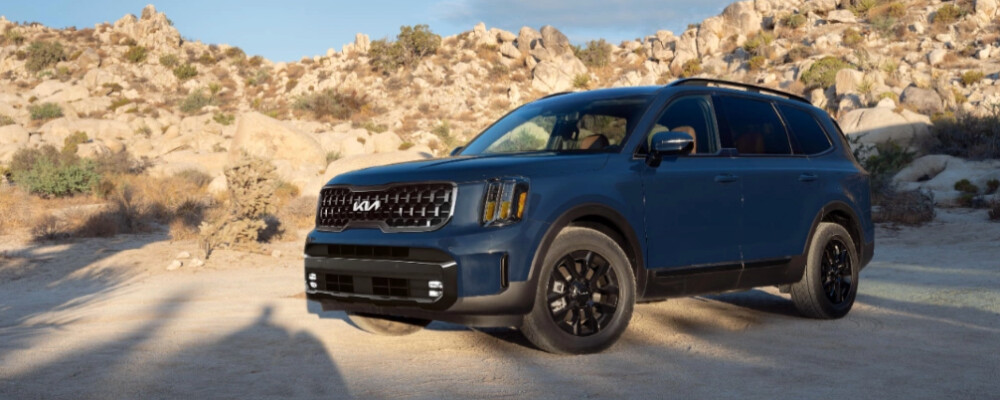
The 2024 Kia Telluride remains a top pick for families who need three usable rows and a composed highway demeanor, but its V6 powertrain isn't the thriftiest in the segment. Understanding the official ratings, what actually moves the needle in daily driving, and how to calculate your true cost of ownership puts you in control at the pump. Below you'll find EPA numbers by trim, real-world factors that help or hurt efficiency, a fuel-cost calculator you can adapt to local prices, and a straight-up comparison against the Telluride's closest rivals.
EPA Fuel Economy Ratings by Trim and Drivetrain
Every 2024 Telluride uses a 3.8-liter V6 paired with an eight-speed automatic. Front-wheel drive is standard; all-wheel drive adds a multi-plate clutch center differential and drops the combined rating by roughly 2 mpg. The table reflects the final EPA-certified figures posted on fueleconomy.gov. You can also read our guide on invention of suv.
| Trim / Drivetrain | City MPG | Highway MPG | Combined MPG |
|---|---|---|---|
| LX / S / EX FWD | 20 | 26 | 23 |
| SX / SX-Prestige FWD | 20 | 26 | 23 |
| LX / S / EX AWD | 19 | 24 | 21 |
| SX / SX-Prestige AWD | 19 | 24 | 21 |
| X-Pro / X-Line AWD | 18 | 23 | 20 |
In practice, the X-Pro and X-Line trims shed another 1 mpg combined because of their all-terrain tires and revised final-drive gearing. If you rarely leave pavement, the standard AWD models deliver the same traction for less fuel penalty.
 X-Pro trim pictured — note the all-terrain tires that reduce combined MPG to 20.
What Actually Moves the Needle on Real-World MPG
EPA tests are repeatable, but your driveway isn't a dynamometer cell. Owners consistently report 1–3 mpg below the combined label in mixed driving; the gap widens with short trips, heavy loads, or aggressive throttle inputs. You can also read our guide on evaluation of suv.
Driving style is the single biggest variable. Smooth acceleration, anticipating stops, and using cruise control on flat highways can recover 10–15 percent of the EPA gap. A common mistake is flooring the pedal to merge — the V6 responds eagerly, but the eight-speed drops two gears and instantaneous fuel flow spikes.
Payload and towing cut efficiency fast. Each 100 lb of passengers and cargo costs roughly 1 percent MPG; a 5,000-lb trailer at 70 mph can drop observed average into the low teens. If you tow regularly, budget for 15–17 mpg combined while hooked up. You can also read our guide on kia suv hybrid.
Tire pressure is the easiest win. The door-jamb placard calls for 35 psi front and rear (cold). Running 5 psi low increases rolling resistance enough to cost 0.5–1 mpg and wears the outer tread blocks prematurely.
Climate and terrain matter more than most buyers expect. Sub-20 °F starts with winter-blend fuel and extended warm-up idling can shave 10–15 percent off winter averages. Mountain grades at altitude force the transmission to hold lower gears longer, especially on AWD models sending torque to all four corners. You can also read our guide on history of suv.
Maintenance deferred is silent theft. A clogged engine air filter, overdue spark plugs (interval is 105,000 miles), or degraded oxygen sensors gradually enrich the mixture. In practice, a neglected 3.8 L V6 can lose 2–3 mpg before a check-engine light ever appears.
Factory Features That Help Save Fuel
Kia equips every Telluride with a handful of hardware and software tricks that nudge efficiency upward when you let them work.
- Idle Stop & Go (ISG) shuts the engine at prolonged stops (traffic lights, drive-thrus) and restarts instantly when you release the brake. In heavy urban grids it can add 0.5–1 mpg combined. The system disables automatically if cabin climate demand is high or battery state-of-charge is low.
- Drive Mode Select — Eco mode softens throttle mapping, shifts earlier, and reduces climate compressor duty cycle. Smart mode learns your inputs and blends Eco/Normal/Sport logic; it’s the best “set and forget” choice for mixed loops.
- Eight-speed automatic with torque-converter lockup engages as early as 25 mph in top gear, minimizing parasitic loss. Manual shift paddles let you hold a gear on descents instead of riding brakes, preserving momentum and fuel.
- Active air flaps behind the lower grille close at steady cruise to reduce drag coefficient by roughly 0.02 Cd — a small but measurable gain above 55 mph.
Calculating Your Annual Fuel Cost
Use the formula below with your local pump price and annual mileage. The table shows examples at $3.50/gal (national 2026 average for regular unleaded) and 15,000 miles/year.
| Drivetrain | Combined MPG | Gallons/Year | Annual Cost @ $3.50 |
|---|---|---|---|
| FWD | 23 | 652 | $2,282 |
| AWD | 21 | 714 | $2,499 |
| X-Pro AWD | 20 | 750 | $2,625 |
Your custom calc: (Annual Miles ÷ Your Observed MPG) × Local $/gal = Annual Spend.
If you average 21 mpg combined in an AWD Telluride and drive 18,000 miles at $3.80/gal: (18,000 ÷ 21) × 3.80 = $3,257.
For context, the segment average for non-hybrid three-row SUVs sits near 22 mpg combined, so the FWD Telluride is essentially on par, while AWD trims trail by 1 mpg.
Telluride vs. Key Competitors: Fuel Economy Head-to-Head
| Model (2024 MY) | Drivetrain | Combined MPG | Notes |
|---|---|---|---|
| Kia Telluride | FWD / AWD | 23 / 21 | V6 only; no hybrid yet |
| Hyundai Palisade | FWD / AWD | 23 / 21 | Mechanical twin; identical ratings |
| Toyota Highlander (gas) | FWD / AWD | 22 / 21 | 2.4 L turbo-4; slightly thirstier city |
| Toyota Highlander Hybrid | AWD only | 35 | Best-in-class efficiency; less towing |
| Honda Pilot | FWD / AWD | 22 / 20 | 3.5 L V6; 10-speed auto |
| Ford Explorer (base 2.3T) | RWD / 4WD | 23 / 21 | Turbo-4; premium fuel recommended |
| VW Atlas | FWD / 4Motion | 21 / 20 | 2.0 T or 3.6 VR6; lower combined |
The Telluride and Palisade share the same powertrain, so cross-shopping on MPG alone is a wash. If fuel savings trump maximum towing, the Highlander Hybrid’s 35 mpg combined is compelling — but it sacrifices 1,500 lb of tow capacity and third-row headroom. For buyers who need the full 5,000 lb rating and eight-passenger seating, the Telluride’s 21–23 mpg combined is competitive. You can explore how the highlander hybrid stacks up in our detailed review.
Practical Tips to Squeeze More Miles Per Gallon
- Check tire pressure monthly — cold, at 35 psi.
- Remove roof rails/crossbars when not in use; they add 0.5–1 mpg drag at 70 mph.
- Use Top Tier regular gasoline — detergent packages keep injectors clean and prevent carbon buildup that degrades spray patterns.
- Combine short trips — a cold engine runs open-loop enrichment for the first 3–5 minutes; clustering errands cuts warm-up cycles.
- Enable Eco mode + Smart cruise on highway stretches; the transmission will upshift earlier and hold top gear on gentle grades.
- Follow the severe-service schedule if you tow, idle extensively, or drive in dust — change engine oil every 5,000 miles and inspect the air filter at each service.
- Lighten the load — every 100 lb removed from the cargo area returns ~1 percent MPG.
Frequently Asked Questions
Does the 2024 Telluride require premium fuel?
No. The 3.8 L V6 is calibrated for 87-octane regular. Premium adds no measurable power or economy benefit in stock form.
How accurate is the dashboard MPG display?
Typically within ±0.5 mpg of hand-calculated fill-to-fill averages. Reset it after each tank for the cleanest comparison.
Can I improve MPG with a cold-air intake or tuner?
Aftermarket intakes on this engine usually increase intake noise without measurable flow gains; the factory airbox already flows more than the V6 can ingest. Tunes that advance timing often require 91+ octane, negating any per-mile savings.
What’s the real-world range on a full tank?
The 18.8-gallon tank yields roughly 395 miles (FWD) or 360 miles (AWD) at combined EPA ratings. Expect 30–50 miles less in winter or with a roof box.
Is there a hybrid or PHEV Telluride coming?
Kia has confirmed a hybrid Telluride for the 2025 model year using a turbocharged 2.5 L four-cylinder with an electric motor. EPA estimates are not yet published.
How does towing affect fuel economy?
Plan on 12–15 mpg combined while towing near the 5,000 lb limit at highway speeds. Engine cooling demands and aerodynamic drag from the trailer dominate consumption.
The Bottom Line on Telluride Fuel Economy
The 2024 Kia Telluride delivers respectable — not class-leading — fuel economy for a three-row SUV with a naturally aspirated V6. Front-wheel-drive trims hit 23 mpg combined, putting them on par with the segment average, while all-wheel-drive models settle at 21 mpg. Real-world results hinge far more on tire pressure, driving style, and payload than on trim selection. If your annual mileage is high and you rarely tow, the Highlander Hybrid’s 35 mpg combined will save $600–$900 per year at current fuel prices. For buyers who need the Telluride’s blend of space, towing, and ride quality, the efficiency penalty is modest and manageable with the habits outlined above.
Next step: Configure your ideal trim on Kia’s build-and-price tool, then plug your local fuel cost into the calculator above to see the true five-year fuel projection. If you’re cross-shopping, our Toyota Rav4 Hybrid deep dive breaks down the efficiency champ of the two-row segment.