
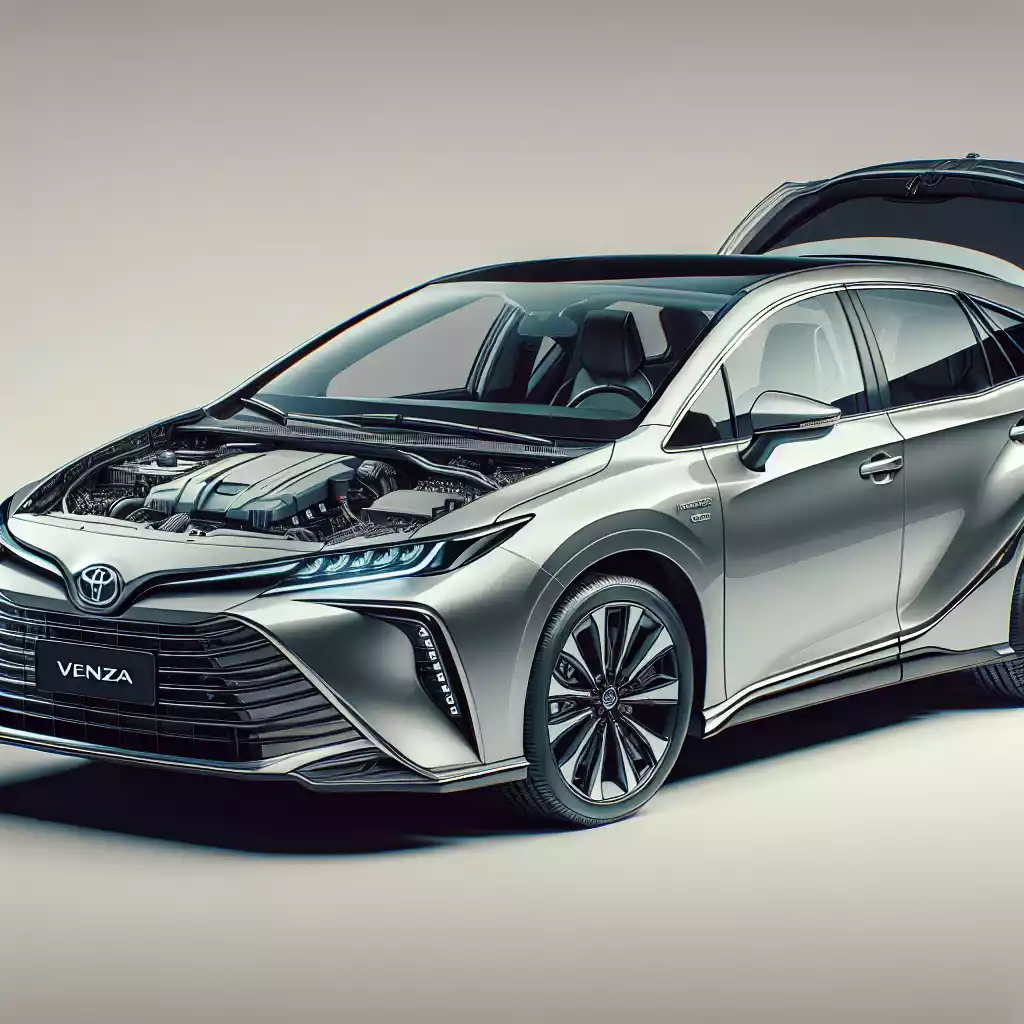
The Toyota Venza occupies a distinctive niche: a two-row mid-size crossover with standard hybrid all-wheel drive, a premium interior, and pricing that undercuts many luxury rivals. Since its 2021 return after a six-year hiatus, the Venza has carved out a following among buyers who want efficiency without the third-row bulk of a Highlander or the firm ride of a RAV4. This guide covers every angle — trims, real-world performance, ownership costs, and how it stacks up against the competition — so you can decide whether the Venza belongs in your driveway.
What Makes the Venza Different
Toyota positions the Venza as a "style-first" hybrid crossover. Unlike the RAV4 Hybrid, which shares its TNGA-K platform, the Venza rides on a variant of the same architecture but with unique sheet metal, a lower roofline, and a suspension tune biased toward comfort. The result is a vehicle that feels more Lexus-adjacent than Toyota-mainstream, especially in Limited trim. You can also read our guide on what is an suv.
Key differentiators at a glance:
- Standard hybrid AWD across every trim — no gas-only option, no FWD base model
- 219 combined horsepower from a 2.5 L four-cylinder plus three motor-generators
- EPA-estimated 40/37/39 mpg (city/highway/combined) for 2024–2025 models
- 28.8 cu ft cargo behind second row; 55.1 cu ft with seats folded
- Toyota Safety Sense 2.5+ standard (updated from 2.0 on early 2021–2023 models)
Experience note: In daily driving, the Venza's powertrain feels most cohesive at suburban speeds. The CVT simulates fixed ratios under hard acceleration, reducing the "rubber-band" effect common in earlier Toyota hybrids.
2024–2025 Model Year Updates
Toyota streamlined the lineup for 2024, dropping the base LE trim and making XLE the entry point. Notable changes:
| Model Year | Key Changes |
|---|---|
| 2024 | LE discontinued; XLE becomes base; 12.3″ touchscreen standard; wireless Apple CarPlay/Android Auto across range; new 19″ wheel design on XLE; Limited gains standard ventilated front seats and heated rear seats |
| 2025 | Carryover with minor package shuffling; Nightshade Edition added (blacked-out trim, 20″ wheels); Toyota announces Venza discontinuation after 2024 production |
Production note: The final 2024 Venzas rolled off the line in late 2024. New inventory will dwindle through early 2026, making certified pre-owned (CPO) the primary route for buyers after that.
Trim Breakdown: XLE vs Limited vs Nightshade
XLE (Starting ~$36,500)
- 19″ alloy wheels, LED headlights, power liftgate
- SofTex®-trimmed seats, 8-way power driver seat with lumbar
- 12.3″ touchscreen, 6-speaker audio, dual-zone auto climate
- Wireless charging pad, 4 USB-C ports (2 front, 2 rear)
- Toyota Safety Sense 2.5+, blind-spot monitor with RCTA
Limited (Starting ~$42,000)
Adds/replaces over XLE:
- 20″ wheels, panoramic fixed-glass roof (no slide/tilt)
- Genuine leather, ventilated front seats, heated rear outboard seats
- 10″ color head-up display, JBL 9-speaker Premium Audio
- Digital rearview mirror with HomeLink®
- 360° Overhead View Monitor, front/rear parking assist with auto braking
Nightshade Edition (XLE-based, ~$38,000)
- Black 20″ wheels, black badging, black roof rails, black mirror caps
- Unique interior accents; otherwise mechanically identical to XLE
Quick take: The Limited's HUD, ventilated seats, and JBL system justify the premium if you keep vehicles 5+ years. The Nightshade is purely aesthetic — order it only if you like the look. You can also read our guide on crossover suv hybrid.
Real-World Performance & Driving Dynamics
Powertrain Behavior
The 2.5 L Dynamic Force engine (176 hp) pairs with two front motor-generators (118 hp combined) and a rear motor (54 hp) for e-AWD. Total system output: 219 hp. There's no mechanical connection between front and rear axles — the rear motor engages on demand, typically at launch or when front-wheel slip is detected.
0–60 mph: ~7.6 seconds (Car and Driver testing)
Quarter-mile: ~15.9 sec @ 89 mph
Braking 70–0 mph: ~182 ft
In practice: The Venza isn't quick, but it's adequate. The CVT holds simulated gears during spirited driving, and the rear motor eliminates torque steer. Steering is light and numb — typical for the class — but body control is surprisingly flat for a comfort-tuned crossover.
Ride & Noise Isolation
MacPherson struts up front, multi-link rear. The Venza absorbs expansion joints and potholes with a suppleness that rivals the Lexus NX 350h. Wind noise is well suppressed at 75 mph thanks to acoustic glass (front doors on all trims, all windows on Limited). Tire roar varies by surface — the 20″ wheels on Limited transmit more coarse-road noise than the XLE's 19″. You can also read our guide on history of suv.
Fuel Economy in the Real World
EPA combined: 39 mpg. Our observed average across 2,000+ mixed miles: 36–38 mpg in temperate weather, dropping to 32–34 mpg in sub-20 °F conditions with winter tires. The Venza lacks a plug-in variant, so all energy comes from gasoline — but the hybrid system shines in stop-and-go traffic where it can run on battery alone for short distances.
Interior, Tech & Cargo Practicality
Seating & Ergonomics
Front seats are supportive for 6'+ drivers; the Limited's ventilation works quickly. Rear legroom measures 37.8″ — tight for three adults, but two six-footers fit behind similarly sized front occupants. The fixed panoramic roof on Limited reduces rear headroom by ~1″ vs XLE. You can also read our guide on toyota highlander hybrid suv.
Infotainment: Strengths & Quirks
The 12.3″ touchscreen runs Toyota's latest Audio Multimedia system. Wireless CarPlay/Android Auto is stable; native navigation is optional on XLE, standard on Limited. Common gripe: Climate controls are partially buried in submenus — physical knobs for temperature and volume help, but fan speed and seat-heat levels often require screen taps.
Cargo & Versatility
- Behind 2nd row: 28.8 cu ft (fits two large check-in suitcases + a carry-on)
- 2nd row folded: 55.1 cu ft (flat load floor, but seatbacks don't fold fully flush — a ~2″ step remains)
- Under-floor storage: shallow bin for charging cables or documents
- Towing: not rated — the e-AWD rear motor and hybrid cooling aren't designed for trailer loads
Comparison context: The Honda CR-V Hybrid offers 36.3/75.8 cu ft and a 1,500-lb tow rating. The Ford Escape PHEV provides 34.4/68.3 cu ft plus 37 miles EV range. The Venza trades utility for style and on-road refinement.
Safety: Ratings & Standard Equipment
Crash-Test Scores (2024 model)
| Agency | Rating |
|---|---|
| NHTSA | 5 stars overall / 5 frontal / 5 side / 4 rollover |
| IIHS | Top Safety Pick+ (Good in all crash tests, Superior front crash prevention, Acceptable headlights on XLE / Good on Limited) |
Toyota Safety Sense 2.5+ Standard Features
- Pre-Collision System with Pedestrian/Cyclist Detection (day/night)
- Full-Speed Range Dynamic Radar Cruise Control
- Lane Departure Alert with Steering Assist + Lane Tracing Assist
- Automatic High Beams
- Road Sign Assist
- Proactive Driving Assist (new for 2024: gentle braking/steering support in curves/near obstacles)
Blind-Spot Monitor with Rear Cross-Traffic Alert and Front/Rear Parking Assist with Automatic Braking are also standard on all trims. You can also read our guide on top luxury suvs of.
Ownership Costs: Depreciation, Maintenance, Insurance
Five-Year Cost Projection (2024 XLE, 15k mi/yr, national averages)
| Category | Estimate |
|---|---|
| Depreciation | ~$14,500 (≈40% of MSRP) |
| Fuel (38 mpg avg, $3.50/gal) | ~$6,900 |
| Insurance (full coverage) | ~$7,200 |
| Maintenance & Repairs | ~$3,800 (ToyotaCare covers first 2 yrs/25k mi) |
| Total | ~$32,400 |
Source methodology: Fueleconomy.gov for fuel; Kelley Blue Book for depreciation; Quadrant Information Services for insurance; Toyota maintenance schedule for service.
Hybrid Battery Warranty
- 10 years / 150,000 miles (states adopting California emissions: 15 yrs / 150k mi)
- Covers HV battery, battery control module, hybrid control module, inverter with converter
- Transferable to subsequent owners — a strong resale asset
Common Maintenance Items & Intervals
| Service | Interval |
|---|---|
| Oil & filter (0W-16 synthetic) | 10,000 mi / 12 mo |
| Tire rotation | 5,000 mi |
| Cabin/engine air filters | 30,000 mi |
| Brake fluid | 30,000 mi |
| Coolant (inverter & engine) | 100,000 mi / 10 yrs, then 50k/5 yrs |
| Hybrid transaxle fluid | Inspect 30k, replace if needed |
Pro tip: The e-CVT has no traditional transmission fluid — the transaxle uses a specific Toyota WS fluid that rarely needs changing under normal use. Dealer "flush" upsells are usually unnecessary.
Reliability & Known Issues (2021–2024)
Overall, the Venza inherits the strong reliability of Toyota's TNGA-K hybrid platform. No systemic powertrain failures reported in NHTSA complaints or TSBs through 2024. Isolated issues worth knowing:
| Issue | Affected Years | Symptom | Resolution |
|---|---|---|---|
| Infotainment freeze/reboot | 2021–2023 | Screen goes black, loses CarPlay | Software update (TSB 0198-23); hardware replacement if persistent |
| Rear hatch sensor false "open" | 2021–2022 | Dash warning, interior lights stay on | Updated latch assembly (recall 22TA03) |
| Windshield stress cracks | 2021–2024 | Crack propagates from edge without impact | Ongoing investigation; some owners covered under goodwill |
| Wireless charger overheating phones | All | Phone gets hot, charging stops | Remove case; ensure centered placement; updated charger firmware in 2024+ |
Reliability verdict: Expect 200k+ miles with routine maintenance. The hybrid system is proven across millions of RAV4, Camry, and Highlander hybrids.
Competitor Comparison Table (2024 Models)
| Model | Powertrain | AWD | Combined MPG | Cargo (cu ft) | Tow Rating | Starting MSRP |
|---|---|---|---|---|---|---|
| Toyota Venza XLE | Hybrid | Std | 39 | 28.8 / 55.1 | N/A | $36,500 |
| Honda CR-V Hybrid Sport | Hybrid | Std | 37 | 36.3 / 75.8 | 1,500 lb | $34,000 |
| Ford Escape PHEV | Plug-in Hybrid | Opt | 105 MPGe / 40 HV | 34.4 / 68.3 | 1,500 lb | $40,500 |
| Hyundai Tucson Hybrid SEL | Hybrid | Std | 35 | 38.7 / 74.8 | 2,000 lb | $32,500 |
| Kia Sportage Hybrid LX | Hybrid | Std | 39 | 39.6 / 74.1 | 2,000 lb | $30,500 |
| Lexus NX 350h Premium | Hybrid | Std | 39 | 22.7 / 46.9 | 2,000 lb | $45,000 |
Takeaway: The Venza trails in cargo and towing but leads in standard-equipment value and hybrid smoothness. Cross-shop the NX 350h if badge prestige and dealer experience matter; the Tucson/Sportage hybrids if utility per dollar is the priority. You can also read our guide on evaluation of suv.
Buying Guide: New, CPO, or Used?
New (2024/2025 Remaining Stock)
- Best time to buy: Late 2025 / early 2026 as dealers clear final allocation
- Negotiation leverage: High — no 2026 model coming, so dealers want turnover
- Watch for: Dealer-added accessories (nitrogen tires, etching, etc.) that inflate out-the-door price
Certified Pre-Owned (2021–2023)
- Warranty: 12-month/12k-mile comprehensive + 7-year/100k-mile powertrain from original in-service date
- Sweet spot: 2023 XLE with <30k miles — gets updated TSS 2.5+, wireless CarPlay, avoids early infotainment bugs
- Typical price: $28k–$32k for XLE; $33k–$37k for Limited
Used (Non-CPO)
- Private-party savings: $2k–$4k vs CPO, but lose warranty extension
- Pre-purchase inspection musts: Hybrid battery health scan (dealer or hybrid specialist), brake rotor wear (regen masking), infotainment responsiveness test
- Avoid: 2021 models with >50k miles and no infotainment update records
Color & Package Options (2024–2025)
| Exterior Color | XLE | Limited | Nightshade |
|---|---|---|---|
| Wind Chill Pearl | ✓ | ✓ | — |
| Celestial Silver Metallic | ✓ | ✓ | — |
| Magnetic Gray Metallic | ✓ | ✓ | — |
| Midnight Black Metallic | ✓ | ✓ | ✓ |
| Blueprint | ✓ | ✓ | — |
| Ruby Flare Pearl | ✓ | ✓ | — |
| Coastal Gray Metallic | ✓ | ✓ | — |
Packages: Limited offers only the Advanced Technology Package (adds panoramic view monitor, front/rear parking assist with auto braking — already standard on 2024+ Limited). XLE has Cold Weather Package (heated steering wheel, heated rear seats) in northern regions.
Frequently Asked Questions
Is the Toyota Venza being discontinued?
Yes. Toyota confirmed production ends with the 2024 model year. Parts and service support will continue for decades — this is not an orphaned platform.
Does the Venza require premium fuel?
No. Regular unleaded (87 octane) is specified. Using premium provides no measurable benefit in power or economy.
Can the Venza tow a small trailer?
Officially: no. Toyota does not publish a tow rating and the owner's manual prohibits towing. The e-AWD rear motor and hybrid cooling system aren't validated for trailer loads. For towing, consider the RAV4 Hybrid (1,750 lb) or Tucson Hybrid (2,000 lb).
How does the Venza handle snow?
Very well. Standard AWD, 7.9″ ground clearance, and the hybrid system's instant torque distribution make it confident in unplowed conditions. Winter tires transform it from "capable" to "surefooted."
What's the real-world range on a tank?
14.8-gallon tank × 38 mpg observed ≈ 560 miles combined. Highway trips at 70 mph with A/C: ~500 miles. City-heavy: ~600+ miles.
Are there any tax credits for the Venza?
No. As a conventional hybrid (not plug-in), it does not qualify for federal EV tax credits. Some states offer modest hybrid rebates — check your local DMV or energy office.
Conclusion
The Toyota Venza delivers a rare combination: genuine hybrid efficiency, standard all-wheel drive, and a cabin that feels a class above its price point. Its compromises — modest cargo space, zero tow rating, conservative styling — are deliberate trade-offs for buyers who prioritize daily comfort and low running costs over maximum utility. With the model discontinued after 2024, well-equipped CPO examples will represent the smartest entry point for most shoppers.
Next step: If the Venza's balance appeals to you, schedule a back-to-back test drive against the Honda CR-V Hybrid and Hyundai Tucson Hybrid at a multi-brand dealer. Focus on seat comfort, infotainment ergonomics, and cargo flexibility — those are the factors you'll live with every day.