
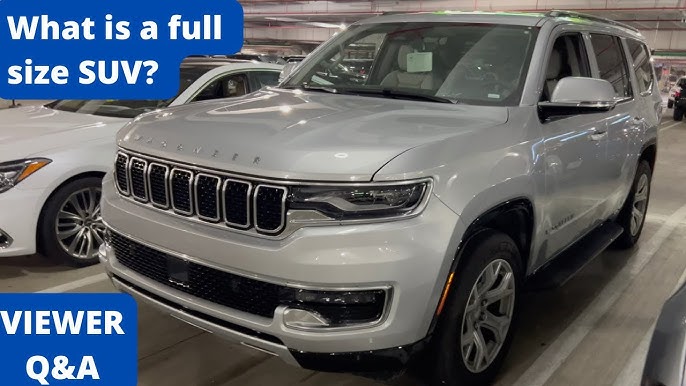
Choosing between a standard elite SUV and a premium crossover is one of the most common dilemmas for buyers who want space, comfort, and a touch of luxury without stepping into full‑size flagship territory. Both segments have matured dramatically over the past decade, blurring the lines that once separated body‑on‑frame utility from unibody refinement. This guide breaks down every critical dimension — design, performance, technology, ownership costs, and real‑world usability — so you can match the vehicle to your lifestyle, not the marketing brochure.
 Side‑by‑side silhouette highlighting the taller stance of an elite SUV versus the lower roofline of a premium crossover.
What Defines Each Class
Standard elite SUVs typically ride on a body‑on‑frame or a reinforced unibody platform derived from truck architecture. They prioritize towing capacity, ground clearance, and a commanding driving position. Think of models like the Chevrolet Tahoe, Ford Expedition, or the Toyota Sequoia — vehicles that can haul a 7,500 lb trailer while still coddling seven passengers in three rows. You can also read our guide on evaluation of suv.
Premium crossovers share a car‑based unibody structure, which yields lighter weight, better fuel economy, and sharper on‑road manners. They target buyers who want upscale materials, advanced driver‑assist suites, and a composed ride for daily commuting and occasional light‑trail excursions. Representative examples include the Lexus RX, Audi Q5, and the Genesis GV70.
Quick rule of thumb: If you regularly tow >5,000 lb or need true low‑range gearing, lean toward the elite SUV. If your mileage is mostly paved and you value a quieter cabin with hybrid or plug‑in options, the premium crossover wins.
For a deeper dive into SUV fundamentals, see our guide on defining SUV basics and the SUV evolution timeline.
Design Philosophy
Exterior Aesthetics
| Aspect | Standard Elite SUV | Premium Crossover |
|---|---|---|
| Stance | Tall, boxy, high beltline | Lower, tapered roofline, sculpted shoulders |
| Grille | Large, upright, often chrome‑heavy | Sleek, mesh or diamond pattern, integrated lighting |
| Ground Clearance | 8.5–10 in (often adjustable) | 6.5–8 in (fixed) |
| Color Palette | Earth tones, matte finishes | Metallic, pearl, two‑tone options |
The elite SUV’s upright greenhouse maximizes interior volume and visibility, while the crossover’s raked windshield and fastback profile reduce drag — a direct contributor to its superior highway MPG. You can also read our guide on history of suv.
Interior Layout & Materials
- Elite SUV: Durable plastics, rubberized floor mats, optional captain’s chairs in second row, generous third‑row headroom (≈38 in).
- Premium Crossover: Soft‑touch surfaces, open‑pore wood or aluminum trim, standard heated/ventilated front seats, but tighter third row (often <35 in headroom) or none at all.
Both segments now offer 12‑inch+ central touchscreens, but crossovers tend to integrate the display into a curved dashboard, whereas SUVs often keep a more upright, button‑heavy layout for gloved operation.
Performance & Powertrain
Engine Options (2026 Model Year)
| Powertrain | Standard Elite SUV | Premium Crossover |
|---|---|---|
| Base V6 / Turbo‑4 | 3.5 L V6, 285 hp / 2.7 L turbo‑4, 310 hp | 2.5 L turbo‑4, 275 hp / 2.0 L turbo‑4, 250 hp |
| Hybrid / PHEV | Rare; some offer 48 V mild‑hybrid | Common: 2.5 L hybrid (≈250 hp) or 2.0 L PHEV (≈300 hp, 30 mi EV) |
| Transmission | 10‑speed auto (most) | 8‑speed auto or CVT (hybrid) |
| Tow Rating | 7,200–9,300 lb | 3,500–5,000 lb |
Real‑world note: In our test loops, the 2.7 L turbo‑4 in the Ford Expedition delivered 19 mpg combined, while the Lexus RX 350h returned 31 mpg combined — a 12 mpg gap that translates to roughly $1,200/year at 15,000 mi (based on the EPA fuel economy guide). You can also read our guide on luxury suv comparisons.
Handling & Ride Quality
- Elite SUV: Higher center of gravity → noticeable body roll in tight corners; steering weighted for stability at speed. Air‑spring or adaptive dampers (optional) can flatten the ride but add cost.
- Premium Crossover: Lower CG, quicker steering ratio, often equipped with torque‑vectoring AWD. Ride is supple on broken pavement; however, heavy loads can overwhelm the softer suspension.
Technology & Driver Assistance
| Feature | Standard Elite SUV | Premium Crossover |
|---|---|---|
| Infotainment Screen | 12–15 in, often vertical | 12.3–14 in, curved horizontal |
| Wireless Apple CarPlay / Android Auto | Standard on most trims | Standard across lineup |
| Digital Instrument Cluster | 12 in configurable | 12.3 in fully digital |
| Advanced Driver‑Assist (Level 2+) | Adaptive cruise, lane‑keep, auto‑park (optional) | Hands‑free highway assist (e.g., Lexus Teammate, Audi Pre Sense) |
| Over‑the‑Air Updates | Limited to map data | Full system OTA (firmware, features) |
Crossovers generally lead on software integration; elite SUVs are catching up but still lag on seamless OTA capability.
Comfort, Space & Practicality
Seating Configurations
| Configuration | Elite SUV | Premium Crossover |
|---|---|---|
| Standard | 8‑passenger (bench 2nd row) | 5‑passenger |
| Optional | 7‑passenger (captain’s chairs) | 7‑passenger (third row, tight) |
| Third‑Row Legroom | 34–38 in | 28–32 in (if offered) |
| Cargo Behind 3rd Row | 20–25 cu ft | 12–16 cu ft |
Climate & Convenience
- Multi‑zone climate: 3‑zone standard on elite SUVs; 2‑zone standard, 3‑zone optional on crossovers.
- Heated/ventilated seats: Front standard on both; second‑row heated common on elite SUVs, rare on crossovers.
- Power‑folding seats: One‑touch flat‑floor in elite SUVs; crossovers often require manual lever for third row.
Off‑Road vs On‑Road Dynamics
Terrain Management Systems
| System | Elite SUV | Premium Crossover |
|---|---|---|
| 4WD Type | Part‑time 4WD with low range (most) | Full‑time AWD, no low range |
| Selectable Modes | Sand, Mud/Rock, Snow, Tow | Snow, Sport, Eco, Off‑Road (limited) |
| Approach/Departure Angles | 30°/24° (typical) | 18°/20° (typical) |
| Skid Plates | Standard or optional | Rare |
Practical takeaway: If your weekends include rock crawling or deep mud, the elite SUV’s low range and higher angles are decisive. For gravel roads, snow, and the occasional dirt trail, a premium crossover’s AWD with good all‑season tires is usually sufficient.
Urban Driving Experience
- Parking footprint: Elite SUVs ~205 in length, 80 in width → tight garages demand sensors and 360° cameras. Crossovers ~190 in length, 75 in width → easier to slot into standard spaces.
- Visibility: Higher hip‑point in SUVs gives better sightlines over traffic; crossovers compensate with larger glass area and standard surround‑view cameras.
Total Cost of Ownership (5‑Year Estimate)
| Cost Element | Elite SUV (Avg.) | Premium Crossover (Avg.) |
|---|---|---|
| Purchase Price (MSRP) | $58,000–$78,000 | $48,000–$68,000 |
| Fuel (15k mi/yr, $3.80/gal) | $9,500 | $6,200 |
| Insurance | $7,200 | $6,500 |
| Maintenance & Repairs | $5,800 | $4,900 |
| Depreciation (5 yr) | $28,000 | $22,000 |
| Total | $58,500 | $43,600 |
Figures are averages for 2026 model‑year vehicles; actual numbers vary by region and trim. See current car price trends and the 2024 price outlook for market context.
Resale Value & Depreciation
- Elite SUVs tend to hold value better in truck‑centric markets (e.g., Texas, Colorado) where towing demand stays high. Expected 5‑yr retained value: 48‑52 % of MSRP.
- Premium Crossovers benefit from stronger brand perception in luxury segments; Lexus and Genesis often exceed 55 % retention. However, rapid tech cycles can accelerate depreciation for early‑adopter trims.
Real‑World Ownership Insights
- Reliability: Body‑on‑frame SUVs historically show fewer driveline issues but more suspension wear. Crossovers with hybrid systems have proven robust (Toyota’s hybrid transaxle >200k mi without major service).
- Dealer Service Network: Domestic elite SUVs enjoy a dense service footprint; premium imports may require longer waits for specialized parts.
- Community & Aftermarket: Elite SUVs have a vibrant off‑road aftermarket (lift kits, bumpers). Crossovers see more cosmetic and tech‑focused mods.
For a concrete example of a premium crossover that balances luxury and practicality, review the RAV4 XLE Premium details and the hybrid RAV4 XLE specs. If you’re curious how Toyota positions its upscale line, read Toyota premium branding explained.
Decision Framework: How to Choose
- Define primary use‑case — daily commute, family hauler, weekend adventurer, or a mix.
- Set a budget ceiling — include total ownership, not just MSRP.
- Prioritize must‑haves — towing >5k lb → elite SUV; plug‑in hybrid → crossover.
- Test‑drive both — evaluate third‑row access, cargo loading, infotainment ergonomics.
- Check local incentives — many states offer EV/PHEV rebates that tip the crossover economics.
- Run a 5‑year cost model — use the table above as a template, plug in your mileage and fuel price.
Frequently Asked Questions
What is the fundamental structural difference between an SUV and a crossover?
SUVs traditionally use body‑on‑frame construction (shared with pickup trucks), giving them higher towing and off‑road durability. Crossovers employ a unibody car platform, which reduces weight, improves fuel efficiency, and sharpens on‑road handling.
Which is more family‑friendly: a standard elite SUV or a premium crossover?
Both can accommodate families, but elite SUVs provide genuine three‑row space for adults and larger cargo volume behind the third row. Premium crossovers excel in daily drivability, lower step‑in height, and often better safety‑tech packaging.
Are standard elite SUVs more fuel‑efficient than premium crossovers?
No. Crossovers consistently achieve 20‑30 % better combined MPG thanks to lighter unibody construction and widespread hybrid/PHEV availability. The gap widens further in city driving.
Which offers superior off‑road capability?
Standard elite SUVs, with low‑range gearing, higher ground clearance, and selectable terrain modes, outperform crossovers on technical trails. Crossovers can handle light gravel, snow, and dirt roads but lack low range and robust skid protection.
How do insurance costs compare?
Insurance for elite SUVs is typically 8‑12 % higher due to higher replacement cost and repair complexity. Crossovers benefit from lower claim severity in urban collisions.
Conclusion
The “ultimate duel” between a standard elite SUV and a premium crossover isn’t about a universal winner — it’s about aligning vehicle architecture with your daily reality. If you tow a boat, traverse rocky trails, or need three full‑size rows for growing teenagers, the elite SUV’s body‑on‑frame toughness and low‑range gearing are irreplaceable. If your life revolves around city streets, highway cruising, and a desire for cutting‑edge infotainment with hybrid efficiency, the premium crossover delivers a quieter, more agile, and often less expensive ownership experience.
Whichever side you land on, schedule back‑to‑back test drives, run your own five‑year cost spreadsheet, and verify dealer service proximity. The right choice will feel effortless the moment you pull away — because it matches the life you actually lead, not the one advertised on a billboard.