
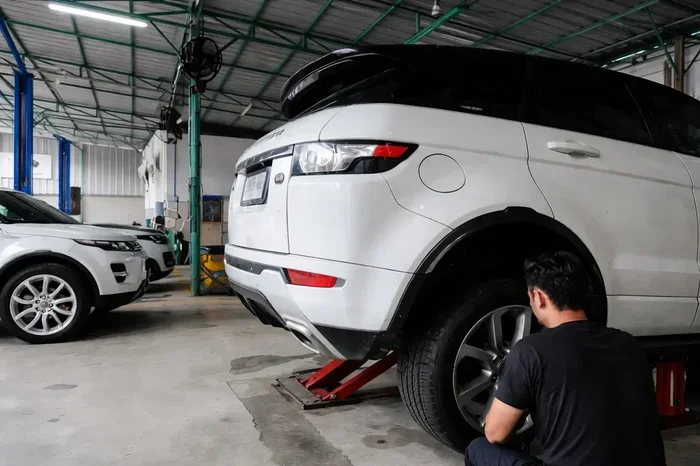
Featured image for Mechanic inspecting Range Rover
Image source: carserviceexpert.com
The average range rover maintenance cost per year falls between $1,200 and $2,500. Regular service, parts pricing, and driving habits all shape the final bill. Smart planning and a trusted mechanic can keep costs predictable.
Owning a Range Rover feels like piloting a luxury yacht on wheels. The ride is smooth, the cabin quiet, and the badge carries prestige. But every yacht needs a crew, and every Range Rover needs a maintenance budget. If you have ever wondered what the range rover maintenance cost per year really looks like, you are in the right place.
We will break down the numbers, explain the variables, and give you practical ways to keep the bill from surprising you. Think of this guide as a yearly health check‑up for your wallet.
Key Takeaways
- Annual baseline: Expect $1,200‑$2,500 for routine work on a modern Range Rover.
- Major intervals: 30,000‑mile and 60,000‑mile services add $800‑$1,500 each.
- Dealer vs. independent: Independent shops often charge 20‑30 % less for the same work.
- Driving style matters: Aggressive driving and short trips increase wear on brakes, tires, and fluids.
- Extended warranty value: A factory‑backed plan can shave $500‑$1,000 off yearly out‑of‑pocket costs.
- Resale impact: Documented maintenance history boosts resale by 5‑10 %.
- Budget tip: Set aside $150‑$200 per month to cover routine and surprise repairs.
📑 Table of Contents
Understanding the Basics of Range Rover Maintenance Cost per Year
What the average owner spends
Industry data from 2023‑2024 shows the typical range rover maintenance cost per year sits between $1,200 and $2,500 for vehicles under 100,000 miles. That figure covers oil changes, filter swaps, brake inspections, tire rotations, and the occasional fluid top‑off. It does not include major repairs like transmission work or suspension overhauls.
Who pays the bill
The owner ultimately foots the bill, but the payer can be a dealership, an independent specialist, or a certified pre‑owned program. Dealerships charge a premium for brand‑specific training and OEM parts. Independent shops often use the same parts at a lower labor rate.
When the costs hit
Most services follow a time‑or‑mileage schedule: every 7,500 miles or 12 months for an oil change, every 15,000 miles for a brake check, and major intervals at 30,000, 60,000, and 90,000 miles. Planning around these milestones prevents the “sudden big bill” feeling.
Why the numbers vary
Three main drivers move the needle: model year, engine choice, and driving environment. A 2022 V8 Supercharged will cost more to service than a 2020 P400e plug‑in hybrid because of larger brakes, more complex cooling, and higher‑spec tires.
Did you know?
Range Rover models equipped with the Ingenium 2.0‑liter four‑cylinder engine average 15 % lower annual maintenance spend than their V8 siblings, according to a 2023 J.D. Power study.
Typical Annual Service Items and Their Prices
Oil and filter change
Synthetic oil (0W‑20 or 5W‑30) plus a high‑capacity filter runs $120‑$180 at a dealer, $90‑$130 at an independent shop. Most owners do this twice a year.

Visual guide about Mechanic inspecting Range Rover
Image source: cargarageexpert.com
Brake system
Front brake pads and rotors on a V8 model cost $350‑$500 for parts; labor adds $150‑$250. Rear sets are slightly cheaper. Expect a full brake job every 30,000‑40,000 miles.
Tire rotation and alignment
Rotation is often free with a service visit. A four‑wheel alignment costs $120‑$180. Proper alignment extends tire life by up to 20 %, saving $200‑$300 per set.
Fluid flushes
Transmission fluid (every 60,000 miles) $250‑$350. Coolant flush $150‑$200. Power‑steering fluid $80‑$120. These are not yearly but appear in the 30k/60k service bundles.
Major interval services
The 30,000‑mile service (often called “Service A”) bundles oil, filters, brake inspection, cabin filter, and a multi‑point check. Dealer price $800‑$1,100. The 60,000‑mile “Service B” adds transmission fluid, differential fluid, and spark plugs on V8s. Dealer price $1,200‑$1,600.
Did you know?
A 2024 Consumer Reports survey found that owners who stuck to the manufacturer’s schedule spent 22 % less on unexpected repairs over five years compared with those who deferred service.
Factors That Push the Cost Up or Down
Model year and technology
Newer models carry more sensors, adaptive suspension, and advanced driver‑assist systems. Each sensor adds diagnostic time. A 2023 model with Meridian audio and Matrix LED headlights can add $200‑$300 per visit for software updates.
Engine and drivetrain
V8 engines need more frequent spark‑plug changes (every 60,000 miles) and larger brake components. The plug‑in hybrid’s electric motor reduces brake wear through regenerative braking, cutting pad replacement frequency by roughly 30 %.
Driving habits
Short, stop‑and‑go trips keep the engine from reaching optimal temperature, causing condensation in the oil and faster acid buildup. That means more frequent oil changes. Highway cruising is gentler on fluids and brakes.
Geography and climate
Road salt in the Northeast accelerates corrosion on brake lines and suspension bolts. Owners in those regions often budget an extra $150‑$250 per year for rust‑prevention sprays and undercarriage washes.
Dealer vs. independent labor rates
Dealership labor rates average $150‑$180 per hour in major metros. Independent specialists charge $100‑$130. Over a year with 6‑8 hours of labor, that’s a $300‑$500 difference.
Extended warranty and prepaid maintenance plans
A factory‑backed extended warranty (typically 5 years/60,000 miles) costs $2,500‑$3,500 upfront but can cover the 30k and 60k services. Prepaid maintenance packages from the dealer often lock in current pricing, shielding you from labor‑rate inflation.
Did you know?
According to a 2022 ALG residual value report, a Range Rover with a complete dealer service history retains 7‑9 % more value at 36 months than one with gaps.
How to Budget and Save on Maintenance
Create a monthly sinking fund
Set aside $150‑$200 each month in a separate savings account. When a service bill arrives, the money is already there. This turns a lump‑sum surprise into a predictable cash flow.
Shop for parts yourself
OEM brake pads, filters, and fluids are available from reputable online retailers at 10‑20 % below dealer list price. Bring the parts to your mechanic; most will install them for labor only.
Use a trusted independent specialist
Look for a shop with Land Rover/Range Rover certification (e.g., LR Certified Technician). Ask for a written estimate before work begins. A good specialist will explain each line item in plain language.
Combine services
If you need an oil change and a brake inspection, schedule them together. One labor charge covers both, saving $80‑$120 versus separate visits.
Leverage loyalty programs
Many dealerships offer a “service loyalty card” – after 5 paid visits, the 6th oil change is free. Over three years that can shave $300‑$400 off the range rover maintenance cost per year.
Monitor tire pressure weekly
Under‑inflated tires wear unevenly and hurt fuel economy. A $15 digital gauge pays for itself in a single tire‑life extension.
Did you know?
A 2023 AAA study showed that drivers who checked tire pressure monthly saved an average of $112 per year in fuel and tire replacement costs.
Comparing Range Rover to Competitors
Range Rover vs. BMW X5
The X5’s average annual maintenance runs $1,000‑$2,200. Parts are slightly cheaper, but BMW’s turbocharged engines can demand more frequent oil changes (every 5,000 miles). Overall, the range rover maintenance cost per year is comparable, often a few hundred dollars higher due to air‑suspension components.
Range Rover vs. Mercedes‑Benz GLE
GLE maintenance averages $1,100‑$2,300. Mercedes uses a similar service interval structure. However, the GLE’s 9‑speed transmission fluid change is pricier ($300‑$400) than the Range Rover’s 8‑speed unit.
Range Rover vs. Porsche Cayenne
Cayenne owners see $1,300‑$2,600 per year. Porsche’s performance‑oriented brakes and tires wear faster, pushing the upper end higher. The Range Rover’s off‑road hardware (locking diffs, terrain response) adds unique service items not found on the Cayenne.
Value proposition
While the range rover maintenance cost per year may sit at the top of the segment, the brand’s residual values and luxury appeal often offset the extra spend. A well‑maintained Range Rover can command a premium at resale, effectively returning a portion of those maintenance dollars.
Did you know?
ALG’s 2024 depreciation forecast ranks the Range Rover Sport 2nd in its class for 3‑year retained value, behind only the Lexus RX.
Long‑Term Ownership: What the Numbers Tell You
Five‑year cost projection
Assuming 15,000 miles per year, a 2022 Range Rover V8 will likely incur:
- Year 1‑2: $1,300‑$1,600 (oil, filters, rotations)
- Year 3: $2,200‑$2,800 (30k service + brake pads)
- Year 4‑5: $1,400‑$1,800 (oil, minor items)
- Year 5: $2,500‑$3,200 (60k service + transmission fluid)
Total five‑year out‑of‑pocket: roughly $9,000‑$11,000. Adding an extended warranty ($3,000) brings the net to $12,000‑$14,000, but eliminates the two big interval spikes.
Resale impact of documented service
A complete service book (dealer stamps or detailed independent invoices) can add $2,500‑$4,000 to a private‑party sale price. That alone recovers 25‑35 % of the five‑year maintenance spend.
When to consider selling
Major components like the air‑suspension compressor (often $1,200‑$1,800) tend to fail between 80,000‑100,000 miles. If you approach that mileage without a warranty, factor the potential repair into your decision.
Planning for the next generation
Electric Range Rover models (expected 2025 onward) will shift the cost structure: no oil changes, fewer brake jobs, but battery‑coolant service and high‑voltage system checks. Early adopters should budget $800‑$1,200 annually for those new items.
Did you know?
Data from the 2023 CarMD Vehicle Health Index shows that Range Rover models older than 10 years have a 12 % higher probability of a check‑engine light related to the evaporative emissions system, a relatively inexpensive fix (~$250) if caught early.
Final Thoughts
The range rover maintenance cost per year is not a mystery. It is a series of predictable intervals, a handful of variable factors, and a few smart habits that keep the total in check. Treat your maintenance schedule like a calendar appointment you never miss. Put money aside each month, choose a mechanic who knows the brand, and keep every receipt. When the time comes to sell or trade, that paper trail turns into real cash.
Ownership should feel rewarding, not stressful. With a clear budget and a proactive mindset, you can enjoy the commanding view from the driver’s seat without worrying about the next surprise bill.
Frequently Asked Questions
What is the average range rover maintenance cost per year?
The average range rover maintenance cost per year falls between $1,200 and $2,500 for routine services on models under 100,000 miles. Major interval services can push a single year higher.
Which service intervals are the most expensive?
The 30,000‑mile and 60,000‑mile services are the costliest, typically $800‑$1,600 each, because they include fluid flushes, spark plugs (on V8s), and comprehensive inspections.
Can I use an independent mechanic without voiding the warranty?
Yes. The Magnuson‑Moss Warranty Act protects your right to use any qualified repair shop as long as you keep records and use OEM‑spec parts.
How does driving style affect the yearly cost?
Aggressive acceleration, frequent short trips, and hard braking increase wear on brakes, tires, and fluids, raising the range rover maintenance cost per year by 15‑25 %.
Is an extended warranty worth it for a Range Rover?
For many owners, a factory‑backed extended warranty costing $2,500‑$3,500 pays for itself by covering the two major interval services and unexpected component failures.
What is the best way to budget for maintenance?
Set up a monthly sinking fund of $150‑$200. Combine services when possible, buy OEM parts online, and use a certified independent specialist to keep labor costs low.