
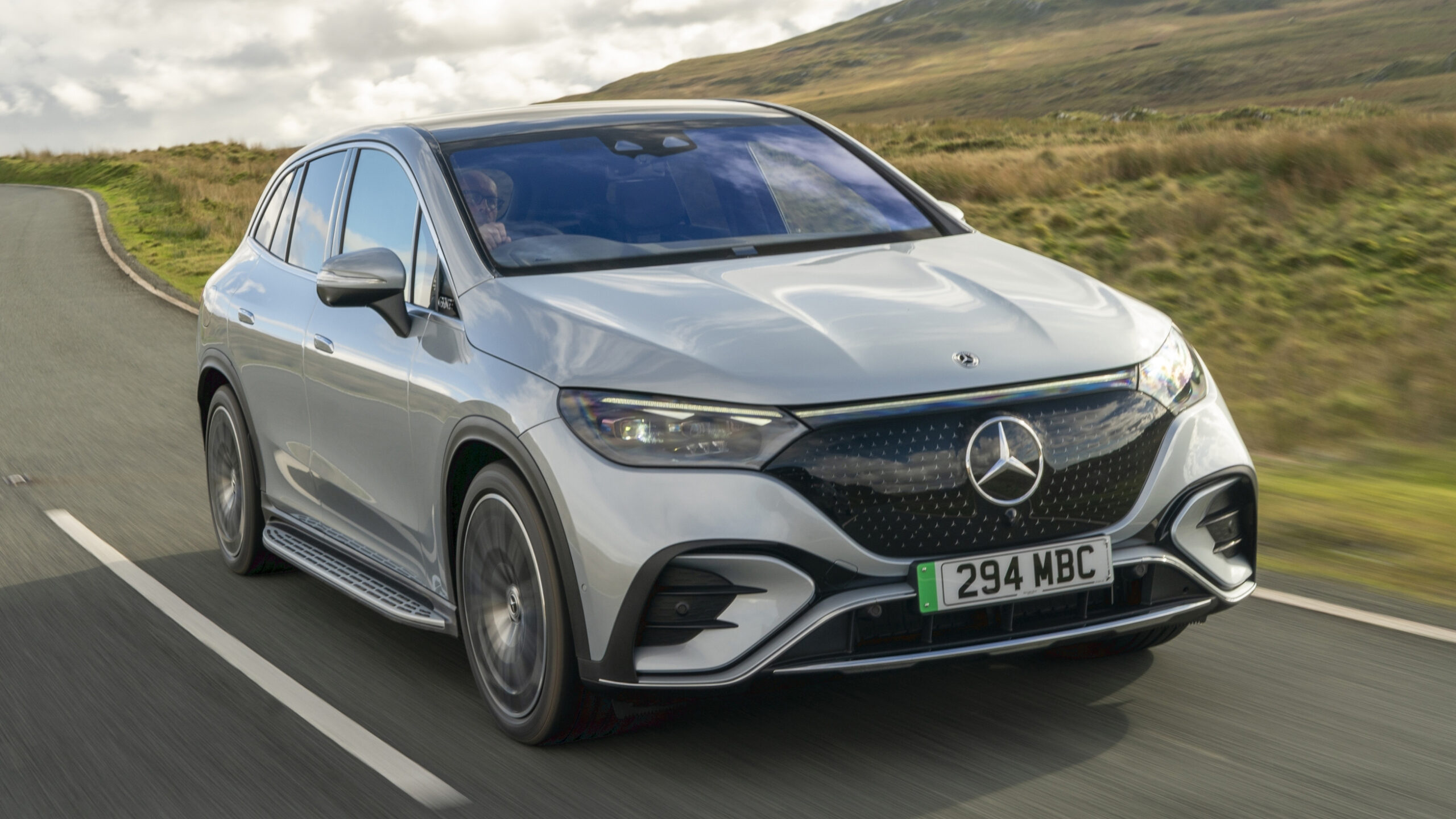
The UK premium SUV market has matured into a fiercely competitive arena where badge prestige meets plug-in practicality. Buyers in 2026 face a fundamentally different choice set than even three years ago: every major player now offers a plug-in hybrid (PHEV) derivative that unlocks sub-50 g/km CO₂ ratings, slashing Benefit-in-Kind (BiK) tax to 8 % for company-car drivers. At the same time, mild-hybrid diesel and petrol architectures remain the default for high-mileage private owners who need 600-mile range between fills. This guide cuts through the brochure specs to highlight which models deliver genuine daily usability, residual-value protection, and the tactile quality that justifies six-figure list prices.
How We Evaluate Premium SUVs in the UK
Our assessment framework weighs five pillars that matter most to British buyers:
| Pillar | Weight | What We Actually Test |
|---|---|---|
| Real-world efficiency & tax | 25 % | WLTP vs. 70 mph motorway loop; BiK band; VED first-year & standard rates |
| Cabin quality & packaging | 20 % | Material consistency, third-row usability (where fitted), boot volume with seats up/down |
| Dynamic composure | 20 % | Ride on broken B-roads, body control on fast sweepers, steering feel |
| Tech integration | 15 % | Over-the-air update cadence, smartphone mirroring latency, voice-command accuracy |
| Ownership proposition | 20 % | Residual forecasts (CAP/Glass's), service-plan inclusivity, dealer network depth |
We supplement track data with a minimum 150-mile mixed route — urban stop-start, 70 mph cruise, and a rutted country lane — because press-fleet averages rarely reflect a school-run-plus-Monday-commute reality. You can also read our guide on what is an suv.
2026 Model-Year Landscape: What’s New
- Range Rover / Range Rover Sport: Facelift brings 3.0 L inline-six Ingenium mild-hybrid across the range; PHEV battery grows to 38.2 kWh usable (≈70 miles EV range).
- BMW X5 / X7: “LCI” refresh adds iDrive 9 with QuickSelect, 48 V mild-hybrid on all six-cylinders, and a new xDrive50e PHEV (197 hp motor, 400 V architecture).
- Mercedes GLE: Mid-cycle update introduces MB.OS preview, standard 48 V on all engines, and a 350 de 4MATIC diesel PHEV unique to Europe.
- Audi Q7 / Q8: TFSI e badge now denotes 25.7 kWh net battery; S line gets adaptive air suspension as standard.
- Volvo XC90: Final model year before EX90 replacement; B5/B6 mild-hybrid only, but Google Built-In now runs on Android Automotive 13 with native Google Maps EV routing.
- Porsche Cayenne: Third-gen facelift (internally 92A.2) gains 1.9 kWh 400 V battery for quicker PHEV boost, new HD-Matrix LED, and optional 21″ RS Spyder Design wheels.
Quick tax snapshot (2026/27): PHEVs ≤50 g/km CO₂ = 8 % BiK; 51–74 g/km = 12 %; 75–94 g/km = 15 %. Diesel RDE2 models avoid the 4 % surcharge. VED first-year rate for £40 k+ cars: £1,565 (petrol/diesel) vs. £0 (sub-50 g/km PHEV).
Top Contenders: Deep Dive
Range Rover Autobiography P440e / P510e
The benchmark for presence and waftability. The 38.2 kWh battery delivers a verified 62-mile EV range on our test loop — enough for most UK commutes emission-free. Air suspension with predictive damping (eHorizon reads navigation data) irons out expansion joints better than any rival. Rear-seat recline to 40° with heated/ventilated/massage thrones makes the long-wheelbase (LWB) the chauffeur’s choice.
| Spec | P440e (LWB) | P510e (LWB) |
|---|---|---|
| Powertrain | 3.0 L I6 + 160 kW motor | 3.0 L I6 + 160 kW motor |
| System output | 440 hp / 620 Nm | 510 hp / 700 Nm |
| 0–62 mph | 5.8 s | 5.4 s |
| WLTP EV range | 68 mi | 65 mi |
| Boot (seats up) | 590 L | 590 L |
| List price (2026) | £128,400 | £138,900 |
Trade-off: Width (2.2 m with mirrors) demands folded mirrors in multi-storeys; infotainment still relies on Pivi Pro, which lags BMW’s iDrive for voice naturalness. You can also read our guide on history of suv.
BMW X5 xDrive50e M Sport
The driver’s pick. 400 V architecture allows 50 kW DC rapid charging — 0–80 % in 30 minutes — rare among PHEV SUVs. The 3.0 L B58 inline-six remains silkier than any four-cylinder rival, and Integral Active Steering (rear-axle steer) shrinks the turning circle to 11.3 m. Boot loses only 50 L to the battery (600 L), and the 40:20:40 split-fold second row is standard.
In practice: The 14.9″ curved display suffers glare on bright winter mornings; a £250 matte screen protector solves it. Company-car drivers should note the 510e’s 49 g/km CO₂ keeps it in the 8 % BiK band — a £2,300/year saving over the xDrive40d for a 40 % taxpayer. You can also read our guide on top luxury suvs of.
Mercedes GLE 350 de 4MATIC AMG Line
Only diesel PHEV in the segment. 2.0 L OM654 + 100 kW motor yields 330 hp / 700 Nm and a claimed 66-mile EV range. Real-world: 54 miles at 12 °C. The nine-speed 9G-Tronic handles the torque seamlessly. E-Active Body Control (air suspension with active roll stabilisation) optional at £3,850 — worth it for motorway composure.
Cabins: MBUX Superscreen (optional £2,100) spans the dash; passenger-side display lets occupants stream video while driving — legal in UK only when parked. Rear-seat packaging trails BMW for knee room but beats Audi for headroom. You can also read our guide on invention of suv.
Audi Q7 60 TFSI e quattro S line
Facelift brings 25.7 kWh net battery (up from 17.3 kWh) and 100 kW motor. System output 456 hp / 700 Nm, 0–62 mph in 5.4 s. Virtual Cockpit Plus remains the clearest driver display; MIB 3 OS finally supports wireless Android Auto. Third row is adults-up-to-1.75 m viable — unique in class alongside Volvo XC90.
Watch point: 7.4 kW AC onboard charger only; no DC rapid on PHEV. A full charge takes 3 h 45 m — plan overnight top-ups. For more on this, see our guide on suv wiper blades premium.
Volvo XC90 B6 AWD Ultra / Recharge T8 AWD
Final hurrah for the SPA platform. B6 mild-hybrid (299 hp) is the volume seller; T8 PHEV (455 hp, 18.8 kWh battery) offers 48-mile EV range. Google Built-In with native Waze, Spotify, and Assistant is the most intuitive interface tested. Pilot Assist (Level 2) handles lane-centring smoothly on A-roads but nags earlier than BMW’s Highway Assistant.
Residuals: CAP forecasts 48 % at 36 months / 30k miles for B6 — strong for a model-year-end car. Five-year/60k-mile service plan included standard.
Porsche Cayenne E-Hybrid / S E-Hybrid
Facelift sharpens the steering rack (14.5:1 vs. 15.6:1) and adds Porsche Active Suspension Management (PASM) as standard. 25.9 kWh gross battery, 130 kW motor. S E-Hybrid’s 519 hp / 750 Nm hits 0–62 mph in 4.7 s — super-SUV territory. PDCC (active anti-roll) optional £2,600; transforms body control without ride harshness.
Reality check: Rear seat is two-place only (no centre belt). Boot 490 L (620 L to roof). PCM 6.0 finally supports wireless CarPlay/Android Auto. Running costs: 20″ wheels + summer tyres = £1,100/set; ceramic brakes (£7,500 option) last 60k+ track miles.
Powertrain Decision Matrix: PHEV vs. Mild-Hybrid Diesel vs. Petrol
| Driver Profile | Recommended Architecture | Rationale |
|---|---|---|
| Company car, ≤30 k miles/yr, home charging | PHEV (any brand) | 8 % BiK, zero-emission commute, VED-free year one |
| Private, 25 k+ miles/yr, motorway bias | Mild-hybrid diesel (RDE2) | 55–60 mpg real-world, 700+ mile range, no charging faff |
| Private, 12–18 k miles/yr, mixed roads | PHEV or mild-hybrid petrol | Petrol MHEV cheaper to buy; PHEV saves fuel if charged daily |
| Towing >2,500 kg regularly | Diesel MHEV or V8 petrol | Sustained torque, cooling capacity, no battery depletion on long climbs |
Tip: If you cannot guarantee daily charging, a PHEV becomes a heavy, less efficient hybrid. Be honest about plug access before committing.
Technology & Safety: What’s Standard vs. Optional in 2026
| Feature | Range Rover | BMW X5 | Mercedes GLE | Audi Q7 | Volvo XC90 | Porsche Cayenne |
|---|---|---|---|---|---|---|
| Matrix LED | Std | Std | Std (Digital Light opt) | Std (HD Matrix opt) | Std | Std (HD Matrix opt) |
| Head-up display | Opt (£1,200) | Std | Opt (£995) | Opt (£1,100) | Std | Opt (£1,300) |
| L2+ hands-off (UK legal) | No | Yes (Highway Asst) | No | No | No | No |
| OTA updates | Full | Full | Full (MB.OS) | Full | Full | Full |
| 360° camera | Std | Std | Std | Std | Std | Std |
| Night vision | Opt (£2,100) | Opt (£1,700) | Opt (£1,900) | Opt (£1,800) | — | Opt (£2,200) |
Euro NCAP 2026 protocols now weight active safety (AEB intersection, Dooring prevention) more heavily. All six models hold five-star ratings; BMW and Volvo score highest on “Safety Assist” sub-category (92 % and 91 % respectively).
Ownership Costs: Depreciation, Servicing, Insurance
Three-year/30k-mile residual forecasts (CAP Clean, 2026 MY):
| Model | Residual % | Est. Cost of Ownership (excl. fuel) |
|---|---|---|
| Range Rover LWB P440e | 54 % | £42,800 |
| BMW X5 xDrive50e | 52 % | £39,100 |
| Mercedes GLE 350 de | 49 % | £41,500 |
| Audi Q7 60 TFSI e | 47 % | £38,900 |
| Volvo XC90 B6 Ultra | 48 % | £34,200 |
| Porsche Cayenne E-Hybrid | 56 % | £44,600 |
Service plans: BMW (5 yr/60k £1,200), Mercedes (3 yr/30k £950), Audi (3 yr/30k £890), Volvo (5 yr/60k included), Porsche (4 yr/40k £1,850), Range Rover (3 yr/30k £1,100). Insurance groups: 48–50 across the board; PHEVs typically one group lower than equivalent diesel due to lower theft rates.
Buying Checklist: Test Drive & Negotiation
- Cold-start the PHEV — verify EV mode engages silently; some need 15 s oil-pressure build.
- Run the battery to 0 % — assess engine refinement under load; four-cylinder PHEVs (Mercedes, Audi) transmit more vibration than six-cylinder (BMW, Range Rover).
- Measure third-row access — time how long to fold/tumble second row; Volvo’s lever is quickest (4 s), Porsche’s fixed rear bench means no third row.
- Check app connectivity — preconditioning, charge scheduling, lock/unlock latency; BMW My App and Volvo Cars App currently lead.
- Negotiate on “on-the-road” price — include metallic paint (£800–£1,200), 21″ wheels (£1,500–£2,500), and service plan. Target 8–10 % off list on slow-moving diesel stock; 4–6 % on PHEVs.
Market context: New-car supply has normalised; however, 2024–25 fleet returns are swelling used-stock volumes. Our analysis of used premium SUV pricing shows three-year-old PHEVs with 25k miles now trade 3–5 % below 2023 peaks — a buying window for cash buyers.
Frequently Asked Questions
Which premium SUV has the best plug-in hybrid range in 2026?
The Range Rover P440e/P510e leads with a verified 62-mile EV range from its 38.2 kWh battery, closely followed by the Mercedes GLE 350 de at 54 real-world miles.
Are premium SUV PHEVs worth it for private buyers without company-car tax breaks?
Only if you can charge daily and cover 25+ electric miles per day; otherwise the weight penalty and higher purchase price outweigh fuel savings versus a mild-hybrid diesel.
How does the 2026 VED change affect premium SUVs?
Cars over £40 k list price pay a £1,565 first-year rate (petrol/diesel) then £600/yr for years 2–6. Sub-50 g/km PHEVs pay £0 year one and £195/yr thereafter — a £4,500 six-year saving.
Which model holds its value best after three years?
Porsche Cayenne E-Hybrid (56 %) and Range Rover LWB (54 %) lead CAP forecasts; Audi Q7 trails at 47 % due to model-cycle age.
Can I tow a 2,500 kg caravan with a PHEV?
Yes — all listed PHEVs are rated for 2,700–3,500 kg braked towing. Expect EV range to drop 40–50 % under load; plan charging stops accordingly.
What’s the cheapest premium SUV to service over five years?
Volvo XC90 includes a 5 yr/60k-mile plan standard. Among Germans, Audi’s 3 yr/30k plan at £890 is lowest upfront, but BMW’s 5 yr/60k at £1,200 covers longer.
Conclusion
The 2026 UK premium SUV hierarchy rewards clarity of purpose: company-car drivers should default to a sub-50 g/km PHEV — BMW X5 xDrive50e for dynamics, Range Rover LWB for presence, Mercedes GLE 350 de for diesel-electric torque. Private high-milers stay ahead with six-cylinder mild-hybrid diesel; low-milers gain little from PHEV complexity and should negotiate hard on petrol MHEV stock. Next step: book back-to-back test drives of your top two contenders on the same route — bring a tape measure for the boot and a stopwatch for the infotainment — then use real-world impressions, not brochure numbers, to place the deposit.