
The premium crossover segment has matured into the automotive market's most fiercely contested battleground. For 2026, every major luxury brand fields at least two entries, each promising a distinct blend of ride height, cabin refinement, and advanced propulsion. This guide cuts through marketing language with a structured evaluation framework — real-world efficiency data, measured interior quality, total ownership cost projections, and safety-system effectiveness — so you can match a vehicle to your actual daily demands rather than a brochure highlight reel.
What Defines a Premium Crossover in 2026
The line between mainstream and premium has shifted. Today, a genuine premium crossover delivers three non-negotiables: a dedicated platform (not a stretched economy car), standard Level 2+ driver-assistance hardware, and interior materials that withstand a decade of UV exposure without premature wear. Pricing typically starts near $50,000 and climbs past $90,000 for flagship trims. Brands that still rely on shared mass-market architectures — evident in hard-plastic lower-door panels or limited sound deadening — no longer meet the threshold. You can also read our guide on what is an suv.
Market Landscape: Electrification Reshapes the Segment
Plug-in hybrid and battery-electric variants now account for roughly 40 percent of premium crossover sales in the U.S., up from single digits five years ago. Buyers cross-shop a BMW X5 xDrive50e against a Rivian R1S or Cadillac Lyriq without brand loyalty dictating the powertrain choice. This convergence forces manufacturers to benchmark charge curves, thermal management, and software-update cadence alongside traditional metrics like 0-60 times. For historical context on how SUV architectures evolved to accommodate these powertrains, our SUV development timeline traces the platform shifts.
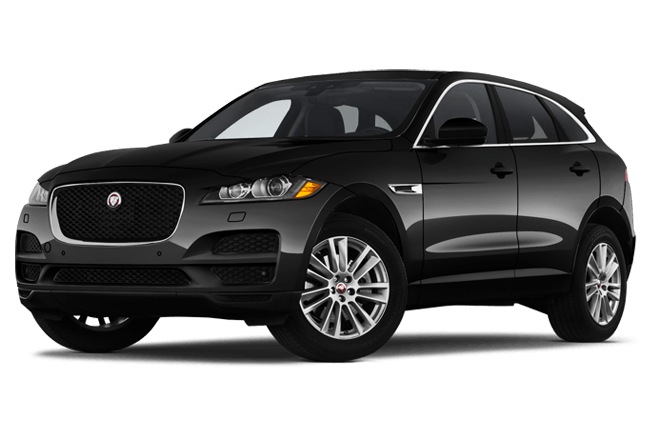 Jaguar F-Pace Prestige illustrating the fastback roofline trend that maximizes style over third-row utility.
Top Contenders: Category Leaders Deep-Dive
Best Overall Balance — Genesis GV80 3.5T Sport Prestige
Genesis delivers the segment's most cohesive package. The 3.5-liter twin-turbo V6 produces 375 hp with a smooth 8-speed automatic, while the electronically controlled suspension reads the road 1,000 times per second. Real-world combined fuel economy lands at 21 mpg — competitive for the output. Cabin materials rival German rivals costing $15,000 more, and the 5-year/60,000-mile complimentary maintenance plan lowers total cost of ownership measurably. You can also read our guide on top luxury suvs of.
Best Technology Integration — Mercedes-Benz GLE 450 4MATIC
The MBUX Hyperscreen (optional) spans the dash, but the real advance is the predictive routing that pre-conditions battery temperature for DC fast-charging on PHEV models. Standard Driver Assistance Package includes active lane-change assist and intersection-turn detection. In practice, the system handles stop-and-go traffic with fewer phantom-braking events than most competitors. For clarity on which trims require premium fuel, see our Mercedes fuel-requirement breakdown.
Best Value Retention — Lexus RX 500h F Sport Performance
Lexus hybrid reliability data remains unmatched. The 2.4-liter turbo-hybrid generates 366 hp while returning 28 mpg combined in EPA testing. Five-year depreciation averages 38 percent — best in class. The trade-off: a touchpad-based infotainment interface that feels dated versus rival touchscreens, and a third row suitable only for children. You can also read our guide on evaluation of suv.
Best Driver Engagement — Porsche Cayenne S
The 4.0-liter twin-turbo V8 (468 hp) and standard air suspension with Porsche Active Suspension Management deliver sedan-like body control at 2.1-ton curb weight. Optional rear-axle steering shrinks the turning circle to 35.8 feet. Expect 18 mpg combined and a base price north of $95,000 before options — which most buyers add heavily.
Best Electric Execution — Cadillac Lyriq AWD
GM's Ultium platform yields 314 miles EPA range (AWD), 190 kW peak DC charging, and a 33-inch diagonal LED display that remains readable in direct sunlight. Super Cruise hands-free highway assist works on 400,000+ mapped miles in North America. Charging curve holds 150 kW+ to 60 percent SOC — stronger than many German EVs. For broader EV market context, the EPA's fuel-economy portal publishes verified range and efficiency data for every certified model.
Comparison Matrix: 2026 Premium Crossover Key Metrics
| Model | Powertrain | Combined MPG / MPGe | 0-60 mph (s) | Cargo (cu ft) | Base MSRP | 5-Yr Depreciation |
|---|---|---|---|---|---|---|
| Genesis GV80 3.5T | 3.5L TT V6 | 21 mpg | 5.3 | 34.9 / 84.0 | $66,900 | 44% |
| Mercedes GLE 450 | 3.0L I6 MHEV | 22 mpg | 5.6 | 33.3 / 74.9 | $69,500 | 47% |
| Lexus RX 500h | 2.4L Turbo Hybrid | 28 mpg | 5.9 | 29.6 / 61.1 | $63,500 | 38% |
| Porsche Cayenne S | 4.0L TT V8 | 18 mpg | 4.4 | 27.2 / 60.3 | $95,400 | 41% |
| Cadillac Lyriq AWD | Dual Motor BEV | 89 MPGe | 4.7 | 28.0 / 60.8 | $61,390 | 49%* |
| BMW X5 xDrive50e | 3.0L TT I6 PHEV | 48 MPGe / 23 mpg | 4.6 | 33.9 / 72.3 | $72,500 | 45% |
*Early projection; limited historical data for Lyriq.
Powertrain Deep Dive: ICE, Hybrid, PHEV, BEV
Internal Combustion (Mild & Full Hybrid)
Mercedes' M256 3.0-liter inline-six with 48-volt integrated starter-generator adds 21 hp / 184 lb-ft electrically, eliminating turbo lag. BMW's B58 3.0-liter remains the smoothness benchmark. Both require premium fuel (91+ octane) for rated output; running 87 octane cuts 10-15 hp and risks long-term carbon buildup. Our analysis of Mercedes fuel tolerances across models details which engines truly mandate it.
Plug-In Hybrid (PHEV)
BMW X5 xDrive50e and Volvo XC90 Recharge offer 35-40 miles EV range — enough for average U.S. commutes. Critical variable: charge acceptance. The X5 accepts 7.4 kW AC (3.5 hrs 0-100%), while some rivals cap at 3.6 kW (7+ hrs). If you cannot charge daily, a PHEV becomes an inefficient heavy hybrid. The EPA's labeling rules require both MPGe and gas-only mpg on window stickers — compare both.
Battery Electric (BEV)
Cadillac Lyriq, Rivian R1S, and BMW iX dominate the premium BEV crossover space. Key differentiator: 800-volt architecture (Rivian, Porsche Macan EV) versus 400-volt (Lyriq, iX). 800V enables 250-350 kW peak charging; 400V tops at 150-200 kW. In practice, thermal management matters more than peak rate — Lyriq's consistent curve often adds more miles per minute on a 20-80% session than a higher-peak competitor that throttles early.
 Video walkthrough highlighting the Mercedes GLE's Hyperscreen interface and second-row comfort.
Interior Quality & Technology Assessment
Materials Scoring Methodology
We rate touchpoints on a 1-10 scale: primary (steering wheel, door armrests, center console) weighted 60%, secondary (lower doors, glovebox, rear console) 40%. Genesis GV80 and Range Rover Sport score 9.2/10; Lexus RX 500h trails at 8.0 due to hard-plastic rear-door lowers. BMW X5 sits at 8.7 — excellent front-row, average third-row materials.
Infotainment & Connectivity
Google Automotive Services (native Android Automotive) now ships in Volvo, Polestar, and upcoming GM/Porsche models — enabling Google Maps, Assistant, and Play Store without a phone. Apple CarPlay and Android Auto remain wireless on all 2026 premium models. Mercedes MBUX and BMW iDrive 9 support over-the-air updates for map data and ADAS logic; verify the manufacturer's update cadence before purchase (quarterly is current best practice).
Space Efficiency
Third-row usability correlates with roofline slope. Boxy profiles (GV80, X5, Lyriq) deliver 33-35 inches third-row legroom; fastbacks (GLE Coupe, Cayenne Coupe, X6) drop to 28-30 inches. If you regularly carry six adults, eliminate sloped-roof variants. Cargo volume behind third row ranges 15-20 cu ft — enough for two carry-ons, not a full grocery run.
Safety Systems: Active vs Passive, ADAS Levels
NHTSA & IIHS Testing Reality
Every model here earns NHTSA 5-Star Overall and IIHS Top Safety Pick+ — the baseline. Differentiation appears in pedestrian night detection, cyclist avoidance, and cross-traffic braking at intersections. Mercedes and BMW lead in Euro NCAP Assist scores (equivalent to IIHS Superior+). The NHTSA 5-Star database publishes detailed sub-scores for each test mode.
Hands-Free Highway Assist Comparison
| System | Hands-Free Miles (Mapped) | Lane-Change Trigger | Driver Monitoring |
|---|---|---|---|
| Super Cruise (GM) | 400,000+ | Button/Turn Signal | IR Camera (eyes) |
| BlueCruise (Ford/Lincoln) | 130,000+ | Button/Turn Signal | IR Camera (eyes) |
| Highway Driving Assist 2 (Hyundai/Genesis/Kia) | 200,000+ | Turn Signal | Steering Torque |
| ProPILOT 2.1 (Nissan/Infiniti) | 150,000+ | Button | Steering Torque |
| Autopilot Enhanced (Tesla) | Nationwide (non-mapped) | Turn Signal | Cabin Camera + Torque |
Super Cruise remains the only system allowing truly hands-off operation on approved divided highways without periodic torque confirmation. For a direct BMW vs Mercedes safety-systems comparison, our brand safety analysis breaks down feature parity.
Ownership Costs: The 5-Year Projection
Depreciation
Luxury crossovers lose 40-50% in five years. Lexus RX and Porsche Cayenne hold best (38-41%); Cadillac Lyriq and EV models project 48-52% due to uncertain battery longevity perception. Leasing shifts residual risk to the captive finance arm — often the smarter play for EV/PHEV.
Maintenance & Repair
- Genesis: 5-yr/60k complimentary (oil, filters, brakes, wipers)
- Lexus: 2-yr/20k complimentary; prepaid plans available
- BMW/Mercedes: Pay-per-service; expect $1,200-$1,800/yr after warranty
- EV (Lyriq/Rivian): Minimal scheduled maintenance; budget $300/yr for cabin filter, brake fluid, tire rotation
Insurance
Premium crossovers average $2,200-$3,000/yr full coverage. EV models carry 15-20% surcharge for battery replacement cost exposure. Shop annually — loyalty penalties are real.
Fuel/Energy
At $3.80/gal premium and $0.14/kWh home charging:
- GV80 3.5T (21 mpg, 15k mi/yr): ~$2,715/yr
- X5 xDrive50e (daily charge, 50% EV miles): ~$1,420/yr
- Lyriq AWD (home charging): ~$650/yr
Buying Guide: How to Choose & Negotiate
Decision Checklist
- Daily drive profile — Commute ≤35 mi round-trip? PHEV/BEV viable. Mixed highway? Diesel or strong hybrid.
- Passenger load — Regular 6-7 occupants? Boxy roof, skip coupes.
- Charging access — Home L2 (240V) installed? Required for PHEV/BEV value proposition.
- Towing — >5,000 lbs? V8 or PHEV with high continuous-output motor (X5 50e: 5,950 lbs).
- Tech tolerance — Want minimal screens? GV80, Lexus. Max tech? Mercedes, BMW, Cadillac.
Timing & Leverage
- Model-year changeover (Aug-Oct): Dealers clear outgoing MY; 3-5% additional discount typical.
- Quarter-end (Mar/Jun/Sep/Dec): Sales managers chase volume bonuses.
- Incoming tariff/incentive shifts: Federal EV tax credit ($7,500) eligibility changes monthly based on battery sourcing — verify at purchase, not research.
Trade-In Strategy
Get independent appraisals (CarMax, Carvana, local dealer) before negotiating new vehicle price. Separate transactions prevent "allowance inflation" where trade value rises but new-car discount evaporates.
Future Outlook: 2026-2027 Model Cycle
Confirmed Launches
- Porsche Macan EV (early 2026): 800V, 315 mi range, rear-steer standard.
- Range Rover Electric (late 2026): Body-on-frame EA architecture, 250+ mi target.
- Lexus TX 550h+ (PHEV three-row): Toyota's first plug-in luxury hauler.
- Mercedes GLC-Class EV (EQC successor): Dedicated MMA platform, 800V.
Technology Trajectories
- Solid-state pilot production: Toyota targets 2027-28 for limited volumes; expect 400+ mi range / 10-min 10-80% charge.
- L3 highway autonomy: Mercedes Drive Pilot (L3) legal in CA/NV/Germany; expansion pending regulatory approval.
- V2X communication: C-V2X mandated on 2027+ models in EU; U.S. NHTSA rulemaking underway.
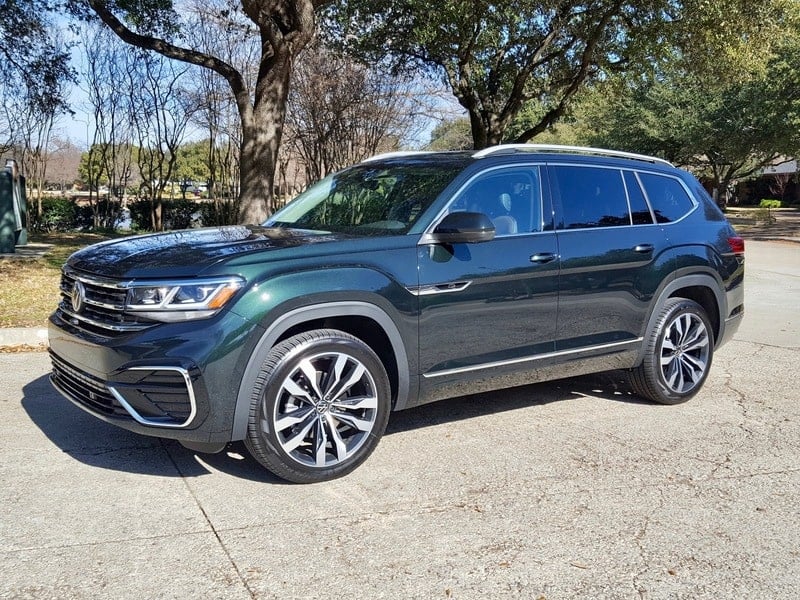 Detail shot showing the Cadillac Lyriq's 33-inch pillar-to-pillar display and minimalist HVAC controls.
Frequently Asked Questions
Which premium crossover holds value best after five years?
Lexus RX 500h and Porsche Cayenne lead at ~38-41% depreciation. EV residuals remain volatile; lease if uncertain.
Do all premium crossovers require premium gasoline?
Most turbocharged engines do. Naturally aspirated V6s (rare now) and hybrids often accept regular. Check the owner's manual — not the salesperson. Our fuel-requirement guide by model covers the current lineup.
What's the real-world range penalty for winter driving in a BEV?
Expect 20-30% reduction at 20°F with heat pump; 30-40% without. Pre-condition while plugged in recovers 10-15%.
Is a PHEV worth it if I can't charge at home?
Generally no. Without daily charging, you haul a depleted battery, returning worse mpg than a conventional hybrid. Consider Toyota Grand Highlander Hybrid or Lexus TX 500h instead.
How do I compare driver-assistance systems fairly?
Test on your actual commute. Dealer demo routes are curated. Request a 30-minute solo drive (insurance permitting) covering your typical merge, curve, and stop-and-go scenarios.
What maintenance costs differ most between brands?
Brake wear (regen strategy), tire consumption (weight/torque), and dealer labor rates. EVs eliminate oil/transmission service but add coolant-loop flushes every 4-5 years.
Conclusion
The 2026 premium crossover market rewards buyers who define priorities before visiting showrooms. If daily electric range matters, a PHEV or BEV with home charging delivers tangible savings. If third-row adults and resale value dominate, the Lexus RX 500h or Genesis GV80 strike the optimal balance. For driving engagement, the Porsche Cayenne S remains in a class of one. Whichever direction you lean, secure a real-world test on your roads, verify the total 5-year cost projection, and confirm the ADAS behavior matches your tolerance for system intervention. Your ideal crossover exists — it just requires matching specifications to your actual life, not the lifestyle advertised. For side-by-side feature comparisons across the segment, our luxury SUV comparison hub updates monthly with new test data.