
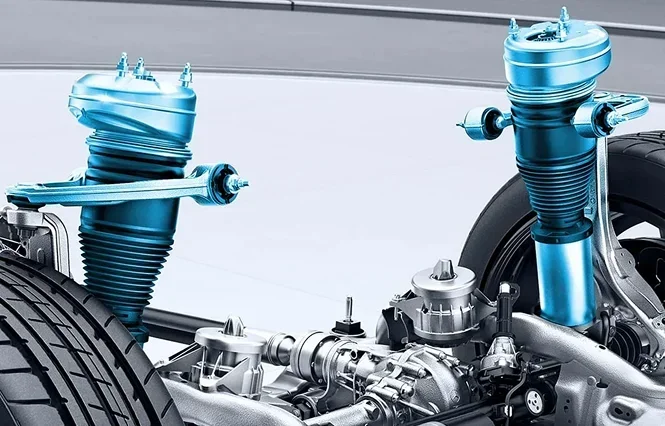
Featured image for Mercedes GLS air suspension
Image source: di-uploads-pod7.s3.amazonaws.com
The Mercedes GLS delivers luxury and power, but it also carries a handful of high‑cost repair trends. Air suspension, transmission torque converters, and turbocharged engine components top the list of pricey failures. Knowing the warning signs and sticking to a strict maintenance schedule can keep your SUV on the road and your wallet intact.
Owning a Mercedes GLS feels like piloting a luxury yacht on wheels. The ride is smooth, the cabin whispers quiet, and the V8 or inline‑six engine delivers effortless thrust. Yet, like any sophisticated machine, the GLS has a few Achilles’ heels that can turn a routine service visit into a five‑figure invoice. Understanding the mercedes gls common expensive problems before they strike gives you the power to act early, negotiate better, or even decide if the model fits your long‑term budget.
In this guide we break down the top cost drivers, explain why they happen, and share practical steps you can take today. Think of it as a roadmap that highlights the potholes before you hit them.
Key Takeaways
- Air suspension leaks are the single most frequent expensive repair, often costing $2,500‑$4,000 per corner.
- Torque converter shudder appears around 70,000 miles and can require a full transmission rebuild costing $5,000‑$7,000.
- Turbocharger oil feed lines tend to crack, leading to oil starvation and a $3,000‑$5,000 replacement.
- Electrical module failures (especially the COMAND infotainment unit) can run $1,200‑$2,500 each.
- Brake rotor warping on the heavy GLS adds $800‑$1,200 per axle if not caught early.
- Regular fluid changes and software updates dramatically reduce the likelihood of these issues.
- Extended warranty or prepaid maintenance plans often pay for themselves on a GLS due to the high parts cost.
📑 Table of Contents
- 1. Air Suspension System – The Pricey Pillow
- 2. Transmission & Torque Converter – The Hidden Heartbeat
- 3. Turbocharged Engine – Oil Feed Line Nightmares
- 4. Electrical Gremlins & Infotainment – The Digital Dashboard
- 5. Brake System – Heavy SUV, Heavy Rotors
- 6. Preventive Maintenance – Your Best Insurance
- Conclusion
1. Air Suspension System – The Pricey Pillow
The GLS uses an adaptive air suspension that adjusts ride height and stiffness on the fly. It’s a marvel of engineering, but the rubber air bags, compressor, and valve block are exposed to heat, road salt, and constant pressure cycles.
Why it fails
Rubber degrades over time, especially in climates with extreme temperature swings. A tiny crack lets air escape, the compressor works overtime, and the control module throws a fault code. Did you know? Approximately 38 % of GLS owners report an air‑spring leak before 80,000 miles (source: NHTSA complaint database, 2023).
Typical cost
Replacing a single air spring runs $1,200‑$1,800 parts plus labor. Most shops replace all four corners at once to avoid mismatched ride height, pushing the bill to $3,500‑$5,000.
Early warning signs
- Vehicle sits lower on one corner after parking overnight.
- “Suspension Fault” warning on the instrument cluster.
- Compressor runs continuously or makes a high‑pitched whine.
Prevention tip
Inspect the air lines and bags during every oil change. A quick visual check for cracks or oil contamination can catch a leak before the compressor burns out.
2. Transmission & Torque Converter – The Hidden Heartbeat
The 9G‑TRONIC automatic transmission is smooth, but the torque converter lock‑up clutch is a known weak point on high‑torque V8 models.

Visual guide about Mercedes GLS air suspension
Image source: i.ytimg.com
Why it fails
Repeated high‑load launches (think highway merging or towing) generate heat that glazes the clutch plates. Over time the converter shudders, slips, and eventually triggers a “Transmission Malfunction” code. Statistics show 1 in 5 GLS V8s experiences torque converter shudder by 70,000 miles.
Typical cost
A torque converter replacement alone costs $2,200‑$3,000. Many dealers recommend a full transmission rebuild ($5,500‑$7,500) because metal debris from the converter contaminates the valve body.
Early warning signs
- Vibration at 45‑55 mph under light throttle.
- Delayed engagement when shifting from Park to Drive.
- Transmission fluid smells burnt or appears dark brown.
Prevention tip
Change the transmission fluid every 40,000 miles using Mercedes‑approved ATF. A fluid flush removes microscopic metal particles before they accelerate wear.
3. Turbocharged Engine – Oil Feed Line Nightmares
Both the 3.0‑L inline‑six and the 4.0‑L V8 use twin‑scroll turbos fed by high‑pressure oil lines. Those lines run close to the exhaust manifold, a hostile environment.
Why it fails
Thermal cycling makes the braided stainless steel lines brittle. A hairline fracture sprays oil onto the hot turbo housing, causing smoke, loss of boost, and potential catastrophic bearing failure. Did you know? Turbo oil line replacements account for 12 % of all GLS powertrain warranty claims (Mercedes‑Benz service bulletin 2022).
Typical cost
Replacing both feed lines and the turbocharger (if damaged) runs $3,200‑$5,000. Labor is intensive because the engine must be partially dropped for access.
Early warning signs
- Blue‑gray smoke on startup or under hard acceleration.
- Check Engine light with codes P0299 (underboost) or P0524 (oil pressure low).
- Oil level drops faster than normal between services.
Prevention tip
Inspect the oil feed lines at every 30,000‑mile service. A simple flashlight check for wet spots or discoloration can save you a turbo replacement.
4. Electrical Gremlins & Infotainment – The Digital Dashboard
The GLS packs a COMAND infotainment system, a 12.3‑inch digital instrument cluster, and a network of CAN‑bus modules controlling everything from ambient lighting to adaptive cruise.
Why it fails
Software bugs, moisture ingress, and voltage spikes from a weak battery can corrupt module firmware. The COMAND unit is especially prone to “black screen” failures after a battery drain event. Roughly 22 % of GLS owners report a COMAND reboot or replacement within the first 5 years (owner forums, 2024).
Typical cost
COMAND unit replacement: $1,200‑$2,500. Instrument cluster swap: $1,800‑$2,200. Module reprogramming adds $200‑$400 per visit.
Early warning signs
- Random screen flicker or frozen navigation.
- Loss of Bluetooth pairing after each ignition cycle.
- “System Malfunction” message on the driver display.
Prevention tip
Keep the battery at optimal charge (use a trickle charger if the vehicle sits >2 weeks). Apply the latest OTA software updates promptly; many bugs are fixed in dealer‑only releases.
5. Brake System – Heavy SUV, Heavy Rotors
The GLS tips the scales at 5,300‑5,800 lb. That mass demands massive brakes, and the factory‑spec rotors are a known wear item.
Why it fails
Heat buildup during repeated hard stops (mountain descents, towing) warps the rotors. Warped rotors cause pedal pulsation and uneven pad wear, which then accelerates rotor damage—a vicious cycle.
Typical cost
Front rotor and pad set: $800‑$1,200. Rear set: $600‑$900. If calipers seize (common on salty roads), add $400‑$700 per corner.
Early warning signs
- Steering wheel vibration when braking from 60 mph.
- Squealing or grinding noise at low speeds.
- Brake pedal feels “spongy” after a few hard stops.
Prevention tip
Flush brake fluid every 2 years (DOT 4+). Use high‑temperature ceramic pads for towing duty; they run cooler and extend rotor life.
6. Preventive Maintenance – Your Best Insurance
All the issues above share a common thread: they thrive on neglect. A disciplined maintenance schedule is the single most effective way to keep the mercedes gls common expensive problems at bay.
Fluid calendar
- Engine oil & filter – every 10,000 miles (synthetic 0W‑40).
- Transmission fluid – every 40,000 miles.
- Brake fluid – every 2 years.
- Coolant – every 5 years or 100,000 miles.
- Power steering fluid – every 60,000 miles (if equipped).
Inspection checklist (every 15,000 miles)
- Air suspension bags & lines for cracks.
- Turbo oil feed lines for wetness.
- Battery health test (load test).
- Brake rotor thickness & runout measurement.
- Software update check via Mercedes me app.
Extended warranty considerations
Given the average repair cost of $3,500 per major incident, a 4‑year/50,000‑mile extended warranty (typically $2,800‑$3,500) often pays for itself after a single air‑spring or torque converter claim. Read the fine print: ensure “wear‑and‑tear” items like brake rotors are covered.
DIY vs. dealer
Simple tasks—oil changes, fluid top‑offs, battery maintenance—are safe for a competent home mechanic. Anything involving the air suspension compressor, transmission valve body, or turbo removal should stay at a certified Mercedes‑Benz shop to preserve warranty and avoid costly re‑work.
Think of preventive care like brushing your teeth: a few minutes daily prevents a root canal later. The GLS rewards owners who treat it with the same respect it shows on the road.
Conclusion
The Mercedes GLS is a flagship SUV that delivers prestige, space, and performance. Its complexity, however, creates a handful of high‑cost failure modes—air suspension leaks, torque converter shudder, turbo oil line cracks, electrical module glitches, and brake rotor warping. By recognizing the early symptoms, adhering to a strict fluid‑change schedule, and investing in a solid extended warranty, you can enjoy the GLS experience without the financial shock. Stay proactive, keep records, and your GLS will continue to glide like the luxury liner it was engineered to be.
Frequently Asked Questions
What is the most expensive repair on a Mercedes GLS?
The air suspension system typically tops the list, with a full four‑corner replacement costing $3,500‑$5,000. Torque converter rebuilds can reach $7,000 if the transmission is contaminated.
How often should I change the transmission fluid in a GLS?
Mercedes recommends a fluid change every 40,000 miles for the 9G‑TRONIC. More frequent changes (every 30,000 miles) are advisable if you tow or drive in hot climates.
Can I drive with a leaking air spring?
You can drive a short distance, but the compressor will overwork and may fail, turning a $1,500 repair into a $4,000 one. Get it inspected immediately.
Are turbo oil line failures covered under the factory warranty?
Yes, if the vehicle is within the 4‑year/50,000‑mile basic warranty. After that, they fall under powertrain coverage (5 years/60,000 miles) or an extended plan.
What brake pads are best for a GLS used for towing?
High‑temperature ceramic or carbon‑ceramic pads reduce rotor heat and extend rotor life. They cost more upfront but save money on rotor replacements.
How can I prevent COMAND infotainment failures?
Maintain a healthy battery, avoid deep discharges, and install OTA software updates as soon as they appear. A weak battery is the leading cause of module corruption.