
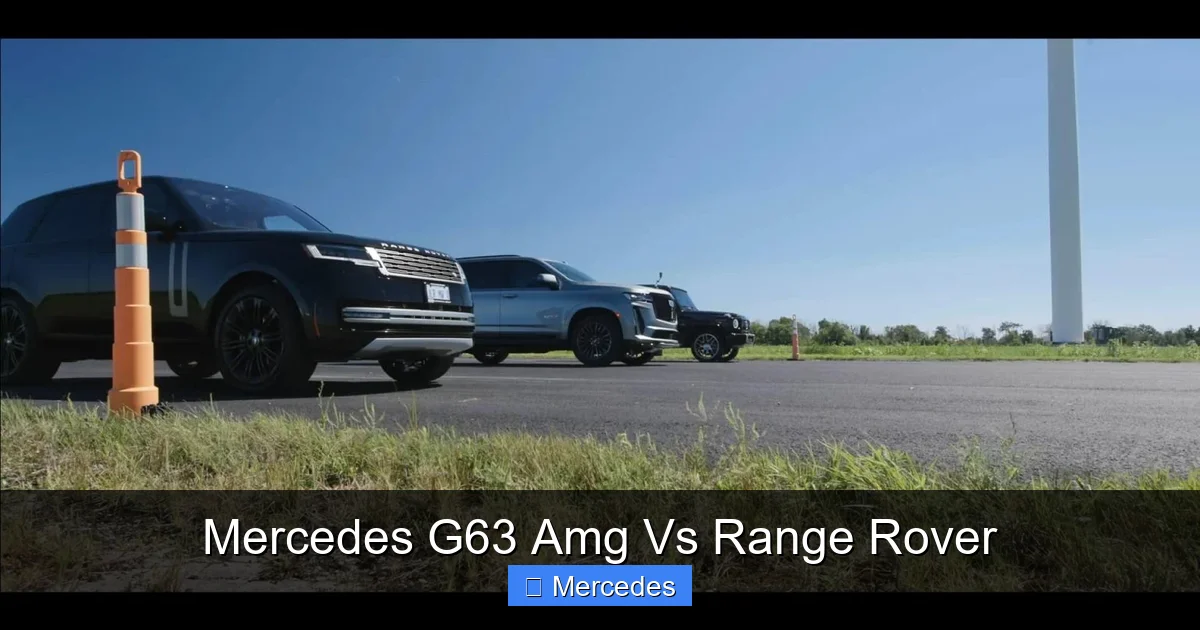
The Mercedes G63 AMG vs Range Rover battle represents two of the most powerful luxury SUVs on the market. While both deliver elite comfort and commanding presence, they take dramatically different approaches to luxury and performance. The G63 AMG leans into raw power with its twin-turbo V8 engine and aggressive styling, while the Range Rover emphasizes refined elegance and advanced technology.
Key Takeaways
- Performance Powerhouses: Both vehicles pack massive engines—the G63’s 4.0L V8 and Range Rover’s 5.0L supercharged V8—delivering impressive acceleration and towing capacity.
- Luxury Philosophy: The G63 AMG focuses on sporty luxury with bucket seats and bold design, while the Range Rover offers plush comfort with premium leather and wood trim.
- Off-Road Capability: Despite their luxury status, both excel off-road with advanced terrain response systems and ground clearance that handles rough terrain.
- Interior Technology: The Range Rover leads in infotainment features with its Pivi Pro system, while the G63 offers a more driver-focused cockpit with AMG Performance steering wheel.
- Pricing Differences: The G63 AMG typically costs $100K+ less than a top-tier Range Rover, offering similar performance at a lower price point.
- Fuel Efficiency: The G63’s 4.0L twin-turbo engine provides better fuel economy than the Range Rover’s larger 5.0L engine, making it slightly more efficient.
- Resale Value: Both maintain strong resale values, but the Range Rover generally holds value better long-term due to broader appeal and reliability.
Quick Answers to Common Questions
Which is faster, the Mercedes G63 AMG or Range Rover?
Answer: The Mercedes G63 AMG is faster, hitting 60 mph in about 4.5 seconds compared to the Range Rover’s 5.1 seconds. The G63’s twin-turbo V8 provides more immediate acceleration, while the Range Rover prioritizes smooth power delivery over raw speed.
Can both vehicles handle serious off-roading?
Answer: Absolutely. Both the G63 and Range Rover are capable off-roaders with advanced systems like differential locks and terrain response. The G63 excels in technical rock crawling due to its geometry, while the Range Rover offers better comfort on longer trail rides.
Which has better interior luxury?
Answer: The Range Rover generally offers superior interior luxury with more premium materials, better rear seat comfort, and more extensive customization options. The G63 focuses more on sporty luxury with firmer seating and driver-focused controls.
What’s the price difference between them?
Answer: The G63 AMG starts around $157,000 while the Range Rover starts around $110,000. However, fully loaded models can cost $200,000+ for either vehicle, with the Range Rover typically being the more expensive option when fully equipped.
Which is better for daily driving?
Answer: For most people, the Range Rover is better for daily driving due to its smoother ride, more comfortable seats, and better noise isolation. The G63 can be firm and loud, making it less ideal for long commutes unless you enjoy the sporty driving experience.
📑 Table of Contents
The Ultimate Luxury SUV Showdown: Mercedes G63 AMG vs Range Rover
In the world of ultra-luxury SUVs, few vehicles command as much attention as the Mercedes-AMG G63 and the Range Rover. These are not just cars—they’re statements of power, prestige, and performance. When you’re deciding between these two titans, you’re choosing between German engineering precision and British luxury tradition. Let’s dive deep into what makes each vehicle unique and help you understand which one might be right for your lifestyle.
The Mercedes-AMG G63 has become an icon in recent years, known for its boxy silhouette, imposing grille, and unmistakable growl. It’s the vehicle you see cruising city streets while still looking ready for any terrain. The Range Rover, meanwhile, represents decades of refinement and evolution—from military utility vehicles to today’s pinnacle of luxury SUVs. Both have loyal followings and come with hefty price tags, so understanding their differences is crucial before making your decision.
Performance Comparison: Engine Power and Driving Dynamics
Under the Hood: Engine Specifications
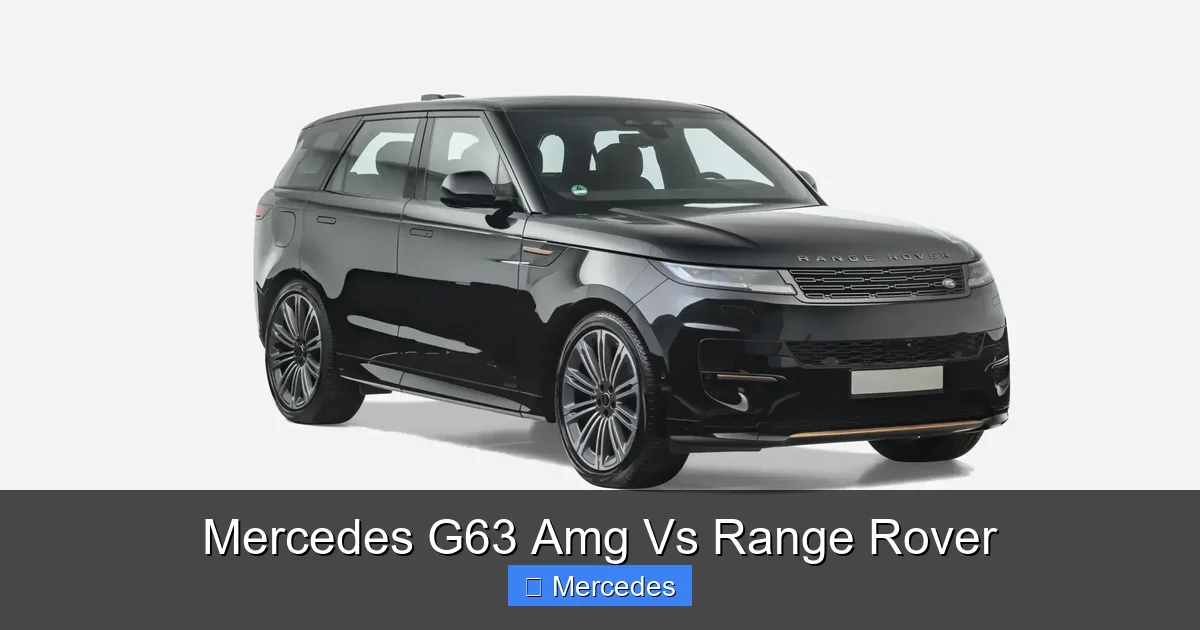
The heart of the AMG G63 is Mercedes’ 4.0-liter V8 biturbo engine that produces 577 horsepower and 627 lb-ft of torque. This engine uses twin turbos to deliver power smoothly across the entire RPM range, eliminating turbo lag that affects some other supercharged engines. The Range Rover comes standard with a 5.0-liter supercharged V8 producing 518 horsepower and 461 lb-ft of torque, though you can upgrade to a 6.0-liter V12 for even more power.
Visual guide about Mercedes G63 Amg Vs Range Rover
Image source: flib.samar.pl
While the G63’s numbers look impressive, the Range Rover’s supercharged engine delivers power with a distinctive smoothness that many owners love. The G63 feels more aggressive and responsive, especially when you floor it from a standstill. The Range Rover prioritizes comfort over raw excitement, making it feel more like a grand touring vehicle than a sports car.
Drivetrain and Handling
Both vehicles feature permanent all-wheel drive with low-range gearing for serious off-road capability. The G63’s 9-speed automatic transmission shifts quickly and keeps the engine in its optimal power band. The Range Rover uses an 8-speed automatic that’s tuned for smoothness rather than speed.
In terms of handling, the G63 feels more planted and connected to the road. Its shorter wheelbase and sport-tuned suspension make it more agile through corners. The Range Rover has a longer wheelbase and more body roll, which some find concerning but others appreciate for the smoother ride quality.
Acceleration and Top Speed
The G63 hits 60 mph in about 4.5 seconds and has a top speed electronically limited to 130 mph. The Range Rover does the same sprint in around 5.1 seconds with a 130 mph cap. While these numbers seem close, the G63 feels faster because of its immediate torque delivery and lower center of gravity.
Luxury and Interior Experience
Interior Design Philosophy
This is where the G63 and Range Rover diverge significantly in their approach to luxury. The G63’s interior is functional yet luxurious, with AMG-branded elements like the three-spoke performance steering wheel and aluminum shift paddles. It feels more like a driver-focused cabin with sport seats that hold you firmly during spirited driving.
Visual guide about Mercedes G63 Amg Vs Range Rover
Image source: flib.samar.pl
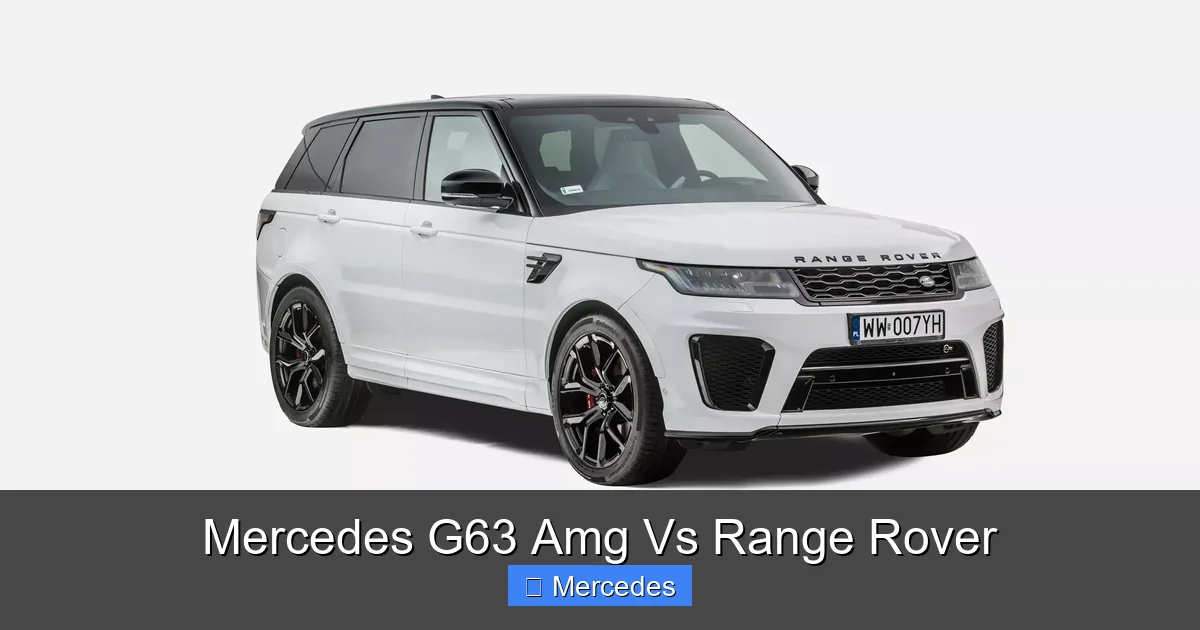
The Range Rover takes a completely different approach. Every surface is covered in premium materials—leather, wood veneer, and metal trim. The seats are incredibly plush with extensive heating, cooling, and massage functions. The rear seats can transform the Range Rover into a mobile office or relaxation suite.
Technology and Infotainment
The G63 runs on Mercedes’ MBUX infotainment system with a dual-screen setup (digital instrument cluster and center touchscreen). It’s intuitive but can feel cluttered compared to the Range Rover’s cleaner interface. The Range Rover uses its Pivi Pro system with a single large touchscreen that’s easier to use while driving.
Both offer advanced driver assistance features, but the Range Rover includes more comprehensive safety systems out of the box. The G63 requires optional packages for some advanced features that come standard on the Range Rover.
Space and Practicality
The Range Rover clearly wins in passenger space, especially in the rear. Legroom and headroom are generous for adults of most sizes. The G63’s rear seats are adequate for short trips but become cramped on longer journeys. Cargo space is similar in both vehicles, though the Range Rover’s seats can fold flat to create a larger cargo area.
Off-Road Capability and Terrain Response
Advanced Off-Road Systems
Despite their luxury positioning, both vehicles are serious off-roaders. The G63 features Mercedes’ legendary three differential locks that can send power to individual wheels when traction is lost. The Range Rover uses its Terrain Response 2 system that automatically adapts settings based on the terrain you’re crossing.
The G63 has a maximum approach angle of 35 degrees and departure angle of 29 degrees. The Range Rover matches or exceeds these figures, giving it excellent off-road geometry. Both have adjustable air suspension that can raise the vehicle for maximum ground clearance.
Real-World Off-Road Performance
In actual off-road conditions, both vehicles perform exceptionally well. The G63’s boxy shape gives it excellent approach and departure angles, making it ideal for rock crawling and steep inclines. The Range Rover’s longer wheelbase can be a disadvantage in tight technical sections but provides better stability on trails.
The G63’s steering is heavier off-road, requiring more effort but providing better feedback. The Range Rover’s steering is lighter and easier to manage, though some drivers miss the connection to the terrain.
Design and Exterior Styling
Exterior Lines and Presence
The G63’s exterior design is instantly recognizable with its squared-off silhouette, prominent grille, and black AMG badging. It looks like it belongs in a museum of military vehicles but with enough modern touches to avoid appearing dated. The Range Rover has evolved over decades to become sleeker while maintaining its commanding presence.
The G63’s design language is more aggressive and purposeful, while the Range Rover emphasizes sophistication and timeless elegance. Both vehicles turn heads wherever they go, but for different reasons.
Customization Options
Both manufacturers offer extensive customization options. The G63 can be personalized through AMG Individual options including special paint colors, exclusive wheel designs, and interior trims. The Range Rover offers even more extensive personalization through its Bespoke program, allowing customers to create truly unique vehicles.
Ownership Experience and Reliability
Maintenance and Service
The Range Rover generally has better reliability scores and requires less frequent maintenance than the G63. Mercedes-AMG vehicles tend to need more specialized service due to their performance-oriented components. However, both brands have improved their reliability in recent years.
Cost of Ownership
Insurance costs are higher for both vehicles due to their luxury status and repair costs. The G63 typically costs less to insure than the Range Rover. Fuel economy is similar—both get around 12-15 mpg combined depending on driving style and conditions.
Resale Value
The Range Rover generally maintains its value better than the G63 over time. This is partly because the Range Rover appeals to a broader market and has fewer extreme performance modifications that can affect resale value.
Frequently Asked Questions
Is the Mercedes G63 AMG worth the extra cost over the Range Rover?
Answer: The G63 offers more performance and aggressive styling for similar money, making it worth considering if you prioritize driving dynamics. However, the Range Rover provides better everyday comfort and more luxury features, so the “worth” depends on your priorities and driving style.
Which vehicle is better for family use?
Answer: The Range Rover is generally better suited for families due to its spacious interior, superior rear seat comfort, and more practical features like better climate control for passengers. The G63’s sportier seats and firmer ride may not be as comfortable for children on long trips.
Do both vehicles have good fuel economy?
Answer: Neither is particularly fuel-efficient, but they’re comparable. Expect 12-15 mpg combined for both vehicles. The G63’s smaller engine gives it a slight edge in efficiency, while the Range Rover’s larger engine provides more power at the cost of better mileage.
Which has better towing capacity?
Answer: The Mercedes G63 AMG has a higher towing capacity of up to 7,000 pounds compared to the Range Rover’s 7,700 pounds. Both can easily tow trailers, boats, or campers, so either would serve well for towing needs.
Are there significant differences in build quality?
Answer: Both vehicles demonstrate excellent build quality for their price ranges. The Range Rover tends to have tighter panel gaps and more consistent fitment, while the G63’s sportier nature means some components are designed to move more freely for better performance.
Which vehicle ages better visually?
Answer: The Range Rover’s design is more conservative and classic, meaning it ages better over time without looking outdated. The G63’s aggressive styling might become polarizing as tastes change, though both maintain strong visual appeal.