

The Mercedes-Benz G63 AMG W463 is more than just a car—it’s a cultural phenomenon that blends raw performance with uncompromising luxury. First introduced in 1979 and produced until 2018, the W463 remains one of the most sought-after classic SUVs worldwide. With its iconic boxy design, handcrafted interior, and twin-turbo V8 engine, the G63 AMG W463 delivers an unforgettable driving experience for collectors and enthusiasts alike.
Key Takeaways
- Iconic Design: The W463 features a distinctive boxy silhouette that has become synonymous with rugged elegance and timeless appeal.
- Powerful Performance: Equipped with a hand-built AMG 5.5L V8 biturbo engine producing 536 horsepower and 561 lb-ft of torque.
- Handcrafted Luxury: Every G63 AMG W463 is assembled by hand in Affalterbach, Germany, ensuring premium materials and meticulous attention to detail.
- Off-Road Capability: Features permanent all-wheel drive, locking differentials, and high/low-range gearing for extreme terrain mastery.
- Collector’s Item: Limited production numbers and exclusivity make the W463 a prized possession among automotive enthusiasts.
- Modern Upgrades Available: Classic owners often retrofit modern tech like infotainment systems and adaptive suspension for daily usability.
- Rare and Valuable: Well-maintained examples can command prices exceeding $200,000, especially in original condition or low mileage.
The Mercedes-Benz G63 AMG W463 isn’t just another luxury SUV—it’s a legend. For nearly four decades, from 1979 to 2018, this beast ruled both city streets and backcountry trails. Built on the foundation of the original G-Class (Geländewagen), which started life as a military vehicle, the W463 evolved into something extraordinary. When AMG took over development in the early 2000s, they didn’t just tweak it—they transformed it into a street-legal monster that could conquer mountains or cruise Beverly Hills with equal grace.
What makes the Mercedes Benz G63 AMG W463 so special? It’s the perfect blend of brutal power and refined luxury. Think matte-finish leather seats, carbon fiber trim, and a growl from that hand-built V8 that sounds like thunder wrapped in velvet. But beneath the chrome accents and quilted stitching lies serious off-road DNA. With three locking differentials and a low-range transfer case, this thing was built to tackle anything Mother Nature throws at it—mud, rocks, snow, you name it.
To learn more about how SUVs evolved from rugged workhorses to family favorites, check out the history of SUVs.
And let’s not forget style. That boxy frame? It’s instantly recognizable. From Hollywood red carpets to desert rally stages, the W463 turns heads everywhere it goes. Whether you’re admiring it in person or dreaming about owning one, there’s no denying its magnetic presence.
Key Takeaways
- Understanding mercedes benz g63 amg w463: Provides essential knowledge
Quick Answers to Common Questions
Is the Mercedes Benz G63 AMG W463 reliable?
Yes, but like any classic vehicle, it requires proper maintenance. The hand-built AMG V8 is robust, but owners should stay on top of oil changes, cooling system checks, and differential servicing to ensure longevity.
Can I daily drive a G63 AMG W463?
Absolutely. Many owners use theirs as primary vehicles. Just be prepared for higher fuel consumption and occasional quirks—older electronics may need attention. Regular servicing minimizes surprises.
What’s the difference between G55 and G63 AMG W463?
The G55 used a naturally aspirated 5.4L V8 (400 hp), while the G63 AMG W463 features a twin-turbo 5.5L V8 (536 hp). The G63 is faster, more refined, and considered the true successor to the G55 lineage.
How much does a Mercedes Benz G63 AMG W463 cost?
Prices range from $80,000 for well-used examples to over $200,000 for pristine, low-mileage classics. Condition, mileage, and originality heavily influence value.
Are parts available for the W463?
Yes, though some discontinued parts may require sourcing from Europe or specialty suppliers. Joining enthusiast communities helps locate rare components and knowledgeable vendors.
📑 Table of Contents
- The Birth of an Icon: Origins of the G-Class
- Performance Under the Hood
- Luxury Meets Utility: Interior and Features
- Driving Dynamics and Handling
- Collectibility and Market Value
- Comparisons and Rivals
- Restoration and Modernization Tips
The Birth of an Icon: Origins of the G-Class
Before we dive into the heart-pounding performance of the G63 AMG W463, we need to understand where it came from. The story begins in 1972 when Mercedes-Benz launched the original Geländewagen—a compact, boxy, and brutally capable off-roader designed for military use. Its ladder-frame chassis, independent front suspension, and solid rear axle made it tough enough for war zones but surprisingly comfortable for civilian roads.
Over time, Mercedes refined the design for the civilian market. By the late 1970s, the W463 was born—officially known as the G-Class. What set it apart immediately were its clean lines, upright stance, and unmistakable square headlights. Even today, no other SUV looks like it. This wasn’t just functional; it was aspirational.
Fast forward to the 1990s and early 2000s, and Mercedes decided to partner with AMG—the high-performance division founded by former Mercedes engineers—to create a halo vehicle for the G-Class. Thus, the G55 AMG arrived in 2002, featuring a naturally aspirated 5.4L V8 and a reputation for being the ultimate luxury off-roader. But AMG wasn’t satisfied. They wanted more power, more refinement, and more exclusivity.
That’s how the G63 AMG W463 was born—a collaboration between two German giants aiming to redefine what a luxury SUV could be.
From Military Tool to Lifestyle Statement
Originally developed for NATO and special forces, the G-Class quickly gained popularity among civilians who appreciated its durability and simplicity. Over the years, Mercedes added features like air conditioning, automatic transmission, and even GPS navigation. But the core philosophy remained: keep it strong, keep it simple, keep it stylish.
By the time the W463 rolled off the assembly line, it had become a symbol of success and adventure. Celebrities, executives, and explorers loved it. In fact, the G-Class has appeared in countless films—from *Taken* to *The Italian Job*—further cementing its status as a cultural icon.
Today, the Mercedes Benz G63 AMG W463 is still revered for its heritage and craftsmanship. While newer models like the G63 AMG 6×6 have taken things to extremes, nothing quite matches the soul of the original W463.
Performance Under the Hood
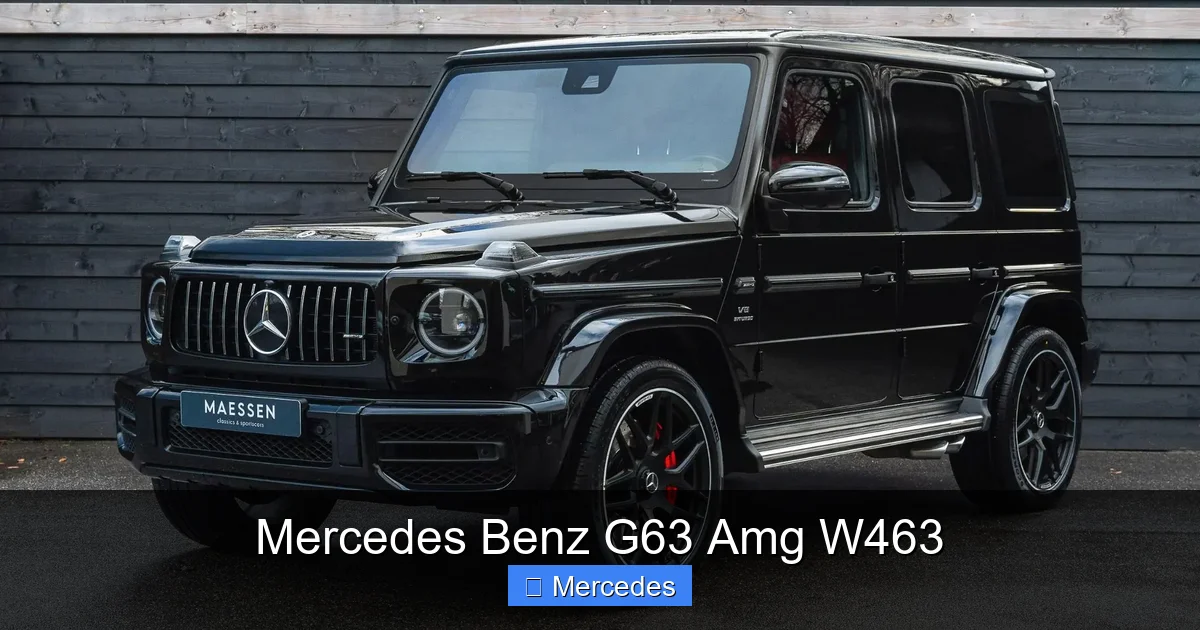
Visual guide about Mercedes Benz G63 Amg W463
Image source: maessencsc.com
When you press the start button on a G63 AMG W463, you’re not just turning on an engine—you’re activating a mechanical symphony. At its heart beats the legendary M157 5.5L V8 biturbo engine, hand-built by AMG technicians in Affalterbach, Germany. Producing 536 horsepower and 561 lb-ft of torque, this powerplant delivers instant throttle response and muscle that can launch the 5,500-pound SUV from 0 to 60 mph in just 5.3 seconds.
But here’s the real magic: torque. Unlike turbocharged engines that build power gradually, this twin-turbo setup delivers peak torque instantly across a wide RPM band. That means you get massive pulling power whether you’re climbing a steep hill or merging onto the highway at full speed. And yes—it sounds incredible. That deep, throaty rumble is music to any gearhead’s ears.
The transmission is equally impressive. The standard 7-speed AMG Speedshift automatic gearbox shifts smoothly and aggressively when needed. You can also manually override gears via paddle shifters mounted behind the steering wheel—perfect for spirited driving or off-road crawling.
For those who prefer more control, some aftermarket options offer manual transmissions or upgraded clutches for track days or heavy-duty towing. But for most owners, the factory setup strikes the perfect balance between comfort and performance.
Turbocharging and Tuning Potential
One of the reasons the G63 AMG W463 remains so desirable is its tunability. Thanks to its robust block design and forged internals, many owners push beyond the stock 536 hp figure. With ECU remaps, cold air intakes, and performance exhausts, some examples now exceed 700 hp while maintaining reliability.
Of course, tuning comes with risks. Poorly executed modifications can lead to premature wear or void warranties—but if done right, the results are stunning. Imagine unlocking that engine’s full potential while still enjoying daily drivability. It’s why many collectors treat their W463 as both a daily driver and a project car.
If you’re considering upgrades, always consult trusted AMG specialists. They know how to extract maximum performance without sacrificing longevity.
Luxury Meets Utility: Interior and Features
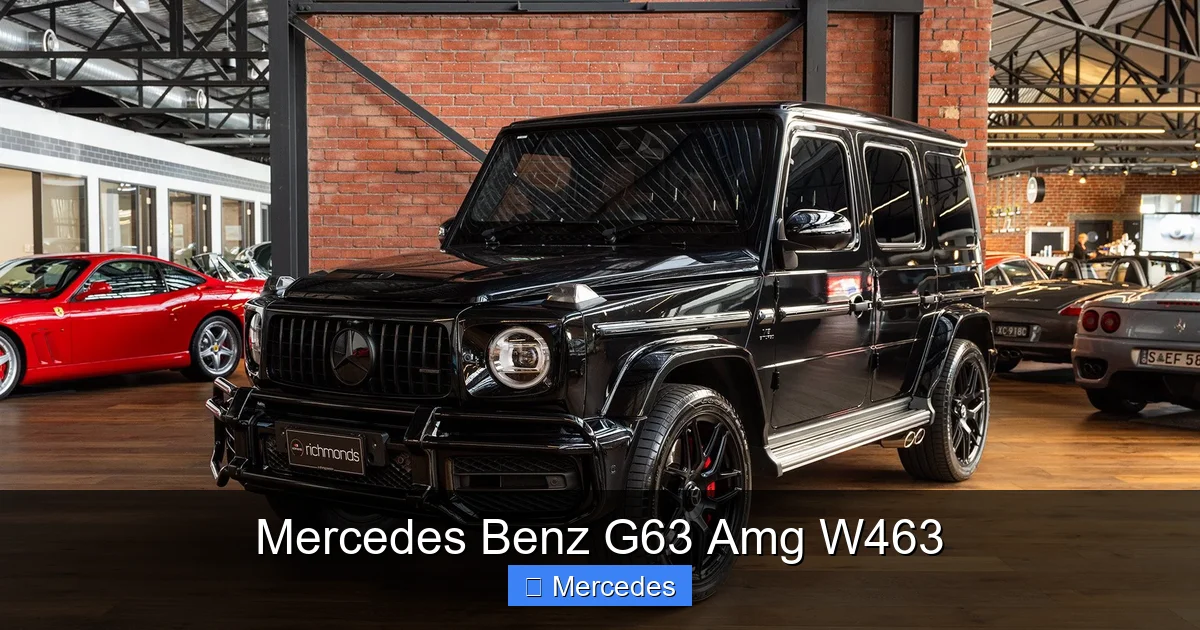
Visual guide about Mercedes Benz G63 Amg W463
Image source: richmonds.com.au
Step inside the cabin of a Mercedes Benz G63 AMG W463, and you’ll find a space that feels more like a private jet than an SUV. The dashboard is dominated by wood or brushed aluminum trim, paired with soft-touch surfaces throughout. Premium Nappa leather upholstery covers every inch of the seats—many feature diamond-quilted patterns and contrast stitching for that extra touch of class.
But luxury isn’t just about looks. The W463 offers heated and ventilated front seats, tri-zone climate control, and even optional rear-seat entertainment systems. Some high-end models include massaging functions and ambient lighting that shifts colors based on your mood. It’s the kind of interior you’d expect from a Rolls-Royce—except this thing can climb Mount Everest.
Technology-wise, the original infotainment system might feel dated compared to today’s standards. Most owners upgrade to modern units like Android Auto-compatible head units or even full BMW iDrive replacements. These upgrades bring navigation, smartphone integration, and surround sound into the mix—making long drives more enjoyable.
Another standout feature is the Burmester surround sound system. Found in select trims, it delivers concert-hall-quality audio that turns your ride into a mobile studio. Pair that with the panoramic sunroof and you’ve got the ultimate luxury cruiser.
Handcrafted Excellence
Each Mercedes Benz G63 AMG W463 is assembled by hand in Sindelfingen, Germany—a process that takes over 30 hours per vehicle. Skilled artisans inspect every component, ensuring flawest fit and finish. From the precision of the stitching to the alignment of the switches, nothing is overlooked.
This level of craftsmanship explains why these vehicles age so well. Even decades later, interiors retain their suppleness and color. That’s rare in the automotive world, especially for SUVs subjected to harsh conditions.
Owners often personalize their W463 further with custom floor mats, monogrammed headrests, or bespoke paint jobs. Some even commission artists to paint murals on the doors—turning their SUV into a rolling work of art.
Driving Dynamics and Handling
Now, let’s talk about what really matters: how does it drive?
On paved roads, the G63 AMG W463 handles surprisingly well. Adaptive dampers smooth out bumps, and the steering provides decent feedback—especially for an SUV of its size. Acceleration is instantaneous, thanks to that twin-turbo V8. Passing trucks on the highway feels effortless, and the braking system brings everything to a stop with confidence.
However, don’t expect sporty agility. At over 6 feet long and weighing nearly 6,000 pounds, it’s not built for tight corners. Instead, it prioritizes stability and comfort. The ride height is higher than average, giving it excellent visibility—a big plus during urban driving or navigating construction zones.
Off-road, though, that’s where the W463 truly shines. With permanent all-wheel drive, three locking differentials, and selectable low-range gearing, it conquers mud, sand, rocks, and snow with ease. The electronic traction control system prevents wheel spin, while the crawl control feature lets you navigate technical trails hands-free.
Many owners report being able to drive straight up a washed-out dirt trail or through shallow streams without breaking a sweat. That kind of capability is hard to match, even in modern electric SUVs.
Tips for Daily Driving and Maintenance
Owning a classic like the Mercedes Benz G63 AMG W463 requires some TLC. Here are a few practical tips:
– **Regular Oil Changes:** Use synthetic oil and change it every 5,000 miles to protect that hand-built V8.
– **Check Coolant Levels:** Turbocharged engines run hot—monitor coolant regularly, especially before long trips.
– **Inspect Differentials:** Locking diffs need periodic servicing. Have them flushed and filled with fresh fluid.
– **Use Quality Tires:** Off-road tires provide better grip and durability. Consider all-terrain or mud-terrain options.
– **Keep It Clean:** Wash and wax frequently to preserve paint and clear coat. Clay bar treatments help remove contaminants.
Also, join enthusiast forums. Owners share invaluable advice on restoration projects, parts sourcing, and modification ideas. You’ll learn more from community members than any manual.
Collectibility and Market Value
If there’s one reason people fall in love with the G63 AMG W463, it’s collectibility. Production numbers were relatively low—only around 40,000 units built over the model’s lifespan. Add to that limited regional availability (especially in North America), and you’ve got a recipe for rarity.
Well-preserved examples with low mileage routinely sell for over $200,000. Original paint, matching-numbers engines, and documented service histories command even higher premiums. Some concours-condition cars have fetched six figures at auction.
Factors affecting value include:
– Mileage (under 50,000 miles is highly desirable)
– Service records
– Originality (unmodified preferred)
– Trim level (AMG Performance Package adds value)
– Documentation (owner’s manuals, service books)
That said, prices vary widely by region and year. Early 2000s models tend to be more affordable than late-2010s versions, which benefited from improved build quality and updated electronics.
Investors view the W463 as a blue-chip asset. As newer AMG models grow older, demand for the original W463 will likely rise—making now a great time to consider acquisition.
Comparisons and Rivals
How does the Mercedes Benz G63 AMG W463 stack up against competitors?
In the late 2000s and early 2010s, rivals included the Range Rover Supercharged, Lexus LX 570, and Porsche Cayenne Turbo. But none matched the W463’s combination of raw power, off-road prowess, and exclusivity.
Compared to the Range Rover, the W463 felt more planted and mechanically simpler—less computer-dependent, more mechanical charm. The Lexus offered reliability but lacked performance flair. The Cayenne was sportier but couldn’t match the G’s go-anywhere attitude.
Today, even the new generation G63 struggles to replicate the W463’s analog spirit. Modern SUVs rely heavily on electronics, whereas the W463 rewards driver involvement. That tactile connection is what makes it so special.
Still, newer models benefit from advanced tech—adaptive cruise control, lane assist, and better fuel economy. So if daily usability is key, consider both eras. Restore the old one as a weekend toy, and enjoy the new one for commuting.
Restoration and Modernization Tips
Many owners choose to restore or modernize their W463 rather than buy a showroom-new example. Why? Because original-condition cars often come with hidden issues—rust, seized components, or outdated wiring.
Start with a thorough inspection. Look for signs of water damage, rust under the doors, or worn bushings. If possible, get a pre-purchase inspection from a specialist familiar with classic Mercedes.
Once you own it, prioritize rust prevention. Apply rust-proof coatings, replace old seals, and keep moisture out. Regular cleaning and waxing go a long way.
For modernization, focus on safety and convenience. Upgrade to LED headlights, install backup cameras, and add blind-spot monitoring. Swap the old radio for a Bluetooth-enabled unit with Apple CarPlay and Android Auto support.
Suspension upgrades are also popular. Air suspension kits allow adjustable ride height—perfect for clearing obstacles or lowering the car for parking garages. Coilover conversions improve handling without sacrificing comfort.
Finally, document everything. Keep receipts, photos, and maintenance logs. This increases resale value and satisfies fellow collectors.
Practical Example: A Weekend Warrior Build
Meet “Brock,” a 2008 G63 AMG W463 owned by an off-road enthusiast in Colorado. After buying it with 85,000 miles, he spent six months restoring it. He replaced all four shocks, upgraded to BFGoodrich KO2 tires, and fitted a Warn winch. Inside, he installed a JBL sound system and custom leather seats. Today, Brock uses it for weekend adventures in Moab and Sedona—proving that even a 15-year-old W463 can deliver modern-day thrills.
His secret? Find a reputable mechanic who knows vintage Mercedes. Don’t cut corners on critical components like brakes or steering. Safety first!
Frequently Asked Questions
What year models are considered best for the Mercedes Benz G63 AMG W463?
Most enthusiists favor 2010–2018 models due to improved build quality, updated electronics, and longer factory warranty coverage. However, earlier models (2003–2009) offer more mechanical simplicity and lower prices.
Does the G63 AMG W463 have good fuel economy?
No—expect around 10–12 mpg combined. That’s typical for large, powerful SUVs. Gas prices may add up, but performance and capability justify the trade-off for many owners.
Can I modify my G63 AMG W463 legally?
Yes, as long as modifications comply with local emissions and safety regulations. Avoid altering exhaust systems too drastically if you live in areas with strict smog laws.
How do I prevent rust on my W463?
Apply annual rust inhibitors, keep the undercarriage clean, and park in dry garages when possible. Pay special attention to door sills, wheel wells, and the firewall area.
Is the G63 AMG W463 a good investment?
Yes, especially if purchased below market value and properly maintained. Classic G-Class values have appreciated steadily, making it a solid collector vehicle with strong demand.
What upgrades are worth doing to my G63 AMG W463?
Focus on safety (LED lights, backup camera), comfort (modern infotainment), and performance (ECU tune, suspension kit). Prioritize reliability fixes like timing chain service and coolant replacement.