
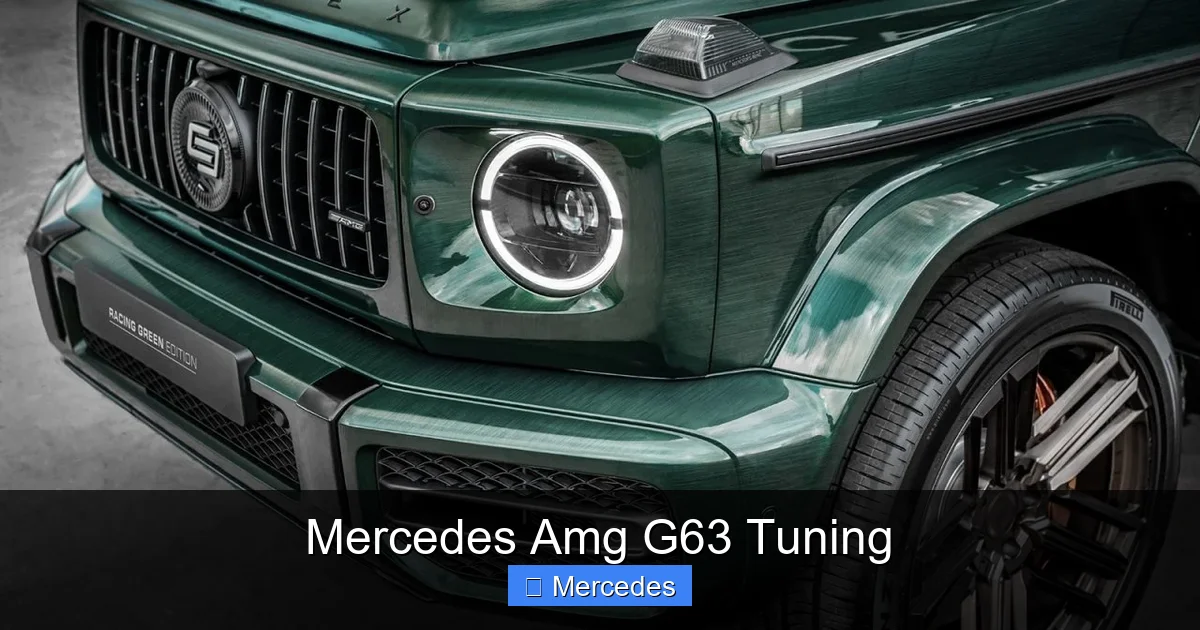
Mercedes AMG G63 tuning transforms your iconic luxury SUV into a high-performance machine without sacrificing comfort. With the right modifications, you can increase power by up to 40%, enhance braking, and refine handling—all while keeping that signature G-Wagen attitude. Whether you’re chasing speed or personalizing aesthetics, tuning offers endless possibilities for customization.
The Mercedes-AMG G63 is more than just a luxury off-roader—it’s a statement. With its legendary boxy silhouette, burly twin-turbo V8 engine, and go-anywhere capability, it’s one of the most recognizable SUVs on the road. But beneath the rugged exterior lies an engine begging to be unleashed. That’s where Mercedes AMG G63 tuning comes in. Whether you’re looking for extra grunt on the highway, sharper handling around corners, or simply want to make your ride stand out, tuning opens up a world of possibilities.
Tuning isn’t just for race cars anymore. Thanks to modern technology, even everyday drivers can benefit from optimized performance, better fuel economy, and enhanced drivability. For owners of the G63—especially those who treat their vehicle as both daily driver and weekend warrior—the right tune can transform the driving experience entirely. In this guide, we’ll walk you through everything you need to know about tuning your Mercedes AMG G63: from basic software updates to advanced mechanical upgrades, safety considerations, and styling options.
Key Takeaways
- Tuning boosts performance: Professional tuning can increase horsepower and torque significantly, turning the already powerful G63 into a track-ready beast.
- Software is key: Most gains come from ECU remapping or chip tuning—simple software changes that unlock hidden engine potential.
- Suspension upgrades matter: Lowering kits, coilovers, and sway bars improve cornering and reduce body roll during spirited driving.
- Brake system enhancements: High-performance brake pads, rotors, and calipers are essential for matching increased power with safe stopping distances.
- Aesthetic mods add personality: Carbon fiber accents, custom wheels, and LED lighting let you express your style while improving aerodynamics.
- Warranty concerns: Unauthorized tuning may void factory warranty; always consult a specialist before making changes.
- Maintenance stays critical: Even tuned vehicles need regular oil changes, fluid checks, and alignment services to stay reliable.
Quick Answers to Common Questions
Can I tune my Mercedes AMG G63 myself?
While DIY tuning kits exist, they carry risks like engine damage or failed inspections. Professional tuners use proven software and diagnostic tools for safer, more effective results.
Will tuning void my warranty?
In theory, yes—but under U.S. law, dealers can’t deny warranty claims solely for tuning unless they prove the modification caused the issue. Using reputable tuners minimizes this risk.
How much does G63 tuning cost?
Stage 1 ECU tunes start around $600–$1,200. Full packages with exhaust, brakes, and suspension can range from $3,000 to over $10,000 depending on scope and brand.
Does tuning improve fuel economy?
Yes—optimized combustion and smarter shift logic often yield better MPG under normal driving conditions compared to stock calibration.
Can I revert my G63 to stock after tuning?
Absolutely. Most professional tuners offer flash-back options to restore factory settings anytime, preserving resale value.
📑 Table of Contents
- Understanding Your Mercedes AMG G63 Before Tuning
- The Core of Tuning: ECU Remapping and Chip Tuning
- Mechanical Upgrades to Complement Your Tune
- Brake System Upgrades for Increased Safety
- Exterior and Interior Styling Options
- Maintaining Your Tuned Mercedes AMG G63
- Legal and Warranty Considerations
- Real-World Examples and Owner Stories
- Final Thoughts: Is Tuning Right for You?
Understanding Your Mercedes AMG G63 Before Tuning
Before diving into modifications, it’s important to understand what makes the G63 unique. Launched in 2019 as the successor to the older G55 model, the current G63 features the hand-built AMG 4.0L V8 biturbo engine producing 577 hp and 627 lb-ft of torque. It pairs with a nine-speed automatic transmission and all-wheel drive, delivering blistering acceleration (0–60 mph in under 4 seconds) and serious off-road credentials thanks to its ladder-frame chassis and portal axles.
Despite its performance pedigree, stock calibration often holds back peak power to meet emissions standards or prioritize reliability over output. This is precisely why tuning has become so popular among enthusiasts. A well-executed tune doesn’t just push numbers higher—it fine-tunes throttle response, shift logic, and torque delivery for a smoother, more engaging drive.
Why Owners Choose to Tune Their G63
Many G63 owners start tuning because they feel the stock setup is either too conservative or doesn’t match their driving style. Some want more aggressive launch control or snappier gear changes. Others simply enjoy the satisfaction of knowing their car runs at peak efficiency. Additionally, tuned G63s often see improved fuel economy under light load due to optimized air/fuel ratios and ignition timing.
It’s also worth noting that tuning can help mitigate issues like turbo lag or inconsistent throttle response—common complaints among early adopters of the platform. With proper tuning, these quirks are smoothed out, making the G63 feel more refined and responsive whether you’re crawling over rocks or cruising down the autobahn.
The Core of Tuning: ECU Remapping and Chip Tuning

Visual guide about Mercedes Amg G63 Tuning
Image source: mercedes-fans.de
When people talk about “tuning” a G63, they’re usually referring to ECU (Engine Control Unit) remapping or chip tuning. This involves modifying the factory software that governs how the engine operates. Unlike older methods that required physical chips inserted into the ECU, today’s tunes are delivered via flash programming—uploading new calibration files directly to the vehicle’s computer.
For the G63, reputable tuners offer stage 1, stage 2, and even stage 3 packages depending on your goals and budget. Stage 1 typically yields +70–100 hp and +80–120 lb-ft of torque by adjusting boost pressure, fuel maps, and ignition timing. These gains are achieved without touching internal components, making them reversible and relatively low-risk.
Benefits of ECU Remapping
- Increased Power & Torque: The most obvious benefit—more horsepower translates to quicker acceleration and better overtaking ability.
- Smoother Throttle Response: Stock G63s can feel sluggish at low RPMs. Tuning sharpens throttle input, especially in lower gears.
- Improved Fuel Economy: Optimized combustion efficiency can lead to better mileage under normal driving conditions.
- Enhanced Transmission Behavior: Shift points and firmness are adjusted for sportier or more relaxed driving styles.
One of the best parts about modern tuning is that it’s non-invasive. Reputable tuners use OEM-level tools and diagnostic equipment to ensure no error codes are introduced. Plus, if you ever sell your vehicle or return it to stock, the original calibration can usually be restored with a simple flash.
Choosing the Right Tuner
Not all tuners are created equal. When selecting someone to tune your G63, look for experience specifically with AMG models, access to dyno testing, and positive reviews from other G63 owners. Avoid “DIY” kits sold online unless you have extensive automotive knowledge—poorly executed tunes can cause engine damage or trigger check-engine lights.
Many independent shops now specialize in German luxury vehicles and offer mobile tuning services. This means they come to your location, perform the tune remotely, then verify results with a road test and final verification scan. It’s convenient, clean, and professional.
Mechanical Upgrades to Complement Your Tune
Visual guide about Mercedes Amg G63 Tuning
Image source: mercedes-fans.de
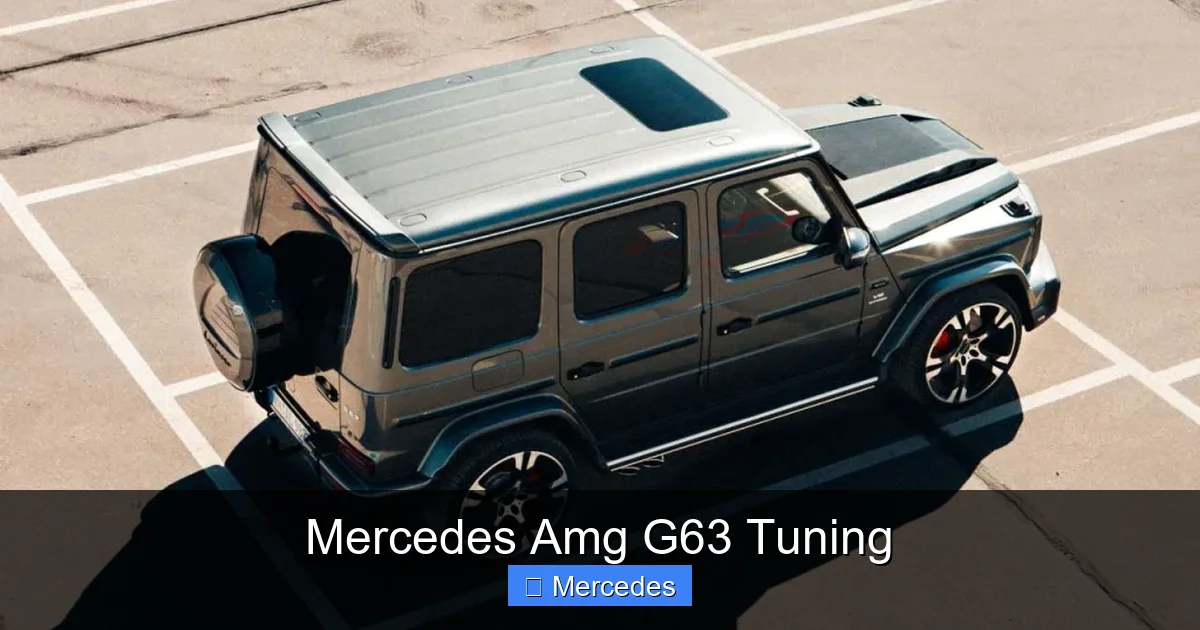
While software gets all the credit, hardware plays a crucial role in maximizing performance gains. Without supporting modifications, pushing more power through the same internals can lead to premature wear or failure. Here’s what every tuned G63 should consider:
Exhaust System Modifications
A high-flow cat-back exhaust system reduces backpressure and improves exhaust gas flow, allowing the engine to breathe easier. Many tuners recommend upgrading the downpipes as well—especially if you plan to run higher boost levels. Aftermarket headers made from stainless steel or titanium offer even greater benefits but come at a premium cost.
Note: Always check local noise regulations before installing loud exhausts—some regions restrict decibel levels on street-legal vehicles.
Intake and Air Filter Upgrades
Cold air intakes pull cooler, denser air into the engine, improving combustion efficiency. While not mandatory for stage 1 tunes, they complement the ECU adjustments by ensuring adequate airflow. Consider reusable cotton gauze filters (like K&N) for washable convenience and minimal restriction.
Suspension and Handling Enhancements
The G63’s stiff suspension is great for off-roading but can feel harsh on pavement. Upgrading to adjustable coilovers (e.g., KW, BC Racing) allows you to lower the ride height for better aerodynamics and reduced body roll. Pair this with polyurethane bushings and upgraded sway bars, and you’ll notice immediate improvements in cornering stability.
Don’t forget alignment! Tuning affects weight distribution and suspension geometry—get a professional alignment after any major suspension change.
Brake System Upgrades for Increased Safety
Adding power without upgrading brakes is like putting racing slicks on a shopping cart—it won’t end well. The factory Brembo calipers and rotors are solid, but they’re designed for the stock power band. Once you exceed ~650 hp, even marginal increases demand stronger stopping capability.
Recommended Brake Upgrades
- Bigger Rotors: Slotted or drilled two-piece rotors dissipate heat faster and resist fade during repeated hard braking.
- Performance Pads: Ferodo DS2500 or Pagid RSL1 offer excellent bite and longevity without excessive dust.
- Liquid Cooling Lines: Directing brake fluid away from the wheel hub helps prevent vapor lock and maintains consistent pedal feel.
Many tuners bundle brake upgrades into their packages since they’re essential for safe operation. Budget around $2,000–$4,000 for a complete front-end upgrade depending on brand and quality.
Monitoring Brake Health
After installing new brakes, monitor rotor thickness regularly. Worn rotors below manufacturer specs can cause vibrations or catastrophic failure. Also, keep an eye on brake fluid condition—replace it every 2 years regardless of usage to maintain moisture resistance.
Exterior and Interior Styling Options
Tuning isn’t just about performance—it’s also about expression. The G63’s bold design invites customization, and many owners choose visual mods to complement their mechanical upgrades.
Wheels and Tires
Staggered wheel setups (wider rears) improve traction and give the G63 a more planted stance. Lightweight forged alloys (BBS, Volk Racing, HRE) reduce unsprung weight, which enhances handling and ride quality. Just ensure tire diameters remain close to stock to avoid speedometer inaccuracies.
Body Kit and Aerodynamics
Carbon fiber hoods, fender flares, and rear diffusers aren’t just for looks—they can improve airflow and reduce lift at speed. Brands like Mansory, Brabus, and Carlsson offer full-body kits that blend seamlessly with the G63’s aggressive lines.
Lighting Upgrades
LED headlights and daytime running lights brighten visibility and modernize the front fascia. Some owners opt for adaptive laser lights for maximum illumination without blinding oncoming traffic.
Interior Accents
Leather seats, carbon fiber trim, and illuminated door sills elevate cabin ambiance. Don’t overlook steering wheel grips—wrapped Alcantara or suede improve comfort and control during spirited driving.
Maintaining Your Tuned Mercedes AMG G63
Even the most perfectly tuned vehicle requires regular maintenance. Neglecting oil changes, coolant flushes, or differential service can lead to costly repairs—especially in a complex AMG powertrain.
Service Intervals After Tuning
Most tuners recommend shortening oil change intervals to every 5,000 miles (or sooner if towing or hot climates). Use synthetic oil rated for high-performance engines (e.g., Mobil 1 5W-40 or Castrol Edge 0W-40). Also, inspect spark plugs annually—higher compression from tuning increases electrode wear.
Differential and Transfer Case Care
The G63 features a locking center differential and optional rear locker. These require periodic fluid changes (every 30k–50k miles) using GL-5 gear oil. Failing to do so can result in noisy operation or internal damage.
Software Updates and Recalibration
If Mercedes releases a new ECU update (via dealership software), it may reset your tune. Always reflash after dealer visits to restore performance settings. Keep records of all modifications—it adds resale value and proves responsible ownership.
Legal and Warranty Considerations
Before tuning, understand your local laws. In the U.S., federal regulations prohibit tampering with emission controls, though ECU tunes typically don’t affect OBD-II monitors if done correctly. However, some states (like California) have stricter rules—consult a legal expert if unsure.
Regarding warranties: Under the Magnuson-Moss Warranty Act, manufacturers cannot deny warranty claims solely because you modified emissions-related systems—but they *can* deny claims related to damage caused by modifications. Document everything and use certified tuners to protect yourself.
In practice, many owners successfully tune their new G63s without warranty issues by choosing conservative tunes and avoiding invasive hardware changes.
Real-World Examples and Owner Stories
Take the case of Alex, a G63 owner in Texas who wanted more punch for highway merging. He opted for a stage 1 tune (+90 hp), upgraded his exhaust, and installed performance pads. Within a week, he noticed instant throttle response and smoother downshifts—no more hunting during overtakes.
Another example is Maria, who lowered her G63 for city driving and added a KW coilover kit. She reports better curb feel and reduced fatigue on long commutes, while still retaining full off-road readiness.
These stories highlight how tuning adapts to individual needs—whether you prioritize performance, comfort, or aesthetics.
Final Thoughts: Is Tuning Right for You?
Tuning your Mercedes AMG G63 is a rewarding process that blends engineering precision with personal expression. Done right, it enhances every aspect of ownership: power, handling, sound, and style. But it’s not a plug-and-play solution—success depends on research, quality parts, and professional execution.
If you’re ready to unlock your G63’s true potential, start by consulting a trusted tuner. Discuss your goals openly, review dyno results, and don’t rush into expensive upgrades. Remember, the best tunes balance aggression with reliability, turning your G63 into a driver’s car without losing its soul.
With careful planning and attention to detail, your tuned Mercedes AMG G63 won’t just turn heads—it’ll deliver unforgettable driving moments mile after mile.
Frequently Asked Questions
What is the difference between stage 1 and stage 2 tuning for the G63?
Stage 1 uses only software changes for modest gains (~70–100 hp). Stage 2 adds hardware like intake, exhaust, and downpipes to support higher boost levels and extract more power safely.
Are aftermarket tunes safe for daily driving?
Yes, if performed by experienced tuners. Conservative maps prioritize drivability and longevity while still enhancing performance during spirited drives.
Do I need to upgrade my tires when tuning my G63?
Not immediately, but wider tires improve grip and stability—especially important if you plan significant power increases beyond stage 1.
How often should I service a tuned G63?
Follow manufacturer guidelines but shorten oil change intervals to every 5,000–7,000 miles due to increased engine stress from higher RPMs and boost pressures.
Can I tune a G63 with the EQ Boost mild-hybrid system?
The standard G63 (non-EQ Boost) has a pure ICE engine ideal for tuning. The hybrid version uses different powertrains and isn’t recommended for traditional ECU modifications.
Will tuning affect off-road capabilities?
No—proper tuning preserves low-RPM torque and drivetrain protection modes essential for trail use. Just ensure suspension and brakes remain intact for rock crawling or mud.