
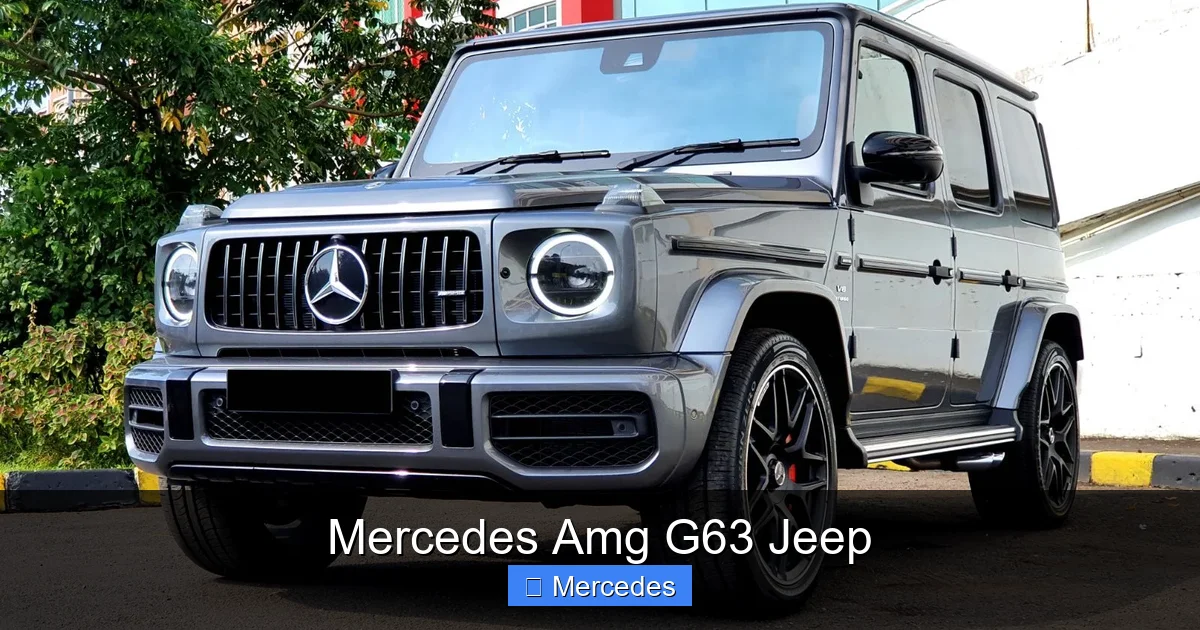
The Mercedes-AMG G63 and Jeep Wrangler represent two very different approaches to luxury off-roading. While the AMG G63 delivers German engineering excellence with a powerful V8 engine, cutting-edge tech, and refined comfort, the Jeep Wrangler offers legendary off-road capability, open-air driving, and unmatched customization. Both are capable of conquering rugged terrain, but they cater to different lifestyles and budgets. Choosing between them depends on whether you prioritize luxury refinement or off-road freedom.
Key Takeaways
- Performance: The AMG G63 features a twin-turbo V8 producing 577 hp, while the Wrangler uses a 3.6L V6 (285 hp) or optional 2.0L turbo (270 hp). The G63 is faster but less fuel-efficient.
- Off-Road Capability: The Wrangler excels with removable doors, roof, and solid axles; the G63 uses advanced 4×4 systems but prioritizes comfort over pure trail toughness.
- Luxury & Tech: The G63 offers premium interiors, MBUX infotainment, and adaptive suspension; the Wrangler has basic tech but more customizable options.
- Pricing: The AMG G63 starts around $145,000; the Wrangler starts at $35,000, making it far more affordable.
- Ride Quality: The G63 provides a smoother, quieter ride with air suspension; the Wrangler rides rougher but handles trails better.
- Customization: The Wrangler has more aftermarket support for modifications; the G63 is factory-built with limited personalization.
- Best For: The G63 suits urban adventurers wanting luxury; the Wrangler fits purists seeking true off-road freedom.
Quick Answers to Common Questions
Is the Mercedes AMG G63 faster than the Jeep Wrangler?
Yes. The AMG G63 accelerates from 0–60 mph in about 4.5 seconds thanks to its 577-horsepower V8. Most Wrangler models take over 7 seconds due to lighter engines and less power.
Can I remove the roof and doors on the G63?
No. Unlike the Wrangler, the G63 has fixed roof panels and full doors. It’s designed for comfort and noise reduction, not open-air driving.
Which has better off-road capability?
The Jeep Wrangler generally has better off-road capability due to its solid axles, disconnecting sway bars, and superior approach/departure angles. The G63 is capable but more focused on comfort.
How much does a used Wrangler cost?
A used 2–5 year-old Wrangler typically ranges from $25,000 to $45,000 depending on trim, mileage, and condition. The G63 retains value better but starts much higher new.
Does the G63 have a manual transmission?
No. The AMG G63 comes only with an automatic 9-speed transmission. The Wrangler offers a 6-speed manual option on some trims for enthusiasts who prefer stick shifts.
📑 Table of Contents
- Mercedes AMG G63 vs Jeep Wrangler: A Clash of Titans
- Design Philosophy: Luxury Meets Utility
- Performance: Power vs. Practicality
- Off-Road Capability: True Toughness vs. Smart Engineering
- Luxury & Technology: Comfort Meets Convenience
- Pricing & Value: Is It Worth the Splurge?
- Which One Should You Choose?
- Final Thoughts: Two Icons, One Dream
Mercedes AMG G63 vs Jeep Wrangler: A Clash of Titans
If you’ve ever dreamed of owning a vehicle that can take you from the boardroom to the backcountry, you’re not alone. The world of high-performance SUVs is full of contenders, but few match the prestige of the Mercedes-AMG G63 or the rugged charm of the Jeep Wrangler. These two vehicles sit at opposite ends of the automotive spectrum—one a symbol of German engineering and luxury, the other an icon of American off-road freedom.
In this detailed comparison, we’ll dive deep into what makes each vehicle unique, how they stack up against each other in key areas like performance, luxury, off-road capability, and value. Whether you’re deciding between the two or just curious about their differences, this guide will help you understand which SUV fits your lifestyle. Spoiler alert: it’s not always about horsepower—sometimes, it’s about soul.
Design Philosophy: Luxury Meets Utility
A G-Wagen Legacy
The Mercedes-AMG G63 carries forward the legacy of the original G-Class, a military vehicle turned luxury icon. Its boxy, angular design isn’t just for looks—it reflects its utilitarian roots while being wrapped in carbon-fiber and leather. Every curve and crease screams AMG performance, from the flared wheel arches to the signature quad-bar grille.
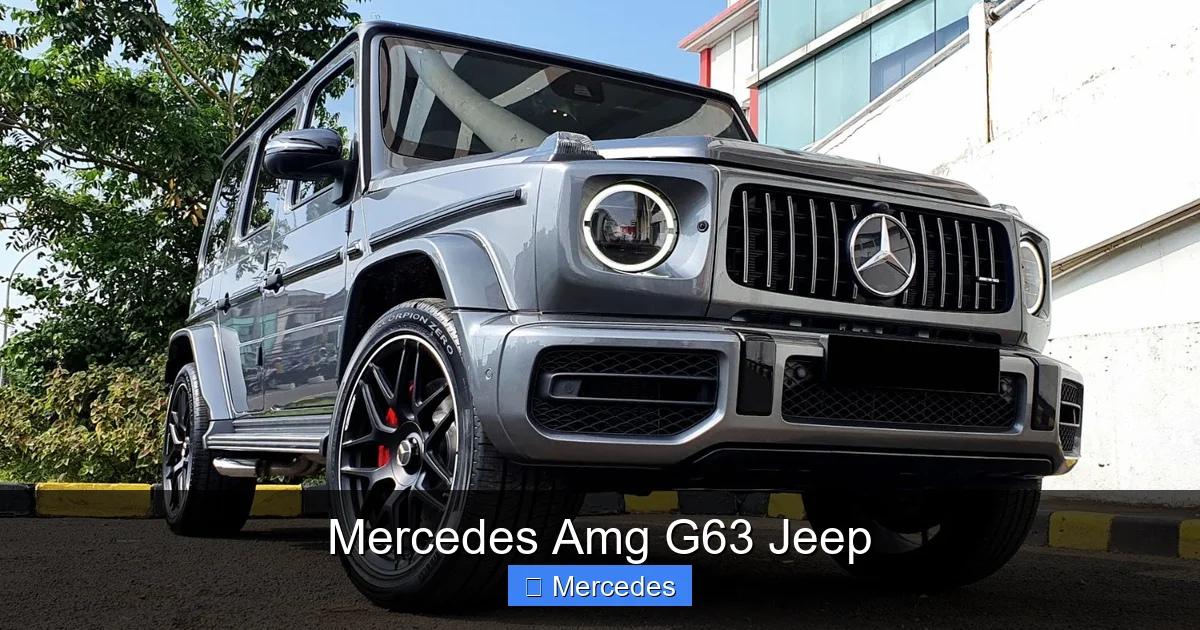
Visual guide about Mercedes Amg G63 Jeep
Image source: img.cintamobil.com
The interior is where the G63 truly shines. Think hand-stitched Nappa leather, real wood trim, ambient lighting, and seats that feel like they were molded to your body. It’s quiet inside, even when accelerating hard—thanks to active noise cancellation and acoustic glass. You won’t hear the V8 rumble unless you want to.
The Wrangler’s Bold Simplicity
In contrast, the Jeep Wrangler embraces simplicity and functionality. Its design is instantly recognizable: round headlights, a fold-down windshield, and the ability to remove both the doors and roof. This isn’t just a styling choice—it’s core to the Wrangler experience. Want to drive with the wind in your hair? Just pop off the top and roll down the windows.
The interior is more utilitarian. Hard plastics dominate, and tech feels dated compared to the G63. But that’s part of the charm. The dashboard is clean, controls are easy to reach, and there’s room for adventure gear in the cargo area. Plus, the Wrangler offers more customization—swap out bumpers, add rock sliders, or install a winch without breaking the bank.
Performance: Power vs. Practicality
The AMG G63’s Beastly Engine
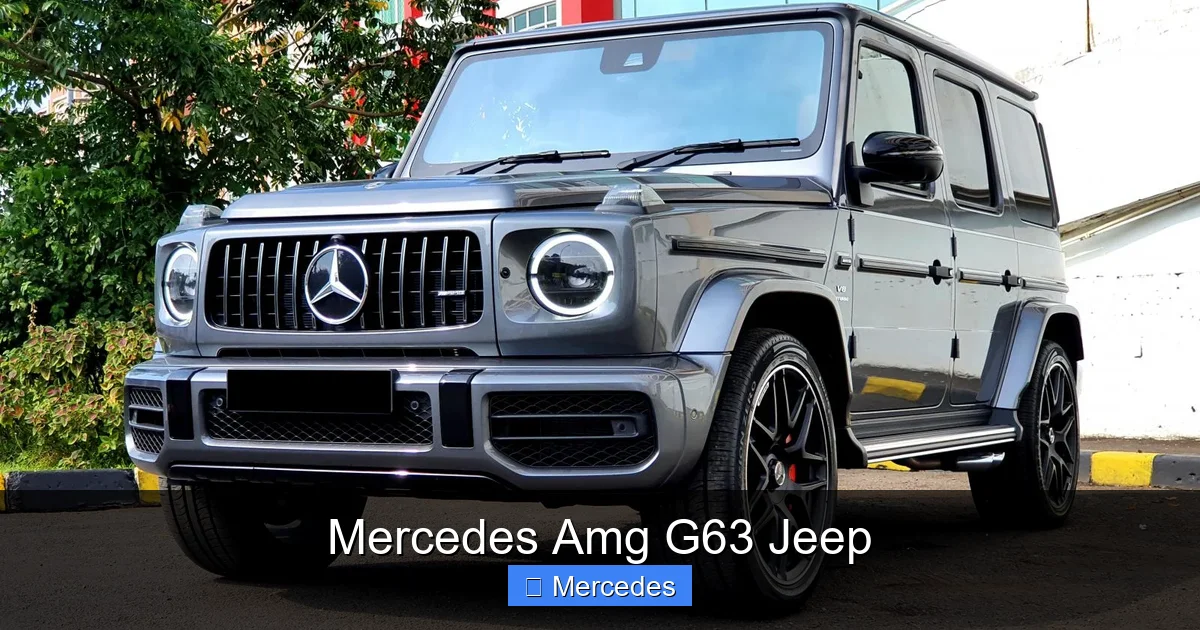
Under the hood of the AMG G63 lies a 4.0-liter twin-turbocharged V8 engine producing 577 horsepower and 627 lb-ft of torque. That’s enough to sprint from 0–60 mph in just 4.5 seconds. With all-wheel drive and a 9-speed automatic transmission, power is sent efficiently to all four corners. The G63 also features adaptive air suspension, allowing you to lower the car at highway speeds for better aerodynamics or raise it for rough terrain.
Visual guide about Mercedes Amg G63 Jeep
Image source: img.cintamobil.com
This isn’t just fast—it’s smart. The AMG SPEEDSHIFT gearbox shifts quickly, and the engine responds instantly to throttle input. You’ll feel every bump, but the suspension smooths them out so well that you might forget you’re driving over rocks.
The Wrangler’s Versatile Options
The Jeep Wrangler offers several engine choices, but the most popular is the 3.6L Pentastar V6, delivering 285 horsepower and 260 lb-ft of torque. It’s reliable and pairs well with either a 6-speed manual or 8-speed automatic. For better fuel economy, the 2.0L turbo-four produces 270 hp and 295 lb-ft—a solid upgrade over older models.
While not as quick as the G63, the Wrangler makes up for it with trail-ready capability. Features like electronic front and rear locking differentials (on higher trims), disconnecting sway bars, and a low-range transfer case give it serious off-road chops. And let’s be honest—there’s nothing quite like the feeling of crawling over boulders with the roof off.
Off-Road Capability: True Toughness vs. Smart Engineering
The G63’s Advanced Systems
The AMG G63 comes standard with the EQUIPMENT OFF-ROAD PAIR, which includes a low-range gearbox, three differential locks, and a crawl control system. These features allow you to tackle steep inclines and slippery surfaces with minimal input from the driver.
However, the G63 is designed more for comfortable off-roading than extreme trail abuse. Its independent front suspension and longer wheelbase make it stable on highways but less agile on tight trails compared to the Wrangler. Still, it’s plenty capable—just don’t expect to win rock-crawling competitions.
The Wrangler’s Legendary Trail DNA
The Wrangler was born for off-roading. Its solid front and rear axles, high ground clearance, and short overhangs let it navigate obstacles that would leave other SUVs stranded. Models like the Rubicon come with features like the Rock-Trac 4×4 system, front and rear electronic lockers, and a disconnecting sway bar—making it one of the best vehicles for serious trail riding.
And because it’s built to be modified, you can upgrade it yourself. Add a lift kit, bigger tires, or a snorkel, and the Wrangler becomes even more capable. It’s the only SUV where you can legally drive with no doors, no roof, and still pass emissions tests (in most states).
Luxury & Technology: Comfort Meets Convenience
Inside the G63’s Cabin
The Mercedes-AMG G63 feels like a floating lounge chair. The seats are heated, ventilated, and massaging (on higher trims). The dashboard is dominated by dual 12.3-inch screens running the latest MBUX infotainment system, complete with voice control, Apple CarPlay, Android Auto, and real-time traffic updates.
You’ll also get features like wireless charging, a Burmester surround sound system, and a panoramic sunroof. Parking sensors, a 360-degree camera, and adaptive cruise control make city driving stress-free. It’s the kind of car that turns heads not just for its looks, but for how effortlessly it blends luxury with performance.
The Wrangler’s Functional Approach
The Wrangler’s tech is simpler. The base model has a 7-inch touchscreen, while higher trims offer an 8.4-inch Uconnect system with navigation, Bluetooth, and available Wi-Fi hotspot. Voice commands work well, but the interface isn’t as intuitive as MBUX.
Still, the Wrangler wins points for practicality. There are plenty of USB ports, a 115-volt outlet, and storage bins for small items. And since many owners keep the doors and roof off, the cabin stays cool in summer and warm in winter—no need for fancy climate control.
Pricing & Value: Is It Worth the Splurge?
The AMG G63’s Premium Price Tag
The Mercedes-AMG G63 starts at around $145,000 before options. Add in packages like the AMG Performance Studio ($12,000) or carbon fiber accents ($2,500), and you’re easily looking at $160,000+. Fuel economy is poor—expect 12 mpg combined—and maintenance costs are high.
But for many buyers, the G63 isn’t just a car—it’s a status symbol. It’s rare enough to stand out, yet luxurious enough to justify the cost. If you spend most of your time on paved roads but want the option to go off-grid occasionally, it’s a strong choice.
The Wrangler’s Affordability Advantage
The Jeep Wrangler starts at $35,000 for the base Sport trim. Even the Rubicon, the most off-road-focused version, starts under $50,000. Aftermarket support means you can modify it for much less than the price difference between the two vehicles.
Fuel economy is decent—around 20 mpg combined—and insurance costs are lower. Plus, with so many people buying used Wranglers, resale value holds up surprisingly well. If your priority is capability and fun per dollar, the Wrangler wins hands down.
Which One Should You Choose?
Choosing between the Mercedes-AMG G63 and the Jeep Wrangler ultimately comes down to what drives you. Do you crave the thrill of raw power and luxury refinement? Then the G63 is your machine. But if you live for weekends spent on dirt trails, love the idea of open-air driving, and value customization, the Wrangler is the clear winner.
There’s no right answer here—only the right one for your lifestyle. Some drivers even own both: the G63 for daily commutes and special occasions, the Wrangler for weekend adventures. But if you had to pick just one, consider where you spend your time, how you use your vehicle, and what kind of experience you want behind the wheel.
Final Thoughts: Two Icons, One Dream
The Mercedes-AMG G63 and Jeep Wrangler may seem worlds apart, but they share something important: a passion for exploration. Whether you’re gliding through city streets in a silent, powerful luxury SUV or crawling over rocks with the wind whipping past your ears, both vehicles inspire a sense of freedom.
They represent different philosophies—one of engineered perfection, the other of rugged individualism. But at their hearts, they’re both machines built for those who refuse to stay in one place. So whether your dream is a quiet ride through the Alps or a weekend trip deep into the desert, these two legends have something to offer.
Just remember: no matter which you choose, always pack extra water, respect the trail, and never underestimate the power of a good playlist. Adventure awaits.
Frequently Asked Questions
What is the difference between the Mercedes AMG G63 and regular G-Class?
The AMG G63 is the high-performance version of the G-Class, featuring a more powerful engine, sportier tuning, AMG-specific styling, and enhanced handling. The standard G-Class has less power and focuses more on luxury than performance.
Can the Jeep Wrangler tow trailers?
Yes. Most Wrangler trims can tow up to 3,500 pounds with the proper hitch and equipment. The Rubicon model supports up to 4,500 pounds. Always check your specific model’s towing capacity before loading up.
Is the G63 fuel efficient?
No. The G63 gets around 12 mpg combined—very low for an SUV. It’s designed for performance and luxury, not fuel economy. Consider the GLE or GLS if saving gas is a priority.
Are Jeep Wranglers good for daily driving?
It depends. Base models can be stiff and noisy on highways, but higher trims like the Sahara or Rubicon offer better comfort and tech. Many owners enjoy the Wrangler as a daily driver if they accept its limitations.
How often should I service the AMG G63?
Mercedes recommends servicing every 10,000 miles or 12 months, whichever comes first. Due to its complex systems and high-end components, maintenance costs are significantly higher than average SUVs.
Can I customize my Wrangler?
Absolutely. The Wrangler has extensive aftermarket support for lifts, tires, bumpers, lighting, and more. Popular mods include skid plates, winches, and soft tops for added adventure readiness.