

Featured image for Dealership vs independent mechanic
Image source: thedapperwrench.com
Choosing between a Lincoln Aviator dealer and an independent shop comes down to cost, warranty protection, technician training, and convenience. Dealers offer factory‑trained staff and genuine parts but usually charge higher labor rates. Independent shops can save you money and often provide faster, more personalized service, though you must verify they use quality parts and keep warranty records intact.
When you own a Lincoln Aviator, every service visit feels like a decision point. You want the SUV to stay smooth, safe, and valuable. The big question is simple: should you go to a Lincoln Aviator dealer or an independent service center? This guide breaks down the facts, adds real numbers, and gives you a clear framework so you can decide with confidence.
We’ll start with the most important numbers — cost, warranty, and expertise — then move to convenience and long‑term value. By the end you’ll have a checklist you can print and take to any shop. Let’s dive in.
Key Takeaways
- Cost Difference: Independent shops typically charge 20‑30 % less for labor than dealers.
- Warranty Safety: Using a qualified independent shop does not void your factory warranty if records are kept.
- Technician Training: Dealer techs receive brand‑specific certification; many independent techs hold ASE master status.
- Parts Quality: Dealers supply OEM parts automatically; independents can source OEM or high‑quality aftermarket parts.
- Convenience: Dealers often provide loaner vehicles and longer hours; independents may offer quicker appointments.
- Decision Checklist: Compare labor rates, parts source, warranty documentation, and customer reviews before deciding.
- Long‑Term Value: Consistent maintenance at either venue preserves resale value and reliability.
📑 Table of Contents
Understanding the Core Differences
Dealer Service Overview
A Lincoln Aviator dealer is a franchised outlet that follows the manufacturer’s service playbook. Technicians attend brand‑specific training camps, use factory diagnostic software, and install only genuine Lincoln parts. The environment feels polished — clean waiting areas, loaner fleets, and a service advisor who knows the model line inside out.
Independent Shop Overview
An independent shop is a privately owned garage that services many brands. Many owners are former dealer techs who opened their own bays. They buy parts from multiple suppliers, set their own labor rates, and often specialize in a handful of models — including the Lincoln Aviator. The vibe is usually more personal; you talk directly to the mechanic who will turn the wrench.
Cost Comparison: What You’ll Pay
Labor Rates
Dealer labor rates in the U.S. average $150‑$180 per hour for a Lincoln Aviator. Independent shops typically charge $100‑$130 per hour. That 20‑30 % gap adds up fast on a 3‑hour brake job or a 5‑hour transmission service. Did you know? A 2023 AAA study showed the average dealer labor charge for a midsize SUV was $165/hour versus $115/hour at independents.
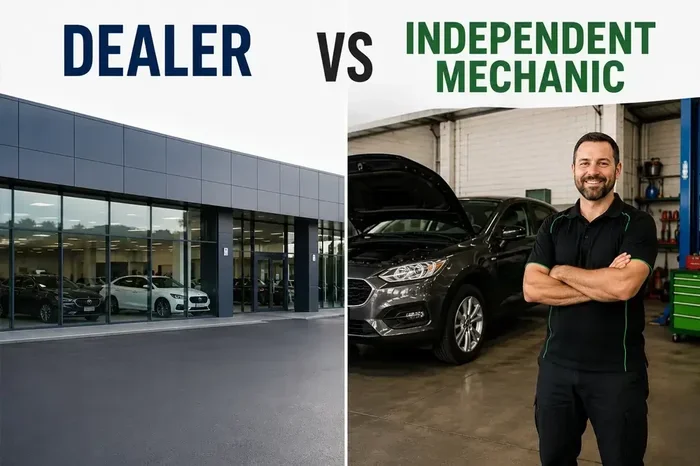
Visual guide about Dealership vs independent mechanic
Image source: ultimatecarexpert.com.au
Parts Pricing
Dealers sell OEM parts at list price, often marked up 10‑15 % above wholesale. Independents can order the same OEM part at wholesale or choose a reputable aftermarket brand that meets SAE standards. For a Lincoln Aviator water pump, the dealer price may be $420 while an independent source can be $310‑$350.
Hidden Fees
Dealers sometimes add “shop supplies” fees, environmental surcharges, or a “diagnostic fee” that is waived only if you approve the repair. Independents usually quote a flat price that includes fluids, shop supplies, and disposal. Always ask for a written estimate before work begins — this applies to both lincoln aviator dealer vs independent service scenarios.
Warranty and Coverage Implications
Factory Warranty Rules
The Magnuson‑Moss Warranty Act protects you: a manufacturer cannot void your warranty simply because you used an independent shop, provided the shop follows the service schedule and uses parts that meet OEM specifications. Keep every receipt, note the mileage, and ask the shop to stamp the service book. This documentation is your shield.
Extended Warranty Considerations
If you purchased a third‑party extended warranty, read the fine print. Some contracts require service at a “certified” facility, which may be defined as a dealer. Others accept any ASE‑certified shop. Call the warranty administrator before you book. A quick phone call can save you a denied claim later.
Expertise, Training, and Equipment
Dealer Technician Certification
Lincoln dealers send technicians to a 12‑week “Lincoln Technical Training” program covering the Aviator’s turbocharged V6, 10‑speed automatic, and advanced driver‑assist systems. They also receive proprietary scan tools that can read module‑level codes no generic scanner sees.
Independent Technician Skills
Many independent techs hold ASE Master Technician status — the same credential dealers require. They invest in high‑end scan tools (e.g., Snap‑on Solus, Autel MaxiSys) that now support Lincoln’s CAN‑bus architecture. Ask the shop for their latest certification list; a reputable independent will show it proudly.
Convenience, Speed, and Customer Experience
Appointment Availability
Dealers often run a 2‑week backlog for non‑urgent work because they prioritize warranty recalls and fleet contracts. Independents usually can slot you in within 2‑3 days. If you need a quick oil change before a road trip, the independent route is often faster.
Loaner Vehicles and Amenities
Dealers typically offer a loaner fleet (often a Lincoln Corsair or Navigator) and a comfortable lounge with Wi‑Fi, coffee, and a kids’ corner. Independents may provide a shuttle ride or a loaner car from a local rental partner, but the amenities are usually more modest. Weigh the value of a loaner against the labor savings.
Making the Right Choice for Your Lincoln Aviator
Decision Checklist
- Compare hourly labor rate (dealer vs independent).
- Verify parts source — OEM, OEM‑equivalent, or aftermarket.
- Confirm warranty documentation process.
- Check technician certifications (Lincoln‑specific vs ASE Master).
- Read recent Google/Yelp reviews for both options.
- Ask about loaner or shuttle availability.
- Get a written estimate with line‑item breakdown.
Real‑World Scenarios
Scenario 1 — 30,000‑mile major service: Dealer quote $1,200 (labor $540, parts $660). Independent quote $860 (labor $360, parts $500). Both use OEM filters and synthetic oil. You save $340 and keep warranty intact by saving receipts.
Scenario 2 — Transmission software update: Only the dealer has the latest calibration file for the 10‑speed automatic. Independent shop can flash the update if they subscribe to Lincoln’s technical service bulletins, but many do not. In this case, the dealer is the only safe path.
Scenario 3 — Brake pad replacement: Independent shop offers a premium ceramic pad set for $210 installed. Dealer uses OEM pads at $340 installed. Both meet stopping‑distance specs. The independent saves you $130 with comparable performance.
Remember, the lincoln aviator dealer vs independent service decision is not a one‑time choice. You can mix and match — use the dealer for software‑only updates and the independent for routine wear items. The key is documentation and quality parts.
Conclusion
Your Lincoln Aviator deserves care that matches its engineering. Dealers bring factory‑level training, proprietary tools, and a polished experience — at a premium price. Independents bring lower labor rates, flexible scheduling, and often the same technical depth — if you verify certifications and parts quality. Use the checklist, keep meticulous records, and you’ll protect both your warranty and your wallet. Whichever lane you choose, regular maintenance is the single biggest factor in long‑term reliability and resale value.
Frequently Asked Questions
Does using an independent shop void my Lincoln Aviator factory warranty?
No. Under the Magnuson‑Moss Warranty Act, a manufacturer cannot void your warranty solely because you used an independent shop, as long as the shop follows the service schedule and uses parts that meet OEM specifications. Keep all receipts and service records.
Are independent shops able to perform software updates on the Lincoln Aviator?
Some independent shops subscribe to Lincoln’s technical service bulletins and have the necessary scan tools, but many do not. For critical module updates — especially transmission or driver‑assist calibrations — the dealer is usually the only source with the latest files.
How much can I save by choosing an independent shop for routine maintenance?
On average, independent shops charge 20‑30 % less for labor than dealers. For a typical 30,000‑mile service, you could save $300‑$400 while still using OEM or equivalent parts.
What certifications should I look for at an independent shop?
Look for ASE Master Technician certification, manufacturer‑specific training (e.g., Lincoln Technical Training), and evidence of up‑to‑date diagnostic equipment such as Snap‑on Solus or Autel MaxiSys.
Will an independent shop provide a loaner vehicle?
Many independents partner with local rental agencies to offer a loaner or shuttle service, but the fleet is usually smaller than a dealer’s. Ask ahead of time if a loaner is essential for you.
Can I mix dealer and independent service for different repairs?
Absolutely. You can use the dealer for software‑only updates or warranty‑covered recalls, and an independent shop for oil changes, brakes, tires, and other wear items. Just maintain a complete, dated service log for every visit.