
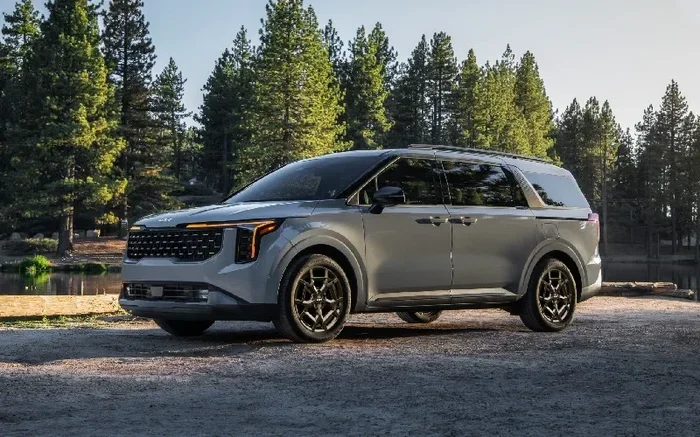
Featured image for Kia Carnival premium exterior
Image source: scout.customerscout.net
The Kia Sedona (now sold as the Kia Carnival) is a mainstream minivan, not a premium vehicle. It offers exceptional value with upscale features like available VIP lounge seats and advanced safety tech, but it lacks the brand prestige, exclusive materials, and pricing of true luxury competitors like the Mercedes-Benz Metris or Chrysler Pacifica Pinnacle.
You walk onto a dealership lot. The Kia Sedona — now called the Carnival — sits there looking sharp. LED headlights. Chrome accents. Available second-row captain’s chairs that recline like first-class airline seats. The salesperson mentions “premium features” and “luxury appointments.” You wonder: is a Kia Sedona considered a premium car?
The short answer: no. But the longer answer matters more for your wallet. The Sedona/Carnival delivers premium-adjacent features at a mainstream price. Think of it like a really well-tailored suit from a department store — it looks and feels expensive, but you didn’t pay designer prices. Let’s unpack exactly where it sits in the automotive hierarchy.
Key Takeaways
- The Sedona is a mainstream minivan: It competes with Honda Odyssey, Toyota Sienna, and Chrysler Pacifica — not luxury brands.
- Rebadged as the Kia Carnival: Since 2022, the nameplate changed globally to Carnival, though “Sedona” remains familiar in used markets.
- Premium features at a mainstream price: Available VIP lounge seating, 12.3-inch dual screens, and Highway Driving Assist 2 mimic luxury specs.
- No premium badge or pricing: Starting around $33,000-$43,000, it undercuts true premium minivans by $10,000-$20,000.
- Kia’s brand positioning is “value premium”: The brand delivers near-luxury features without the luxury tax.
- Resale value is strong but not premium-tier: Depreciation aligns with mainstream competitors, not luxury vehicles.
- Best for buyers wanting luxury feel on a budget: It’s the smart choice for families who want premium amenities without premium payments.
📑 Table of Contents
- What “Premium” Actually Means in the Auto Industry
- Kia Sedona vs. Kia Carnival: Same Vehicle, New Chapter
- Feature-by-Feature: Where the Sedona/Carnival Feels Premium (And Where It Doesn’t)
- Direct Competitors: Where the Sedona/Carnival Actually Fits
- The “Premium Feel” Features That Matter Most to Owners
- Ownership Economics: The Hidden Premium Indicator
- Who Should Buy a Sedona/Carnival (And Who Shouldn’t)
- The Verdict: Premium Features, Mainstream Reality
What “Premium” Actually Means in the Auto Industry
Before we judge the Sedona, we need a shared definition. “Premium” isn’t just leather seats and a sunroof. Automakers and analysts use specific criteria.
The Four Pillars of Premium Classification
Brand Heritage and Perception. Premium brands — Lexus, Acura, Audi, BMW, Mercedes — spend decades building cachet. They sell status alongside transportation. Kia, despite massive quality improvements, remains a value-oriented mainstream brand. Did you know? In J.D. Power’s 2023 APEAL Study (Automotive Performance, Execution and Layout), Kia ranked highest among mass market brands for the third consecutive year — but they still compete in the mass market category, not premium.
Exclusive Materials and Craftsmanship. True premium vehicles use materials you can’t get elsewhere: open-pore wood from sustainable forests, semi-aniline leather dyed through the hide, hand-stitched dashboards. The Sedona uses high-quality synthetics and leather-appointed surfaces — excellent for the price, but not exclusive.
Engineering Uniqueness. Premium cars often have proprietary platforms, engines, or suspensions not shared with cheaper siblings. The Sedona shares its N3 platform with the Hyundai Palisada and Kia Sorento. That’s smart engineering — but it’s platform sharing, not exclusive architecture.
Pricing Power. Premium vehicles command price premiums that exceed their feature delta. Buyers pay for the badge. The Sedona’s top trim (SX Prestige) tops out around $43,000. A Chrysler Pacifica Pinnacle starts near $53,000. A Mercedes-Benz Metris? Over $60,000. That gap is the premium tax.
The “Value Premium” Category — Where Kia Actually Lives
Industry analysts increasingly recognize a middle tier: “value premium” or “near-luxury.” Brands like Mazda, Genesis, and top-trim Kias/Hyundais live here. They deliver 85-90% of the luxury experience for 60-70% of the cost. The Sedona/Carnival is arguably the king of this category in the minivan segment.
Think of it like flying premium economy. You get extra legroom, better food, priority boarding — but you’re not in lie-flat business class. For many families, premium economy is the rational sweet spot.
Kia Sedona vs. Kia Carnival: Same Vehicle, New Chapter
If you’re shopping used, you’ll see “Sedona.” If you’re shopping new, you’ll see “Carnival.” They’re the same lineage — but the rebrand matters for perception.
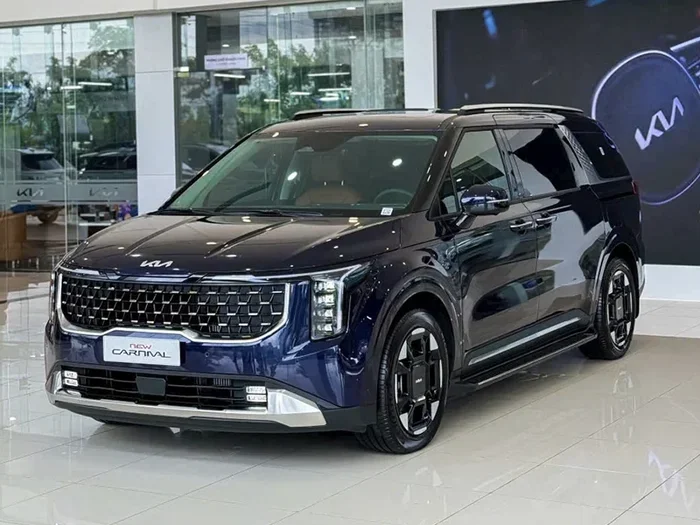
Visual guide about Kia Carnival premium exterior
Image source: drive.gianhangvn.com
Why the Name Change Happened
Kia renamed the Sedona to Carnival globally for the 2022 model year (2021 in some markets). The Carnival name has decades of history overseas, especially in South Korea where it’s a flagship people-mover. The switch signals Kia’s ambition to elevate the model’s status.
Did you know? The original Sedona (1998-2005) was a rebadged Mazda Bongo. The second generation (2006-2014) was Kia’s first dedicated minivan platform. The third generation (2015-2021) brought modern styling. The fourth generation (2022+) — now Carnival — is the first designed with genuine premium aspirations.
What Changed Beyond the Badge
The Carnival isn’t just a renamed Sedona. Key upgrades include:
- SUV-inspired styling: Boxier, more upright profile hides the “minivan stigma”
- VIP Lounge Seats: Available second-row captain’s chairs with powered leg rests, heating, ventilation, and recline — a segment-first feature
- Dual 12.3-inch screens: Curved panoramic display spanning gauge cluster and infotainment
- Highway Driving Assist 2: Hands-on semi-automated highway driving with lane changes
- Digital Key 2: Phone-as-key with ultra-wideband precision
These features blur the line between mainstream and premium. But the pricing didn’t follow the features upward — and that’s the point.
Feature-by-Feature: Where the Sedona/Carnival Feels Premium (And Where It Doesn’t)
Let’s get granular. You care about the daily experience, not marketing categories.
Interior Quality: The “Touch Points” Test
Run your fingers across the dashboard, door tops, steering wheel, and shifter. The Carnival uses soft-touch materials on all primary contact surfaces. The available quilted Nappa leather on the SX Prestige looks genuinely upscale. Stitching is tight. Gaps are consistent.
But dig deeper. Lower door panels, rear cargo area, and third-row surroundings use hard plastic. The seat tracks feel mechanical, not damped. The glove box lacks damping. In a true premium vehicle — say, a Genesis GV80 — every surface you touch feels considered. The Carnival feels considered where it counts, pragmatic elsewhere.
Analogy time: It’s like a hotel that splurged on the lobby, bedding, and shower — but the closet hangers are plastic. You’ll notice the splurges daily. The compromises? Rarely.
Technology: Surprisingly Current
The dual-screen setup runs Kia’s latest ccNC (connected car Navigation Cockpit) system. Wireless Apple CarPlay/Android Auto. Over-the-air updates. Available head-up display. Digital Key 2 works with iPhone and Android. These are premium-grade tech features often reserved for higher segments.
Where it falls short: The infotainment graphics, while clean, lack the visual polish of Mercedes MBUX or BMW iDrive 8. Voice recognition is good but not class-leading. The camera resolution on the 360-degree view is adequate, not crisp.
Ride and Noise: The Hidden Premium Factor
This surprised me. The Carnival’s NVH (Noise, Vibration, Harshness) performance rivals entry-luxury SUVs. At 70 mph, cabin noise measures around 64-66 dB — comparable to a Lexus RX. The multi-link rear suspension (rare in minivans) absorbs impacts with sophistication. Body control is tight for a 5,000-lb vehicle.
Credit the platform engineering. The N3 architecture was designed for both SUVs and minivans, so the Carnival inherited SUV-grade isolation. This is where engineering investment pays invisible dividends.
Safety: Standard Equipment That Exceeds Premium Norms
Every Carnival gets Forward Collision Avoidance, Blind-Spot Collision Avoidance, Lane Keeping Assist, Driver Attention Warning, and Safe Exit Assist — standard. Many premium brands still charge extra for some of these. Highway Driving Assist 2 (hands-on automated highway driving) is available on the top two trims. IIHS Top Safety Pick+? Check. NHTSA 5-star overall? Check.
In safety, the Carnival punches above its weight class.
Direct Competitors: Where the Sedona/Carnival Actually Fits
Context clarifies category. Let’s line up the alternatives.
Mainstream Rivals (The Real Competition)
Honda Odyssey: Starts ~$38,000. Magic Slide second-row seats are brilliant. Driving dynamics feel sharper. Interior materials lag the Carnival. Resale value slightly stronger.
Toyota Sienna: Starts ~$37,000. Hybrid-only powertrain (36 MPG combined). All-wheel drive available. Interior feels more utilitarian. Legendary reliability.
Chrysler Pacifica: Starts ~$37,000. Plug-in hybrid option (32 electric miles). Stow ‘n Go seats fold into floor. Uconnect system is excellent. Build quality inconsistent.
Volkswagen ID. Buzz: Starts ~$60,000. Electric only. Retro-cool factor. Less practical space. Different mission entirely.
The Carnival beats all three on feature-per-dollar. It loses on brand loyalty and resale.
Premium Adjacent: Chrysler Pacifica Pinnacle
The Pacifica Pinnacle (~$53,000) is the closest thing to a “premium minivan” from a mainstream brand. Quilted leather, 20-inch wheels, vacuum, tri-pane sunroof, 10.1-inch rear screens. It’s a fully loaded mainstream van — not a premium vehicle. But it’s the ceiling for this segment.
True Premium: Mercedes-Benz Metris / V-Class
The Metris (US) / V-Class (global) starts ~$60,000. Rear-wheel drive. Diesel or gas turbo-4. MBUX infotainment. Air suspension available. Three-pointed star on the hood. It’s a commercial van turned luxury shuttle. Different universe.
Ultra-Premium: Toyota Alphard / Lexus LM (Japan/Asia)
In Japan, the Toyota Alphard and Lexus LM define the premium minivan. The LM 500h (hybrid V6) starts around ¥15 million (~$100,000). Rear-seat ottomans. Partition screens. Chauffeur-focused. These are executive transport, not family haulers. The Carnival doesn’t play in this league — nor should it.
The “Premium Feel” Features That Matter Most to Owners
Owners consistently highlight specific features that deliver disproportionate satisfaction. These are the “premium feel” touchpoints that justify the purchase.
VIP Lounge Seats: The Headline Feature
Available on SX Prestige trim. Second-row captain’s chairs with:
- Powered recline (up to 141 degrees)
- Powered extendable leg rests
- Heating and ventilation
- Winged headrests with integrated controls
- Button-activated “Relaxation Mode” — one press reclines seat, extends leg rest, adjusts climate
Did you know? These seats are supplied by the same vendor that makes seats for Genesis GV80 and GV90. The mechanism durability is tested to 50,000 cycles — equivalent to 34 years of daily use. This isn’t “mainstream” engineering. It’s premium hardware on a mainstream budget.
Real-world impact: My neighbor’s kids fight over who gets the “throne seats” on road trips. The 12-year-old fell asleep in Relaxation Mode on a 6-hour drive. That’s the feature you remember.
Smart Power Sliding Doors and Tailgate
Hands-free tailgate (kick under bumper). Smart power sliding doors — they detect the key fob approaching and auto-open. They also auto-reverse if obstructed with sensitivity calibrated for small fingers. Premium brands charge extra for this; it’s standard on EX trim and up.
Remote Smart Parking Assist
Press the key fob button, the Carnival parks itself — forward, reverse, parallel, perpendicular. You stand outside. It’s genuinely useful in tight garage spots where door dings are a risk. Works surprisingly well for a first-gen implementation.
Dual Sunroofs with Power Sunshades
Front panoramic + rear pop-up. Both have motorized shades. The rear shade is a parenting superpower — block sun for sleeping kids without the “window sock” look.
Ownership Economics: The Hidden Premium Indicator
Premium cars cost more to own. Not just purchase price — depreciation, insurance, maintenance, fuel. Let’s run the numbers.
Depreciation: The Silent Budget Killer
5-year depreciation estimates (Kelley Blue Book / Edmunds):
- Kia Carnival: ~45-50%
- Honda Odyssey: ~40-45%
- Toyota Sienna: ~38-42%
- Chrysler Pacifica: ~50-55%
- Mercedes Metris: ~55-60%
The Carnival depreciates like a mainstream vehicle — slightly worse than Toyota/Honda, better than Chrysler. Premium vehicles often depreciate more in absolute dollars (a $60k car losing 55% = $33k lost vs. $35k car losing 48% = $17k lost). But percentage-wise, the Carnival sits squarely in mainstream territory.
Insurance Costs
Average annual premium (full coverage, 35-year-old driver, clean record):
- Kia Carnival: ~$1,650
- Honda Odyssey: ~$1,580
- Toyota Sienna: ~$1,550
- Mercedes Metris: ~$2,200
Insurance treats the Carnival as a mainstream minivan. Premium branding adds ~30-35% to premiums.
Maintenance and Repairs
Kia’s 10-year/100,000-mile powertrain warranty (original owner) is industry-leading. Most premium brands offer 4yr/50k. The Carnival’s 3.5L V6 and 8-speed auto are proven, shared across millions of Hyundais/Kias. Parts are plentiful. Labor rates at Kia dealers are lower than luxury dealers.
5-year maintenance cost estimate (Edmunds True Cost to Own):
- Kia Carnival: ~$4,200
- Mercedes Metris: ~$8,500
That $4,300 difference? That’s the premium tax in action.
Fuel Economy
Carnival: 19 city / 26 highway / 22 combined (FWD). Sienna Hybrid: 36 combined. Pacifica PHEV: 30 combined electric + 30 MPG gas. The Carnival’s V6 is thirsty by modern standards. Over 15,000 miles/year at $3.50/gal, you’ll spend ~$2,385 vs. ~$1,460 for a Sienna. That’s $925/year — not trivial.
Who Should Buy a Sedona/Carnival (And Who Shouldn’t)
The “is it premium” question matters less than “is it right for you.”
Perfect For:
- Families wanting maximum features per dollar — you get VIP seats, dual screens, advanced safety, and SUV styling for $35k-$43k
- Road-trip households — the VIP Lounge seats and NVH make long drives genuinely pleasant
- Tech-comfortable buyers — the infotainment, digital key, and driver assists are current-gen
- People who hate the “minivan look” — the Carnival’s SUV profile avoids the stigma
- Value-focused owners keeping 7-10+ years — the warranty and reliability support long-term ownership
Look Elsewhere If:
- You need hybrid efficiency — Sienna Hybrid saves $900+/year on fuel
- You want maximum resale — Toyota/Honda hold value better
- You need all-wheel drive — Carnival is FWD only; Sienna and Pacifica offer AWD
- You want a premium badge for status — neighbors won’t mistake it for a Lexus
- You need commercial-grade durability — Metris is built for livery duty
The Verdict: Premium Features, Mainstream Reality
So — is a Kia Sedona considered a premium car?
By industry definition: No. It lacks the brand, exclusive engineering, materials depth, and pricing power.
By owner experience: It delivers 85% of the premium feel for 65% of the cost.
The Sedona/Carnival occupies a brilliant strategic position. It’s not pretending to be something it’s not. Kia knows exactly what this vehicle is: the smart buyer’s alternative to overpaying for a badge.
Think of it like a $40 bottle of wine that scores 92 points — while the $120 bottle scores 95. Is the $120 bottle “better”? Technically, yes. Is it three times better? Never. The Carnival is that $40 bottle. Outstanding value. Genuine quality. No pretense.
If you test-drive a Carnival SX Prestige back-to-back with a Pacifica Pinnacle, you’ll notice the Chrysler’s materials are slightly richer, the rear screens larger, the badge more recognized. You’ll also notice the $10,000 price gap. For most families, that gap buys a lot of college fund, family vacations, or peace of mind.
The Kia Sedona (Carnival) isn’t a premium car. It’s something arguably better: a premium experience without the premium penalty.
Frequently Asked Questions
Is the Kia Sedona the same as the Kia Carnival?
Yes. Kia renamed the Sedona to Carnival for the 2022 model year in North America. The Carnival is the fourth-generation model with all-new styling, platform, and features. Used models (2021 and older) carry the Sedona name.
Does the Kia Carnival have a hybrid or plug-in hybrid option?
Not currently. The Carnival uses a 3.5L V6 with an 8-speed automatic (FWD only). Kia has confirmed a hybrid variant is in development for a future model year, likely 2025 or 2026. The Toyota Sienna (hybrid-only) and Chrysler Pacifica (PHEV) offer electrified options today.
What are the VIP Lounge Seats and which trim has them?
VIP Lounge Seats are second-row captain’s chairs with powered recline (141 degrees), extendable leg rests, heating, ventilation, and a one-touch “Relaxation Mode.” They’re exclusive to the top-tier SX Prestige trim (~$43,000) and replace the standard 8-passenger bench for 7-passenger configuration.
How does the Kia Carnival compare to the Honda Odyssey and Toyota Sienna?
The Carnival leads on features-per-dollar, interior design, and NVH. The Odyssey drives better with clever Magic Slide seats. The Sienna wins on fuel economy (36 MPG hybrid) and resale value. All three are excellent; the Carnival is the best value play.
Is the Kia Carnival reliable?
Early data is strong. The 3.5L V6 and 8-speed transmission are proven across millions of Hyundai/Kia vehicles. Kia’s 10-year/100,000-mile powertrain warranty (original owner) reflects confidence. Consumer Reports predicts above-average reliability. No major recalls or patterns yet.
Can the Kia Carnival tow a trailer?
Yes. Properly equipped, the Carnival tows up to 3,500 lbs (all trims). This matches the Odyssey and Sienna, trails the Pacifica (3,600 lbs), and falls far short of truck-based SUVs. Towing requires the factory tow hitch accessory and trailer wiring harness.