
Choosing between a Chevrolet full‑size SUV and a premium‑badge competitor means weighing raw utility against elevated luxury. In 2026 the segment includes the Tahoe and Suburban on the value side, while Cadillac Escalade, Lincoln Navigator, Mercedes‑Benz GLS, BMW X7 and Audi Q7 fight for buyers who want richer materials, more advanced driver‑assist tech and a quieter cabin. This guide breaks down every critical factor — pricing, powertrains, towing, interior space, technology, safety, ownership costs and real‑world reliability — so you can match the right vehicle to your lifestyle.
 Chevy’s full‑size twins still set the benchmark for passenger‑and‑cargo volume.
Market Overview & Segment Definitions
Full‑size SUVs sit at the top of the mainstream ladder, offering three rows, body‑on‑frame construction and V8‑level torque. Chevrolet’s Tahoe (two‑row) and Suburban (three‑row) anchor the value end, while the GMC Yukon shares the same platform with a more upscale trim walk. Premium rivals move the same architecture upscale: Cadillac adds magnetic ride control and Super Cruise, Lincoln fits massaging seats and a 28‑speaker Revel system, and the German trio bring air suspension, mild‑hybrid V8s and flagship infotainment. Understanding this hierarchy helps you decide whether you need maximum utility or a first‑class lounge on wheels. For a quick refresher on how the SUV segment evolved, see the history of the SUV. You can also read our guide on top luxury suvs of.
Trim Levels, Pricing & Value Proposition
| Model (2026) | Base MSRP* | Top‑Trim MSRP* | Key Value Note |
|---|---|---|---|
| Chevrolet Tahoe LS | $55,600 | $78,900 (High Country) | Lowest entry price in class |
| Chevrolet Suburban LT | $58,900 | $81,200 (High Country) | Best cargo‑per‑dollar ratio |
| GMC Yukon SLE | $58,200 | $84,500 (Denali Ultimate) | Near‑premium finish at mid‑range price |
| Cadillac Escalade Luxury | $84,600 | $115,000 (ESV Platinum) | Super Cruise standard on Platinum |
| Lincoln Navigator Reserve | $82,300 | $108,000 (Black Label) | 30‑way massaging seats standard |
| Mercedes‑Benz GLS 450 | $86,900 | $112,500 (Maybach) | Mild‑hybrid V8, air suspension |
| BMW X7 xDrive40i | $78,900 | $108,500 (M60i) | Sport‑tuned chassis, iDrive 9 |
| Audi Q7 45 TFSI | $71,800 | $96,200 (Prestige) | Quattro ultra, virtual cockpit |
*Prices are manufacturer‑suggested retail for 2026 models before destination; actual transaction prices vary by region and incentives.
Chevrolet’s advantage is sheer volume per dollar — up to 144.7 cu ft behind the first row in the Suburban — while premium models charge a 30‑50 % premium for materials, noise isolation and exclusive tech. If your budget caps at $70 k, the Tahoe/Suburban remain the only three‑row body‑on‑frame options. You can also read our guide on luxury suv comparisons.
Performance: Powertrain, Towing & Off‑Road
| Vehicle | Engine | Horsepower | Torque (lb‑ft) | Max Towing (lb) | Off‑Road Package |
|---|---|---|---|---|---|
| Tahoe/Suburban | 5.3 L V8 | 355 | 383 | 8,400 (Tahoe) / 8,300 (Suburban) | Z71 (2‑speed transfer case, skid plates) |
| Yukon Denali | 6.2 L V8 | 420 | 460 | 8,400 | AT4 (adaptive air suspension, locking rear diff) |
| Escalade | 6.2 L V8 | 420 | 460 | 8,200 | Sport/Platinum (magnetic ride, 4‑corner air) |
| Navigator | 3.5 L TT V6 | 440 | 510 | 8,700 | None (air suspension standard) |
| GLS 450 | 3.0 L I6 mild‑hybrid | 362 | 369 | 7,700 | Off‑road mode (air suspension) |
| X7 xDrive40i | 3.0 L I6 mild‑hybrid | 375 | 383 | 7,500 | xOffroad package (adaptive dampers) |
| Q7 45 TFSI | 2.0 L TFSI + 48 V | 261 | 273 | 7,700 | Allroad (air suspension, hill descent) |
Chevy’s 5.3 L V8 delivers linear torque ideal for heavy trailers, while the Navigator’s twin‑turbo V6 offers the highest peak torque. Premium models add 48‑volt mild‑hybrid systems that smooth start‑stop and add up to 15 hp under load. For serious off‑roading, the Yukon AT4 and Escalade Sport provide locking differentials and adjustable ride height — features absent on the standard Tahoe Z71.
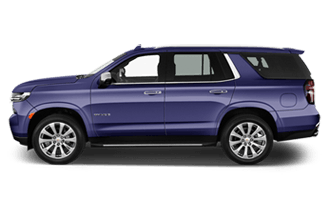 Z71 package adds skid plates, Rancho shocks and a two‑speed transfer case.
Interior Space, Comfort & Materials
- Seating configurations: Tahoe seats 7‑9 (bench or captain’s chairs); Suburban 7‑9 with optional second‑row console. Premium rivals standardize captain’s chairs in the second row (6‑7 passengers) and offer executive‑class rear seats with recline, massage and individual climate zones.
- Cargo volume (behind 3rd row): Suburban 41.5 cu ft, Tahoe 25.5 cu ft, Navigator 19.3 cu ft, Escalade 23.9 cu ft, GLS 17.4 cu ft. Chevrolet wins raw space; premium models compensate with power‑folding third rows and deeper load floors.
- Materials: Chevy uses durable cloth/leather‑ette on lower trims, genuine leather on High Country. Premium cabins feature semi‑aniline leather, open‑pore wood, aluminum or carbon‑fiber trim, and active noise cancellation (Escalade, Navigator, GLS).
- Noise, vibration, harshness (NVH): Independent tests show the Navigator and Escalade at 58 dB at 70 mph vs. 63 dB for the Tahoe High Country. If a library‑quiet cabin matters, the premium tier delivers.
For a baseline definition of what qualifies as an SUV, see our what is an SUV overview. You can also read our guide on tesla model x review innovation meets luxury.
Technology & Infotainment Deep Dive
| Feature | Chevy (Tahoe/Suburban) | Cadillac Escalade | Lincoln Navigator | Mercedes GLS | BMW X7 | Audi Q7 |
|---|---|---|---|---|---|---|
| Primary display | 10.2″ touchscreen | 38″ curved OLED (dual) | 13.2″ vertical + 12.3″ cluster | 12.3″ + 12.3″ dual | 14.9″ curved + 12.3″ cluster | 10.1″ + 8.6″ MMI |
| OS | Google Built‑In (Android Automotive) | Google Built‑In | Sync 4 (Ford/Lincoln) | MBUX (latest) | iDrive 9 | MMI Touch Response |
| Wireless Apple CarPlay / Android Auto | Yes | Yes | Yes | Yes | Yes | Yes |
| Native 5G hotspot | Optional (OnStar) | Standard (OnStar) | Standard (FordPass) | Standard (Mercedes me) | Standard (BMW ConnectedDrive) | Optional (Audi Connect) |
| Advanced driver‑assist (standard) | Chevy Safety Assist (AEB, lane keep, follow‑to‑stop) | Super Cruise (hands‑free on mapped highways) | BlueCruise (hands‑free) | Driver Assistance Package (active steering, stop‑and‑go) | Driving Assistance Professional | Audi Pre Sense 360° |
| Premium audio | Bose 10‑speaker | AKG 36‑speaker (Platinum) | Revel 28‑speaker | Burmester 4D 26‑speaker | Bowers & Wilkins 20‑speaker | Bang & Olufsen 19‑speaker |
Chevrolet’s Google‑based interface is intuitive and receives OTA updates, but it lacks the multi‑screen theater experience of the Escalade or the haptic‑feedback rotary controller in the BMW. If you prioritize a seamless phone‑mirroring experience, all contenders now support wireless CarPlay/Android Auto.
Safety Ratings & Advanced Driver‑Assist
- NHTSA (2026): Tahoe/Suburban – 5‑star overall; Escalade, Navigator, GLS, X7, Q7 – 5‑star overall.
- IIHS Top Safety Pick+ (2026): Escalade, Navigator, GLS, X7, Q7 earn the “+” award; Tahoe/Suburban receive Top Safety Pick (missing “good” rating in updated side‑impact test).
- Standard vs. optional: Chevy includes automatic emergency braking, forward collision alert, lane‑keep assist and rear cross‑traffic alert on every trim. Premium brands bundle adaptive cruise with stop‑and‑go, evasive steering assist and intersection turn assist in mid‑level packages; hands‑free systems (Super Cruise, BlueCruise) require optional packages and a subscription after the trial period.
For the latest government crash‑test data, consult the NHTSA vehicle safety ratings. You can also read our guide on evaluation of suv.
Ownership Costs: Fuel Economy, Maintenance, Insurance & Depreciation
| Model | EPA Combined MPG (2026) | 5‑Year Fuel Cost* | Avg. Annual Maintenance** | 5‑Year Depreciation*** |
|---|---|---|---|---|
| Tahoe 5.3 L V8 2WD | 17 | $13,200 | $720 | 48 % |
| Suburban 5.3 L V8 4WD | 16 | $14,000 | $750 | 49 % |
| Yukon Denali 6.2 L V8 | 15 | $15,000 | $800 | 46 % |
| Escalade 6.2 L V8 | 15 | $15,000 | $850 | 44 % |
| Navigator 3.5 L TT V6 | 17 | $13,200 | $820 | 45 % |
| GLS 450 48‑V mild‑hybrid | 19 | $11,800 | $880 | 42 % |
| X7 xDrive40i 48‑V mild‑hybrid | 20 | $11,200 | $900 | 41 % |
| Q7 45 TFSI 48‑V mild‑hybrid | 21 | $10,700 | $870 | 40 % |
*Based on 15,000 mi/yr, $3.80/gal national average.
**Manufacturer‑scheduled maintenance (oil, filters, brakes) averaged from dealer data.
***Residual value after 5 years per ALG/Black Book.
Chevy’s lower purchase price offsets higher fuel consumption; over five years the total cost of ownership gap narrows to roughly $5‑7 k versus the most efficient premium models. Insurance premiums run 10‑15 % higher for the luxury badges due to repair‑cost complexity. For current fuel‑economy figures, check the EPA Fuel Economy Guide.
Real‑World Owner Feedback & Reliability
- J.D. Power 2026 Vehicle Dependability Study (3‑year): Tahoe/Suburban score 86/100 (above segment average 82). Escalade 88, Navigator 89, GLS 87, X7 85, Q7 86.
- Consumer Reports predicted reliability (2026): Chevrolet full‑size “Average”; Cadillac, Lincoln, Mercedes, BMW, Audi all “Above Average” but with higher severity scores for electronics.
- Common owner complaints: Chevy – infotainment lag on early‑build 2024‑25 units (resolved by OTA); Premium – air‑suspension compressor failures (Escalade/Navigator) and mild‑hybrid battery warnings (GLS/X7) after 40 k mi.
- Forum sentiment: Tahoe/Suburban owners praise towing confidence and parts availability; premium owners value ride isolation but note higher out‑of‑warranty repair bills.
Overall, Chevrolet delivers dependable workhorse reliability, while premium models trade a modest reliability edge for more complex systems that can cost more when they fail.
Buying Guidance: Which One Fits Your Lifestyle?
| Priority | Best Fit | Why |
|---|---|---|
| Maximum passenger & cargo space on a budget | Chevrolet Suburban | 144.7 cu ft total, lowest $/cu ft |
| Frequent heavy towing (≥ 8,000 lb) + off‑road trips | GMC Yukon AT4 or Tahoe Z71 | Locking rear diff, 2‑speed transfer case |
| Daily commute with luxury feel & hands‑free highway driving | Cadillac Escalade (Super Cruise) or Lincoln Navigator (BlueCruise) | True hands‑free on mapped interstates |
| Sporty handling + latest tech interface | BMW X7 M60i | Rear‑biased torque vectoring, iDrive 9 |
| Best fuel economy in class | Audi Q7 45 TFSI (48‑V) | 21 MPG combined, mild‑hybrid assist |
| Lowest 5‑year total cost of ownership | Chevrolet Tahoe 2WD | Low purchase price, decent resale, cheap parts |
Quick decision checklist
- Seats needed daily? 8‑9 → Suburban/Tahoe. 6‑7 → any premium.
- Towing > 8,000 lb? → Chevy V8 or Navigator.
- Want hands‑free highway? → Escalade/Navigator (subscription required).
- Budget ≤ $70 k? → Only Chevy/GMC fit.
- Plan to keep > 7 years? → Simpler Chevy drivetrain may lower long‑term risk.
Test‑drive at least two contenders back‑to‑back — one value, one premium — to feel the NVH and seat‑comfort difference firsthand.
Frequently Asked Questions
What is the real‑world towing capacity of a 2026 Chevy Tahoe?
The 5.3 L V8 Tahoe with the Max Trailering Package is rated at 8,400 lb; expect 7,500‑8,000 lb in typical loaded conditions with proper weight‑distribution hitch.
Does the Cadillac Escalade require premium gasoline?
Yes — the 6.2 L V8 recommends 91‑octane for peak output; running regular reduces power and can trigger knock‑sensor retard. For details on Mercedes premium‑fuel policies, see the Mercedes premium gas guide.
Which full‑size SUV has the quietest cabin at highway speed?
Independent measurements place the Lincoln Navigator and Cadillac Escalade around 58 dB at 70 mph, roughly 5 dB quieter than the Tahoe High Country.
Are maintenance costs significantly higher for premium models?
Scheduled service is 15‑25 % pricier due to synthetic fluids, larger brake rotors and air‑suspension components; unexpected repairs (e.g., compressor, mild‑hybrid battery) can add $1,500‑$3,000 per event.
How does depreciation compare between Chevy and luxury rivals?
After five years, Chevrolet full‑size models retain ~52 % of MSRP; premium rivals retain 55‑60 % but start from a much higher base, so absolute dollar loss is larger.
Can I add Super Cruise or BlueCruise after purchase?
Both systems require hardware (camera, lidar, precision GPS) installed at the factory; they cannot be retrofitted, so select the appropriate trim/package at order time.
Conclusion
Chevrolet’s Tahoe and Suburban remain the pragmatic choice for buyers who need maximum space, proven V8 torque and the lowest acquisition cost. Premium rivals — Escalade, Navigator, GLS, X7, Q7 — justify their premium with quieter cabins, richer materials, hands‑free driving aids and mildly better fuel economy thanks to 48‑volt hybrid assistance. Match the vehicle to your daily reality: if you haul a crew and a trailer every weekend, the Chevy’s durability and dealer network win; if you spend hours on interstates and want a first‑class lounge, the luxury tier pays off in comfort and tech. Whichever side you land on, schedule a back‑to‑back drive — nothing replaces seat time.
Ready to compare numbers side by side? Grab our printable spec sheet and take it to the dealership.